
Arashiyama's best souvenirs trace back to the two things the district is genuinely known for: bamboo, thanks to the Sagano Bamboo Grove, and tofu and yuba, a Saga-Arashiyama culinary specialty tied to Kyoto's temple cuisine. Handcrafted bamboo goods and packaged tofu products both connect to the area rather than to Kyoto as a generic brand.
Arashiyama draws crowds for the bamboo grove, the Togetsukyo Bridge, and Tenryu-ji's UNESCO-listed garden, and the shops along its main route reflect that same identity if you know which ones to walk into. The district's souvenir strength isn't generic Kyoto merchandise, it's the two things Arashiyama's own geography and history actually produce: bamboo craft and tofu.
Both categories reward a little patience. The obvious stalls closest to the bamboo grove entrance and the bridge sell the fastest, least specific version of each; the better versions of both sit a few doors further down the same streets, in shops that have been doing one thing for a long time rather than everything for everyone.
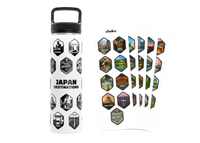
As Tokyo-based photographers who visit Kyoto often rather than live there, we curate rather than claim local-insider knowledge. What follows are the categories and picks that actually connect to Arashiyama, not a list of every shop on the approach to Tenryu-ji. If Kyoto fits into a longer trip, the Traveler bucket-list bottle includes Arashiyama among its 27 destinations, built for a first Japan route that covers Tokyo, Kyoto, and the stops between them.
Here's what's worth carrying home from Arashiyama, and what to skip.
What makes an Arashiyama souvenir worth buying?
An Arashiyama souvenir earns its place when it ties to bamboo or tofu, the two things the district is actually built around. Generic "Kyoto" merchandise sold along the approach to the bamboo grove or Togetsukyo Bridge fails that test.
The Sagano Bamboo Grove is the reason most visitors come to Arashiyama in the first place, a roughly 400-meter paved path running from near Nonomiya Shrine toward Okochi Sanso Villa. Kyoto's bamboo-craft tradition predates the grove's popularity as a photo stop, and Arashiyama sits close enough to that tradition that bamboo goods here carry real weight, if you buy from a shop that actually works with it.
The second identity is food. Saga-Arashiyama has long been associated with tofu and yuba (soy milk skin), tied to Kyoto's shojin ryori temple-cuisine tradition, since temples in the area have used both for centuries. A souvenir that draws on either category is doing more than a magnet with a bridge on it.
For how we apply the same filter to souvenirs across Japan, see our Japan souvenirs guide.
What bamboo souvenirs should you buy in Arashiyama?
Handcrafted bamboo goods, baskets, chopsticks, tea utensils, and small homeware, are the souvenir most directly tied to Arashiyama's defining sight. Quality varies by shop, so look for visible handwork rather than uniform, machine-finished pieces.
1. Bamboo baskets and homeware
Kyoto's bamboo-craft tradition produces baskets, trays and small storage pieces with visible joinery and a natural, uneven finish that machine-made versions don't have. A basket bought near Arashiyama is a souvenir that both references the bamboo grove you just walked through and functions as a genuinely useful object at home.
Where: craft shops along Arashiyama's main sightseeing route, particularly near the bamboo grove entrance and Tenryu-ji's approach.
2. Bamboo chopsticks and tea utensils
Smaller and easier to pack than a basket, bamboo chopsticks and tea utensils (whisks and scoops for matcha preparation) are a lower-cost way to bring the same material home. If tea ceremony culture interests the person you're buying for, a bamboo chasen (tea whisk) is a specific, meaningful pick rather than a generic souvenir.
Where: the same craft and homeware shops through the district.
3. Bamboo-patterned goods
Beyond raw bamboo objects, several shops sell paper goods, textiles and stationery printed or woven with bamboo-grove patterns, referencing the grove without requiring the material itself. These are a lighter, cheaper option for a longer gift list.
Where: gift and stationery shops along the main route.
Go if: you want a genuinely local craft souvenir with real weight and use at home. Skip if: you're traveling light; a full bamboo basket takes up real suitcase space.
❤️ This is one of the 27 destinations on the Japan Destinations I Traveler bucket-list bottle, built for first-time Japan visitors planning a trip that covers the essentials. Live on Kickstarter now.
What tofu and yuba souvenirs are worth bringing home from Arashiyama?
Saga-Arashiyama's tofu and yuba specialists sell packaged yuba, tofu-based sweets, and other soy products that reference the district's temple-cuisine roots. Packaged, shelf-stable versions travel far better than fresh tofu.
4. Packaged yuba
Yuba, the skin that forms on top of simmering soy milk, is a genuine Saga-Arashiyama specialty tied to Kyoto's shojin ryori tradition. Dried, packaged yuba keeps far longer than the fresh version served at a meal in the district, and it's an ingredient most visitors won't have cooked with before, which makes it a distinctive gift for anyone who cooks.
Where: tofu and yuba specialty shops through Saga-Arashiyama.
5. Tofu-based sweets and snacks
Several shops in the district sell tofu-based sweets and snacks, tofu doughnuts and tofu soft-serve among the more visible options along the main route, alongside packaged tofu confectionery that travels better than the fresh versions. These make a lighter, food-forward souvenir for anyone who wants a taste of the area without committing to raw ingredients.
Where: tofu specialty shops and stalls along Arashiyama's main sightseeing route.
The fresh versions, eaten on the spot, are worth building into the visit itself rather than treated purely as a souvenir opportunity. Save the packaged yuba and confectionery for the people back home; eat the soft-serve while you're standing in front of the bamboo grove.
6. Matcha-flavored sweets
Matcha runs through Kyoto's confectionery tradition broadly, and Arashiyama's shops carry their share of matcha cookies, chocolate and other packaged sweets. It's a less Arashiyama-specific pick than bamboo or tofu, but a reliable, widely appealing option if you're buying for someone less particular about regional specificity.
Where: confectionery shops along the main route and near Togetsukyo Bridge.
Where should you actually shop in Arashiyama?
Bamboo craft shops cluster near the grove entrance and Tenryu-ji's approach; tofu and yuba specialists are spread along the main route toward Togetsukyo Bridge. A souvenir stop pairs naturally with the walk most visitors already do between the two.
Arashiyama's sights sit close enough together that souvenir shopping doesn't need its own separate trip. The bamboo grove and Tenryu-ji sit at the district's northern end; Togetsukyo Bridge marks the southern edge, with the Katsura River between them. Most craft and food shops line the route connecting the two, so a souvenir stop fits naturally into a day already spent walking from the grove to the bridge.
| Bamboo craft shops | Tofu & yuba specialists | |
|---|---|---|
| Best for | A lasting, handcrafted homeware souvenir | A distinctive, packable food souvenir |
| Located | Near the bamboo grove entrance and Tenryu-ji approach | Spread along the main route toward Togetsukyo |
| Price range | Modest for chopsticks, higher for baskets | Modest, mostly gift-box or packet priced |
| Best time | Morning, paired with an early bamboo grove walk | Any time, though fresher stock is more likely earlier in the day |
Morning is the standout window for Arashiyama generally; the bamboo grove is busiest at midday, and shops along the route are calmer before the day's tour groups arrive. If your day also includes Tenryu-ji, the Sagano Scenic Railway, or the Iwatayama Monkey Park, treat souvenir shopping as the connective tissue between sights rather than a separate errand; the district is compact enough that a considered stop at a bamboo shop or tofu specialist barely adds to the day.
Free for you: our Tokyo Google Maps list We keep a Google Maps list of the must-see spots around Tokyo - restaurants, cafes, shops, viewpoints, and streets worth the detour. Drop your email and we'll send it over.
What should you avoid buying in Arashiyama?
Skip generic "Kyoto" merchandise sold along the approach to the bamboo grove and bridge, plus machine-finished bamboo goods with a uniform, plastic-feeling texture. Neither connects to what actually makes Arashiyama distinctive.
Arashiyama's busiest stretches, particularly near the bamboo grove entrance and Togetsukyo Bridge, carry the same generic Kyoto tourist stock found in Gion or near Kiyomizu-dera: printed tote bags, keychains, and magnets with no tie to bamboo, tofu, or the district itself. Skip them for something from the two categories that are actually Arashiyama's own.
Bamboo goods deserve a second look before buying. Machine-finished, uniformly smooth bamboo items, often the cheapest option on a shelf, lack the visible joinery and slight irregularity of handcrafted pieces. If a bamboo basket or set of chopsticks feels too perfect and too light for its size, it's likely mass-produced rather than made by the kind of craft tradition Kyoto is known for.
The same caution applies to packaged tofu sweets sold in bulk near the busiest entrances. A tofu doughnut or soft-serve eaten fresh at a specialty shop tastes noticeably different from a shelf-stable version sold as a boxed set purely for the souvenir shelf. If a shop's main business looks like packaging rather than making, that's the signal to walk past it toward one of the district's actual tofu specialists instead.
❤️ If your Kyoto stop is part of a longer route, 3 Weeks in Japan is our 200+ page travel guide covering Tokyo, Kyoto, Osaka & Nara, and six Tokyo day trips, with our own photography of each destination. Live on Kickstarter now.
FAQ
What souvenirs should I buy in Arashiyama?
Arashiyama's best souvenirs come from the two things the district is actually known for: bamboo, thanks to the Sagano Bamboo Grove, and tofu and yuba, a Saga-Arashiyama culinary specialty. Handcrafted bamboo baskets and chopsticks, plus packaged yuba and tofu-based sweets, both tie directly to the area rather than to Kyoto in general.
Is bamboo craft from Arashiyama actually made locally?
Kyoto has a long tradition of bamboo craft, and Arashiyama's proximity to the Sagano Bamboo Grove makes it a natural place to buy it, though quality and origin vary by shop. Look for handcrafted pieces with visible joinery and a shop willing to talk about where a piece was made, rather than uniform, machine-finished bamboo goods.
What is yuba and where can I buy it in Arashiyama?
Yuba is the skin that forms on top of simmering soy milk during tofu-making, prized in Kyoto's temple cuisine (shojin ryori) tradition. Saga-Arashiyama has multiple tofu specialists selling fresh and packaged yuba, along with tofu-based sweets like tofu doughnuts and soft-serve, near the district's main sightseeing route.
Activities and tours in Tokyo
cheku is a GetYourGuide partner. We link to tours that handle the parts of travel that eat your time, getting there, booking ahead, language, context you'd otherwise miss. If you book through our link, we earn a small commission at no extra cost to you.


