
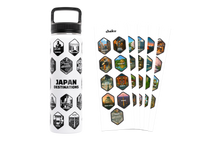
Japan culture runs on one operating principle: don't make your presence someone else's problem. This guide translates the rest from Japanese sources themselves, including the railway industry's own passenger surveys, the Agriculture Ministry's chopstick rules, and Kyoto's official code of conduct, so you know what actually matters and what's traveler-forum folklore.
Most Japan culture guides are written from the outside, and it shows. They pile up fifty rules of equal weight until visitors are afraid to exhale on the Yamanote line.
Japanese sources weight things differently, and they publish exactly what bothers people. The railway association surveys its passengers every year. A government ministry maintains an official page of chopstick taboos. Kyoto wrote its expectations into a civic code. Reading those sources, a calmer picture appears: a short list of things that genuinely matter, and a long list where trying counts. This post covers both, and if it's doubling as first-trip planning, the Traveler Bottle I covers the 27 destinations most first trips are built from.
What defines Japanese culture for a traveler?
Consideration for the people around you, practiced in small, consistent ways: queuing, quiet, cleanliness, and not making your convenience someone else's inconvenience. Get that principle and the specific rules mostly derive themselves.
Living here, the pattern you notice isn't formality, it's predictability. People line up where the platform markings say to line up. Phone calls wait until the train empties. Trash goes home in a pocket because there's no bin, and nobody drops it anyway. The famous politeness is less about ceremony than about a shared agreement that public space belongs to everyone in it.
For a visitor this is good news. You aren't expected to perform Japanese manners like a local. You're expected to notice the room. Every specific rule in this guide, from chopsticks to onsen, is a local expression of that one idea, and Japanese sources judge visitors far more gently on execution than on obliviousness.
Two loanwords will help you see it. Meiwaku is the noun for the nuisance you impose on others, and avoiding it is close to a civic religion. Omotenashi is hospitality without expectation of return, which is why the service is warm and the tip jar doesn't exist.
Two more concepts explain the moments that puzzle visitors. Uchi and soto, inside and outside, is the line Japanese social life draws between one's own circle and everyone else, and it's why the same person can be reserved with strangers and unreservedly generous once you're a guest. Honne and tatemae, private feeling and public face, is why a Japanese "maybe" or "it's a little difficult" usually means no. Neither is dishonesty. Both are lubricants for a country where 125 million people share very little space, and reading them saves you from pushing when a soft refusal has already been given.
None of this requires study before you land. It requires noticing. The visitors who have a hard time in Japan are almost never the ones who bow at the wrong angle; they're the ones who move through the country as if it were a backdrop. Watch the room for one day and the room starts working with you.
How do bowing and greetings work in Japan?
Bow when bowed to, at whatever depth feels natural. Nobody expects a foreign visitor to know the angles. A small nod of the head covers ninety percent of traveler situations, from konbini counters to ryokan check-ins.
Bowing in daily life is mostly light and constant: a nod to the driver, a dip of the head with an apology, a deeper beat of thanks when someone has gone out of their way. Shop staff will bow to you; a nod and a thank-you back is exactly right. Handshakes happen in business settings but aren't assumed, and hugs are not a greeting here.
Two phrases carry a full trip. Sumimasen works as excuse me, sorry, and thank-you-for-the-trouble all at once, and you will hear it fifty times a day. Arigato gozaimasu is the full thank you. Add gochisosama deshita after meals, said to nobody in particular as you leave, and you'll register as someone who tried, which in Japan buys enormous goodwill.
What are the chopstick and dining rules Japanese people actually follow?
The Ministry of Agriculture keeps an official list of taboo chopstick uses. The two with real weight are sticking chopsticks upright in rice and passing food chopstick to chopstick, both funeral gestures. The rest are table manners on the level of not talking with your mouth full.
Japan's Ministry of Agriculture, Forestry and Fisheries publishes the taboo list, called kirai-bashi, and it reads like a taxonomy of small rudenesses: mayoi-bashi, hovering your chopsticks over dishes while deciding; sashi-bashi, pointing with them; utsuri-bashi, hopping from dish to dish without returning to rice; watashi-bashi, resting them across your bowl mid-meal (it signals you're done); yose-bashi, dragging a dish toward you. The ministry's model of proper form is simple: return to your rice between side dishes, and rest chopsticks on the holder.
The funeral pair sits above all of these. Chopsticks upright in a bowl of rice mirror the offering at a wake, and passing food from your chopsticks to someone else's mirrors the passing of bones after cremation. These are the two a Japanese table will actually flinch at; everything else earns you, at most, the mild look any table manners slip earns anywhere.
Beyond chopsticks: slurping noodles is correct, lifting the rice bowl to your mouth is correct, and pouring drinks for others before yourself is the round-table custom worth adopting. Eating while walking is the one street-level rule visitors ask about most, and the practice is simple: eat where you bought it. Festival streets and market alleys are the relaxed exception.
How should you behave on Japanese trains?
Quietly. In the railway association's FY2024 survey of its own passengers, the top complaint about visitors specifically was loud conversation, named by 51.8% of respondents who'd had a problem, followed by luggage handling at 37.1%. Fix those two and you're a model passenger.
The Japan Private Railway Association surveys passengers annually about what bothers them on trains, which means we don't have to guess what Japanese riders actually think. The overall FY2024 rankings: uncovered coughs and sneezes first at 50.5%, seat manners second at 31.9% (not sliding over, stretched legs), loud conversation third at 29.2%, strong fragrance fourth at 26.3%, and blocking doors fifth at 23.8%.
The survey's inbound-visitor section is the part written for you. Among the 62.9% of respondents who reported friction with visitors, the top three issues were loud conversation (51.8%), large-luggage handling (37.1%), and stopping or blocking passages in stations (24.8%). Notice what's absent: nobody is grading your bow. The asks are practical. Talk at the volume the carriage is already using, keep your suitcase out of the flow and use the luggage space or coin lockers, and step out of the stream before checking your phone.
Phone calls on trains are the one hard line: don't. Messages and browsing are fine on silent. Priority seats deserve an extra glance, and on escalators, stand on the side everyone else is standing on, which flips between Tokyo and Osaka. Our getting-around guide covers the mechanics; the survey covers the manners.
What should you know at shrines, temples, and onsen?
Three sacred-adjacent spaces, three short scripts. Shrines: purify, then two bows, two claps, one bow. Temples: hands together, no clapping. Onsen: wash and rinse completely before entering the water, naked, no towel in the bath.
At Shinto shrines, the etiquette comes straight from Jinja Honcho, the Association of Shinto Shrines: rinse both hands and your mouth at the temizu basin, then pray with two bows, two claps at chest height, and a final bow. At Buddhist temples the prayer is silent, hands together, no claps. That single difference is the one visitors most often mix up, and our Japanese temples guide goes deep on which temples deserve your limited days and how goshuin collecting works.
Onsen etiquette is famous enough that Hoshino Resorts produced a four-language animated video, The Manner of ONSEN, because so many visitors arrive at the bath with no idea of the sequence. As TABI LABO reports, it was made in response to real visitor feedback, including "there were no usage instructions at the onsen" and "I'm uneasy being naked in public but want to respect the local rules." The sequence itself: undress fully in the changing room, wash and rinse your whole body at the seated stations, then soak. The small towel stays out of the water (on your head is the classic move), swimsuits stay in the locker, and you towel off before stepping back into the changing room.
Tattoos are the honest complication. Some baths still refuse visible ink, others don't care, and policies are changing yearly. The decision path:
Small tattoo → cover stickers from a drugstore or the front desk, problem solved at most facilities Large ink → book a private bath (kashikiri-buro) or a room with its own rotenburo, zero friction Either way → check the facility's stated policy first, and take a clear no gracefully
When do you take your shoes off in Japan?
At the genkan, the recessed entryway, of any home, every ryokan, most temples' interior halls, and a surprising number of restaurants, clinics, and fitting rooms. The floor level changing is your cue: step up means shoes off.
The genkan is the most reliable piece of architecture in Japan. Homes, ryokan, izakaya with tatami seating, temple halls, and school buildings all begin with a sunken entry space where outdoor shoes stop. The etiquette is physical rather than verbal: step out of your shoes onto the raised floor (not onto the genkan tiles in socks), turn your shoes to face the door, and take the slippers if any are offered.
Living here, the sub-rules become automatic. Slippers come off at tatami; only socks or bare feet touch the mats. The separate pair of slippers inside the toilet room is for the toilet room only, and wearing them back to the dinner table is the single most-told visitor story in Japan, so check your feet at the door. At restaurants with floor seating, shoes go in the provided locker or shelf at the entrance.
Two practical consequences for packing. First, slip-on shoes repay themselves within a day of temple-hopping, which is one reason we push them in our what to wear guide. Second, your socks are public. Bring pairs without holes, because they'll spend more time on display than you expect, on tatami, in fitting rooms, and at every ryokan check-in.
The same threshold logic explains the rhythm of Japanese interiors more broadly. Clean and dirty, inside and outside, are kept physically separate, which is also why bath water stays soap-free, why train stations sell shoe covers on rainy days, and why the genkan of even a tiny apartment is built with a visible step. Once you see the line, you stop tripping over it.
Is it rude to take photos of people in Japan?
Without permission, yes, and in some places it's now against posted rules with a fine attached. Kyoto's Gion district put up no-entry signs on a private alley in May 2024 with a stated ¥10,000 penalty after visitors chased and touched maiko. Photograph places freely, people by permission.
The Gion story is the cautionary tale Japanese media itself tells. As Kansai TV reported, the Gion Minami district council posted no-entry signs on Koshode-koji, a private alley, with a ¥10,000 fine for violators, after residents and teahouse operators described visitors cutting through private property, surrounding maiko for photos, and, in the words of one teahouse proprietor, the worst of it: touching them. A maiko walking to work is a person commuting, not a photo opportunity that escaped a museum.
Kyoto has formalized the broader expectations in its Tourism Code of Conduct, built around everyone in Kyoto tourism "mutually respecting one another" for sustainable travel. The practical translation for photographers: shoot the street, not the stranger; ask before pointing a lens at anyone working in traditional dress; respect no-photography signs instantly, especially inside temple halls and in the lanes marked private.
The same consideration extends to residential streets everywhere in Japan. The picturesque alley is someone's front door. Early morning shooting, quiet voices, and staying off private steps keep the neighborhoods photogenic for everyone after you.
Free for you: our Tokyo Google Maps list We keep a Google Maps list of the must-see spots around Tokyo - restaurants, cafes, shops, viewpoints, and streets worth the detour. Drop your email and we'll send it over.
Do you tip in Japan, and how does money actually work?
No tipping, anywhere: not restaurants, not taxis, not hotels. Service is in the price. The money rules that do matter are carrying some cash and knowing that the trash can you're looking for doesn't exist.
Tipping isn't an insult so much as a malfunction. Staff will assume you forgot your change and come after you to return it. Living here, the exchange that replaces it is verbal: a gochisosama deshita on the way out of a restaurant does the work a twenty percent tip does elsewhere.
The practical money culture matters more. In a Good Luck Trip survey of 891 overseas visitors reported by Time Out Tokyo, about 15% named mobile payments as a difficulty and another 15% found their credit or debit cards unusable somewhere. Cards and IC payments now cover most of urban Japan, but small restaurants, shrines, temple offices, and rural ticket windows still run on cash, so keep a few thousand yen on you and treat the konbini ATM as your friend.
The same survey explains the other daily puzzles. The single biggest inconvenience was Wi-Fi (31.5%), so download offline maps before you fly. Roughly 16% flagged the shortage of trash bins: the custom is to carry your trash until you find a bin, usually back at a konbini or station, and it's why the binless streets stay clean. And about 14% struggled to find smoking areas, because street smoking is restricted to marked zones in most cities.
Which customs and traditions shape the Japanese year?
Japan's calendar culture is seasonal to the bone: hanami parties under April cherry blossoms, summer matsuri and fireworks in yukata, Obon in mid-August when the country travels home, autumn foliage hunting, and hatsumode, the year's first shrine visit, in January.
You don't have to schedule around these traditions, but knowing them explains what you're seeing. Hanami in late March and April is a picnic culture with centuries of practice; the blue tarps under the trees are as traditional as the blossoms at this point. Summer festivals fill weekend evenings from July, and nobody minds a visitor in a rental yukata, since dressing for the occasion is half the point; our what to wear guide covers the practical side. Obon in mid-August is the one to plan around, because intercity trains and hotels fill with homecoming travelers; our Japan in August guide maps the dates.
Winter closes the loop. Over New Year, the country quiets for family days, temple bells at midnight, and then hatsumode, the first shrine visit of the year, when queues at major shrines stretch longer than any other day on the calendar. If you're here for it, join the line; it's the most welcoming crowd in Japan, and the etiquette is the same two bows, two claps, one bow you've already learned.
The gift culture deserves a mention because you'll participate whether you plan to or not. Omiyage, the regional souvenirs everyone brings back for coworkers and family, is why every station sells beautifully boxed local sweets. It's also the single easiest custom for a visitor to adopt; our Japan souvenirs guide is built around it.
First trip to Japan: learn the train rules and the no-tipping rule, keep cash, and let the rest be observation. You'll absorb more in three days on the ground than in thirty articles. Repeat visitor or staying longer: adopt the giving customs, omiyage and seasonal greetings, and learn the phrases beyond sumimasen. This is the layer where Japan starts treating you like a regular.
❤️ For first-time Japan visitors, the Traveler bucket-list bottle celebrates 27 destinations along the Golden Route — Tokyo neighborhoods and day trips included. A travel guide, souvenir, and reusable bottle rolled into one. Live on Kickstarter until July 26. Reserve yours now at the best prices we'll offer.
FAQ
Is tipping rude in Japan? Tipping isn't part of the culture. Service is included, and staff will chase you down to return money left behind. Pay the bill, say gochisosama deshita, and leave; that's the full transaction.
Can you eat while walking in Japan? Generally avoided. Eat where you bought the food, standing by the stall or shop. Festivals and market streets are the relaxed exception. If nobody around you is walking with food, don't be the first.
Are tattoos allowed in Japanese onsen? It varies by facility. Some still refuse visible tattoos, others sell cover stickers or offer private baths, and tattoo-friendly onsen are increasing. Check the policy before you go; book a private bath when unsure.
What should you not do in Japan? Don't talk loudly or take calls on trains, don't stick chopsticks upright in rice or pass food chopstick to chopstick, don't photograph people without asking, don't tip, and don't wear shoes past a genkan. The rest is forgiven instantly.
Do people speak English in Japan? Less than expected. In a Good Luck Trip survey of 891 overseas visitors, 20.2% named staff communication as a top difficulty and 17.5% cited the lack of multilingual signage. Translation apps and patience close the gap.
If Japan's culture is what's pulling you toward the trip, the Traveler Bottle I holds the 27 destinations we'd build that first trip around — designed for first-time travelers who want the essentials in one route. Live on Kickstarter now.
Sources
- 日本民営鉄道協会 — 2024年度 駅と電車内の迷惑行為ランキング
- 農林水産省 — 箸の正しい使い方(作法)
- 京都観光行動基準(京都観光モラル)
- カンテレ — 迷惑行為に悩む京都・祇園の私道に「進入禁止」の看板
- Time Out Tokyo — 外国人旅行者が日本で不便に思う10のこと
- TABI LABO — 星野リゾート「The Manner of ONSEN」
- 神社本庁 — 参拝方法
Activities and tours in Tokyo
cheku is a GetYourGuide partner. We link to tours that handle the parts of travel that eat your time, getting there, booking ahead, language, context you'd otherwise miss. If you book through our link, we earn a small commission at no extra cost to you.


