
Fushimi Inari's best souvenirs follow the shrine's own symbolism: fox-themed omamori and ema, since foxes are Inari's messengers, and a goshuin stamp collected on site. Beyond the shrine gates, Fushimi ward is one of Japan's great sake-producing districts, which makes a bottle from a local brewery the strongest food souvenir tied to the area.
Fushimi Inari doesn't have a shopping street built for souvenirs the way some Kyoto neighborhoods do. What it has is a specific, well-defined symbolism, thousands of vermilion torii gates, a mountain shrine dedicated to Inari, and foxes everywhere as the deity's messengers, and that symbolism is the honest starting point for anything worth buying here. Skip the generic Kyoto merchandise. Buy the things that actually connect to this shrine.
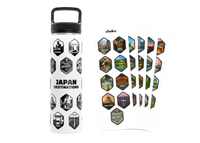
We approach every Kyoto souvenir the same way, since we're Tokyo-based and don't claim local-insider status there: editorial judgment on what genuinely ties to the place, not a rundown of every stall on the approach. If Kyoto is part of a longer Japan trip, the Traveler bucket-list bottle includes Fushimi Inari among its 27 destinations, built for a first-time route that covers Tokyo, Kyoto, and the stops in between.
Here's what's actually worth carrying home from a Fushimi Inari visit, and what to leave on the shelf.
What makes a Fushimi Inari souvenir worth buying?
A Fushimi Inari souvenir is worth packing when it connects to the shrine's actual symbolism, foxes, torii gates, and the Inari deity, or to the ground the shrine sits on, which happens to be one of Kyoto's most historic sake districts. Generic Kyoto merchandise with no tie to either fails the test.
Fushimi Inari is the head shrine of thousands of Inari shrines across Japan, founded in 711, before Kyoto was even the capital. Foxes are regarded as Inari's messengers, which is why stone fox statues stand throughout the grounds and why fox motifs run through nearly everything sold near the shrine that's actually worth buying. That symbolism is specific to this shrine; it isn't interchangeable with a generic "Kyoto" tote bag or keychain.
The second honest angle is geography. Fushimi Inari sits in Kyoto's Fushimi ward, and Fushimi has been one of Japan's major sake-producing districts for centuries. A souvenir that draws on that fact, rather than ignoring it, is doing more work than most shrine-adjacent shopping.
For how we apply this same test across Japan, see our Japan souvenirs guide.
What fox-themed souvenirs can you buy at Fushimi Inari?
The fox is Fushimi Inari's defining symbol, and the souvenirs worth buying lean directly into it: fox-motif omamori (protective charms), fox-face ema (wooden prayer plaques), and fox-shaped sweets and stationery sold near the approach.
1. Fox-motif omamori
Omamori are the small protective charms sold at Japanese shrines, and Fushimi Inari's carry the shrine's fox and torii imagery. Because Inari is the deity of rice, harvest, and success in business, look specifically for business-success and prosperity charms if you want one tied to what this shrine is actually known for granting, rather than a generic travel-safety charm you could buy anywhere.
Where: the shrine's charm office, near the main hall.
2. Fox-face ema
Ema are small wooden plaques on which visitors write wishes before hanging them at the shrine. Fushimi Inari is known for offering fox-face ema, blank white plaques shaped like a fox's face that visitors draw their own expression onto before writing a wish on the back. It's an unusually personal, visual souvenir if you buy a spare to keep rather than hang.
Where: the shrine's ema stand, near the main hall and Senbon Torii entrance.
3. Fox-shaped sweets and stationery
Small shops near the shrine's approach sell fox-themed sweets, stationery and trinkets, playing on the same symbolism. Quality varies considerably between shops, so look for the version with an actual maker's name on the packaging rather than the unmarked version.
Where: shops along the approach to the shrine entrance.
Go if: you want a small, inexpensive souvenir that visibly connects to the shrine you're standing in. Skip if: you're after something substantial; these are pocket-money purchases, not centerpiece gifts.
❤️ This is one of the 27 destinations on the Japan Destinations I Traveler bucket-list bottle, built for first-time Japan visitors planning a trip that covers the essentials. Live on Kickstarter now.
Should you collect a goshuin at Fushimi Inari?
Yes, if you're building a goshuin collection or want a souvenir that's genuinely unique to your visit. A goshuin is a hand-written, hand-stamped seal that shrines and temples provide, collected in a dedicated book called a goshuincho, and Fushimi Inari's is one of the more recognized examples in Kyoto.
4. A goshuin and goshuincho
A goshuin costs a small fee and takes a few minutes while a shrine staff member writes the shrine's name and the date by hand and adds an ink stamp, directly into a goshuincho, the accordion-fold book sold specifically for collecting them. If you don't already own a goshuincho, Fushimi Inari's shrine shop sells them, and starting your collection here means the first page carries one of Kyoto's most visited shrines.
This is arguably the most honest souvenir on this list: it can't be bought pre-made, it requires you to actually be there, and it records the date. Because the shrine grounds never close, it's also possible to collect a goshuin outside the busiest daytime hours if the counter's staffing allows, worth checking on arrival rather than assuming a set schedule.
Where: the shrine's goshuin counter, near the main hall.
If a goshuincho isn't part of your trip, treat the same purchase as a standalone piece of calligraphy instead: it frames well, and it's a more considered wall object than most shrine-adjacent merchandise.
What Fushimi ward souvenirs pair well with a shrine visit?
Fushimi Inari sits inside Kyoto's Fushimi ward, one of Japan's most historically important sake-producing districts alongside Nada in Hyogo. A bottle of local sake, bought at a shop or brewery in the district, is a stronger regional souvenir than most Kyoto merchandise because it comes from the ground the shrine itself sits on.
5. Local Fushimi sake
Fushimi's soft groundwater has supported sake brewing for centuries, and the district a short trip from the shrine has multiple working breweries, some with shops and visitor facilities attached. A bottle from the district makes a genuinely specific gift for anyone who drinks sake, far more specific than a bottle bought at a Kyoto Station gift shop with no tie to a place.
If a full brewery visit doesn't fit the day, some shops closer to the shrine and station stock bottles from Fushimi producers; ask before assuming a shelf is generic. Where: Fushimi ward's sake district, a short trip from Fushimi Inari Taisha.
The pairing makes sense beyond the geography, too. Sake, like the shrine itself, is bound up with harvest and prosperity, the same themes Inari governs, which gives a Fushimi bottle a genuine thematic tie to the shrine and not just a shared postcode.
Free for you: our Tokyo Google Maps list We keep a Google Maps list of the must-see spots around Tokyo - restaurants, cafes, shops, viewpoints, and streets worth the detour. Drop your email and we'll send it over.
First visit to Kyoto: the fox-motif omamori or a goshuin, small, inexpensive, and tied directly to the shrine you're standing in. Already collecting sake or building a serious gift list: a bottle from Fushimi's sake district, a short trip from the shrine and a far more specific regional souvenir than anything sold at the entrance.
What should you avoid buying at Fushimi Inari?
Skip generic "Kyoto" merchandise with no fox or torii tie, and be wary of miniature torii-gate trinkets from unmarked stalls; the shrine's own gates are donated by individuals and companies, and a mass-produced plastic replica sold for a few hundred yen doesn't carry the same weight.
The approach to Fushimi Inari has the same category of shop found near any major Japanese shrine: generic keychains, magnets and T-shirts printed with "Kyoto" and no connection to the shrine itself. They're the easiest thing to buy and the least worth buying, since none of it required being at this specific shrine.
Miniature torii-gate souvenirs deserve a specific note. The mountain's real torii gates are donations, given by individuals and companies as thanks for a wish granted, and donating a full-size gate currently runs from roughly ¥400,000 to over ¥1,000,000 depending on size, a custom that spread during the Edo period and continues today. A plastic keychain version sold at a stall doesn't carry that meaning, and it's worth knowing the gap between the two before treating a cheap torii trinket as a meaningful souvenir. If the torii tunnels are what drew you to Fushimi Inari in the first place, a well-shot photograph of the Senbon Torii will do more to capture that than a novelty replica ever will.
❤️ If your Kyoto stop is part of a longer route, 3 Weeks in Japan is our 200+ page travel guide covering Tokyo, Kyoto, Osaka & Nara, and six Tokyo day trips, with our own photography of each destination. Live on Kickstarter now.
FAQ
What souvenirs should I buy at Fushimi Inari?
Fushimi Inari's best souvenirs lean into the shrine's fox theme: fox-motif omamori (protective charms), fox-face ema (wooden prayer plaques), and a goshuin, the shrine's hand-stamped calligraphy seal collected in a dedicated stamp book. Beyond the shrine itself, Fushimi ward is one of Japan's most famous sake-producing districts, which makes a bottle a strong regional pairing for anyone building a Kyoto souvenir list.
What is a goshuin and can I get one at Fushimi Inari?
A goshuin is a hand-written, hand-stamped seal that Japanese shrines and temples provide to visitors, collected in a dedicated book called a goshuincho. Fushimi Inari's is one of the more recognized in Kyoto given the shrine's scale and the number of visitors who collect them. It costs a small fee and takes a few minutes while a shrine staff member writes it.
Why is sake a good souvenir near Fushimi Inari?
Fushimi Inari sits in Kyoto's Fushimi ward, one of Japan's most historically important sake-producing districts alongside Nada in Hyogo. The area's soft groundwater has supported sake breweries for centuries, and several are open to visitors a short trip from the shrine. A bottle from the district ties directly to the ground the shrine sits on, which is a better regional story than a generic Kyoto souvenir.
Are omamori from Fushimi Inari different from other shrines?
The imagery is different. Fushimi Inari's omamori carry the shrine's fox and torii motifs, and because Inari is the deity of business success as well as harvest, business-prosperity charms are a specific, well-matched pick here rather than a generic travel-safety charm you could buy anywhere.
Activities and tours in Tokyo
cheku is a GetYourGuide partner. We link to tours that handle the parts of travel that eat your time, getting there, booking ahead, language, context you'd otherwise miss. If you book through our link, we earn a small commission at no extra cost to you.


