
Japanese streetwear worth a dedicated Tokyo shopping trip breaks into four registers: Ura-Harajuku streetwear (BAPE, UNDERCOVER, WTAPS, NEIGHBORHOOD, HUMAN MADE), Okayama and Osaka heritage denim (Momotaro, Kapital, the Osaka Five), designer labels that pair with both (Yohji Yamamoto, Comme des Garçons), and the watches, sneakers, and bags that round out the wardrobe. All are genuinely Japan-origin.
The menswear internet has spent two decades obsessing over a specific set of Japanese labels, and most of them trace back to the same small stretch of backstreets in 1990s Harajuku. Shopping for them in Tokyo isn't just cheaper than buying resale abroad, it's often the only way to get current-season pieces at retail price at all.
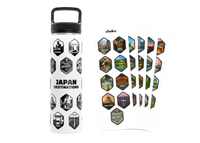
This guide works through the categories in the order they're worth prioritizing: the core streetwear names first, then the denim heritage brands that justify a day trip, then the designer and accessory layers that complete the wardrobe. If a Japan trip is shaping up around this kind of shopping, the Traveler bucket-list bottle covers 27 destinations built for a first-time route, including the Tokyo neighborhoods where most of this list lives.
For the broader set of brands beyond streetwear that Japanese consumers themselves follow, see our Tokyo local brands guide.
What makes a Japanese streetwear brand worth the trip?
A brand belongs on this list if it's genuinely Japan-origin and either priced meaningfully better in Japan than through resale abroad, or difficult to find outside Japan at retail at all. The exclusivity case is stronger than the savings case, particularly for the brands with cult resale markets.
Several of the names below (BAPE especially) have huge resale markups outside Japan precisely because retail availability is limited. Buying at a Tokyo flagship at retail price, rather than paying a resale premium at home, is often the single biggest saving on this whole list.
What are the essential Ura-Harajuku streetwear brands?
BAPE, UNDERCOVER, WTAPS, NEIGHBORHOOD, and HUMAN MADE all trace back to the same early-1990s Ura-Harajuku (back-streets of Harajuku) scene, a small circle of designers and friends who built the foundation of modern Japanese streetwear.
1. BAPE (A Bathing Ape)
Nigo (Tomoaki Nagao) founded BAPE in Ura-Harajuku in 1993. The camo prints and ape-head branded hoodies are the most internationally recognized Japanese streetwear signature there is, and the brand's Tokyo flagships carry a far deeper range, colorways, collaborations, sizing, than most stores abroad.
2. UNDERCOVER
Jun Takahashi opened the "Nowhere" store with Nigo on April 1, 1993, and UNDERCOVER grew out of that same moment. It's the punk-leaning, more conceptual sibling to BAPE's graphic streetwear: darker, more fashion-literate, closer to the runway than the resale market.
3. WTAPS
WTAPS grew from Tetsu Nishiyama's "FORTY PERCENT AGAINST RIGHTS" label, which was already being carried at the Nowhere store in 1993, part of the same founding circle. Military-derived construction, M-65 jackets and cargos reworked with Japanese attention to fabric and fit, is the brand's throughline.
4. NEIGHBORHOOD
Founded by Shin Takazawa, also part of the early-90s Ura-Harajuku circle, NEIGHBORHOOD works a heavier military-and-motorcycle register, biker jackets, selvedge, hardware detailing, than the rest of the group.
5. HUMAN MADE
Nigo's second label, launched in 2010 after he sold his stake in BAPE, HUMAN MADE trades the camo for nostalgic Americana: heart logos, varsity jackets, a softer, more collector-graphic aesthetic than BAPE's harder streetwear edge.
❤️ If a Japan trip is shaping up around this kind of specific, taste-led shopping, the Traveler bucket-list bottle illustrates 27 destinations that hold up after the research, part travel guide, part souvenir, and a daily essential for the trip itself. Live on Kickstarter now.
What Japanese denim brands are worth a special trip?
Kojima, in Okayama prefecture, is Japan's denim capital, home to Momotaro Jeans and Kapital. Osaka is the other major center, birthplace of the "Osaka Five," the heritage brands who pioneered premium Japanese selvedge denim in the late 1980s and early 1990s.
6. Momotaro Jeans
Established in Kojima in 2005, Momotaro takes its name from the Japanese folk hero born from a peach, reflected in the brand's signature pink selvedge line and Zimbabwean cotton. It's the more polished, boutique-presented end of Kojima denim.
7. Kapital
Also based in Kojima, Kapital is the more experimental of the two, built around boro and sashiko patchwork techniques and a preference for manual, non-mechanized processes over factory efficiency. Less a jeans brand than a full clothing house that happens to be rooted in denim.
8. The Osaka Five
Studio D'Artisan, Denime, Evisu, Full Count, and Warehouse built Osaka's reputation as Japan's other denim capital through the late 1980s and 1990s, using retooled vintage shuttle looms and historically accurate American workwear construction. Evisu, founded by Hidehiko Yamane in 1991, became the most internationally recognized of the five thanks to its painted gull logo. Full Count, founded in Osaka in 1993 by Mikiharu Tsujita, and Warehouse & Co., founded in 1995 by twin brothers Kenichi and Koji Shiotani, round out the group alongside Studio D'Artisan and Denime.
A day trip to Kojima specifically for denim shopping is a legitimate add to a Japan itinerary for anyone serious about the category, not just a Tokyo afternoon.
What Japanese designer brands pair with streetwear?
Yohji Yamamoto, Comme des Garçons, N.Hoolywood, and AURALEE are the designer names that sit naturally alongside a streetwear wardrobe rather than against it, each bringing a different degree of formality.
9. Yohji Yamamoto
Yamamoto founded his company Y's in Tokyo in 1972, and made his reputation with a 1981 Paris debut built on oversized black tailoring, uneven hems, and draped silhouettes that confused critics at the time and defined a design language ever since. It's the most fashion-forward, least casual name on this list.
10. Comme des Garçons
Rei Kawakubo's house, founded in 1969, spans everything from full runway collections to the wearable PLAY diffusion line; either end works depending on budget and how far into avant-garde territory you want to go.
11. N.Hoolywood
Daisuke Obana launched N.Hoolywood in Tokyo in 2002 after working as a vintage-clothing buyer, and the label blends military reference, American vintage sportswear, and Japanese craft in a way that reads more wearable than Yohji or CDG, without losing the design intent.
12. AURALEE
Ryota Iwai founded AURALEE in 2015 on a background in knitwear and textile development. It's the quietest name on this list, no logo, just exceptional fabric and cut, and increasingly the label serious menswear buyers reach for once they're past the graphic-heavy phase of Japanese streetwear.
What watches, sneakers, and bags round out the wardrobe?
A Porter Tanker bag, a Seiko or Grand Seiko watch, Onitsuka Tiger's Mexico 66, and Sabae-region eyewear are the accessory categories that complete a Japanese streetwear wardrobe, each with genuine Japan-exclusive references.
13. Porter Tanker
Yoshida & Co. launched the Porter line in 1962 and introduced the Tanker series, its nylon-twill signature with the contrasting orange lining, in 1983. Every Yoshida & Co. product is made in Japan, and the Tanker remains the most recognizable Japanese streetwear bag there is.
14. Seiko, Grand Seiko, and G-Shock
Seiko dates back to 1881 and introduced the world's first commercial quartz wristwatch in 1969; Grand Seiko, launched in 1960, is the house's push for mechanical precision at the top of the range. Casio's G-Shock, launched in 1983, covers the tougher, more streetwear-coded end, and both brands carry Japan-domestic references (Seiko's kanji day-date models, certain G-Shock colorways) that don't ship internationally.
Orient, founded in 1901 by Shogoro Yoshida, is the value pick of the three: automatic mechanical watches at a fraction of Grand Seiko's pricing, a solid entry point for anyone new to Japanese watchmaking rather than already collecting it.
15. Onitsuka Tiger and Mizuno
Onitsuka Tiger was founded in Kobe in 1949 by Kihachiro Onitsuka; the company merged into ASICS Corporation in 1977, and the Mexico 66, introduced in 1966, remains the brand's defining silhouette. Mizuno, founded in Osaka in 1906, runs its own line of Japan-only sneaker colorways and collector releases, worth checking specifically in-store rather than assuming international stock matches.
16. Sabae-region eyewear
Fukui prefecture's Sabae region produces roughly 95% of Japan's optical eyewear frames. Factory900, Kaneko Optical (1958), and 999.9 (Four Nines, 1995) are the three names worth knowing specifically, each running its own factories in the region and offering a level of frame construction that's hard to find at the same price outside Japan.
Free for you: our Tokyo Google Maps list We keep a Google Maps list of the must-see spots around Tokyo - restaurants, cafes, shops, viewpoints, and streets worth the detour. Drop your email and we'll send it over.
Where should you actually shop?
Harajuku and Ura-Harajuku cover the streetwear flagships in one walkable area. Aoyama and Omotesando cover the designer names. Kojima (a day trip from Tokyo or Osaka) is worth it specifically for denim. Watches and eyewear can be folded into whichever of these stops is already on the route.
| Harajuku / Ura-Hara | Aoyama / Omotesando | Kojima (day trip) | |
|---|---|---|---|
| Best for | BAPE, UNDERCOVER, WTAPS, NEIGHBORHOOD, HUMAN MADE | Yohji Yamamoto, Comme des Garçons, N.Hoolywood, AURALEE | Momotaro, Kapital, Osaka Five-adjacent shops |
| Price feel | Streetwear pricing, some cult-resale premiums avoided at retail | Designer-tier | Mid-to-premium, direct from source |
| Time needed | Half a day to properly cover the backstreets | An afternoon | A full day trip |
❤️ For the full Tokyo route that pairs with this kind of shopping day, the cheku 9 Days in Tokyo guide has 106 pages of local knowledge and our photography, built around what to do, day by day. Live on Kickstarter now.
What should you avoid buying?
Skip brands with a huge Japanese retail presence that aren't actually Japan-origin. Stussy and Supreme both originated in the United States and have a massive Japanese following, but buying them in Tokyo gets you neither real savings nor something exclusive to Japan.
The test is the same one that applies to any of this list: does buying it in Japan get you a meaningfully better price, or something you genuinely can't get at home? Stussy (Laguna Beach, 1980) and Supreme (New York) both fail that test despite deep Japanese retail footprints and huge local followings. They're fine to browse, just don't mistake either for a Japan-exclusive buy.
FAQ
What are the best Japanese streetwear brands?
BAPE, UNDERCOVER, WTAPS, NEIGHBORHOOD, and HUMAN MADE are the essential names, all rooted in the early-1990s Ura-Harajuku scene. BAPE (1993) and UNDERCOVER (1993) are the oldest of the group; HUMAN MADE (2010) is Nigo's newer, more nostalgic label after BAPE.
Where should I buy Japanese denim?
Kojima, in Okayama prefecture, is Japan's denim capital and home to Momotaro Jeans and Kapital. Osaka is the other major denim center, birthplace of the "Osaka Five" heritage brands (Studio D'Artisan, Denime, Evisu, Full Count, Warehouse) who pioneered premium Japanese selvedge denim in the late 1980s and early 1990s.
What Japanese watches and sneakers are worth buying in Japan specifically?
Seiko (Grand Seiko in particular), Orient, and Casio's G-Shock all have Japan-domestic references and finishes not sold internationally, plus a meaningfully better price on the mechanical Seiko and Orient tiers. Onitsuka Tiger's Mexico 66, born from the same Kobe company that became ASICS in 1977, and Mizuno's JDM sneaker runs are the two sneaker names worth seeking out specifically in Japan.
Activities and tours in Tokyo
cheku is a GetYourGuide partner. We link to tours that handle the parts of travel that eat your time, getting there, booking ahead, language, context you'd otherwise miss. If you book through our link, we earn a small commission at no extra cost to you.


