
The strongest Japanese women's clothing brands split into a few clear registers: designer (Issey Miyake, sacai, Comme des Garçons PLAY), contemporary everyday (SNIDEL, AURALEE, GELATO PIQUE), Shibuya 109 gyaru labels (Liz Lisa, MURUA, EMODA, MOUSSY), and pearls (Mikimoto, Tasaki). All are genuinely Japan-origin, and buying at the source beats paying export markup abroad.
A Tokyo shopping trip for women's fashion can go in a lot of directions, and the trap is spending a full day chasing brands you could have ordered online from home. The brands worth prioritizing in person are the ones with a real reason to buy here: designer labels sold at Japanese pricing without the international markup, and 109-tenant brands that barely export at all.
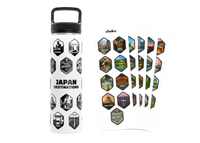
This edit works through the registers in order, from designer pieces down to the pastel maximalism of Shibuya 109, so you can pick the lane that matches who you're shopping for. If a Japan trip is taking shape around this kind of considered shopping, the Traveler bucket-list bottle covers 27 destinations built for a first-time route, with room to build a real shopping day into Tokyo.
For the wider set of brands beyond fashion that Japanese consumers themselves follow, see our Tokyo local brands guide.
What makes a Japanese women's clothing brand worth buying in Tokyo?
A brand earns a spot on this list if it's genuinely Japan-origin and either costs meaningfully less in Japan than abroad, or is difficult to find outside the country at all. Exclusivity is the stronger reason to buy; savings is the second-best reason.
Weak yen pricing and tax-free shopping (on general goods over ¥5,000, with your passport) both make the savings case real, particularly on watches and pearls where the price gap abroad is largest. But the better test is exclusivity: brands like Liz Lisa or MURUA barely export, so buying in Tokyo isn't just cheaper, it's often the only practical way to get the piece at all.
What Japanese designer brands should you know?
Issey Miyake, sacai, and Comme des Garçons PLAY are the three designer names worth knowing specifically. Issey Miyake's Pleats Please and BAO BAO bags are the most gift-friendly entry points; sacai and CDG PLAY reward anyone already fashion-literate.
1. Issey Miyake — Pleats Please and BAO BAO
Issey Miyake's design studio began showing in New York in 1971 and Paris in 1973, built around pleating technology that's since become the house's signature. Two lines make the best Tokyo buys specifically: Pleats Please, the pleated, easy-care ready-to-wear line, and BAO BAO, the geometric, triangle-paneled bags that fold flat and hold their shape. Both are considered, wearable, and unmistakably Japanese in a way that translates well as a gift.
2. sacai
Chitose Abe founded sacai in 1999 after working as a pattern cutter for Comme des Garçons and later Junya Watanabe. The label's signature is hybrid construction, splicing two different garments or fabrics into one piece, a knit sleeve grafted onto a woven body, a shirt hem meeting a sweatshirt hem mid-torso. It's a designer-tier buy, priced accordingly, for someone who already knows and wants Japanese avant-garde design specifically.
3. Comme des Garçons PLAY
Rei Kawakubo founded Comme des Garçons in 1969, and PLAY is the line that makes the house wearable for everyone else: T-shirts, sweaters, and the Converse collaboration sneakers, all marked with the heart-with-eyes logo. It's the easiest, most gift-ready entry point into a house that otherwise sits firmly in designer pricing.
❤️ If a Japan trip is shaping up around this kind of specific, taste-led shopping, the Traveler bucket-list bottle illustrates 27 destinations that hold up after the research, part travel guide, part souvenir, and a daily essential for the trip itself. Live on Kickstarter now.
What contemporary Japanese womenswear brands are worth shopping?
SNIDEL, GELATO PIQUE, and AURALEE cover the everyday-to-elevated range. SNIDEL is elegant casual streetwear, GELATO PIQUE is Japan's reference loungewear brand, and AURALEE is the quieter, textile-obsessed label fashion insiders actually wear.
4. SNIDEL
SNIDEL launched in 2005 as Mash Holdings' first fashion brand (the company that also owns GELATO PIQUE and Mila Owen), and it's grown into one of Japan's most recognizable elegant-casual labels. Dresses are the brand's strongest category, feminine without being precious, and a genuinely good gift for someone whose style sits between streetwear and formal.
5. GELATO PIQUE
GELATO PIQUE followed SNIDEL a few years later as Mash Holdings' loungewear line, and it's become Japan's reference brand for that category: soft, considered homewear that doesn't look like pajamas the moment you leave the house. It's one of the easiest, most universally appealing gifts on this list, since almost anyone appreciates good loungewear.
6. AURALEE
Designer Ryota Iwai founded AURALEE in 2015, drawing on a background in knitwear and jersey textile development, and it's become one of the labels Japanese fashion insiders actually wear rather than just talk about. The clothes are quiet: excellent fabric, careful cut, no logo doing the talking. It rewards a recipient who already cares about quality of material over branding.
7. Mila Owen
The third Mash Holdings label on this list, Mila Owen sits closer to structured, slightly androgynous minimalism, tailored pieces and considered basics rather than SNIDEL's more feminine lean. A solid pick for someone whose taste runs cleaner and less decorated.
What are the best Shibuya 109 gyaru brands?
Shibuya 109, the ten-floor department store that's shaped Japanese youth fashion since it opened in 1979, is home to the labels most associated with gyaru style. Liz Lisa (pastel, sweet), EMODA (mode-gyaru monochrome), MOUSSY (vintage-style denim), and MURUA (feminine minimalism) each cover a different register within it.
8. Liz Lisa
Liz Lisa is the reference for "sweet" gyaru: pastel colors, lace, ruffles, vintage-inspired silhouettes. It's one of the original tenant brands that helped define Shibuya 109's identity, and it remains one of the most recognizable names in the building.
9. EMODA
EMODA takes the opposite tack: sleek, monochrome, mode-gyaru pieces aimed at a slightly older customer than Liz Lisa's sweeter register, with bolder cuts and a harder edge.
10. MOUSSY
MOUSSY works primarily in vintage-style denim and oversized silhouettes, aimed at a customer who wants an urban, confident read rather than either the pastel or the monochrome extremes.
11. MURUA
MURUA blends feminine minimalism with structured, monochrome pieces, sitting somewhere between EMODA's mode edge and Liz Lisa's softness.
12. GYDA
GYDA runs a casual-meets-sexy register, LA-inspired denim, crop tops, laid-back and confident styling, distinct from both Liz Lisa's sweetness and EMODA's monochrome edge.
13. dazzlin
dazzlin works a 70s-influenced retro lane: polka dots, pleats, and a breezy, comfortable take on casualwear that reads softer and more vintage than the rest of the 109 lineup.
The six brands above cover the range of what Shibuya 109 actually sells, and they're the names most likely to be recognizable outside Japan, a reasonable filter for a first visit rather than trying to see all 100-plus tenants in one trip.
Are Japanese pearls worth buying?
Yes. Mikimoto (the originator of the cultured pearl, since 1893) and Tasaki (running its own pearl farms since 1954) are both genuinely Japan-origin, and buying close to the source, rather than through an export retailer, typically means better selection at better pricing.
14. Mikimoto
Kokichi Mikimoto successfully cultured the world's first cultured pearl in 1893 and opened his first boutique in Ginza in 1899. The house remains the classic, formal choice: Akoya pearls, imperial-grade quality, the kind of piece that reads as an heirloom rather than a trend purchase.
15. Tasaki
Shunsaku Tasaki began as a pearl farmer on Osaka Bay in 1954, and the house has grown into the bolder, more design-forward option of the two, still built on Akoya pearls but styled for a younger customer who wants pearls without the formality.
16. Hirotaka
A newer name worth knowing: designer Hirotaka Inoue trained in classic jewelry-making in Paris before launching his own line, which found an early following through a Soho, New York trunk show before opening a Tokyo flagship. Delicate, contemporary pieces, pearl ear cuffs and diamond bars, for a recipient who wants fine jewelry without the formality of Mikimoto or Tasaki's classic register.
Free for you: our Tokyo Google Maps list We keep a Google Maps list of the must-see spots around Tokyo - restaurants, cafes, shops, viewpoints, and streets worth the detour. Drop your email and we'll send it over.
Where should you actually shop?
Shibuya 109 covers the gyaru brands in one building. Omotesando and Aoyama cover the designer names (Issey Miyake, sacai, Comme des Garçons). Ginza is the pearl district, anchored by Mikimoto's flagship. Porter (bags) and Sabae-region eyewear brands are worth folding into whichever of these stops is already on the route.
| Shibuya 109 | Omotesando / Aoyama | Ginza | |
|---|---|---|---|
| Best for | Gyaru brands (Liz Lisa, EMODA, MOUSSY, MURUA) | Designer labels (Issey Miyake, sacai, CDG) | Pearls (Mikimoto), classic jewelry |
| Price feel | Accessible | Designer-tier | Wide range, formal-leaning |
| Time needed | Half a day if you want to browse properly | An afternoon, stores are spread out | An hour or two for a focused pearl visit |
Two accessory categories are worth folding into whichever stop above is already on the route rather than treating as separate destinations: a Porter bag (Yoshida & Co.'s line since 1962, made entirely in Japan) pairs naturally with an Omotesando designer stop, and Sabae-region eyewear, the Fukui prefecture area that produces roughly 95% of Japan's optical frames, is worth a look in any select shop or dedicated eyewear retailer along the way.
If resort or swimwear is on the list, ALEXIA STAM's flagship sits in Omotesando itself, a beach-inspired, Japan-centric line that fits naturally into the same afternoon as the designer stops nearby.
❤️ For the full Tokyo route that pairs with this kind of shopping day, the cheku 9 Days in Tokyo guide has 106 pages of local knowledge and our photography, built around what to do, day by day. Live on Kickstarter now.
What should you avoid buying?
Skip brands that are big in Japan but not Japan-origin, since they don't carry the exclusivity or savings case that makes this kind of shopping worthwhile. Stussy and New Balance both have a major Japanese retail presence but originated in the United States; buying them in Tokyo gets you neither a meaningfully better price nor something you couldn't buy at home.
The whole premise of shopping for Japanese brands specifically is exclusivity or genuine savings. A brand that's simply popular in Japan without being made or founded there fails that test, no matter how prominent its Tokyo storefront is. If you're unsure whether a brand qualifies, ask the shop, or check before you buy; it's an easy thing to get right and an easy thing to get embarrassingly wrong once you're home and someone asks where a "Japanese" piece is actually from.
FAQ
What are the best Japanese women's clothing brands?
It depends on the register you want. For designer-level pieces, Issey Miyake (Pleats Please, BAO BAO bags) and sacai. For everyday contemporary wear, SNIDEL and AURALEE. For the pastel, maximalist Shibuya 109 aesthetic, Liz Lisa. For jewelry, Mikimoto or Tasaki pearls. All are genuinely Japan-origin and priced better in Japan than anywhere they're exported to.
Is Comme des Garçons PLAY the same as Comme des Garçons?
PLAY is Comme des Garçons' more affordable, wearable line, recognized by the heart-with-eyes logo, best known through its Converse collaboration. Rei Kawakubo founded Comme des Garçons itself in 1969; PLAY sits underneath that main line as the accessible entry point, not a separate company.
What are Shibuya 109 gyaru brands?
Liz Lisa, MURUA, EMODA, and MOUSSY are among the best-known labels associated with Shibuya 109, the ten-floor department store that's shaped Japanese youth fashion since 1979. Liz Lisa leans pastel and sweet, EMODA is mode-gyaru monochrome, MOUSSY works in vintage-style denim and oversized cuts, and MURUA mixes feminine minimalism with structured monochrome pieces.
Are Japanese pearls worth buying in Japan?
Yes, particularly Akoya pearls from Mikimoto or Tasaki. Mikimoto's founder cultured the world's first cultured pearl in 1893; Tasaki has run its own pearl farms since 1954. Buying in Japan, close to the source, typically means better selection and pricing than the same brands sold abroad.
Activities and tours in Tokyo
cheku is a GetYourGuide partner. We link to tours that handle the parts of travel that eat your time, getting there, booking ahead, language, context you'd otherwise miss. If you book through our link, we earn a small commission at no extra cost to you.


