
Kamakura is a seaside town just south of Tokyo that was once Japan's capital. It holds an 11.4-meter bronze Great Buddha, the great shrine of Tsurugaoka Hachimangu, hydrangea temples that glow blue in June, and a little coastal train, the Enoden, that clatters along the water. It's the day trip from Tokyo we send people on first.
Some places in Japan feel like they were designed for the end of a film. Kamakura is one of them. You come down out of the hills on a small green train, the sea opens up on your right, and you understand immediately why this town keeps turning up in Japanese stories about summer, first love, and going home. It has the light for it.
But Kamakura isn't only atmosphere. For nearly 150 years it was the actual seat of power in Japan, and that history is still standing — in a giant bronze Buddha, in a shrine at the top of a long cherry-lined avenue, in temples full of Kannon and Jizo and, in June, thousands of hydrangeas. This guide covers what to see, when to come, and how to do it from Tokyo.
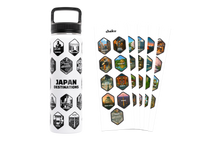
If Kamakura is going on your Japan list, the Traveler Bottle I covers 27 of the country's essential destinations in one piece — the kind of trip a day like this belongs in.
What is Kamakura, and why go?
Kamakura was Japan's de facto capital from 1185 to 1333, the seat of the country's first military government. Today it's a seaside temple town — dense with shrines and temples, wrapped around beaches and a coastal railway — and one of the easiest, richest day trips from Tokyo.
To understand Kamakura, start with the fact that it used to run the country. From 1185 to 1333 it was Japan's de facto capital, the seat of the Kamakura shogunate established by Minamoto no Yoritomo — the first military government in Japan's history. The emperor stayed in Kyoto; real power sat here, in a small bay ringed by hills.
That's why a town this size holds so many major temples and shrines. They weren't built for tourists. They were built by and for a medieval capital, and most of them are still active places of worship. What makes Kamakura special today is the combination: serious historical weight and a relaxed seaside-town rhythm, in a place small enough to cover on foot and by a single-carriage train.
For a first-time visitor working out where a day near Tokyo is best spent, Kamakura answers a lot of questions at once — history, temples, food, and the sea, all in one trip.
How do you get to Kamakura from Tokyo?
Kamakura sits directly on the JR Yokosuka Line, with stops at Ofuna, Kita-Kamakura, and Kamakura. From Kamakura Station the sights are walkable or a short bus away, and the Enoden line runs along the coast to Enoshima and Fujisawa.
Getting there is refreshingly simple. Kamakura is a direct stop on the JR Yokosuka Line, which runs through Ofuna, Kita-Kamakura, and Kamakura stations. No transfers, no complicated routing — you get on in Tokyo and get off by the sea.
The two stations that matter for sightseeing are Kita-Kamakura, on the north edge near the quieter Zen temples and Meigetsu-in, and Kamakura, the main station in the center of town. A common and satisfying way to do the day is to get off at Kita-Kamakura, walk south through the temples toward the center, then finish by the coast.
Once you're in town, the star of the local transport is the Enoden — the Enoshima Electric Railway — a small, streetcar-like train that runs west from Kamakura toward Enoshima and Fujisawa, hugging the coastline for much of the way. It's how you reach the Great Buddha and Hasedera (get off at Hase), and it's also, frankly, one of the nicest short train rides in the country.
📍 Getting there: Direct on the JR Yokosuka Line (Ofuna → Kita-Kamakura → Kamakura) 🚃 Around town: The Enoden line along the coast; much of central Kamakura is walkable ⏰ How long: A full day for the highlights; two if you love temples 🌸 Best season: June for hydrangeas; spring and autumn for the temple gardens
What is the Great Buddha of Kamakura?
The Great Buddha at Kotoku-in is a bronze Amida Buddha, 11.4 meters tall, cast in 1252. It has stood in the open air since the late 15th century after the building around it was destroyed. You can even step inside it.
The Great Buddha — the Daibutsu — is the image most people have of Kamakura, and it earns it. Housed at the temple of Kotoku-in, it's a bronze statue of Amida Buddha, 11.4 meters tall, cast in 1252. It has sat in the open air since the late 15th century, after the wooden hall that once sheltered it was destroyed by storms. That exposure is part of the effect: the Buddha sits against the sky and the hills, weathered green, entirely calm.
Admission is ¥300, with an extra ¥50 to step inside the hollow statue — a small, strange, worthwhile detour to see how it was cast. It's an easy walk from Hase Station on the Enoden line, which makes it natural to pair with Hasedera nearby.
What is Tsurugaoka Hachimangu?
Tsurugaoka Hachimangu is Kamakura's most important shrine, dedicated to Hachiman and moved to its present site in 1191 by the shogun Minamoto no Yoritomo. Its long approach, the Dankazura, runs 1.8 kilometers down to the sea.
If the Great Buddha is Kamakura's most famous face, Tsurugaoka Hachimangu is its heart. It's the most important Shinto shrine in the city, dedicated to Hachiman, and it's woven directly into the town's founding: Minamoto no Yoritomo moved it to its present hilltop site in 1191 to watch over his new government.
The approach is the thing to understand. A 1.8-kilometer avenue called the Dankazura runs from the shrine straight down to the ocean at Yuigahama, lined with cherry trees and passing through three great torii gates. It was built to widen as it nears the sea, so that seen from the shrine it looks longer than it really is — a piece of medieval stagecraft you're still walking through today. The grounds hold the Genpei Ponds, named for the rival Minamoto and Taira clans, and the shrine still hosts yabusame, archery performed from horseback.
What makes Hasedera worth the climb?
Hasedera houses a 9.18-meter wooden eleven-headed Kannon, looks out over Yuigahama and Sagami Bay, and is famous for its hydrangea path and a cave dedicated to the sea goddess Benten.
Hasedera, a short walk from the Great Buddha, is the temple people are often most surprised by. Its main hall holds a massive wooden statue of the eleven-headed Kannon — the Jūichimen Kannon — 9.18 meters tall, carved from camphor wood and covered in gold. It's one of the largest wooden statues of its kind in Japan.
But the reason to climb Hasedera's slope is what opens up at the top: a terrace with wide views over Yuigahama and Sagami Bay. The temple is also known for its Hydrangea Path, which blooms in June and July, and for the Benten-kutsu, a low candlelit cave carved with figures of Benzaiten, the sea goddess. Elsewhere on the grounds stand hundreds of small Jizo statues — guardians of children — of which around 50,000 have been placed since the war. Few temples pack this much range into one hillside.
Where is the bamboo grove — Hokokuji?
Hokokuji is Kamakura's bamboo temple: a dense grove of tall bamboo you walk through, with stone buddhas and a tea house where you can sit with matcha among the stalks.
For the quieter, greener side of Kamakura, head east to Hokokuji. It's known for its bamboo grove — a stand of tall bamboo you walk into, with stone buddhas set among the stalks and, in June, hydrangeas as a backdrop. It's a different register from the big shrines: smaller, hushed, more about atmosphere than monument. Sitting with a bowl of matcha at the edge of the grove is one of the calmer half-hours you can have near Tokyo.
Free for you: our Tokyo Google Maps list We keep a Google Maps list of the must-see spots around Tokyo - restaurants, cafes, shops, viewpoints, and streets worth the detour. Drop your email and we'll send it over.
When is hydrangea season in Kamakura, and where do you see them?
Kamakura's hydrangeas peak in mid-to-late June. Meigetsu-in in Kita-Kamakura is the most famous, with around 2,500 flowers in "Meigetsuin blue"; Hasedera has 40+ varieties and a longer season but uses timed entry.
June is when Kamakura turns blue, and it's become one of the most searched things about the town for good reason. During the rainy season, the temple gardens fill with ajisai (hydrangeas), and a handful of temples have become pilgrimage sites for them.
- Meigetsu-in, in Kita-Kamakura, is the most famous — around 2,500 mophead hydrangeas in a distinctive shade known as "Meigetsuin blue." Come right at opening or in the late afternoon to avoid the worst crowds.
- Hasedera takes a different approach, with more than 40 varieties spread across its sloping terrain. Because they bloom at different times, its season runs longer — but it uses timed queue numbers, so reserving online ahead of a June visit is wise.
- Hokokuji and the lesser-known Jochiji round out the circuit, the former mixing hydrangeas with its bamboo, the latter quieter with lacecap blooms by a pond.
Peak is roughly mid-to-late June into early July, overlapping with the rain. Bring an umbrella and lean into it — wet hydrangeas against dark temple wood is the whole point.
Through the lens, hydrangea season is Kamakura at its most photogenic. Overcast light is soft and even, the blues go saturated in the damp, and Meigetsu-in's round window framing the garden is one of the most photographed compositions in the country. Go early, before the queues, and shoot into the green.
What about the beaches and the coast?
Kamakura has real beaches — Yuigahama and Zaimokuza — right where the town meets the sea, and the Enoden line runs along the coast, making the shoreline part of any visit, not an afterthought.
Kamakura is a temple town, but it's also a beach town, and that's a big part of its character. The beaches of Yuigahama and Zaimokuza sit right where the Dankazura and the town run down to the water, divided by the mouth of the Namerigawa river. In summer they fill with day-trippers from Tokyo; out of season they're wide, quiet, and good for a long walk.
The coast is best experienced from the Enoden, which runs west along the shoreline toward Enoshima. There's a stretch where the train runs right beside the sea, and it's the image that launched a thousand daydreams about living here. If you do nothing else with the coast, ride the Enoden a few stops with the window down.
Which parts of Kamakura should you prioritize?
Split the town in two: the Hase area (Great Buddha, Hasedera, the beach) in the south, and Kita-Kamakura plus the center (Tsurugaoka Hachimangu, Meigetsu-in, Hokokuji) in the north. Pick by season and pace.
Kamakura rewards a plan, because the sights cluster in two directions from the station. Here's how we'd choose:
| Hase / south | Kita-Kamakura / center | |
|---|---|---|
| Highlights | Great Buddha, Hasedera, Yuigahama beach | Tsurugaoka Hachimangu, Meigetsu-in, Hokokuji |
| Feel | Big landmarks + the sea | Quieter Zen temples, gardens |
| Best for | First visit, the classic images, summer | Hydrangea season, a slower temple day |
| Getting around | Enoden to Hase | Walk south from Kita-Kamakura Station |
If you only do three things: ride the Enoden to Hase for the Great Buddha and Hasedera, walk the Dankazura up to Tsurugaoka Hachimangu, and — in June — get to Meigetsu-in right when it opens.
For a first visit and the classic Kamakura, weight the day toward Hase and the coast. If you're here in June, or you've done the headline sights before, Kita-Kamakura's temples and hydrangeas are the richer, quieter half.
Ready to plan the day?
Kamakura is worth a full, unhurried day rather than a squeezed half. For the hour-by-hour itinerary — the order to walk the temples, timings, and what Japanese visitors actually do — we've written that up separately.
This guide is the what of Kamakura: the place, its history, and the sights worth your time. When you're ready for the how — a specific route through the town, timings that dodge the crowds, and the local angle on where to eat and linger — read our companion guide, planning a Kamakura day trip from Tokyo. It's built to be the itinerary to this overview.
When our 2-Week Japan Guide is ready, it'll fold days like this into a full route — where Kamakura sits in a trip, and how to string the coast, Tokyo, and beyond into one itinerary. Subscribe and we'll let you know when it ships.
FAQ
How do you get to Kamakura from Tokyo? Kamakura sits directly on the JR Yokosuka Line, which runs through Ofuna, Kita-Kamakura, and Kamakura stations. From there the town's temples are walkable or a short bus ride, and the Enoden line carries you along the coast toward Enoshima and Fujisawa.
Is Kamakura worth visiting? Yes. Kamakura was Japan's political capital from 1185 to 1333 and still holds that history in its temples and shrines — the 11.4-meter bronze Great Buddha, Tsurugaoka Hachimangu, and Hasedera — wrapped around a working seaside town with beaches and a coastal train. It's one of the best day trips from Tokyo.
What is the Great Buddha of Kamakura? The Great Buddha (Daibutsu) at Kotoku-in is a bronze statue of Amida Buddha standing 11.4 meters tall, cast in 1252. It has sat in the open air since the late 15th century after the hall around it was destroyed. Admission is ¥300, plus ¥50 to step inside the hollow statue.
When is hydrangea season in Kamakura? Kamakura's hydrangeas (ajisai) peak in mid-to-late June, into early July, during the rainy season. Meigetsu-in in Kita-Kamakura and Hasedera are the two most famous hydrangea temples; Hasedera uses timed queue numbers, so booking online ahead is wise.
How long do you need in Kamakura? A full day covers the highlights comfortably — the Great Buddha and Hasedera in the Hase area, Tsurugaoka Hachimangu and the Kita-Kamakura temples in the north, plus time by the sea. Committed temple-goers can easily fill two days.
If Japan's on your list, the Traveler Bottle I holds the 27 destinations we'd pair with it — built for first-time travelers building one trip that covers the essentials, with a seaside day in Kamakura as the kind of detour that makes it personal.
Sources
- japan-guide — Kamakura's Great Buddha (Kotoku-in) — material, height, date, admission, Enoden access
- Wikipedia — Kamakura — history as shogunate capital, beaches, Yokosuka Line, Enoden
- Wikipedia — Tsurugaoka Hachimangu — founding, the Dankazura approach, yabusame
- Wikipedia — Hase-dera (Kamakura) — eleven-headed Kannon, sea views, hydrangea path, Benten cave, Jizo statues
- Nippon.com — Kamakura's Hydrangea Temples — Meigetsu-in, Hasedera, Hokokuji, Jochiji
Activities and tours in Tokyo
cheku is a GetYourGuide partner. We link to tours that handle the parts of travel that eat your time, getting there, booking ahead, language, context you'd otherwise miss. If you book through our link, we earn a small commission at no extra cost to you.


