
The best Meiji Shrine souvenirs are the shrine-original ones: omamori amulets blessed at the juyosho, a goshuin calligraphy stamp if you brought the book, and a small bottle of Meiji Jingu sake. Two minutes south is Harajuku, two minutes east is Omotesando, and together they make the strongest souvenir corner in Tokyo.
Meiji Shrine is one of Tokyo's most-visited landmarks, and the souvenir experience here is a tale of two registers. Inside the shrine grounds, the things to take home are quiet, ritual objects: cloth omamori amulets, wooden ema plaques, calligraphy stamps inked by a shrine attendant. Walk two minutes in either direction and you are in Harajuku (south) or Omotesando (east), and the registers shift completely.
We've curated Meiji Shrine souvenirs through years of recommending the area to first-time Tokyo visitors. The lesson is consistent: the shrine and its neighbors are best treated as one souvenir landscape with three modes, and the strongest gift bag combines all three.
These are the Meiji Shrine omiyage worth packing, the Harajuku and Omotesando picks that pair with them, and where to actually buy each one without burning an afternoon on indecision.
What makes a Meiji Shrine souvenir worth buying?
A Meiji Shrine souvenir is worth packing when it is either a genuine shrine-blessed object (omamori, ema, goshuin, shrine sake) or something specific to the surrounding Harajuku and Omotesando districts. The trap is generic "Tokyo" merchandise sold from Takeshita Street stalls that has no relationship to either place.
The shrine itself is the more careful of the two halves. Omamori and the other shrine objects carry meaning. They are not decorative; they are part of a 100-year-old ritual setting honouring Emperor Meiji and Empress Shoken, and people give them as gifts the way a Catholic family might give a saint's medal. That story is the value.
The neighbors, Harajuku and Omotesando, are louder and broader, but the rule is similar. A Pokémon plush from Kiddy Land is genuinely from Kiddy Land. A wagashi box from a 200-year-old Omotesando shop is genuinely from that shop. A "I ❤️ Tokyo" T-shirt from a Takeshita stall is genuinely from nowhere in particular.
This is the curated approach. For the broader Japan-wide criteria, our Japan souvenirs guide covers the full case.
What shrine-original souvenirs can you buy at Meiji Shrine?
The shrine sells four kinds of original souvenir at its juyosho (charm office): omamori cloth amulets for specific purposes, ema wooden prayer plaques, goshuin calligraphy stamps inked into a shrine stamp book, and small bottles of Meiji Jingu sake tied to the famous wall of sake barrels at the south entrance.
1. Omamori (shrine-blessed amulets)
Omamori are small embroidered cloth pouches blessed at the shrine, each tied to a specific wish: health, study, traffic safety, love, success in business, easy childbirth. Meiji Shrine sells a particularly good range, and they are one of the few souvenirs in Japan with a genuine ritual story behind them.
Prices typically run ¥500 to ¥1,000 per amulet. Two basic rules of respect: do not open the pouch (the blessed contents inside are not for you to see), and traditionally they are returned to a shrine after a year or so to be respectfully burnt. Where: the juyosho near the main shrine buildings.
2. Goshuin (shrine calligraphy stamp)
A goshuin is the shrine's official seal, hand-inked into your goshuincho stamp book by a shrine attendant. The Meiji Jingu version is beautifully done. The catch is that you need to bring the book; goshuincho stamp books are sold at the shrine if you do not have one (typically ¥1,000 to ¥2,000 for a quality cover), and the stamp itself costs ¥300 to ¥500.
For anyone who plans to visit several shrines on a Japan trip, starting the collection at Meiji is a strong opener. Where: the juyosho.
3. Ema (wooden prayer plaques)
Ema are small wooden plaques on which visitors write a wish, then hang at the shrine. Most people leave them, but you can also buy one as a souvenir to take home unwritten, particularly the seasonal designs the shrine releases. They make a tactile, distinctly-Japanese gift that does not need explanation.
Prices typically ¥500 to ¥1,000. Where: the juyosho.
4. Meiji Jingu sake
The south entrance to Meiji Shrine is famous for its wall of sake barrels, kazaridaru, donated by sake breweries across Japan. The shrine itself sells small bottles of Meiji Jingu sake at the juyosho, and the connection to the barrels is the souvenir story.
It is a more modest pour than a serious sake gift, but the tie to a specific shrine and a specific photographable landmark makes it a stronger souvenir than a generic bottle of the same price. For a proper premium sake gift, the Daiso-to-depachika scale runs through Isetan Shinjuku.
What Harajuku and Omotesando picks pair with a Meiji Shrine visit?
Three are worth building a souvenir loop around: Kiddy Land Omotesando for character merchandise (five floors of Pokémon, Hello Kitty, Studio Ghibli), Calbee Plus on Takeshita Street for fresh-fried souvenir chips, and the Omotesando wagashi shops for premium traditional sweets.
5. Kiddy Land Omotesando
Kiddy Land is a five-floor character emporium two minutes from the Omotesando exit of Meiji Shrine, and it covers the safest cross-generation souvenir territory in Tokyo. Pokémon Center sub-shop on one floor, Hello Kitty on another, Studio Ghibli on another, Snoopy, Disney Japan exclusives, Sumikko Gurashi.
For anyone who actually likes any of these properties, Japan-only and limited editions sell here that do not appear abroad. Prices range from ¥500 stocking stuffers to ¥5,000 plush. Where: 6-1-9 Jingumae, on Omotesando about three minutes east of the shrine.
6. Calbee Plus (Takeshita Street)
Calbee Plus is the snack maker's flagship experience store on Takeshita Street, selling fresh-fried potato chips, exclusive regional flavors, and gift-packaged variants you cannot get anywhere else. The hot bag of just-fried Jagariko is the in-store treat. The gift-boxed multi-packs are what to actually take home.
Prices ¥300 to ¥1,500 for boxed gift sets. Where: the Takeshita Street entrance side, a few minutes from Meiji Shrine's Harajuku exit.
7. Omotesando wagashi
Omotesando, the broad tree-lined avenue running east from the shrine, holds some of Tokyo's better wagashi (traditional Japanese sweet) shops. Toraya, the 500-year-old wagashi house, has an Akasaka flagship a short ride away. For an Omotesando-area direct option, the wagashi sections at Omotesando Hills department complex carry premium gift boxes (¥2,000 to ¥5,800).
Wagashi is the gift that telegraphs care and Japanese craft in a single object. Where: Omotesando Hills food halls; Toraya Akasaka for the destination version.
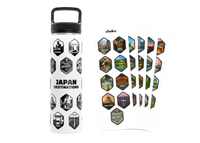
❤️ Even if your trip stays in Tokyo, the Traveler bucket-list bottle has plenty to mark off, its 27 destinations include Tokyo neighborhoods, day trips like Kamakura and Hakone, and the wider Japan route for whenever you go further. Live on Kickstarter until July 26. Reserve yours now at the best prices we'll offer.
Where should you actually shop around Meiji Shrine?
Three areas cover the whole experience: the shrine juyosho for shrine-original items, Takeshita Street (Harajuku) for character merchandise and snacks, and Omotesando for upmarket Japanese design and wagashi. The order to do them in is shrine first, neighborhoods after.
The geography is simple. Meiji Shrine sits inside a 70-hectare forest in central Tokyo. The Harajuku side exit lets you out onto Takeshita Street, the loud, narrow, snack-and-fashion lane that defined Tokyo youth culture in the 1990s. The Omotesando side exit lets you out onto a broad tree-lined boulevard with the design boutiques, the wagashi shops, and Kiddy Land.
The shrine juyosho is the only place to buy shrine-original omamori, ema, goshuin and Meiji Jingu sake. It is open during shrine hours (roughly sunrise to sunset, varying by season). Take cash; small denominations are easiest.
Takeshita Street is for the youthful-Tokyo register: Calbee Plus, Daiso Harajuku, crepe stands (for eating now, not packing), character merchandise from independent shops, and the rainbow cotton candy that turns up on every Tokyo travel feed. Walk it on a weekday morning if you can; weekend afternoons are wall-to-wall.
Omotesando is for considered buys: Kiddy Land, the wagashi shops, the design retailers on Cat Street, and Omotesando Hills for premium gift-quality everything. This is the half of the area where you spend more per item and bring home less stuff.
| Stop | Best for | What to expect |
|---|---|---|
| Meiji Jingu juyosho | Shrine-blessed omamori, goshuin, ema, shrine sake | Cash only; respectful queue; shrine hours |
| Takeshita Street (Harajuku) | Calbee Plus, character shops, snack haul | Crowded, fast, low-cost; weekend afternoons brutal |
| Omotesando | Kiddy Land, wagashi, Japanese design | Higher-end; more considered; better gift wrapping |
| Omotesando Hills depachika | Premium food omiyage with gift wrap | The proper department-store experience |
Free for you: our Tokyo Google Maps list We keep a Google Maps list of the must-see spots around Tokyo - restaurants, cafes, shops, viewpoints, and streets worth the detour. Drop your email and we'll send it over.
What should you avoid buying near Meiji Shrine?
Skip generic "Tokyo" merchandise sold from Takeshita Street stalls (the same shirts and keychains turn up everywhere with city names swapped), unblessed pseudo-omamori from street vendors outside the shrine, and overpriced "matcha" lattes-to-go sold as collectible cups. The shrine office is the only legitimate omamori source.
The biggest single avoidance is the unbranded charms sold from carts and small stalls outside the shrine gates. Real omamori come from the juyosho, are blessed by the shrine, and carry the shrine's name. Pseudo-charms from street vendors are merchandise, not ritual objects, and someone who actually understands what an omamori is will spot the difference.
On Takeshita Street, the rule mirrors Dotonbori: any "Tokyo" T-shirt, hoodie or keychain that sits next to identical "Osaka" or "Kyoto" stock is the same factory swapping the printed label. The same object has no relationship to Tokyo. The branded items from Calbee Plus, Daiso Harajuku and the character shops are the part of Takeshita Street that holds up.
The collectible takeaway cups (matcha lattes, themed bubble tea) are designed to be photographed, then thrown away. As a memento they have a half-life of about an hour past the photo. As a souvenir for someone else, they make no sense at all.
For broader avoidance criteria across the whole country, the japan-souvenirs guide covers the full set.
❤️ For the full Tokyo route that pairs with this kind of neighborhood walk, the cheku 9 Days in Tokyo guide has 106 pages of local knowledge and our photography, built around what to do, day by day. Live on Kickstarter until July 26. Reserve yours now at the best prices we'll offer.
FAQ
What souvenirs can you buy at Meiji Shrine?
Meiji Shrine sells genuine shrine-blessed souvenirs at its juyosho (charm office): omamori amulets for specific wishes, ema wooden prayer plaques, goshuin calligraphy stamps (you'll need a goshuincho stamp book), and small bottles of Meiji Jingu sake tied to the famous wall of sake barrels at the entrance. The shrine office is the only place to get the authentic versions.
Are omamori from Meiji Shrine real souvenirs to take home?
Yes, and they are one of the few souvenirs in Japan with a genuine ritual story behind them. Omamori are small cloth amulets that have been blessed at the shrine for specific purposes (health, study, traffic safety, love). Treat them with the basic respect the shrine asks for: do not open them, and traditionally they are returned to a shrine after a year or so to be respectfully burnt.
Where do you shop for souvenirs around Meiji Shrine?
Three areas. The shrine's own juyosho (charm office) for shrine-original items. Takeshita Street in Harajuku, two minutes south of the shrine's Harajuku exit, for youth-culture snacks, character merchandise and cheap fashion. And Omotesando, the broad tree-lined avenue running east, for upmarket Japanese design, wagashi, and the five-floor Kiddy Land toy emporium.
What is the best Harajuku souvenir to buy near Meiji Shrine?
Pokémon, Hello Kitty and Studio Ghibli merchandise from Kiddy Land Omotesando are the safest picks for almost anyone. The store covers five floors of character goods including limited Japan-only items. For snack souvenirs, Calbee Plus on Takeshita Street sells freshly fried potato chips and limited regional flavors in gift-friendly packaging.
Activities and tours in Tokyo
cheku is a GetYourGuide partner. We link to tours that handle the parts of travel that eat your time, getting there, booking ahead, language, context you'd otherwise miss. If you book through our link, we earn a small commission at no extra cost to you.


