
Tokyo travel makes sense the moment you stop planning by attraction and start planning by area. Japanese guides split the city into districts, Shibuya, Shinjuku, Asakusa, Ginza, Ueno and more, and recommend one or two per day. This guide maps those areas, the landmarks inside them, and how to move between them.
Every tokyo travel search returns the same wall: a hundred destinations, no shape. Japanese guides solve the shape problem differently than English ones. Mapple, one of Japan's biggest map publishers, opens its Tokyo guide by describing the city as a collection of districts with individual personalities, 「東京は各エリアに個性があり」, and organises all sixty of its standard sights by area rather than by ranking.
That framing is the whole trick. Tokyo is not a city with a list of places in it. It is a dozen small cities touching, and the good trip picks areas, not pins. This guide translates how Japanese sources lay out those areas, which landmarks genuinely anchor them, and the pacing rule that makes the whole thing work.
For the full version with nine planned days, our cheku 9 Days in Tokyo guide is 106 pages of local knowledge and our photography — designed for first-time visitors who want every day planned before they land. Live on Kickstarter until July 26. Reserve yours now at the best prices we'll offer.
What are the main Tokyo travel areas?
Japanese guides divide the visitor's Tokyo into roughly eight districts: Shibuya, Harajuku and Omotesando, Shinjuku, Asakusa and the east side, Ueno, Ginza, the Tokyo Station and Imperial Palace core, and Odaiba on the bay.
Mapple's area list is a clean map of where Japanese guides expect you to spend your time: Harajuku and Omotesando, the Tokyo Station, Marunouchi and Nihonbashi core, Ginza, Odaiba, Shibuya, the Shinjuku and Ikebukuro corridor, Ueno and Kappabashi, and Roppongi. Asakusa and the Skytree anchor the east side in every domestic roundup.
Here is that geography as a decision tool:
| Area | The anchor | The character | Best for |
|---|---|---|---|
| Shibuya / Harajuku | The crossing, Meiji Shrine | Youth, fashion, energy | First morning in Tokyo |
| Shinjuku | Kabukicho, Omoide Yokocho | Neon, nightlife, scale | Evenings and night photography |
| Asakusa / Skytree | Senso-ji, the 634 m tower | The old low city | Tradition and craft shopping |
| Ueno | Ueno Park, the museums | Green, unhurried, cultural | Museum days, cherry-blossom season |
| Ginza / Tsukiji | The department stores, the outer market | Polish next to fish-market grit | Food and considered shopping |
| Marunouchi / Palace | Imperial Palace, Tokyo Station | Formal, open, architectural | A slow half day in the middle |
| Odaiba | The bay, Rainbow Bridge | Spacious, futuristic | Families, night views over water |
| Akihabara | The electric town | Anime, games, electronics | One themed afternoon |
Every one of these areas has its own full cheku guide, and they go deeper than a pillar can: start with things to do in Shibuya and follow the links outward.
Which Tokyo landmarks are actually worth it?
The ones attached to areas you want anyway. Senso-ji, the Skytree, Shibuya's crossing, Meiji Shrine and the Imperial Palace all pass the test: the landmark is ten percent of the reason, the district around it is the rest.
Tokyo landmarks divide into two kinds: the ones that anchor a neighborhood and the ones that are only a queue. Japanese sources are useful here because they describe what surrounds each sight, not just the sight.
Senso-ji is the clearest case. Rakuten Travel's Tokyo guide notes it is the oldest temple in Tokyo, and the approach through the Kaminarimon gate and Nakamise-dori, lined with long-established souvenir and sweets shops, is as much the point as the main hall. The classic move is comparing ningyoyaki, the little filled sponge cakes, across a couple of Nakamise shops. Our Senso-ji guide covers the timing that beats the crowds.
The Skytree, per the same source, stands 634 meters with the Solamachi complex at its base, and the observation deck runs to 22:00 on weekdays, last entry 21:00. Go for the night city, not the daytime haze. Tokyo Tower plays the opposite role: better photographed than climbed, the orange lattice in the frame from Roppongi or the bay.
The Imperial Palace is the pause button. Wide gravel approaches, the moat, the skyline of Marunouchi behind it. It costs nothing, asks an hour, and resets your feet between denser districts. Shibuya's crossing needs no planning at all. You will be in Shibuya anyway. Cross it twice and get on with the neighborhood.
What locations in Tokyo do Japanese guides rate beyond the landmarks?
The markets and the park. Tsukiji's outer market packs around 460 shops into a few blocks, Toyosu holds the tuna auction, and Ueno Park is the city's default green space, free and always open.
Past the postcard tier, the locations Japanese guides give the most space to are food and park territory.
Tsukiji Outer Market, per Rakuten Travel, holds roughly 460 shops: tuna specialists, dried-goods stalls, tamagoyaki counters, knife shops that supply professionals, and sushi and kaisendon restaurants threaded between them. The famous inner wholesale market moved, but the outer market stayed, and mornings here are the best breakfast in the city. The auction itself lives at Toyosu now, where visitor galleries overlook the tuna sale and the Uogashi Yokocho row gathers about 70 shops.
Ueno Park is the counterweight to all that density. It is open around the clock, free, and Rakuten Travel ranks it among Tokyo's most famous cherry-blossom sites, with the lotus of Shinobazu Pond taking over in summer. Ueno Zoo inside it charges adults ¥600, one of the city's honest bargains. The museums cluster at the park's north end, and the whole area works at a slower tempo than anywhere else on this page. We walk it properly in our Ueno Park guide.
A photographer's note across all three: markets and parks beat towers for pictures of Tokyo. The tower shots all exist already. The 7 a.m. version of Tsukiji, steam off the grills and hand-lettered price boards, or Ueno's lotus leaves at eye level, are frames that still belong to the person taking them.
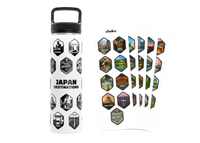
❤️ Even if your trip stays in Tokyo, the Traveler bucket-list bottle has plenty to mark off — its 27 destinations include Tokyo neighborhoods, day trips like Kamakura and Hakone, and the wider Japan route for whenever you go further. Live on Kickstarter until July 26. Reserve yours now at the best prices we'll offer.
How do you get around Tokyo?
Trains, an IC card, and modest ambitions. Base fares run about ¥150 to ¥180, most area-to-area moves inside the Yamanote loop take around thirty minutes, and a ¥1,600 day pass exists for heavy-transit days.
Mapple's transport section is reassuringly boring, which is the point. Trains are the default: JR, Tokyo Metro and the Toei subway between them cover nearly everything a visitor does inside the Yamanote loop, with base fares in the ¥150 to ¥180 range. An IC card on your phone handles all of it without fare tables.
Two of its numbers are worth planning around. First, moves between areas take about thirty minutes inside the loop, which means every extra area you add to a day costs you an hour of round-trip transit plus the re-orientation. Second, for days you know will be train-heavy, the Tokyo Free Kippu day pass covers JR within the 23 wards, the Metro, Toei lines and buses for ¥1,600.
From the airport, mapple's example run is Haneda to Tokyo Station in about 40 minutes via the monorail and a Yamanote transfer at Hamamatsucho. For the broader practical layer, cash, etiquette, the JR Pass question, our 30 Japan travel tips is the companion read.
Free for you: our Tokyo Google Maps list We keep a Google Maps list of the must-see spots around Tokyo - restaurants, cafes, shops, viewpoints, and streets worth the detour. Drop your email and we'll send it over.
How should you pace a Tokyo trip?
One or two areas per day. That is not our rule; it is the explicit guidance in Japanese planning guides, and it is the difference between visiting Tokyo and commuting through it.
Mapple states the pacing rule outright: because each district holds so much, one to two areas per day is the ideal, 「1日に観光できるのは1〜2エリア程度が理想」. Its practical advice follows from that: comfortable shoes, light bags, and slack in the schedule, because districts like Ginza, Marunouchi and Harajuku are walking-and-browsing territory rather than see-it-and-leave territory.
We would push the rule further for first trips: one area per day, with the second area as an evening option rather than an obligation. The failure mode of Tokyo travel is the three-district day, which turns into ninety minutes of trains, three shallow visits and no meal anyone chose carefully.
Day-count math follows directly. The eight areas in the table above, at one or two per day, is four to five full days before you have added a single day trip. For a shorter first visit, our Tokyo itinerary page is built around exactly that how-many-days question. If your trip has ten days for Tokyo, our 10-day Tokyo itinerary sequences all of it day by day, and for the wider country the two-week Japan route shows where Tokyo fits.
Which Tokyo destinations belong on a first-trip list?
Fifteen, if you want our honest shortlist: the eight area anchors plus the places that survive repeat visits, Meiji Shrine, Harajuku, Golden Gai, Omoide Yokocho, Odaiba, Tokyo Tower and the market mornings.
Lists of fifty Tokyo places are avoidance dressed as thoroughness. Our editorial shortlist, the one we built our own products around, is fifteen Tokyo destinations: Shibuya, Harajuku, Meiji Shrine, Shinjuku's Kabukicho and Omoide Yokocho, Golden Gai, Senso-ji, the Skytree, Ueno Park, Akihabara, Ginza, Tsukiji Outer Market, the Imperial Palace, Tokyo Tower and Odaiba.
The picks skew toward places with a strong evening or morning identity, because those are the hours that make Tokyo feel like itself:
Your first two days: Shibuya and Asakusa. The two poles of the city, new west and old east, each a full day with its anchor landmark inside it. Your evenings: Shinjuku and Golden Gai. Tokyo after dark is half the reason to come; our Golden Gai guide covers how the tiny bars actually work. Your slow day: Ueno Park in the morning, the Imperial Palace after lunch, Ginza toward evening. Three green-and-granite stops that rebuild your legs.
Tokyo travel rewards the traveler who chooses. Pick areas, give them whole days, and let the city's density work for you instead of against you.
❤️ If you want a full nine-day Tokyo itinerary mapped out for you, our cheku 9 Days in Tokyo guide is 106 pages of local knowledge and our photography — designed for first-time visitors who want every day planned before they land. Live on Kickstarter until July 26. Reserve yours now at the best prices we'll offer.
FAQ
What are the must-see destinations in Tokyo?
Japanese guides converge on the same anchors: Senso-ji and the Skytree in the east, Shibuya's crossing and Meiji Shrine in the west, Shinjuku's neon, Ginza, Ueno Park and the Imperial Palace in the middle. The better question is which areas to give full days to, because each anchor sits inside a district worth hours on its own.
How many days do you need for Tokyo travel?
Four to five days covers the core areas at the pace Japanese guides recommend, which is one or two areas per day. A week lets you add day trips. Fewer than three days means choosing two areas and accepting the rest for next time. The city rewards length more than any list rewards speed.
What is the easiest way to get around Tokyo?
Trains, with an IC card on your phone. JR, Tokyo Metro and Toei cover nearly everything inside the Yamanote loop, with base fares from around ¥150 to ¥180 and most area-to-area moves taking about thirty minutes. Day passes exist, like the ¥1,600 Tokyo Free Kippu, if you plan a many-train day.
Which Tokyo landmarks are worth visiting?
The ones that anchor a good area day: Senso-ji because Asakusa around it is the old city, the 634-meter Skytree for the night view, Shibuya's crossing because you are already in Shibuya, and the Imperial Palace as a green pause in the middle. A landmark is worth it when its neighborhood is.
Sources
- mapple.net — 東京観光の定番スポット60をエリア別に紹介 — the area-by-area structure, the 1–2 areas-per-day pacing rule, transport fares and the Haneda access example (updated March 2025)
- Rakuten Travel — 東京観光おすすめスポット76選 — spot facts: Senso-ji and Nakamise, Skytree height and hours, Ueno Park and Zoo, Tsukiji Outer Market's ~460 shops, Toyosu, Odaiba
Activities and tours in Tokyo
cheku is a GetYourGuide partner. We link to tours that handle the parts of travel that eat your time, getting there, booking ahead, language, context you'd otherwise miss. If you book through our link, we earn a small commission at no extra cost to you.


