
Nikko is a mountain town about two hours north of Tokyo, best known for Toshogu, the lavishly carved UNESCO World Heritage shrine and mausoleum of Tokugawa Ieyasu. Beyond the shrines lies a second zone of lakes and waterfalls. The honest planning question for a day trip is which of the two to make your focus.
A Nikko day trip from Tokyo delivers two very different experiences, and most guides quietly skip over the fact that you probably cannot do both well in a day. There is the shrine complex, dense and ornate, sitting close to the stations. And there is the mountain zone, Lake Chuzenji and Kegon Falls, about an hour further up a winding road. They are both worth the trip. They are not both comfortably doable in one.
Japanese travel media treats Nikko as a year-round destination. MATCHA's day-trip guide points specifically to its autumn foliage and winter snowscapes, and to the Lake Chuzenji area as somewhere you can fill a full day on its own.
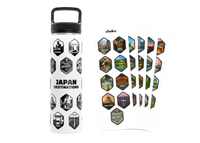
Nikko is one of the destinations on the Traveler Bottle, the bucket-list bottle we built for first-time visitors planning a route. This guide covers how to reach Nikko, what to prioritize at Toshogu, and how to make the shrine-versus-lake decision before you go rather than on the platform.
Is Nikko worth a day trip from Tokyo?
Yes. Nikko holds Toshogu, the most ornately decorated shrine in Japan and a UNESCO World Heritage site, alongside a national park of lakes, waterfalls and forest. It is roughly two hours from Tokyo. The one caveat is scale: the shrine zone and the lake zone are an hour apart.
Toshogu alone justifies the journey. It is unlike any other shrine in Japan, covered in carving and gold leaf to a degree that the rest of Japanese religious architecture deliberately avoids. Seeing it is the kind of thing that recalibrates what you thought a shrine could be.
The surrounding national park is the second reason. Japan-guide.com describes Nikko as the town at the entrance to Nikko National Park, with mountains, lakes, waterfalls, hot springs and hiking trails. That is a lot of destination for two hours from the capital.
The honest framing is that Nikko is almost two day trips wearing one name. Knowing that before you go is what makes the day work.
How do you get from Tokyo to Nikko?
Take the Tobu Railway from Asakusa. Tobu express trains run to Tobu-Nikko Station in about 2.5 hours for roughly 1,400 yen one way. The Tobu Limited Express, the Spacia X or Revaty, does it in about 1 hour 50 minutes for around 3,050 yen. A sightseeing bus links the station to the shrines.
The route is straightforward, and the choice is really about how much speed and comfort you want to pay for.
- Tobu express, the budget option. About 2.5 hours from Asakusa for roughly 1,400 yen. Fine if you leave early.
- Tobu Limited Express, the comfortable option. The Spacia X or Revaty reach Tobu-Nikko in about 1 hour 50 minutes for around 3,050 yen, with reserved seats. On a day trip, the time saved at both ends is worth a lot.
- From the station. Toshogu is a 30 to 40 minute walk, or a 10 minute bus (350 yen one way, 600 yen for a day pass), per japan-guide.com.
For a day trip, leaving Tokyo around 7:00 to 8:00 gets you to the shrines before the tour buses. That early start matters more in Nikko than in most day-trip destinations, because of the distances involved once you arrive.
What is Toshogu Shrine, and what should you see there?
Toshogu is the lavishly decorated mausoleum of Tokugawa Ieyasu, founder of the Tokugawa shogunate. Inside, look for the Yomeimon Gate, the five-story pagoda, the three wise monkeys carving and the sleeping cat. Admission is 1,600 yen for the shrine, or 2,400 yen combined with its museum.
Toshogu is the reason most people come, and it rewards knowing what you are looking at.
Japan-guide.com records the essentials. Ieyasu is enshrined here as Tosho Daigongen, the "Great Deity of the East Shining Light." The shrine opens 9:00 to 17:00 in summer and 9:00 to 16:00 in winter, with admission closing 30 minutes before.
The carvings are the point, and a few are worth seeking out specifically:
- The Yomeimon Gate, described as perhaps the most ornate single structure in Japan, layered with hundreds of carvings.
- The five-story pagoda, whose central pillar hangs about 10 centimeters above the ground, an engineering trick to absorb the wood's expansion and movement.
- The three wise monkeys, the original "see no evil, speak no evil, hear no evil" carving, smaller and higher up than most visitors expect.
- The Nemurineko, or sleeping cat, a small, famous carving on the Sakashitamon Gate.
The shrine area also contains Rinnoji, Nikko's most important temple, and Futarasan Shrine, both part of the same UNESCO World Heritage listing. Allow a couple of unhurried hours for the whole complex.
What else is in Nikko's shrine area?
Beyond Toshogu, the shrine zone holds the vermilion Shinkyo Bridge at its entrance, Rinnoji Temple, Futarasan Shrine, and the quieter Kanmangafuchi Abyss, a riverside trail lined with stone Jizo statues. All sit within walking distance of each other.
If you choose the shrines as your focus, the area gives you more than Toshogu alone.
The Shinkyo Bridge is the red sacred bridge at the entrance to the shrine precinct; a small fee lets you walk onto it. Rinnoji is the area's leading temple. Futarasan Shrine sits between Toshogu and Rinnoji and is calmer than its famous neighbor.
The one most day-trippers miss is the Kanmangafuchi Abyss, a short, atmospheric walking trail along a gorge, lined with a row of weathered Jizo statues. It is free, quiet, and a good antidote to the density of Toshogu. Japan-guide.com lists all of these within the same compact area.
Free for you: our Tokyo Google Maps list We keep a Google Maps list of the must-see spots around Tokyo - restaurants, cafes, shops, viewpoints, and streets worth the detour. Drop your email and we'll send it over.
Should you go to Lake Chuzenji and Kegon Falls?
Only if you commit to it. Lake Chuzenji is Japan's highest natural lake, and Kegon Falls beside it drops nearly 100 meters. They are spectacular, but reaching them is a 50-minute mountain bus ride from the stations, so adding them to a shrine day means an early start and a brisk pace.
This is the part of Nikko that the cheerful itineraries gloss over.
Lake Chuzenji sits up in the mountains, reached by a bus that climbs the winding Iroha-zaka road, about 50 minutes from the Nikko stations for 1,250 yen. Sightseeing boats loop the lake in an hour for 1,850 yen, running from the second week of April through November.
Kegon Falls, fed by the lake, is nearly 100 meters tall. There is a free upper viewing platform and a paid lower observation deck reached by a 100-meter elevator for 600 yen. It opens 8:00 to 17:00 from March to November.
Use this to decide how to weight your day:
| Shrine area (Toshogu) | Lake area (Chuzenji, Kegon) | |
|---|---|---|
| What it is | UNESCO shrines and temples | Mountain lake and a 100m waterfall |
| Best for | First visit, history, architecture | Nature, autumn foliage, scenery |
| From the station | 10 min bus or short walk | About 50 min by mountain bus |
| Realistic time | A focused half to full day | A focused half to full day |
The honest recommendation: on a single day trip, pick one. The shrines are the safer first choice. If the lakes pull at you, go for the lakes and accept that Toshogu waits for another visit.
How do you plan a Nikko day trip, and when should you go?
Decide your focus before you leave: shrines or lakes. For the shrines, an early Limited Express and a relaxed pace through Toshogu and its neighbors fills the day well. For the lakes, head straight up to Chuzenji. Autumn is the most beautiful season and the most crowded.
The plan flows from the one decision above.
Shrine-focused day. Early Limited Express to Tobu-Nikko, bus to the shrines, the Shinkyo Bridge, Toshogu, Rinnoji and Futarasan through the late morning and early afternoon, Kanmangafuchi Abyss for a quiet finish, then back.
Lake-focused day. Early train, straight onto the Chuzenji bus, the lake and Kegon Falls through the day, with a boat ride if the season allows.
On timing, autumn is Nikko's signature season. The foliage around Lake Chuzenji and the Iroha-zaka tends to peak around mid-to-late October, and it is genuinely worth seeing, which is exactly why it draws the year's heaviest crowds. Late spring and summer are green and comfortable. Winter is cold and quiet, with Toshogu occasionally under snow, which suits the shrine well.
The photographer's note: Toshogu is a difficult, rewarding subject. The carving is so dense that wide shots turn to noise, so shoot tight, isolate single carvings, the sleeping cat, a dragon on the Yomeimon Gate, and let the gold leaf catch the light. The shrine sits under tall cedars, so the light is dappled and uneven; overcast days actually photograph better than harsh sun. Up at Lake Chuzenji, the classic frame is Kegon Falls from the lower deck in autumn, the white water against turning forest. Morning haze on the lake is common and worth getting up for.
For sequencing Nikko into a longer route, the 2-Week Japan Guide covers how Japanese travel writers tend to pace a first trip.
Nikko is the kind of destination the Traveler Bottle was built around: a day trip that looks straightforward and turns out to have real depth once you understand it. Decide your focus, take the early train, and Nikko gives you one of the best days out of Tokyo.
FAQ
Is Nikko worth a day trip from Tokyo?
Yes. Nikko holds Toshogu, Japan's most ornately decorated shrine and a UNESCO World Heritage site, plus a mountain zone of lakes and waterfalls. It is about two hours from Tokyo. The catch is scope: the shrine area and the Lake Chuzenji area are an hour apart, so a day trip means choosing a focus or starting early.
How do you get from Tokyo to Nikko?
The Tobu Railway from Asakusa is the standard route. Tobu express trains take about 2.5 hours for roughly 1,400 yen one way; the Tobu Limited Express, the Spacia X or Revaty, reaches Tobu-Nikko Station in about 1 hour 50 minutes for around 3,050 yen. From the station, a sightseeing bus runs to the shrines.
Can you see both Toshogu and Lake Chuzenji in one day?
It is possible but tight. Toshogu sits near the stations; Lake Chuzenji and Kegon Falls are about 50 minutes further by mountain bus. Doing both means an early start and a brisk pace. Many visitors get more out of the day by choosing one zone, usually the shrines, and not rushing.
What is the best time to visit Nikko?
Autumn, roughly mid-to-late October, is Nikko's most celebrated season, when the foliage around Lake Chuzenji and the Iroha-zaka road turns. It is also the most crowded. Late spring and summer are green and pleasant; winter is cold and quiet with the shrines under occasional snow. Toshogu opens at 9:00 year-round.
Sources
- japan-guide.com — Nikko — overview, World Heritage sites, Shinkyo Bridge, Kanmangafuchi
- japan-guide.com — Toshogu Shrine — fees, hours, key carvings and structures
- japan-guide.com — Kegon Falls — height, elevator fee, hours
- japan-guide.com — Lake Chuzenji — access and sightseeing boats
- MATCHA — day trips from Tokyo — Japanese day-trip guide on Nikko's foliage and lake area
Activities and tours in Tokyo
cheku is a GetYourGuide partner. We link to tours that handle the parts of travel that eat your time, getting there, booking ahead, language, context you'd otherwise miss. If you book through our link, we earn a small commission at no extra cost to you.


