
The things to avoid buying in Japan cluster around one pattern: generic Japan branding without a named region or named maker. Japanese omiyage culture runs on regional specificity, so generic "Japan" sweet boxes, gold-bottle "samurai" sake, polyester yukata sets, mass-produced samurai swords, kimono-print t-shirts, and novelty character figures sit outside the system Japanese consumers actually use. This guide separates the categories Japanese sources flag as tourist marketing from the substantive equivalents worth the suitcase space.
The fastest way to identify a Japan souvenir Japanese people themselves avoid is to read the packaging. Does it name a region (Kyoto, Hakata, Hokkaido)? Does it name a maker (Otabe, Toraya, Royce', Dassai)? If both are absent, the product probably exists for tourist markets rather than the domestic omiyage system. Most things to avoid buying in Japan fail this two-part test the same way.
Japanese travel writing on jalan.net, note.com, and TABIZINE treats the local-versus-tourist split as a substantive shopping distinction rather than a snobbery point. Generic Japan-themed merchandise has its own retail ecosystem (airport gift shops, Don Quijote tourist sections, souvenir-district stalls) that runs in parallel to the regional meibutsu and named-maker system Japanese travelers use. Both exist; only one is what locals bring back.
For the substantive side of every category — the named makers, regional meibutsu, and the omiyage gift-giving system Japanese people use internally — the Japan souvenirs guide covers it across all categories.
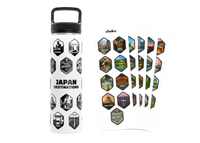
❤️ If you're planning a first Japan trip, the cheku Japan Destinations I Traveler bucket-list bottle illustrates the 27 destinations that hold up after the research — part travel guide, part souvenir, and a daily essential for the trip itself. Live on Kickstarter until July 26. Reserve yours now at the best prices we'll offer.
How do you tell a tourist-trap souvenir from a real one in Japan?
Japanese omiyage culture runs on two markers: regional specificity (meibutsu / 名物) and a named maker. Products without either are usually marketing for tourists rather than the domestic gifting system. Kogei Japan maintains the official directory of registered traditional crafts, and Japanese lifestyle writing on note.com consistently treats named-region attribution as the dividing line.
The two-part test from Japanese omiyage culture:
- Can you point to where this object comes from on a map of Japan? Tokyo Banana from Tokyo, Yatsuhashi from Kyoto, Mentaiko from Fukuoka, Shiroi Koibito from Hokkaido. If the answer is just "Japan," the product carries no regional signal.
- Can you name who makes it? The maker name should be on the packaging (Otabe, Toraya, Nishiki-do, Royce', Dassai). Generic boxes labeled only "Japan" or "Tokyo Souvenir" without a maker name have no producer accountability.
Both questions need a yes. The Japanese omiyage system is built so the colleague receiving the box reads where the trip was from the packaging itself. Generic Japan-themed boxes don't carry that signal, which is why Japanese consumers themselves skip them. The boxes still sell; they just sell to visitors who haven't yet learned to read the regional system.
The same test runs across categories. Sake from a named brewery (Dassai, Kiku-Masamune, Hakushika) versus gold-bottle "samurai sake." Ceramics from a named kiln (Mino-yaki, Bizen-yaki, Mashiko-yaki) versus generic "Japanese-style" plates. Yukata from a specialist cotton-yukata shop versus polyester sets with no maker. The pattern is consistent across the categories Japanese travel media covers.
Which Japanese sweets should you not buy?
Generic Japan-branded sweet boxes without a named maker are the most common tourist-souvenir category Japanese consumers themselves skip. The All Japan Confectionery Association recognises regional wagashi by prefecture and named maker, and Japanese sweet souvenirs sit inside that system or outside it.
Skip:
- "Japan Sweets" or "Tokyo Sweets" boxes with no maker name. Boxes branded only with country or city name, no Otabe, Toraya, Nishiki-do, or other established maker. These have no place in the omiyage system.
- Generic mochi or wagashi imitations at tourist district shops. Mass-produced versions of named meibutsu sold without the original maker's attribution.
- Novelty character-shaped sweets at tourist shops. Generic anime or "kawaii"-themed candy boxes that aren't licensed character products from named series.
- Boxes of mixed snacks marketed as "Japanese assortments" at airport gift shops when the same individual snacks are sold for a fraction of the price at any konbini or supermarket.
Buy instead:
- Tokyo Banana from the maker (Tokyo Station, Haneda, Narita), Yatsuhashi from Otabe or Shogoin (Kyoto Station and Kiyomizu approach), Shiroi Koibito from Ishiya (New Chitose, Sapporo Station), Momiji Manju from Nishiki-do or Yamadaya (Hiroshima, Miyajima), Hakata Tōri Mon (Hakata Station), Akafuku (Ise).
- Premium wagashi from Toraya, Kameya Yoshinaga, Tsuruya Yoshinobu at depachika basement food halls.
Go if: the packaging names both a region and a maker. Skip if: the box reads "Japan" or generic city name with no named producer.
Should you buy sake at tourist shops in Japan?
Sake from named breweries at depachika beverage sections is one of the better Japanese souvenir categories; the gold-bottle "samurai sake" at tourist shops and airport gift counters is generic marketing. The Japan Sake and Shochu Makers Association maintains the directory of registered breweries and geographical indication (GI) sake designations, and authentic sake sits inside that registry.
Skip:
- Gold-bottle "samurai" or "ninja" themed sake. Generic bottles with samurai imagery and no specific brewery, often at inflated prices. Sold at airport gift shops and tourist-district stalls.
- Small "sake gift sets" with no brewery names. Mini-bottle boxes branded only "Japan Sake" or with generic Japan imagery, no kuramoto attribution.
- Sake cups and tokkuri with samurai or geisha imagery sold at tourist shops as "sake sets." Novelty rather than usable ware; rarely from any named pottery tradition.
Buy instead:
- Named-brewery junmai daiginjo, daiginjo, or junmai sake at depachika (Isetan Shinjuku, Mitsukoshi Nihonbashi, Daimaru Tokyo, Takashimaya Nihonbashi). The brewery name (Dassai from Yamaguchi, Kiku-Masamune from Hyogo, Hakushika from Hyogo, Niigata breweries, Akita breweries, Fushimi sake from Kyoto), the prefecture, and the grade should all be on the label.
- GI sake with one of Japan's geographical indication designations (GI Hakusan, GI Yamagata, GI Yamanashi, and others).
- Direct from breweries if traveling to Niigata, Fushimi, Nada, Saijo, or other major sake regions.
Go if: the bottle names the brewery, prefecture, and grade. Skip if: the bottle shows samurai or ninja imagery and the only words you can read are "Japan Sake."
Which "kimono" and yukata products should tourists avoid?
The polyester "yukata sets" at tourist-district shops and the kimono-print t-shirts at souvenir stalls are not the same product category as cotton yukata from specialist makers or vintage kimono from secondhand shops. Japanese textile writing on icotto and Discover Japan treats these as separate categories rather than budget versions of the same thing.
Skip:
- Polyester "yukata sets" sold at tourist shops at suspicious price points (often under ¥3,000 complete with obi). The fabric, dye, and construction sit well below what a cotton yukata from a specialist shop carries at the same nominal "yukata" name. The garment is closer to costume than to a wearable summer kimono.
- T-shirts, hoodies, and miscellaneous apparel printed with kimono or geisha motifs. Kimono-themed clothing rather than kimono.
- Mass-produced "samurai outfits" sold as novelty wear. Costume products rather than Japanese clothing.
Buy instead:
- Cotton yukata from specialist shops. Budget yukata at ¥3,000–4,500 from named cotton-yukata makers; quality pieces at ¥15,000–30,000+. The fabric weight, the dye work, and the maker name distinguish these from polyester equivalents.
- Vintage and secondhand kimono and haori at established secondhand kimono shops. Authentic, often beautifully made, and significantly cheaper than new. Quality vintage haori start around ¥3,000–8,000.
- Tabi socks from named makers (Sou Sou Kyoto, specialist tabi shops). ¥800–3,500 per pair.
- Tenugui from Eirakuya, Kamawanu, Musubi and other established makers. ¥800–2,500.
Go if: the garment is cotton, names a maker, and the price reflects real fabric and construction. Skip if: it's polyester, has no maker attribution, and the price is suspicious for the named product.
What craft items at tourist shops should you skip?
The mass-produced "samurai swords," "ninja stars," generic kokeshi, and stamped souvenir-shop ceramics are not part of any registered Japanese craft tradition. Kogei Japan lists the 240+ registered traditional crafts (dentōteki kōgeihin / 伝統的工芸品); items outside the registry aren't carrying any documented craft tradition behind the product.
Skip:
- Display "samurai swords" and "katana" at tourist shops. Decorative replicas with no named maker, no traditional steel work, no continuous craft tradition. They also create customs and transport complications when flying out (most countries treat them as restricted items requiring declaration; many simply confiscate them at security or customs).
- "Ninja stars," "ninja sets," and shuriken novelty merchandise. Tourist-market novelty.
- Generic kokeshi without a regional style. Real traditional kokeshi (傳統こけし) come from named northern Honshu styles (Naruko, Tsuchiyu, Yajiro, Tōgatta, Sakunami, Hijiori, Yamagata, Zaō, Tsugaru, Nanbu, Kijiyama). Generic painted kokeshi without a style name are unrelated.
- Mass-produced "geisha figurines" at souvenir district shops. Cheap figures with no craft tradition behind them.
- Generic "Japanese style" plates, bowls, and ceramics with no kiln name. The everyday Japanese household uses named-kiln ceramics (Mino-yaki, Bizen-yaki, Mashiko-yaki, Hagi-yaki, Karatsu-yaki, Arita-yaki, Imari-yaki, Kiyomizu-yaki). Generic Japan-themed ceramic plates skip the kiln entirely.
- Mt. Fuji or geisha themed knickknacks at tourist district shops. Snow globes, magnets, keychains, and miscellaneous merchandise produced for the visitor market.
Buy instead:
- Named-region ceramics at depachika craft sections and dedicated ceramic shops. Mino-yaki bowls (¥1,500–4,500), Mashiko-yaki tea cups (¥1,500–4,500), Karatsu-yaki small dishes.
- Small Wajima-nuri, Aizu-nuri, or Wakasa-nuri lacquerware (¥2,500–4,500 for chopstick rests and small dishes).
- Japanese knives from named makers in Sakai, Seki, Aritsugu (Kyoto), and Kappabashi (Tokyo). ¥3,000–30,000 for everyday quality, with the maker's name engraved on the blade.
- Traditional kokeshi from named northern Honshu styles sold at specialist kokeshi shops and craft sections.
Go if: the object names the kiln, the maker, or the registered craft tradition it belongs to. Skip if: it's "Japanese-style" but generic, with no producer accountability and no documented tradition.
Free for you: our Tokyo Google Maps list We keep a Google Maps list of the must-see spots around Tokyo — depachika worth the detour, named knife shops in Kappabashi, specialist craft sections, regional ceramic counters, and the maker-shops Japanese consumers themselves use. Drop your email and we'll send it over.
What about character goods, anime merch, and pop culture souvenirs?
Officially licensed character goods from named series sit inside a real product category; the unlicensed imitations at generic tourist shops do not. Japanese pop-culture writing on note.com and Tripnote treats licensed character goods as a substantive shopping category, with named shops (Pokémon Center, Ghibli's Donguri Kyowakoku, Sanrio's Sanrio World, Nintendo Tokyo, Capcom shops) as the canonical buying spots.
Skip:
- Unlicensed imitations of popular character merchandise sold at souvenir district shops. Cheap figures and apparel produced without the original studio's licensing.
- Generic "anime" branded merchandise without a named series. Boxes or apparel branded only "anime" or "manga" with no specific series attribution.
- Cheap Studio Ghibli imitations. Real Ghibli merchandise is sold at Donguri Kyowakoku branches (Solamachi, Shibuya, several others) and at the Ghibli Museum shop. Unauthorised imitations of Totoro, Spirited Away, and other titles appear at generic souvenir shops at suspicious prices.
Buy instead:
- Officially licensed character goods from named shops. Pokémon Center (multiple Tokyo branches), Donguri Kyowakoku for Ghibli, Sanrio World Ginza for Sanrio characters, Nintendo Tokyo at Shibuya Parco, Capcom Store, Jump Shop for Shonen Jump series, character cafés with their own licensed merchandise lines.
- Manga and art books from the publishers at specialist bookstores (Animate, Mandarake, Book Off for secondhand).
Go if: the merchandise is from a licensed shop tied to the named series or studio. Skip if: it's a cheap imitation at a generic tourist district souvenir shop.
Should you buy electronics and gadgets as souvenirs in Japan?
Japan-exclusive electronics and gadgets at Bic Camera, Yodobashi, and named brand shops are substantive products; the "Japanese tech" novelty items at tourist souvenir shops usually aren't. Japanese consumer writing on note.com and on Japanese review platforms covers this as a clear split.
Skip:
- Novelty "Japan tech" gadgets at tourist souvenir shops. Plug-shaped keychains, novelty USB drives in samurai imagery, fake "Japanese calculators," and miscellaneous tech-themed merchandise at suspicious prices.
- Overpriced general electronics that aren't Japan-exclusive. A generic Bluetooth speaker bought at a tourist-district shop at airport markup isn't a Japan souvenir; it's a generic product at a worse price than home.
- Cheap imitations of Japanese audio brands. Generic earbuds sold as "Japanese audio" without a named brand name.
Buy instead:
- Japan-exclusive Casio G-Shock and Seiko models at major retailers. Some Casio lines (Mr-G, MT-G premium tiers; specific colourways and limited editions) and Seiko (Presage, Prospex domestic-market editions) are domestic-only or cheaper in Japan.
- Premium Japanese audio from named brands. Audio-Technica, Sony domestic-market models, Final Audio, Stax electrostatic headphones. Bic Camera and Yodobashi audio departments have the full range.
- Japanese kitchen electronics. Zojirushi rice cookers, Tiger thermoses, Balmuda toasters and kettles. The named-brand versions, not generic equivalents.
- Japanese stationery technology. Pilot Frixion erasable pens, Uni Kuru Toga rotating-lead mechanical pencils, premium Japanese mechanical keyboards from Topre and HHKB. All cheaper or only available domestically.
Go if: the electronics carry a named Japanese brand and the product is either domestic-exclusive or genuinely cheaper than at home. Skip if: it's novelty Japan-themed packaging on a generic product, or general electronics at tourist-district markup.
How do the things to avoid buying in Japan compare across categories?
| Category | What to skip | What to buy instead | Where to buy the real version |
|---|---|---|---|
| Sweets | Generic "Japan" boxes with no maker | Named regional meibutsu (Tokyo Banana, Yatsuhashi, Shiroi Koibito, Momiji Manju, Hakata Tōri Mon) | Tokyo Station, Kyoto Station, Hakata Station, New Chitose, depachika |
| Sake | Gold-bottle "samurai sake" with no brewery | Named-brewery junmai daiginjo / daiginjo / junmai, GI sake | Depachika beverage floors, Bic Camera and Yodobashi liquor, named breweries |
| Yukata / kimono | Polyester "yukata sets" at suspicious price points; kimono-print t-shirts | Cotton yukata from specialist makers; vintage / secondhand kimono and haori | Specialist yukata shops, secondhand kimono stores |
| Ceramics | Generic "Japanese style" plates with no kiln name | Mino-yaki, Bizen-yaki, Mashiko-yaki, Hagi-yaki, Karatsu-yaki from named kilns | Depachika craft sections, named ceramic shops, Aoyama craft district |
| Lacquerware | Mass-produced "Japanese style" lacquer with no region | Wajima-nuri, Aizu-nuri, Wakasa-nuri small pieces | Depachika craft sections, Yanaka craft shops, specialist lacquer shops |
| Knives / swords | "Samurai sword" display replicas at tourist shops | Sakai, Seki, Aritsugu (Kyoto), Kappabashi (Tokyo) knives from named makers | Kappabashi, Aritsugu Kyoto, specialist knife shops |
| Kokeshi | Generic painted kokeshi with no style | Traditional kokeshi from named northern Honshu styles (Naruko, Tsuchiyu, etc.) | Specialist kokeshi shops, craft sections |
| Character goods | Unlicensed imitations at generic tourist shops | Officially licensed product from named shops | Pokémon Center, Donguri Kyowakoku, Sanrio World, Nintendo Tokyo |
| Tech / gadgets | Novelty "Japan tech" keychains; generic electronics at tourist shops | Japan-exclusive Casio G-Shock, Seiko, Audio-Technica, Zojirushi, Pilot Frixion | Bic Camera, Yodobashi, brand stores |
| Best for | Avoiding overpriced tourist marketing across categories | The Japanese omiyage system, with named-region and named-maker products | Major stations + depachika + specialist named shops |
❤️ The cheku 9 Days in Tokyo guide is our 106-page deep-dive for first-time Tokyo visitors who want a full itinerary they can hand to themselves — with our photography embedded throughout, depachika and craft district walks included. Live on Kickstarter until July 26. Reserve yours now at the best prices we'll offer.
FAQ
What should you avoid buying in Japan? The categories Japanese sources consistently flag as overpriced or low-value for tourists: generic "Japan"-branded sweet boxes with no named maker, gold-bottle sake with samurai or ninja imagery and no brewery name, polyester "yukata" sets sold at suspicious price points, mass-produced samurai swords and ninja stars at tourist shops, generic kokeshi without a regional style attribution, kimono-print t-shirts, novelty character figures imitating popular series, and generic Mt. Fuji or geisha-themed merchandise at tourist district souvenir shops. None of these sit inside the Japanese omiyage or traditional craft system.
Why do Japanese people not buy "Japan" branded souvenirs? The Japanese omiyage system runs on regional specificity (meibutsu / 名物) and named makers. A box of sweets labeled "Japan" with no specific region or maker carries no signal in the system Japanese travelers actually use. The same product labeled "Yatsuhashi from Otabe (Kyoto)" or "Tokyo Banana from the maker" communicates where the traveler went and which named producer made it. Generic "Japan" boxes exist for tourists who don't yet read the regional system; Japanese consumers skip them in favor of named-region equivalents.
Are samurai swords and ninja stars worth buying in Japan? The mass-produced samurai swords and ninja stars at tourist souvenir shops are not part of any registered Japanese craft tradition. They're novelty merchandise produced for visitor markets, with no named maker, no traditional materials, and no continuous craft tradition behind them. Real Japanese knife-making (Sakai in Osaka, Seki in Gifu, Aritsugu in Kyoto) is a substantive craft category and sits in the dentōteki kōgeihin registered traditional craft system, but the display swords at tourist shops aren't part of that. They also create customs and transport complications most travelers don't anticipate.
Is sake at the airport worth buying? Named-brewery sake at airport depachika sections is the same product as in city department stores and is fine to buy. The category to avoid is gold-bottle "samurai sake" or "ninja sake" with generic Japan imagery and no named brewery. Authentic sake bottles name the brewery (Dassai, Kiku-Masamune, Hakushika, etc.), the prefecture, and the grade (junmai daiginjo, daiginjo, junmai). If the bottle reads "Japan Sake" with samurai art and no brewery name, it's tourist marketing rather than substantive sake.
What kimono products should tourists not buy? The polyester "yukata sets" sold at tourist districts and online marketplaces at suspicious price points (often under ¥3,000) are not the same product as a cotton yukata from a specialist maker. Real cotton yukata from named makers start around ¥3,000–4,500 for budget pieces and run to ¥15,000–30,000+ for quality work. T-shirts and hoodies printed with kimono motifs are kimono-themed clothing, not kimono. Vintage or secondhand kimono and haori (short kimono jackets) at established secondhand shops are excellent value and authentic; the costume-grade synthetic versions at tourist shops are not.
For the substantive alternative to every category above — the named-maker and named-region options, plus the full Japanese omiyage gifting system — the Japan souvenirs guide is the deep-dive companion.
Sources
- jalan.net — Japan domestic travel platform, regional meibutsu and named-maker souvenir features
- note.com — Japanese longform writing on omiyage culture and named-maker accountability
- icotto — Japanese women's lifestyle media, souvenir reviews and named-maker craft features
- TABIZINE — online Japanese travel magazine, regional product features
- Tripnote — Japanese travel guide platform, named-shop guides
- Discover Japan — Japanese culture magazine, named-maker craft journalism
- Kogei Japan — registered traditional Japanese crafts directory
- All Japan Confectionery Association — industry body for traditional Japanese sweets
- Japan Sake and Shochu Makers Association — official body for Japanese sake and shochu
Activities and tours in Tokyo
cheku is a GetYourGuide partner. We link to tours that handle the parts of travel that eat your time, getting there, booking ahead, language, context you'd otherwise miss. If you book through our link, we earn a small commission at no extra cost to you.


