
Golden Gai is a warren of narrow alleys in Shinjuku packed with close to 300 tiny bars. The thing to do here is bar-hop: pick a bar with an English sign or posted prices, pay the small cover charge, have a drink or two, and move on. Go in ones and twos, and arrive after 9pm.
Golden Gai is one of the strangest and best nights out in Tokyo, and it intimidates people for no good reason. From the alley it looks like a closed world: tiny doors, hand-painted signs, bars the size of a garden shed, full of people who clearly know each other. The honest truth about the things to do in Golden Gai is that there is really only one, bar-hopping, and once you understand how it works it is completely approachable.
We live in Tokyo and have spent a lot of late nights in these alleys. Golden Gai is not a trap and it is not exclusive by accident. It is a few hundred genuinely tiny bars, each one essentially someone's personal project, and the etiquette that surrounds it exists to protect that, not to keep you out.
This guide takes the mystery out of it: what Golden Gai is and why it survived, how to get there, how bar-hopping and the cover charge actually work, how to choose a bar you will be welcome in, the etiquette that matters, and what else is worth your time nearby.
What is Golden Gai, and why is it worth visiting?
Golden Gai is a district of six narrow alleys in Shinjuku, Tokyo, crammed with somewhere between 200 and 300 tiny bars. It is worth visiting because nowhere else in Tokyo packs this much character, history and atmosphere into so small a space.
Golden Gai is small. You could walk its whole footprint in a few minutes. What fills it is the density: a grid of about six alleys, linked by passages barely wide enough for one person, lined wall to wall with bars. Depending on how you count, there are roughly 200 to nearly 300 of them, and they are genuinely tiny. Many seat five or six people. Some seat fewer.
The history is the reason it feels the way it does. Golden Gai grew out of the chaos after the Second World War, starting around 1949 as a black market, then operating as an illegal red-light area until Japan's anti-prostitution law took effect in 1958. After that it became a drinking quarter, and over the following decades it turned into something specific: a haunt for writers, editors, journalists, filmmakers and actors. By the 1970s, as Nippon.com describes it, it drew intellectuals who would argue and drink until dawn.
That matters because Golden Gai could very easily not exist. Most of central Tokyo has been rebuilt many times over. This pocket of low wooden buildings survived the development that flattened everything around it, and the result is a piece of mid-20th-century Tokyo still working as it always did.
So the reason to visit is not a particular sight. It is the experience of the place itself: stepping off a bright Shinjuku street into a dark lane of hand-painted signs, picking a door, ducking through it, and ending up in a tiny room talking to a stranger. There is nothing else quite like it in the city. For another, very different slice of old Tokyo, our guide to things to do at Senso-ji Temple covers the daytime version.
How do you get to Golden Gai, and when does it open?
Golden Gai is a few minutes' walk from the east side of Shinjuku Station, next to the Kabukicho district and beside Hanazono Shrine. Most bars open around 9:00 or 10:00pm, so the district only comes alive late in the evening.
Getting there is simple. Golden Gai sits a short walk from the East Exit of Shinjuku Station, the busiest railway station in the world, so almost any train line you are on connects to it. From the station, head toward Kabukicho, Tokyo's largest entertainment district, and Golden Gai is on its eastern edge. The easiest landmark to navigate by is Hanazono Shrine, which sits right beside the alleys.
The timing is the part that catches people out. Golden Gai is an after-dark place, fully. Most of the bars do not open until around 9:00 or 10:00pm, and in the daytime and early evening the alleys are quiet, shuttered, and frankly a little dull. Turn up at 7pm expecting atmosphere and you will be disappointed.
📍 Location: Kabukicho, Shinjuku ward, Tokyo, beside Hanazono Shrine 💴 Cost: Free to walk the alleys; bars charge a cover (commonly ¥500–¥1,000) plus drinks ⏰ Bar hours: Most open around 21:00–22:00 and run late into the night 🚶 Access: A few minutes' walk from Shinjuku Station East Exit
The sweet spot is between about 9pm and midnight. Arrive in that window and the lanterns are lit, the bars are open, and the alleys have their crowd without yet being at their most crushed. Golden Gai does run very late, well past midnight, so there is no rush, but before 9 there is simply not much happening.
One worthwhile move: walk through Golden Gai once in daylight or early evening, with no intention of drinking, just to see the layout and read the signs without pressure. Then come back after 9 to actually go in.
How does bar-hopping in Golden Gai actually work?
You enter a bar, you are charged a small cover or seat charge on top of your drinks, you have one or two drinks, and then you move on to another bar. Bar-hopping is not just allowed in Golden Gai, it is the expected way to spend the night.
This is the mechanic that confuses first-timers, so here it is plainly.
Golden Gai bars almost all charge a cover charge, sometimes called a seat charge, that is separate from what you pay for drinks. It is typically around ¥500 to ¥1,000 per person, occasionally higher. This is not a scam and it is not aimed at tourists. It is how a bar with six seats stays in business. In return you usually get an otoshi, a small snack served automatically, perhaps nuts, crackers or a little stew.
The single best habit is to check the charge before you go in. Most bars post their cover charge and drink prices on a sign by the door. Read it. As Nippon.com puts it, confirming what you will pay up front avoids any argument when the bill comes. If a bar posts nothing and the door is opaque, you can simply choose a different one. There are hundreds.
Once inside, order a drink. Always. The bars are tiny and live entirely on drink sales, and sitting down without ordering is genuinely rude. One drink minimum, and that is the natural rhythm anyway.
Then comes the part people do not expect: you are meant to move on. You are not settling in for the night at one bar. The whole idea of Golden Gai is to do a small circuit, one or two drinks in a bar, settle up, step back into the alley, and pick another door. Each bar is a different room, a different owner, a different crowd. A good night here is three or four bars, not one. If a bar is full or has people waiting, finishing up and leaving is the polite thing to do.
Budget rough numbers: with a cover charge and a drink or two, plan on something like ¥2,000 to ¥3,000 per bar. Decide how many bars that buys you before you start.
❤️ Our 9 Days in Tokyo guide is the 106-page version of "what would two photographers in Tokyo actually do every day" — built to save you the research time first-time visitors usually spend. Live on Kickstarter until July 26. Reserve yours now at the best prices we'll offer.
Which bars should you choose in Golden Gai?
Choose by reading the door. Bars that post prices and show English signs are welcoming newcomers and are the easy, safe place to start. Bars with no menu, no English and a room full of regulars are the deeper experience, and fine to enter if you respect the room.
There is no single best bar in Golden Gai, and anyone who hands you one name is missing the point. The skill is not knowing the "right" bar. It is learning to read a door in three seconds.
Golden Gai bars fall, very roughly, into two kinds. Some serve mainly regulars, and traditionally a newcomer was expected to be introduced by someone who already drank there. Others actively welcome visitors, and many of those now post English signs and price lists precisely to say so. Neither kind is better. They are different experiences, and both are valid nights.
First time, and unsure of the etiquette: Choose a bar with an English sign and prices posted outside. It is telling you plainly that newcomers are welcome and what it costs. Start here, get the rhythm, then get braver. You want the older, deeper Golden Gai: Look for a small bar with a free seat, an owner mid-conversation, and no English anywhere. Greet the room when you enter, order, and mostly listen. This is the real thing. You are overwhelmed by the choice: Ask. Step into one friendly bar, and ask the owner to recommend the next one. Owners know the street and will happily point you to a bar that suits you.
The "ask the owner" move is the one most visitors never think of, and it is how locals do it. The bars are a community. An owner sending you two doors down to a friend's bar is Golden Gai working exactly as intended.
A note on themes: many bars are built around one obsession, a music genre, a film era, a sport, a single author. That theme is a clue. If a bar's whole front is punk records or 1960s cinema and that is your thing, you have found your bar for the night.
What are the etiquette rules in Golden Gai?
Go in ones and twos, never a big group. Order at least one drink in every bar. Do not photograph the alleys or a bar's interior without permission. And when a bar is busy, drink up and free the seat. The rules all protect the same thing: very small bars.
Golden Gai has a reputation for being prickly about etiquette. It is not, really. Every rule here comes from the simple fact that the bars are tiny, and once you see that, the etiquette is just common sense.
Keep your group small. One or two people is ideal, three is the maximum. A bar with six seats cannot absorb a group of five, and many bars will simply turn groups away. This is the rule visitors break most often. Golden Gai is not a place for the whole travel party. Split up, or come another night.
Order a drink, every time. It is the deal. The bar gives you a seat and its atmosphere; you buy a drink. One is enough, but zero is not acceptable.
Do not be loud, and do not overstay. If a bar is full and people are waiting in the alley, have your drink and move on. The hop is built into the etiquette.
The photographer's note here is important, because it is our own field. Photography and video on the Golden Gai streets are restricted, and shooting without permission from the area's business association is not allowed. As photographers, we think this rule is right and we keep to it. Golden Gai is full of people having a private night out in a public-feeling space, and a stranger's camera changes that. Inside a bar, never photograph the room, the owner or other customers without clearly asking first, and accept a no. Treat Golden Gai as a place to be in, not a backdrop to collect. The memory is better than the photo here anyway.
Get those four things right and you will not put a foot wrong. None of it is hard. It is just the courtesy a six-seat bar deserves.
Free for you: our Tokyo Google Maps list We keep a Google Maps list of the must-see spots around Tokyo - restaurants, cafes, shops, viewpoints, and streets worth the detour. Drop your email and we'll send it over.
What is there to do around Golden Gai?
Golden Gai sits inside the larger nightlife area of east Shinjuku. Right beside it is Hanazono Shrine, a calm contrast. Kabukicho's entertainment district is next door, and Omoide Yokocho, another lane of tiny bars, is a short walk away.
Golden Gai is compact enough that a night there has room for more, and everything worth adding is within a few minutes' walk.
Hanazono Shrine is directly beside the alleys, and it is a genuine surprise: a quiet, working Shinto shrine pressed right up against the bars. Walk through it before the drinking starts, or after, when it is lit and empty. It is the calm counterweight to everything Golden Gai is, and seeing the two side by side tells you something true about Tokyo.
Kabukicho wraps around Golden Gai on the other side. It is Tokyo's largest entertainment district, loud, bright and relentless. It is worth a walk through for the sheer sensory overload of the main streets. Use ordinary city sense in the deeper backstreets, ignore anyone touting bars or clubs on the street, and treat the bright main drag as the show.
Omoide Yokocho, on the west side of Shinjuku Station, is Golden Gai's natural pairing. It is another tight lane of tiny bars and yakitori stalls, smokier and more food-focused. Many people do both in one night: yakitori and beer in Omoide Yokocho earlier, then cross the station to bar-hop Golden Gai later.
Together these turn Golden Gai from a one-stop into a full Shinjuku night: eat in Omoide Yokocho, walk Kabukicho's main street for the spectacle, look in on Hanazono Shrine, and spend the late hours in the Golden Gai alleys.
What are the key things to do in Golden Gai in one visit?
Arrive after 9pm, walk the alleys once to get your bearings, then bar-hop three or four bars, starting with a newcomer-friendly one. Check the cover charge at every door, order a drink in each, and keep your group to one or two people.
Golden Gai rewards a loose plan rather than a rigid one, because the whole point is to wander.
Come into the alleys around 9 to 10pm. Do one slow lap of the six lanes with no pressure to enter anywhere, just reading signs and noticing which bars feel open to you. Pick a first bar that posts its prices and looks welcoming, and go in. Have a drink, talk if the room is talking, then settle up and move on. Repeat, getting a little braver with each bar. Somewhere in the night, ask an owner for a recommendation and follow it. Three or four bars is a full, good night.
If you only do three things in Golden Gai: 1. Bar-hop properly. Do not plant yourself in one bar for the night. Three or four small rooms, one or two drinks in each, is the whole experience and the entire reason the place exists. 2. Read the door before you enter. The posted cover charge and the presence or absence of English tell you everything about whether a bar wants you and what it will cost. This one habit removes all the risk. 3. Ask an owner where to go next. It is how locals navigate Golden Gai, it always works, and it turns a night of guessing into a guided tour of the street.
Golden Gai is far more welcoming than its tiny doors suggest. It asks only that you come in small numbers, buy your drinks, respect the room, and keep moving. Do that, and a night in these alleys is one of the things you will remember longest from Tokyo.
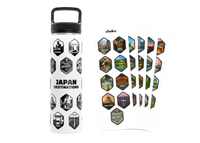
❤️ For first-time Japan visitors, the Traveler bucket-list bottle celebrates 27 destinations along the Golden Route — Tokyo neighborhoods and day trips included. A travel guide, souvenir, and reusable bottle rolled into one. Live on Kickstarter until July 26. Reserve yours now at the best prices we'll offer.
FAQ
What is there to do in Golden Gai?
The thing to do in Golden Gai is bar-hop. The district is a warren of alleys packed with hundreds of tiny bars, each with its own character. You pick a bar, pay a small cover charge, have a drink or two, then move on to another. It is one of the best nights out in Tokyo.
How much does Golden Gai cost?
Most Golden Gai bars charge a cover or seat charge of roughly 500 to 1,000 yen per person, sometimes higher, on top of your drinks. Drinks are typically 700 to 1,200 yen. A few bars charge no cover. Expect to spend around 2,000 to 3,000 yen per bar you visit.
Can you take photos in Golden Gai?
Not freely. Photography and video on the Golden Gai streets are restricted, and shooting without permission from the area's business association is not allowed. Inside a bar, always ask the owner first. Treat Golden Gai as a place to experience rather than to photograph.
Is Golden Gai tourist-friendly?
Partly. Many bars now welcome visitors and post English signs and prices, and these are easy and friendly to enter. Other bars serve mainly regulars and are not aimed at newcomers. The skill is reading which is which, which this guide explains.
What time should you go to Golden Gai?
Most Golden Gai bars open around 9:00 or 10:00pm and the district is quiet before then. Arrive between 9pm and midnight for the full atmosphere. The alleys are worth a quick daytime look too, but the bars themselves are an after-dark experience.
Sources
- Wikipedia — Shinjuku Golden Gai — the district's layout and six alleys, bar count, history, and the photography restriction
- Nippon.com — How to Drink in Golden-gai Like a Regular — cover charge, otoshi, group size, bar-hopping, and the district's cultural history
- Nippon.com — Golden-gai's history — from post-war black market and red-light district to drinking quarter
- GO TOKYO — Shinjuku Golden Gai — the official Tokyo travel guide entry
Activities and tours in Tokyo
cheku is a GetYourGuide partner. We link to tours that handle the parts of travel that eat your time, getting there, booking ahead, language, context you'd otherwise miss. If you book through our link, we earn a small commission at no extra cost to you.


