
Tsukiji Outer Market's best souvenirs are not the fresh seafood, which can't travel. They're the tools and pantry staples that seafood culture produces: handmade Japanese kitchen knives from specialist shops, katsuobushi and nori from century-old dry-goods stores, and tamagoyaki sold hot off the grill. Go for what lasts, not what's on ice.
Tsukiji Outer Market survived the 2018 move of the wholesale fish auctions to Toyosu because the outer market was never about the auctions. It's roughly 400 shops packed into narrow lanes near Tsukiji Station, most of them selling the tools, ingredients and cooked food that Tokyo's restaurant kitchens have relied on for generations. That's the souvenir angle worth chasing here: not a plastic tuna keychain, but the actual instruments and ingredients of Japanese cooking.
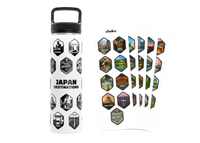
We've walked these lanes more times than we can count, mostly for breakfast, and kept mental notes on what's worth carrying home versus what's built for a five-minute tourist glance. If you're planning a Japan trip that treats souvenirs as more than fridge magnets, the Traveler bucket-list bottle covers Tsukiji as one of 27 destinations worth building a Tokyo itinerary around.
This guide covers what's actually worth buying at Tsukiji Outer Market, where the good shops cluster, and what to walk past.
What makes a Tsukiji Outer Market souvenir worth buying?
A Tsukiji souvenir earns its place in the suitcase when it's a tool or ingredient the market's own restaurant-trade customers still buy: a knife, dried bonito, tea, pickles, not a mass-produced trinket printed with a tuna graphic.
Tsukiji's real trade has always been supplying kitchens, not tourists. The knife shops sharpen blades for working chefs. The dry-goods shops sell katsuobushi and nori to restaurants that need the real thing daily. That trade infrastructure is still visible if you know where to look, and it's a better filter for souvenir quality than anything printed on a T-shirt.
The test we use: would a Tokyo home cook or a sushi chef actually buy this, or is it priced and displayed purely for visitors passing through with 20 minutes before their next stop? Kitchenware and dried goods pass. Novelty fish-shaped merchandise does not.
For the broader picture of what's worth packing across Japan, our Japan souvenirs guide covers the criteria across categories.
What kitchen knives and tools should you buy at Tsukiji?
Tsukiji Outer Market has several specialist knife shops clustered through its lanes, selling handmade Japanese kitchen knives that working chefs actually use. This is one of the few places in Tokyo where a serious knife purchase and a market breakfast happen in the same 20 minutes.
1. A Japanese kitchen knife from a specialist shop
Japanese kitchen knives are famously precise, and Tsukiji's proximity to the professional kitchen trade means the market's knife shops carry a deeper, more serious selection than a general kitchenware store. Expect single-bevel and double-bevel options, a range of steel types, and staff who can talk through what a home cook actually needs versus what a restaurant kitchen uses. Some shops offer engraving.
A knife is the kind of souvenir that gets used weekly for years, which is rare for anything bought on a two-week trip. Where: the specialist knife shops clustered through Tsukiji Outer Market's lanes.
2. Sharpening stones and knife-care tools
The same shops that sell the knives sell what keeps them sharp: whetstones in a range of grits, and sometimes a basic sharpening lesson if you ask. If you're buying a knife here, buying a stone alongside it is the difference between a blade that stays good and one that dulls in a drawer.
Where: the same specialist knife shops.
❤️ If you're planning a Tokyo trip built around this kind of specific, purposeful shopping, the Traveler bucket-list bottle has plenty to mark off. Its 27 destinations include Tokyo neighborhoods, day trips like Kamakura and Hakone, and the wider Japan route for whenever you go further. Live on Kickstarter now.
What food and dried-goods souvenirs are worth bringing home from Tsukiji?
Beyond fresh seafood, which can't travel, Tsukiji's dry-goods shops sell the pantry staples of Japanese cooking: katsuobushi (dried bonito flakes), nori, Japanese tea, and tsukemono pickles. These are the everyday ingredients Tokyo households actually buy, and most pack well for the flight home.
3. Katsuobushi (dried bonito flakes)
Katsuobushi is the smoked, dried, fermented bonito that forms the base of dashi, the stock behind most Japanese cooking. Tsukiji's dry-goods shops sell it in blocks for shaving fresh or pre-shaved in bags, alongside the tools to shave it yourself if you want the full home-cook experience. It's shelf-stable, light, and turns miso soup and simmered dishes at home into something noticeably closer to what you ate in Tokyo.
Where: dried-goods shops through the market's central lanes.
4. Nori and other dried seaweed
Sheets of nori, along with other dried seaweed varieties, are a market staple, sold in gift-ready tins and boxes as well as everyday packs. Quality and thickness vary noticeably between the market's specialist shops and a convenience-store equivalent; a market-bought tin is worth the difference for anyone who actually eats it at home.
Where: dried-goods and grocery shops throughout Tsukiji Outer Market.
5. Japanese tea
Tsukiji's grocery shops stock Japanese green tea, from everyday sencha to higher-grade options, often loose-leaf rather than bagged. A tin of tea bought here reads as a considered gift rather than an airport-lounge purchase, particularly if the shop can point you toward something regional.
Where: tea and grocery shops through the market.
6. Tsukemono (Japanese pickles)
Tsukemono, Japan's pickled vegetables, are sold fresh and in shelf-stable packaged forms at several Tsukiji shops. They're a genuinely useful gift for anyone who already cooks Japanese food at home, and a good way to bring back a flavor that's harder to find outside Japan than sushi or ramen.
Where: pickle specialists and grocery shops in the market's central lanes.
7. Tamagoyaki on a stick
Tamagoyaki, the rolled sweet-savory omelette, is sold hot off the grill on sticks throughout the market, and it's as much a food souvenir as a snack. It doesn't travel home, but it's worth calling out here because it's the dish most associated with a Tsukiji visit; eat it standing at the stall, not walking (the market asks visitors not to eat while walking the lanes).
Where: tamagoyaki stalls scattered through the market, easy to spot by the smoke and the queue.
Where should you actually shop at Tsukiji Outer Market?
Knife and dry-goods shopping both live inside the same dense grid of lanes near Tsukiji Station, so a souvenir run pairs naturally with a market breakfast. Go in the morning, before the best stalls wind down in the early afternoon.
Tsukiji Outer Market runs on an early schedule that's easy to misjudge if you're used to normal shopping hours. Most shops open around 5am and close by early-to-mid afternoon, and many of the best food stalls wind down by late morning. The standout window is roughly 8 to 10am: late enough that everything is open and trading, early enough to beat the crowds. The market is closed or noticeably quieter on Sundays and some Wednesdays, so check before you plan a visit around either day.
| Knife & tool shops | Dry-goods shops | |
|---|---|---|
| Best for | A serious kitchen souvenir that gets used for years | Pantry staples and gift-ready tins |
| Price range | Several thousand yen and up for a knife | Modest, mostly gift-box priced |
| Time needed | 15-20 min if you know what you want | 10-15 min per shop |
| Cash or card | Larger shops often take card | Many smaller stalls are cash only |
Carry yen. Several of Tsukiji's best dried-goods stalls and smaller shops are cash only, and the lanes are narrow working spaces, so move with the flow of the market rather than stopping dead in the middle of a lane.
Free for you: our Tokyo Google Maps list We keep a Google Maps list of the must-see spots around Tokyo - restaurants, cafes, shops, viewpoints, and streets worth the detour. Drop your email and we'll send it over.
What should you avoid buying at Tsukiji?
Skip the fish-shaped novelty merchandise sold at the market's tourist-facing stalls, and don't buy fresh seafood expecting to carry it home; it won't survive the trip. If you want the seafood experience, eat it there instead of trying to pack it.
Tsukiji's tourist-facing stalls carry the same category of novelty item you'll find at any Tokyo souvenir shop: tuna keychains, fish-print tote bags, generic "Tsukiji" T-shirts. None of it connects to what actually makes the market distinctive, which is the knife trade and the dry-goods trade. Skip it in favor of something that ties to what the shop actually specializes in.
The other trap is fresh seafood itself. It's the most visually tempting thing in the market and the least practical souvenir; without proper packing and a short flight home, it won't survive the trip in any usable state. If you want the seafood, eat it at the market, at a stall or one of the small sit-down counters, and buy the dried and packaged goods to take home instead.
❤️ For the full Tokyo route that pairs with this kind of market morning, the cheku 9 Days in Tokyo guide has 106 pages of local knowledge and our photography, built around what to do, day by day. Live on Kickstarter now.
FAQ
What souvenirs should I buy in Tsukiji Outer Market?
Tsukiji Outer Market's best souvenirs split into two categories: kitchen goods and dried food. A Japanese kitchen knife from a specialist shop is the market's signature purchase for anyone who cooks. For food gifts, katsuobushi (dried bonito flakes), nori, Japanese tea and pickles travel well and come from shops that have sold them for decades.
Where can I buy Japanese kitchen knives at Tsukiji?
Tsukiji Outer Market has several specialist knife shops clustered through its lanes, selling handmade Japanese kitchen knives alongside sharpening stones and knife care tools. These shops sell to working chefs as well as visitors, which is why the selection and quality run deeper than a department store kitchenware floor.
Is Tsukiji Outer Market a good place for food souvenirs?
Yes. Beyond the fresh seafood that can't travel, the outer market's dry-goods shops sell katsuobushi, nori, tea, tsukemono pickles and other Japanese pantry staples that pack well and last. These are the everyday ingredients Tokyo households actually buy, not tourist-aisle versions.
When is the best time to shop for souvenirs at Tsukiji?
Morning, roughly 8 to 10am, is the standout window. Most shops open around 5am and start closing by early-to-mid afternoon, and the market is closed or much quieter on Sundays and some Wednesdays.
Can I use a credit card at Tsukiji Outer Market?
It varies by shop. Larger knife and kitchenware shops often accept cards, but many of the smaller dried-goods stalls and food stands are cash only. Carry yen to avoid missing out on a shop that doesn't take cards.
Activities and tours in Tokyo
cheku is a GetYourGuide partner. We link to tours that handle the parts of travel that eat your time, getting there, booking ahead, language, context you'd otherwise miss. If you book through our link, we earn a small commission at no extra cost to you.


