Built from 100+ packing videos

What to pack for Japan, without overpacking

The wrong shoes are the regret nobody plans for. Build a season-specific Japan packing list in 20 seconds. No sign-up — it saves as you tick it off.

Build my list
100+
Packing videos studied
40+
Items, season-sorted
2026
Updated for

This checklist is digested from over 100 real Japan packing videos (2025–2026), weighted toward what travelers said they actually used or wished they had brought. Your list saves in this browser, so you can tick it off as you pack.

Take a piece of Japan home

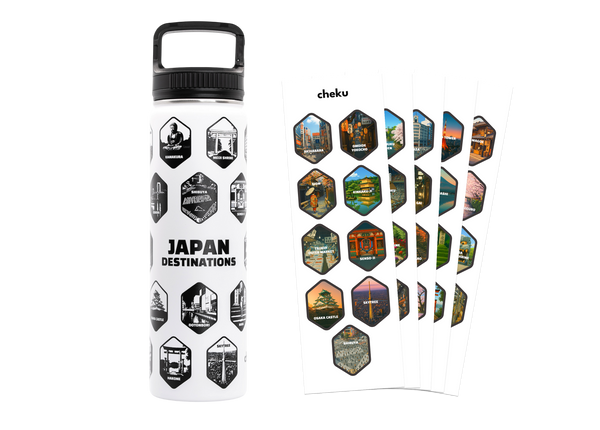
White water bottle with black graphics and 'Japan Destinations' text, accompanied by colorful hexagonal stickers on a white background.

For your first trip to Japan

The Traveler Bottle

27 of Japan's most iconic destinations across Tokyo, Kyoto and Osaka, laser-engraved on a stainless steel bottle. The places you cannot miss on a first trip.

27
Destinations
3
Cities
22oz
Capacity
See the Traveler Bottle →
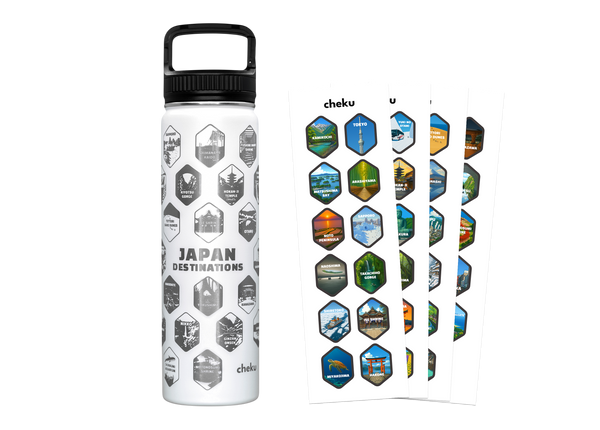
White water bottle with black lid and 'Japan Destinations' design, next to a sheet of colorful hexagonal stickers on a white background.

For Japan travel lovers

The Explorer Bottle

46 destinations across 31 prefectures, for travelers and residents ready to go past the highlights. The deeper Japan bucket list.

46
Destinations
31
Prefectures
22oz
Capacity
See the Explorer Bottle →

The bottle that holds your trip

The Japan Destinations Bottle launches June 15

Our first campaign drops on Kickstarter at 9am JST on June 15. Backers get early pricing for the first 48 hours, and the list gets the link before anyone else.

What the videos told us

What 100+ travelers taught us about packing for Japan

Every item on the checklist above earned its place. These are the patterns that came up again and again across the packing videos we studied.

The video study
💯
100+ Japan packing videos analyzed

We watched so you don't have to

This checklist isn't guesswork. It's digested from over 100 real Japan packing videos (2025–2026), weighted toward what travelers said they actually used, or wished they had brought.

“If I could repack for this trip, I'd cut everything in half. Honestly.”
⚠️
packing regret

Comfortable walking shoes

Expect 10,000 to 20,000 steps a day. Break new shoes in before you fly.

Type A
Japan's plug

The plug-adapter myth

Japan uses the same flat two-pin plug as North America. US and Canadian travelers need no adapter.

Daily life
1 in 23
people per vending machine — the densest network on earth

A vending machine on every corner, a bin on almost none

Japan has roughly one vending machine for every 23 people. Public bins, on the other hand, are genuinely rare. The combination catches travelers out for the first 24 hours. A small drawstring bag for your rubbish and a refillable bottle solve both on day one.

🚮

Carry a bag for your rubbish

Public bins are genuinely rare. A couple of small plastic bags save you carrying litter around for hours.

🧳

Pack a half-empty suitcase

Travelers routinely buy an extra bag in Japan just to get everything home. The advice repeated most often was simple: leave the space on purpose.

¥500
the heaviest circulating coin in the developed world

Bring a coin purse, mean it

Japan still runs on cash in plenty of places, and the ¥500 coin weighs seven grams. A flat coin purse keeps the weight off your hip and speeds up payment at temples, small shops and ticket machines.

24/7
konbini ATM, foreign cards welcome

The ATM that always works

Most Japanese bank ATMs close around 21:00 and many reject foreign cards. The 7-Eleven ATM inside every konbini takes them around the clock, in English, and pulls yen straight from your home account.

🪥

If you forget the toiletries

Fear not, Japanese hotels supply the basics and the drugstores cover the rest.

Before you pack

Packing for Japan, answered

What should I pack for Japan?

Start with the season. Japan swings dramatically between July's humidity and February's snow, so the list above filters by month. The shorter version: comfortable walking shoes, a half-empty suitcase, a coin purse for the ¥500 coins, prescriptions in original packaging, and a power bank. Leave most toiletries at home, the drugstores in Japan are excellent and a fraction of the airport markup.

What do you wear in Japan in summer vs winter?

Summer (June to early September) runs 28°C to 35°C with monsoon humidity, so pack lightweight linen or cotton, breathable shorts or skirts, a UV hat or parasol, and a thin sweat towel. Winter (December to February) drops to 2°C in Tokyo and below freezing in the mountains, so layer thermal tops under a down jacket, wool socks, and a packable umbrella for the sleet. Spring and autumn need layers across both ends.

What clothes should I wear in Japan?

Japan dresses politely. Smart-casual lifts the experience, black, navy and neutrals slip you into the local rhythm, and bare shoulders feel out of place in restaurants and shrines. Bring layers for the temperature swings between train stations and street, and shoes you can slip off easily, since you will remove them at temples, ryokan, izakaya and many homes.

What should you pack for cherry blossom season in Japan?

Sakura season runs late March into early April, with temperatures swinging from 8°C in the morning to 18°C by mid-afternoon. Pack layers: a light wool sweater, a packable rain shell for the surprise showers that knock blossoms loose, a long-sleeve tee, jeans or chinos, and the most comfortable walking shoes you own. A picnic blanket folds flat into the bag and earns its keep at the first hanami spot.

What size suitcase do you need for Japan?

One cabin-sized bag for a trip of three to five days. A 24 to 26 inch checked case for a week or more. Anything bigger fights you on Tokyo trains and station stairs. The more useful rule: arrive with the case half-empty, since travelers routinely buy a second bag in Japan just to fly everything home. Takkyubin (宅急便) couriers ship a full suitcase between hotels next-day for around ¥2,000.

Can you do Japan with only carry-on luggage?

Yes, and it is easier than most travelers expect. Trains and station stairs punish big bags, takkyubin couriers ship anything you do buy between hotels for around ¥2,000 a leg, and konbini sell every toiletry you forgot. Pack five outfits, do laundry once a week at the hotel, and leave a third of the bag empty for the haul home. The test before flying: pack the case and walk a mile with it.

How much luggage should I bring to Japan?

Less than you think. Plan for one cabin-sized bag on the way over, leaving the suitcase half empty for the haul home. Japan's trains and station stairs reward light luggage, and takkyubin (宅急便) couriers ship a full suitcase between hotels next-day for around ¥2,000. The most common regret across the videos we studied was packing too much before the trip even began.

What shoes should you wear in Japan?

Plain, dark, easy to slip off. You will remove them at temples, ryokan, izakaya, fitting rooms and most homes, so laces become friction and bright colours feel out of step. A broken-in walking sneaker in black or navy is the safest bet. Expect 10,000 to 20,000 steps a day, so this is one item not worth breaking in on the plane.

What is the dress code at temples and ryokan in Japan?

Modest but not formal. Cover shoulders, skip short shorts, and wear shoes that slip off easily, since you will remove them at temple halls and the ryokan entrance. The ryokan provides a yukata (浴衣) cotton robe to wear in the room, around the building, and at dinner. Tattoos still need covering at most public onsen, less so at private ryokan baths. Plain colours blend in best.

Do I need a power adapter for Japan?

Probably not, if you are flying from North America. Japan uses the same flat two-pin Type A plug as the US and Canada, so most chargers work without an adapter. The voltage is 100V vs 120V at home, which is fine for phones, laptops and most modern electronics. UK, EU and Australian travelers do need an adapter, and anyone bringing a high-draw appliance like a hair dryer should check the voltage on the box.

Can I bring medication into Japan?

Yes, but check the list first. Common Western medications including pseudoephedrine (Sudafed, Vicks inhalers) and codeine are banned in Japan, and ADHD stimulants like Adderall require advance permission. Carry everything in original packaging with your doctor's note. For controlled medications or larger quantities, file a Yakkan Shoumei (薬監証明) declaration with the Ministry of Health before you fly.

Do I need cash in Japan?

More than you would expect. Card acceptance has improved sharply, and tap-to-pay works on every train, but small restaurants, shrines, vending machines and most ryokan stay cash-only or cash-preferred. Carry around ¥10,000 in mixed notes and coins per day, and refill at any 7-Eleven konbini ATM, which takes foreign cards 24/7 in English. The ¥500 coin is the heaviest in the developed world, so a flat coin purse keeps the weight off your hip.

What should I leave at home for Japan?

Most of your toiletries, the hair dryer, the umbrella, and the power adapter if you are flying from North America. Japanese hotels supply shampoo, conditioner, body wash and a toothbrush. Every konbini sells a sturdy clear umbrella for around ¥500. The drugstores carry better skincare and sunscreen than most bathroom shelves. Leaving these home buys you the suitcase space for the haul back.

What is the one thing Japan travelers forget to pack?

A small hand towel. Most public bathrooms in Japan have no hand dryers and no paper towels, on purpose. Locals carry a thin tenugui or handkerchief in their pocket. Konbini sell them, so this is more a habit to start than a bag to add. The other quiet regrets: a coin purse for the heavy ¥500 coins, a small bag for your rubbish, and a power bank for Google Maps battery drain.

How does the cheku packing list work?

Pick your travel month and we filter the list above to the season. Tap items off as you pack, your progress saves in this browser so you can come back to it. The whole list is digested from 100+ real Japan packing videos, weighted toward what travelers said they actually used or wished they had brought. Nothing is sponsored, nothing is fluff.