Snacks & Sweets★ cheku pick
Japan-exclusive KitKats
The default group gift. Matcha, sake, hojicha, regional flavours you can't get at home. Individually wrapped, so one box splits across a whole office.
Your Japan haul
What to buy in Japan
The souvenir you'll regret isn't the one you bought. It's the one you walked past and never found again. So we studied every Japan haul video we could find, and ranked what travelers actually buy.
Tap the heart to save what you'd regret leaving behind.
Every card is ranked by how often it turned up in the 105 haul videos we analyzed. Tap the arrow to add your vote, the heart to save it to your haul.
The default group gift. Matcha, sake, hojicha, regional flavours you can't get at home. Individually wrapped, so one box splits across a whole office.
Soft banana sponge, banana custard inside. The airport classic for a reason. Short shelf life, so buy it on the way out.
Silky ganache squares from Hokkaido. It melts, so it's a last-day buy and a cold-bag job.
White chocolate between two langue de chat biscuits. The Hokkaido gift everyone recognizes.
The giant-format boxes and the flavors that never reach overseas shelves.
Calbee's potato sticks. Salty, weirdly addictive, survives a suitcase.
Soy-glazed, nori-wrapped, sold in proper gift tins. The grown-up snack gift.
Rolled butter cookies in the blue tin. Quietly the most elegant edible gift in Japan.
Chewy fruit candy in flavors that don't make it abroad. Cheap and universally liked.
Fresh-made, beautiful, short-lived. For someone you'll see within two days.
A loud, cheap chocolate rice-puff bar. A konbini cult favorite.
Ringed layered cake, a genuine Japanese obsession. Travels better than it looks.
Uji or Shizuoka, in a sealed tin. The real thing, at a fraction of overseas prices.
The everyday baking and latte grade. Lighter on the wallet, still far better than home.
Proper Japanese green tea in gift packaging.
Roasted green tea, nutty and low-caffeine. The easy crowd-pleaser.
Green tea with toasted rice. Comforting, and hard to find a good version of abroad.
Suntory, Nikka. Airport duty-free is the move for the bottles worth carrying.
Pick by the shop's recommendation, buy the size your luggage allows.
Yuzu kosho, yuzu syrup, yuzu sake. The flavour people fly home wanting more of.
A konbini fridge run for the flavours that don't exist at home.
Easy, light, nostalgic for anyone who's had it.
The marble-bottle soda. More fun than gift, but it always lands.
The umami-heavy mayo people genuinely restock on.
Vermont, Golden Curry blocks. One block makes dinner and weighs nothing.
Rice seasoning in a dozen varieties. Tiny, cheap, transforms a bowl of rice.
S&B seven-spice. The little tin that upgrades everything.
Instant umami base. Real Japanese home cooking starts here.
Citrus soy sauce. Once you cook with it you don't stop.
Small-batch shoyu, a real step up from the supermarket bottle at home.
Try a regional one. It keeps and travels fine.
Ichiran's take-home kit and the premium cup ramen you can't buy abroad.
Recreates tamago-kake-gohan without a raw egg. Travel-safe and very Japan.
Fresher and sharper than the tube version at home.
A single good santoku or gyuto outlasts everything else in your kitchen. Buy from a shop that sharpens it for you.
Mino-yaki, Hasami-yaki. Everyday pottery, sold loose so you mix your own set.
Lacquered pairs in a gift box. The most giftable thing in Japan.
Heirloom-grade ironware from Iwate. Heavy, and worth it.
For hot pot and rice. Bulky, but a real cook will thank you.
Ceramic or glass, a complete little ritual in a box.
Teapot plus cups. Pairs with the loose-leaf tea above.
A proper lacquer or stainless one, not the cartoon kind.
Bowls and trays in deep red and black. Lighter than ceramic, surprisingly durable.
A copper grater, a perfect peeler, a tamagoyaki pan. Kappabashi is full of them.
Hand-cut glassware if you're splurging. A genuine craft object.
A chawan bowl and a bamboo chasen whisk. The matcha you carried home deserves the real set, and a good bowl runs a fraction of the overseas price.
The cult Japanese SPF. Weightless, no white cast. Buy several.
The hyaluronic-acid hydrator that starts the J-beauty habit.
Pennies a sheet here, marked way up abroad. Buy a stack.
The dense-foam face wash everyone repurchases.
Blush, the Mermaid Skin Gel SPF, cream shadows. Cheap and genuinely good.
Primers and the make-base sunscreen. The other half of the budget-makeup answer.
A 20-year cult curl mascara. Smudge-proof, washes off with warm water.
The curler beauty editors actually carry home.
The original olive-oil cleanser, far cheaper here.
The sensitive-skin line for anyone who reacts to everything.
Camellia-oil shampoos that end up smelling like the whole trip.
The microcurrent rollers and scalp tools the beauty-haul videos keep coming back for. A splurge, and a "wish I had bought it" regret for the ones who pass.
Rohto's cult vitamin C serum and spot essence. A few hundred yen at any drugstore, a fraction of the marked-up overseas price.
Self-warming eye masks. The single best thing for the long flight home.
The cooling foot patches after a 25,000-step day.
Roihi-Tsuboko, Vantelin. Japan's medicine-cabinet staple.
Cabagin, Ohta's Isan. For the trip, and to bring back.
Eve, Loxonin. The ones travelers quietly swear by.
Sante, Rohto. Famously intense. A love-it-or-hate-it souvenir.
Herbal throat relief in beautiful tins.
Stick-on magnets for stiff shoulders. Very Japan.
Hokairo hand warmers, cooling sheets. Seasonal, cheap, practical.
Brands like Shiro and the Loft house lines punch well above their price.
UT collab tees and collections that never reach overseas stores, around 30% cheaper here.
Uniqlo's trend-led, cheaper sister brand. Japan-only, fun, disposable-priced.
Tokyo's secondhand scene is world-class. Plan a half-day for it.
Embroidered satin jackets. The original Japan souvenir, still the coolest.
A cotton yukata to wear, a vintage haori jacket to layer over anything.
Selvedge from Okayama. For the person who cares, this is the pilgrimage buy.
Scarves, tops and totes in real ai-zome indigo.
The cheku-ish answer to "where do locals actually shop."
Split-toe socks. The genuinely useful tiny gift.
Quiet, well-made basics. The Japan range is wider and cheaper.
Small zip pouches and gama-guchi clasp purses. Useful, flat, endlessly patterned. A gift that never reads as a throwaway.
Japanese tote bags, from museum-shop canvas to cult bookstore designs. Folds flat on the way over, carries the haul on the way back.
Up to 40% cheaper than home, tax-free on top. The shoe everyone is wearing in 2025, and the queues prove it.
Handcrafted in Japan, often unavailable elsewhere. The collector's pick.
Running and lifestyle models in Japan-exclusive colors.
Running shoes, and the surprise-hit retro sneakers.
Quiet, Japanese-made canvas sneakers. The under-the-radar buy.
Traditional wooden and woven sandals. Look great, take a little practice.
Split-toe work boots. Equal parts useful and conversation piece.
If you find the Japan-made line, it rarely turns up overseas.
Hi-Tec-C, Juice, Frixion erasable. The pens stationery people hoard.
A mechanical pencil whose lead self-rotates so the point never goes blunt. A genuinely clever object.
Leather-cover refillable notebook with a real cult following.
The famous day-per-page planner. Buy in autumn for the new year.
Decorative paper tape, endless designs, weighs nothing.
The everyday notebook, done properly.
Proper Japanese paper, for crafters and framers.
Pilot, Sailor, Platinum. From a ¥1,000 Kakuno to a real splurge.
A custom name stamp. The personalized souvenir.
Beautiful paper goods, from quietly elegant to maximum cute.
The flattest, cheapest, most frame-able souvenir there is. Museum-shop art, vintage finds, ukiyo-e reprints. Buy a stack.
Tiny decorative envelopes for gifting cash or a note. Beautiful, near weightless, and quietly one of the best small gifts you can bring home.
Japanese sticky notes and page tabs are a genre of their own. Die-cut, translucent, absurdly tidy. A desk gift that gets used.
A cloth that becomes a bag, a gift wrap, a scarf. The smartest souvenir in Japan.
Printed cotton towels. Frame one, use one. Cheap and endlessly varied.
Shoyeido, Nippon Kodo, the Kyoto houses. A small box that resets a room.
The beckoning cat. The souvenir everyone instantly recognizes.
The goal-setting wish doll. You paint one eye, then the other when the wish lands.
Simple wooden dolls, traditional or modern-designer versions.
Fabric doorway curtains. Surprisingly transformative at home.
A proper silk or paper fan, not the plastic kind.
Glass or iron. The sound of a Japanese summer.
Shrine charms for luck, health, study, love. Buy them where you visit.
From affordable museum-shop prints to specialist dealer pieces.
Full disclosure: this one is ours. A stainless steel bottle laser-engraved with 27 of Japan's most iconic destinations across Tokyo, Kyoto and Osaka. The trip itself, as an object you use every day.
Also ours. Fine-art prints of Japan shot by the same eye behind this guide. A wall-sized souvenir that outlasts every fridge magnet.
The classic low-stakes souvenir, and Japan does them well: enamel, wood, regional. The thing you bring back for the person you forgot.
The ¥300–500 machine habit. Weirdly specific, totally addictive.
Plush and goods you only find at the official stores.
Totoro everything, from the Donguri Republic shops.
Hello Kitty, Kuromi, the whole roster.
Pokémon and One Piece. A serious hobby and a serious souvenir.
The volumes in Japanese, or art books that travel as objects.
Nendoroid, figma, scale figures. From gift-cheap to collector-grade.
Famicom and Super Famicom carts, old handhelds. Akihabara and Super Potato.
Plush versions of everything. The reliable gift for kids.
Sanrio, Pokémon and Ghibli socks by the basket. Tiny, cheap, endlessly collectable, and they turn up in haul after haul.
Cheap, flat, weirdly personal. Character keychains, enamel pins, the little crane-fold ones. The souvenir you buy fifteen of without thinking.
There are whole Miffy stores in Japan, and they are a quiet riot. Towels, ceramics, stationery, plush. Cleaner and more grown-up than most character merch.
Popcorn buckets, snacks and goods you genuinely cannot get at any other Disney park. For the Disney person in your life, this is the one.
Kitchen gadgets, stationery, organizers. The best-value souvenir run in Japan.
The fridge-and-shelf sweep of limited editions. The cheapest, most authentic haul there is.
Donki's own-brand snacks and oddities, found somewhere in the five-floor maze.
Onigiri molds, animal-shaped cutters, bento accessories.
Blotting paper, nail files, the famous cheap makeup brushes.
The konbini and Daiso travel aisles are a souvenir category of their own.
Socks, pouches, hand towels for pocket change.
Sakura-season and Halloween-season everything. Buy it when you see it, because it vanishes.
Tokyo's used-camera shops are a pilgrimage. Compact point-and-shoots that cost a fortune at home turn up here in working order. Ask to test before you buy.
Fujifilm's instant cameras, often in Japan-only colors and cheaper than abroad. Buy a few packs of film while you are here.
Old manual-focus lenses, cheap and plentiful in the used shops. A photographer's souvenir with no expiry date.
Japan-domestic Seiko models, including ones never sold overseas, at prices well under the export markup.
Solar-powered and low-maintenance, and noticeably cheaper bought in Japan.
From the famous cheap Casio to Japan-exclusive G-Shock editions. The easy, sturdy watch souvenir.
Japan's used-watch market is deep and fairly priced. For the patient browser with a budget.
The point-and-shoot digicam is back in fashion, and Japan's electronics floors are the place to find one.
The cheapest way into film. Grab one, shoot the whole trip, develop it at home.
Try fewer filters, or clear them to see every souvenir on the board.
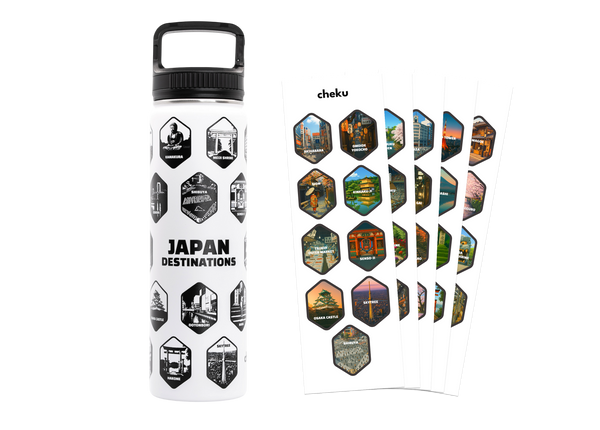
For your first trip to Japan
The Traveler Bottle
27 of Japan's most iconic destinations across Tokyo, Kyoto and Osaka, laser-engraved on a stainless steel bottle. The places you cannot miss on a first trip.
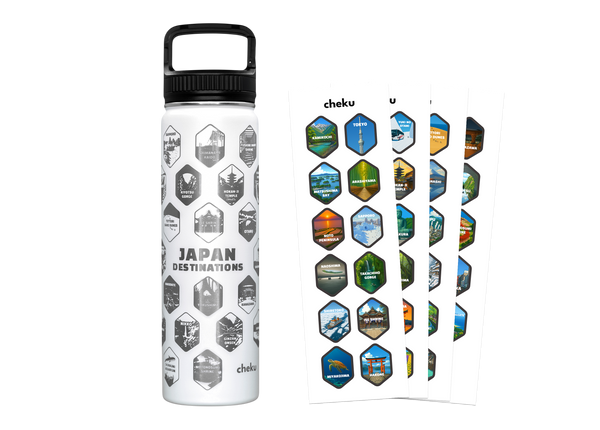
For Japan travel lovers
The Explorer Bottle
46 destinations across 31 prefectures, for travelers and residents ready to go past the highlights. The deeper Japan bucket list.
The bottle that holds your trip
Our first campaign drops on Kickstarter at 9am JST on June 15. Backers get early pricing for the first 48 hours, and the list gets the link before anyone else.
Learn from 105 haul videos
Across 105 Japan haul videos, buyer's remorse barely came up. This did: the things travelers wish they had bought, and the few traps that cost them. Dodge these seven.
You spot something, you hesitate, you move on. That shop turns out to be the only one that had it. Under-buying is the single most common souvenir regret there is. The fix is simple: if you love it, it goes in the bag now.
Every spare shirt and charger you bring is space you cannot fill with Japan. Pack deliberately light, and leave a half-empty bag or fold a flat duffel inside it for the journey back.
A five-floor Loft on day two, running on three hours of sleep, ends with you walking out empty-handed. Build your list before you fly. In-store you are then just collecting, not deciding.
The mass-produced 'artisan' trinkets in the gift shops around the big temples are not the craft you came for. Real craft carries a maker and a method. Buy crafts from craft shops, not from photo-spot stalls.
Beauty and watch counters are very good at walking you up to the pricier option. Decide your budget before you walk in. 'I am just looking, thank you' is a complete sentence.
Japan runs on 100 volts. A hair dryer or straightener bought here may not work at home, or may burn out the first time you plug it in. Only buy electricals if the box says dual voltage.
Two things before you fly
Spend ¥5,000 or more in one shop and most stores take the roughly 10% consumption tax off on the spot. Your passport is the only thing you need to carry.
The haul is bigger than you think. Travelers routinely buy a second bag to fly it all home. Pack light on the way over and plan the space.
Built by travelers
The board is only as good as the people who use it. Spotted something worth buying, or have an idea to make the tool better? We read every note.
Add to the line-up
Something worth buying that is not on the board yet? Tell us. We review every suggestion before it goes live.
Ideas & feedback
An idea for the tool, a souvenir category we are missing, something that feels off. We read every note.
Go deeper

Souvenirs
What to buy in Osaka: Tabelog reviewers and Japanese food media point to food omiyage from Kuromon Market, specific confectionery, and Osaka's depachika over tourist-zone shops.
Read the guide →

Souvenirs
What do Japanese people actually recommend as Tokyo souvenirs? Local sources point to specific brands, specific shops, and a very different list from tourist shops.
Read the guide →

Souvenirs
What to buy in Kyoto: yatsuhashi, Uji matcha, Kiyomizu ceramics, Nishiki pickles. Japanese sources point to where locals actually shop versus where tourists are sent.
Read the guide →

Souvenirs
Famous Japanese souvenirs broken down by what Japanese sources actually consider iconic — and which 'famous' items are tourist marketing rather than genuine cultural artefacts.
Read the guide →
Overwhelmed already?
In all 105 haul videos we studied, the travelers with zero regrets had one thing in common: a plan. Here is the no-regrets shortlist — the items with the broadest agreement across every haul. Add all ten to your haul in one tap.
Before you go
The best souvenirs are small, light, and specific to Japan. Furoshiki cloth, tenugui towels, incense, matcha, and individually wrapped sweets all travel well and split easily among friends and coworkers. For something with more weight to it, Japanese knives, lacquerware, and indigo-dyed textiles are worth the suitcase space. Filter the board by budget to see the options in your range.
The ones with no real export market. Furoshiki cloth, regional KitKat flavours (Tokyo Banana, Shinshu wasabi, Hokkaido melon), Sonny Angel mini figures, Sanrio collaborations that never leave Japan, indigo-dyed boro textiles, Japanese-only Studio Ghibli merchandise from the Donguri Kyowakoku stores, and any 100-yen-shop seasonal range. The board above flags the items the haul videos called genuinely Japan-only.
It depends on the souvenir. Konbini and Don Quijote cover snacks and everyday finds. Drugstores cover skincare and medicine. Department store food halls, the depachika, cover the gift-worthy sweets. Kappabashi covers knives and kitchenware. Every card on the board shows where to find that specific item, and you can filter the whole board by shop type.
Yes. Spend ¥5,000 or more in one shop on the same day and most stores take the roughly 10% consumption tax off at the counter. Carry your passport, that is the only document required. Department stores, drugstores, Don Quijote and most electronics chains participate, and the tax-free signage is in English everywhere. The discount is processed in-store, not refunded at the airport.
Most things travel. The exceptions sit in three groups. Fresh meat, fruit and vegetables get held at the border in the US, UK, EU, Canada and Australia, so leave the wagyu jerky and the omiyage peaches behind. Alcohol is capped at three 750ml bottles per adult duty-free. Anything over ¥200,000 in total declared value is dutiable on arrival home. Antique swords and items over 100 years old need an export permit from Japan before they fly.
Japan now sells 50+ KitKat flavours that never leave the country. The reliable regional exclusives are Tokyo Banana (Kanto), Shinshu wasabi (Nagano), Hokkaido melon, Uji matcha (Kyoto), Shizuoka strawberry and Setouchi salt-and-lemon. The KitKat Chocolatory at Tokyo Station and the airport hall both carry the rotating premium boxes. Mini multi-packs are the easiest gift to split, and they survive a checked bag without melting.
Yes, for anyone who cooks. A handforged gyuto (chef's knife) or santoku from Kappabashi Street in Asakusa runs ¥10,000 to ¥40,000, and arrives sharper than most home kitchens have ever known. The trusted shops are Kamata Hakensha and Tsubaya. The same knife at a specialty retailer in the US or UK sells for roughly double. Carry it home in your checked bag, never the carry-on.
The 100-yen shops, Daiso, Seria and Can Do, are a souvenir category of their own. Stationery, washi tape, cute kitchen tools, ceramics, socks and travel accessories mostly sit between ¥100 and ¥300. A konbini snack run is just as cheap. Filter the board to the single ¥ budget to see everything in that range.
Across the 105 haul videos we studied, three names came up the most by far: Loft, Tokyu Hands and the konbini. Loft and Tokyu Hands are the lifestyle one-stops, six floors of stationery, skincare, character goods and the small homeware that does not exist at home. Konbini cover the snack run and the late-night gift round. For specific categories: Kappabashi for knives and ceramics, the depachika (food halls beneath department stores) for edible gifts, and Don Quijote for skincare in bulk.
Yes. Sealed matcha powder, loose-leaf green tea and unopened snacks pass cleanly through customs in the US, UK, EU, Canada and Australia, provided the packaging is commercial and unopened. Marukyu Koyamaen and Ippodo are the cheapest at the source. Buy a few extra tins, because the at-home price is double or triple what you pay in Kyoto.
Omamori (お守り) are small embroidered amulets sold at Shinto shrines and Buddhist temples, each targeted at a specific intention: health, traffic safety, study, love, safe childbirth, business luck. Prices sit between ¥500 and ¥1,000. Buy them at the shrine office (jusho), not from the souvenir stalls outside. Tradition holds you return them to the shrine after a year, but most travelers keep them as a quiet keepsake.
Something with a maker and a method behind it. A single Echizen lacquer chopstick rest, a handblown Edo Kiriko sake glass, a bar of Kurochiku indigo soap, or a small Tsubame-Sanjo stainless steel kitchen tool all land in the under-¥5,000 range and feel personal in a way the airport-shop souvenirs do not. Filter the board by 'Gift' to see the curated shortlist.
Across the 105 haul videos we studied, buyer's remorse was rare. The real regret was the opposite: walking past something at one shop and never finding it again. The most common 'I should have bought it' items were Japanese-only Sonny Angel blind boxes, a second tin of matcha from Marukyu Koyamaen or Ippodo, a knife from Kappabashi, and a vintage piece from a small Shimokitazawa store. The fix is simple. If you love it, it goes in the bag now.
Travelers in our budget breakdowns split into three rough tiers per person, per trip. Budget travelers spend $100 to $300, mostly on snacks, drugstore skincare and small character goods. Mid-range travelers spend $300 to $600, adding a knife, a ceramic piece or a vintage clothing find. Comfort travelers spend $600 to $1,500, and routinely buy a second suitcase to fly it home. The Japan trip budget calculator runs the math against your full trip.
The airport is the place for two things: edible gifts with a short shelf life, like Tokyo Banana and Royce' chocolate, and duty-free Japanese whisky or premium skincare. Buy these last so they are fresh and so you are not carrying them around all trip. Everything else is cheaper and better chosen in the city.