
Hakone is a volcanic hot-spring region about 85 minutes southwest of Shinjuku by Odakyu Romancecar. Japanese guides run it as one fixed day-trip shape: the Golden Course loop of mountain railway, cable car, ropeway over Owakudani, and a boat across Lake Ashi, all covered by the 7,100 yen Hakone Free Pass.
A Hakone day trip from Tokyo is the most systematised day trip in Japan. That sounds like a criticism. It is the opposite. Japanese travel media has refined this day into a published loop with a name, a start time, and a pass that covers every leg of it, which means your only real job is to catch the train.
Odakyu, the railway that runs there, publishes the model course itself: out of Hakone-Yumoto at 8:30, up the mountain by railway and cable car, over the volcanic valley by ropeway, across the lake by boat, and back by bus. This guide covers that loop, the Free Pass math, and the one decision Japanese travelers make months earlier than everyone else.
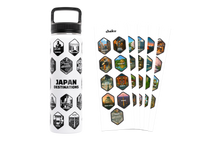
Hakone is also one of the day trips on the Traveler Bottle, the bucket-list bottle we built for first-time visitors planning the route around Tokyo.
Is Hakone worth a day trip from Tokyo?
Yes. In one loop you get a mountain railway, a ropeway over a steaming volcanic valley, a boat across a caldera lake, and a shrine founded in 757, with Mt. Fuji above the ropeway on clear days. Japanese guides treat it as a default first-visit day trip.
The case for Hakone is concentration. Most mountain day trips give you scenery and a shrine. Hakone stacks five different modes of transport through five different landscapes, and the transport itself is the sightseeing: the switchback railway climbs, the ropeway crosses the sulphur vents of Owakudani, and the boat that carries you across Lake Ashi is done up as a pirate ship. Nobody defends this last fact. Everybody rides it anyway.
The Jalan model courses make a second point worth hearing before you go: Japanese guides split Hakone into three separate days. The loop is one. The art museums around Gora are another. The Sengokuhara museum quarter and its pampas-grass fields are a third. A day-tripper picks one. Trying to do the loop and the museums in the same day is the classic first-visit mistake, and it turns a relaxed day into a timetable problem.
How do you get from Tokyo to Hakone?
Take the Odakyu Romancecar direct from Shinjuku to Hakone-Yumoto, about 85 minutes for around 2,470 yen. Ordinary Odakyu trains do it in about two hours for 1,270 yen with one transfer at Odawara. The loop starts at Hakone-Yumoto Station.
According to japan-guide.com, the three options break down like this:
- Romancecar → direct, reserved seat, about 85 minutes, around ¥2,470. The comfortable default.
- Ordinary Odakyu trains → about 2 hours with a transfer at Odawara, ¥1,270. Nearly half price for 35 extra minutes.
- Tokaido Shinkansen to Odawara → about 30 minutes from Tokyo or Shinagawa, roughly ¥3,500 one way. Only worth it if you hold a JR Pass, and you still connect to the Hakone line at Odawara.
One planning note: the Romancecar seat is separate from the Free Pass. The pass covers the regular Odakyu fare and everything inside Hakone; the Romancecar surcharge is paid on top, per Odakyu's official pass page.
What is the Hakone Golden Course?
The Golden Course is the standard loop: Hakone Tozan Railway from Hakone-Yumoto to Gora, cable car to Sounzan, ropeway over Owakudani to Togendai, pirate ship across Lake Ashi, then a walk to Hakone Shrine and a bus back to Hakone-Yumoto.
Hakone Navi's day-trip version runs it counterclockwise from an 8:30 start, and the sequencing is the whole trick: rail up the mountain, boat across the water, bus back down. One direction of travel, no backtracking.
The stops, in order:
Gora and the climb. The Tozan Railway switchbacks up from Hakone-Yumoto to Gora in about half an hour, then the cable car continues to Sounzan. This is the slow, scenic half of the morning.
Owakudani. The ropeway crosses the steaming remains of a volcanic crater, and the station sits at the top around lunchtime. The thing to eat here is the kuro-tamago, eggs boiled in the volcanic springs until the shells turn black from the iron-rich water. Jalan lists them at ¥500 for four, and the local custom says each one adds years to your life. On clear days, Mt. Fuji stands directly behind the valley.
Lake Ashi. From Togendai, the pirate ship crosses the caldera lake in about 25 minutes to Hakone-machi and Moto-Hakone. The lake sits in the crater of the old volcano, and the crossing lines up the water, the torii gate on the shore, and Fuji behind them when the weather cooperates.
Hakone Shrine. Founded in 757 per Hakone Navi, about 15 minutes on foot from the port, with its famous vermilion torii standing in the lake itself. Entry is free. From here, the bus returns you to Hakone-Yumoto, with time for a hot-spring soak before the train if you kept to schedule.
❤️ Even if your trip stays in Tokyo, the Traveler bucket-list bottle has plenty to mark off — its 27 destinations include Tokyo neighborhoods, day trips like Kamakura and Hakone, and the wider Japan route for whenever you go further. Live on Kickstarter until July 26. Reserve yours now at the best prices we'll offer.
Is the Hakone Free Pass worth it for a day trip?
Usually, yes. The 2-day pass from Shinjuku costs 7,100 yen, and Odakyu's own area guide priced the standard loop at 10,622 yen in individual fares. There is no 1-day pass; day-trippers simply use day one of the 2-day pass.
This is one of the few "is the pass worth it" questions in Japan with a published answer. Hakone Navi tested it on the Golden Course: ¥10,622 of individual fares against the ¥7,100 pass, a saving of ¥3,522 on transport alone, before counting the ¥100-per-facility discounts it carries at around 70 museums and attractions, and free entry to Gora Park, normally ¥650.
The pass covers all eight transport modes in the area, which is exactly the set the loop uses: the Tozan railway, cable car, ropeway, the boats, and the buses that fill the gaps. Official prices, as of July 2026: ¥7,100 from Shinjuku or ¥6,000 from Odawara for 2 days, ¥7,500 and ¥6,400 for 3 days.
The honest caveat: if you skip the loop and only visit one museum and one onsen near Hakone-Yumoto, individual fares win. The pass pays for the loop, and the loop is why you came.
Should you visit the Hakone Open Air Museum on a day trip?
Only if you give it a real slot. Japanese planning blogs budget 2 to 3 hours for it, the grounds involve about 2 kilometers of walking, and squeezing it into the middle of the loop compresses both.
The Hakone Open Air Museum is the region's headline museum: 120-plus outdoor sculptures across a hillside, a Picasso pavilion, and an 18-meter stained-glass tower called the Symphonic Sculpture that you climb from the inside. Admission is ¥2,000, open 9:00 to 17:00, two minutes from Chokoku-no-Mori Station on the Tozan line, one stop before Gora, per this Japanese visit-planning guide.
The same guide is refreshingly blunt about time: a fast visit is 1 to 1.5 hours, a proper one is 2 to 3, and the full grounds are about 2 km of walking with real elevation change. If you are committed to the loop, its advice is to walk the outdoor sculpture circuit, climb the stained-glass tower, rest your feet in the onsen foot bath, and let the Picasso pavilion's interior go. If art is the reason you are coming to Hakone at all, do what Japanese guides do and make it a separate Gora day, paired with the Hakone Museum of Art up the hill.
Free for you: our Tokyo Google Maps list We keep a Google Maps list of the must-see spots around Tokyo - restaurants, cafes, shops, viewpoints, and streets worth the detour. Drop your email and we'll send it over.
Should you stay overnight in Hakone instead?
If the onsen ryokan is the point, yes, and Japanese travelers decide this months ahead: 3 to 6 months for popular ryokan, 6 months for foliage season or Obon. For a sights-first first visit, the day trip covers the essentials.
Here is where Japanese behavior diverges most from a visitor's. To Japanese travelers, Hakone is above all an onsen destination, and Japanese booking-strategy guides treat the ryokan reservation as the trip's first decision, not the last. The stated baseline for popular ryokan, especially those with open-air baths in every room, is booking 3 to 6 months out. For the autumn foliage peak in late October and November, 6 months barely secures a weekend. The most famous ryokan of all, Hakone Ginyu, is described in Japanese media as the hardest booking in the country. December to February weekdays are the value window, when both availability and prices ease.
So the real question is what your day is for:
| Day trip | Overnight | |
|---|---|---|
| What you get | The full Golden Course loop | The loop at half pace, plus the onsen evening |
| Cost | ¥7,100 pass + lunch and tickets | Add roughly ¥15,000–30,000 per person at a Yumoto ryokan, more in Gora |
| Planning lead time | Buy the pass that morning | 3–6 months for popular ryokan, per Japanese booking guides |
| Best for | First visit, sights first, tight itinerary | Second visit, or a trip where the bath is the destination |
The area logic from the same source, if you do stay: Hakone-Yumoto is the accessible gateway with the widest price range, Gora is the luxury ryokan cluster, Sengokuhara is the design-hotel quarter, and the Lake Ashi shore trades ryokan character for lake views.
When is the best time to visit Hakone?
Clear winter days give the best Mt. Fuji visibility from the ropeway. Late September to November brings the golden pampas-grass fields at Sengokuhara and then the foliage, and everything books out accordingly.
The seasonal logic in Japanese sources is mostly about what you can see. Fuji appears when the air is clear, which favors crisp winter mornings. Jalan's Sengokuhara course puts the susuki pampas fields at their golden peak from September to November, and the foliage that follows is the season every ryokan calendar in the region is priced around. If your dates land in that window, the booking-timing advice above stops being optional.
The photographer's note: on the ropeway, sit on the side facing away from the mountain slope, because Fuji reveals itself over Owakudani suddenly and the window seats go first. At Moto-Hakone, the lakeside torii of Hakone Shrine draws a queue for the front-on shot; the quieter frame is from further along the shore path, with the gate small against the water and Fuji behind. Late afternoon light comes down the lake lengthwise, and the last boats of the day carry it with them.
If you are stringing Hakone into a longer route, it slots naturally between Tokyo and the westward leg; our guide to getting from Tokyo to Kyoto covers that next step, and our roundup of the best day trips from Tokyo covers how Hakone compares with a Mt. Fuji day trip when Fuji itself is the goal.
❤️ For the full route that links Tokyo to Kyoto to wherever you go next, 3 Weeks in Japan is our 200+ page travel guide — day-by-day plans for Tokyo, Kyoto, Osaka & Nara, and six Tokyo day trips, with our photography of each one. Live on Kickstarter until July 26. Reserve yours now at the best prices we'll offer.
FAQ
Is Hakone worth a day trip from Tokyo?
Yes. Hakone is about 85 minutes from Shinjuku on the Odakyu Romancecar, and the standard loop covers a mountain railway, a ropeway over the volcanic Owakudani valley, a boat across Lake Ashi, and a 1,200-year-old shrine in a single day. Japanese guides publish it as a set day-trip course starting around 8:30.
Is the Hakone Free Pass worth it for one day?
Usually yes. There is no 1-day version, but the 2-day pass costs 7,100 yen from Shinjuku, and Odakyu's own area guide priced the standard loop at 10,622 yen in individual fares. The pass covers all eight transport modes on the loop plus discounts at around 70 facilities.
How do you get from Tokyo to Hakone?
The Odakyu Romancecar runs direct from Shinjuku to Hakone-Yumoto in about 85 minutes for around 2,470 yen. Ordinary Odakyu trains take about two hours with one transfer at Odawara for 1,270 yen. The Tokaido Shinkansen reaches Odawara in about 30 minutes for roughly 3,500 yen one way.
Should you stay overnight in Hakone instead of a day trip?
If an onsen ryokan is the point of your trip, yes, but plan early. Japanese booking guides treat 3 to 6 months ahead as standard for popular ryokan, and 6 months for autumn foliage or Obon dates. For a first visit focused on the sights, the day-trip loop covers the essentials comfortably.
Sources
- Odakyu — Hakone Free Pass prices — official 2-day and 3-day pass prices
- Hakone Navi — Free Pass value check — coverage and the tested loop savings
- Hakone Navi — Golden Course day trip — the model loop, timings, Hakone Shrine
- Jalan — Hakone Free Pass model courses — the loop, Gora art, and Sengokuhara courses with prices
- Tra-bell — Hakone ryokan booking strategy — booking lead times by season and area guide
- Banzoku — Hakone Open Air Museum time guide — duration, admission, priorities
- japan-guide.com — Getting to Hakone — access options and fares
Activities and tours in Tokyo
cheku is a GetYourGuide partner. We link to tours that handle the parts of travel that eat your time, getting there, booking ahead, language, context you'd otherwise miss. If you book through our link, we earn a small commission at no extra cost to you.


