
Higashiyama is Kyoto's eastern district, running along the base of the Higashiyama mountains. It holds the city's densest concentration of temples, shrines and preserved stone-paved streets, including Kiyomizu-dera, Yasaka Shrine and the Gion geisha quarter. It is the most walkable historic area in Kyoto.
If you only have one day in Kyoto and you want it to look the way Kyoto looks in your head, you spend it in Higashiyama. The eastern district of Kyoto is where the wooden machiya streets, the temple gates, the stone-paved slopes and the geisha quarter all sit within walking distance of one another. You do not need a transport plan. You need comfortable shoes and an early start.
Japanese travel sources are direct about why Higashiyama works. Souda Kyoto, the official travel site run by JR Tokai, describes the Gion and Higashiyama area as a run of "stone-paved walking paths full of Kyoto atmosphere," linking the teahouse street of Hanami-koji, the willow-lined Gion Shirakawa canal, and the Ninenzaka and Sannenzaka slopes that climb toward Kiyomizu-dera. The appeal is the walking itself.
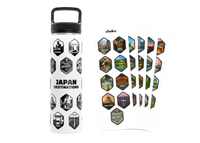
Higashiyama is one of the Kyoto stops on the Traveler Bottle, the bucket-list map we built for first-time visitors who want the route that holds up after you do the research. This guide covers what Higashiyama is, the streets and temples worth your time, and how to walk the district so it feels like Kyoto rather than a queue.
What is the Higashiyama district?
Higashiyama is the eastern of Kyoto's central districts, named for the Higashiyama mountains it sits against, and it contains the largest connected stretch of historic Kyoto still standing.
The name 東山 simply means "eastern mountains." The district takes in the lower slopes where they meet the city, and that geography is the whole story. Because the land rises toward the hills, Higashiyama was never flattened and rebuilt the way much of central Kyoto was. The temples stayed. The narrow approach streets stayed. The result is a district where you can walk for an afternoon and rarely lose the sense of old Kyoto.
What sets Higashiyama apart from Kyoto's other famous areas is density. Arashiyama has its bamboo grove and Fushimi has its torii gates, but they are single destinations. Higashiyama is dozens of destinations threaded together by streets that are themselves worth the walk. You move from a World Heritage temple to a preserved shopping slope to a shrine to a geisha quarter without ever getting in a vehicle.
Where is Higashiyama, and how do you get around?
Higashiyama runs down the eastern edge of central Kyoto, just across the Kamogawa from downtown. You reach it by train or bus, and once you are there, you walk.
The practical access points:
- Keihan Line: Gion-Shijo Station drops you at the foot of Gion. Kiyomizu-Gojo Station is closer to the southern end and the climb toward Kiyomizu-dera.
- City bus: Routes along Higashioji-dori, the district's main road, stop near most of the major sights. Buses get crowded in peak season.
- From downtown: If you are staying near Kawaramachi or Pontocho, Higashiyama is a short walk across the river.
Once inside the district, do not plan around transport. The core sights sit within a 30-to-40-minute walk of each other, and the walking is the experience. The one thing worth planning is direction. Most people walk Higashiyama north to south or south to north along the slope, and starting at the Kiyomizu-dera end while it is early is the move that changes your whole day.
What are Higashiyama's historic streets?
Ninenzaka and Sannenzaka are the district's preserved stone-paved slopes, lined with wooden shopfronts, and they form the classic approach walk up toward Kiyomizu-dera.
These streets are not a route to somewhere better. They are the destination. Sannenzaka, "three-year slope," and Ninenzaka, "two-year slope," are gently stepped lanes paved in stone and walled with traditional wooden buildings, now holding teahouses, craft shops, sweet shops and cafes. Souda Kyoto groups them with Hanami-koji and Gion Shirakawa as the area's signature stone-paved walks, and that grouping tells you what to expect: streets designed, centuries ago, to be moved through slowly.
The catch is that everybody knows this. By late morning in any tourist season, Sannenzaka becomes a slow river of people. The streets are still beautiful then. They are just no longer quiet. The fix is timing, which we will come back to.
The photographer's eye: these slopes face roughly west and stay in soft shade early. The best window is the first hour after sunrise, when the stone is clean of crowds and the light is even rather than harsh. Shoot down the slope rather than up, so the stepped paving and the rooflines stack into the frame. After rain, the wet stone doubles the light and the streets read at their best. Stand to one side; these are working shopping streets, not a set.
Which temples and shrines should you see in Higashiyama?
Kiyomizu-dera and Yasaka Shrine are the two anchors. Kodaiji and, at the southern end, Sanjusangendo round out a district that holds more worthwhile temples than one day can hold.
The essentials, north to south:
- Yasaka Shrine. A major shrine at the eastern end of Shijo-dori, it functions as the gateway between Gion and the Higashiyama slopes. It is open and free to walk through, busy day and night, and it sits right beside Maruyama Park.
- Kiyomizu-dera. The district's headline sight and a UNESCO World Heritage temple, known for its great wooden stage projecting over the hillside and the views back across Kyoto. It is the busiest place in Higashiyama. Going first thing is the difference between a memory and a crush.
- Kodaiji. A quieter temple founded by Nene, the wife of the warlord Toyotomi Hideyoshi, with gardens that reward an unhurried visit. It is the kind of stop that thins out the moment you step off the main slope.
- Sanjusangendo. At the southern edge of Higashiyama, this is the long hall of 1,001 Kannon statues. It is indoors, calmer than the hillside temples, and a good way to bookend a Higashiyama day.
A realistic note: you cannot see all of these properly in a few hours. Higashiyama has more temples than this list, and trying to tick every one turns a great district into a checklist. Pick the anchors, walk the streets between them well, and let the rest go.
Free for you: our Tokyo Google Maps list We keep a Google Maps list of the must-see spots around Tokyo - restaurants, cafes, shops, viewpoints, and streets worth the detour. Drop your email and we'll send it over.
What is Gion, the geisha district in Higashiyama?
Gion is Higashiyama's historic geisha quarter, centred on the teahouse street of Hanami-koji and the willow-lined canal lane of Gion Shirakawa. It is a working hanamachi, not an attraction.
Gion sits at the northern, downtown-facing edge of Higashiyama, around Yasaka Shrine and Shijo-dori. Two streets define it for most visitors. Hanami-koji is the teahouse street, lined with wooden ochaya frontages, and it is where geiko and maiko move between appointments in the early evening. Gion Shirakawa is the quieter counterpart, a short canal lane hung with willows that Souda Kyoto singles out as one of the most atmospheric corners of the whole area.
Here is the part that matters. Gion is a neighborhood where people genuinely live and work. The geiko and maiko you might glimpse are on their way to a job, not performing for a street. In 2019, the district responded to years of tourist crowding by posting photography restrictions on its private alleys. The public main streets remain fine for photographs. The private lanes are not, and that line should be respected.
First evening in Kyoto, want atmosphere over checklist: walk Gion Shirakawa at dusk, then cross the river for dinner. You want the famous temple view: start your day at Kiyomizu-dera before 8am and walk the slopes down afterward. You want quiet over icons: prioritize Kodaiji and the southern end around Sanjusangendo, and skip the slopes at midday.
When is the best time to visit Higashiyama?
Early morning. The district's streets and temples are genuinely transformed by the hour you arrive, and the gap between 7am and 11am Higashiyama is enormous.
This is the single most useful thing to know about Higashiyama. The streets that look serene in photographs, the stepped slopes, the temple approaches, are photographed early or late for a reason. By mid-morning in any tourist season they fill, and Sannenzaka in particular becomes slow going. Japanese travel coverage of the area, including the listings on Yahoo Travel, consistently points visitors toward the major sights, which is exactly why arriving ahead of the crowds pays off so much here.
By season:
- Cherry blossom (late March to early April): Maruyama Park, beside Yasaka Shrine, is one of Kyoto's most popular blossom-viewing spots. Beautiful, and correspondingly crowded.
- Autumn (mid to late November): The Higashiyama temples and their maples are a headline draw. Stunning, and the busiest the district gets.
- Off-peak (early summer, winter): Fewer crowds, lower pressure, and the streets closer to how they were meant to feel.
Whatever the season, the time-of-day rule beats the time-of-year rule. An off-peak afternoon can still be crowded; a peak-season 7am rarely is.
How do you spend a day in Higashiyama?
Start high and early at Kiyomizu-dera, then walk downhill through the slopes to Gion, ending the evening across the river. Gravity and crowd logic both push you the same direction.
The route that works:
Kiyomizu-dera before 8am → empty stage, clean light, the temple at its best Down through Sannenzaka and Ninenzaka → the slopes before they fill, shops opening Kodaiji → a quieter temple to slow the pace mid-morning Yasaka Shrine and Maruyama Park → open, free, a natural midday break Hanami-koji and Gion → late afternoon, as the light softens Gion Shirakawa at dusk → the willows and the canal, then dinner across the river
If you have a full day and the energy, add Sanjusangendo at the southern end before or after the slopes.
If you only do three things in Higashiyama: 1. Reach Kiyomizu-dera before 8am. The same temple is a different place at that hour. 2. Walk Sannenzaka and Ninenzaka slowly, in the morning, before the shops are shoulder to shoulder. 3. Be in Gion Shirakawa at dusk, when the lane empties and the willows and water do the work.
For fitting Higashiyama into a wider trip, the 2-Week Japan Guide covers the pacing Japanese travel writers recommend so a day like this lands with room to breathe around it.
What should you know before visiting Higashiyama?
Higashiyama rewards an early start, respectful behavior in Gion, and a willingness to skip things. The district punishes a packed checklist and a late arrival.
A short pre-visit checklist:
- Start early. It is the whole game. A 7am start changes every street you walk.
- Wear real shoes. This is a walking day on stone slopes and steps.
- Respect Gion. Public streets are fine for photos; private alleys are not. Do not crowd or photograph geiko and maiko without consent.
- Skip deliberately. You cannot do every temple. Choose anchors and walk well between them.
- Carry cash. Smaller shops, sweet stalls and teahouses along the slopes still favor it.
Higashiyama is the destination that makes the case for the whole Traveler Bottle: a place that is genuinely worth the journey, and genuinely better when you understand how to walk it. Give it a full day, start before the crowds, and let Kyoto be Kyoto.
FAQ
What is Higashiyama in Kyoto?
Higashiyama is Kyoto's eastern district, running along the base of the Higashiyama mountains. It holds the city's densest concentration of temples, shrines and preserved stone-paved streets, including Kiyomizu-dera, Yasaka Shrine and the Gion geisha quarter, and it is the most walkable historic area in Kyoto.
How long do you need in Higashiyama?
A focused half-day covers the core walk from Kiyomizu-dera down through the slopes to Yasaka Shrine and Gion. A full day lets you add Kodaiji, Maruyama Park and the southern temples around Sanjusangendo. Most first-time visitors give Higashiyama a full day.
Can you take photos in Gion?
On Gion's public main streets, yes. The district's private alleys carry posted photography restrictions, introduced in 2019, and those should be respected. Never photograph geiko or maiko without consent. Treat Gion as a neighborhood where people live and work.
Sources
- Souda Kyoto — Gion and Higashiyama area guide — JR Tokai's official Kyoto travel site
- Kyoto City Tourism Navi — Higashiyama Trail — the Higashiyama section of the Kyoto Trail
- Yahoo Travel — Higashiyama sightseeing — Japanese travel platform area listings
Activities and tours in Tokyo
cheku is a GetYourGuide partner. We link to tours that handle the parts of travel that eat your time, getting there, booking ahead, language, context you'd otherwise miss. If you book through our link, we earn a small commission at no extra cost to you.


