
Pontocho is a narrow stone-paved alley on the west bank of the Kamogawa, running between Sanjo and Shijo in central Kyoto. One of the city's historic geisha districts, it packs around 74 restaurants and teahouses into a single lane. From May to October, many build wooden platforms out over the river.
Pontocho Alley in Kyoto is barely wide enough for two people to pass with umbrellas open. It runs for roughly half a kilometer, parallel to the Kamogawa, and from the outside it gives almost nothing away. The frontages are wooden, low, and quiet. The signs are small. What looks like a service lane is in fact one of the densest, most storied dining streets in the country.
The Pontocho merchants association describes the district as a hanamachi, a "flower district," and counts around 74 member shops along the lane. That is the figure worth holding onto. Most Kyoto streets give you a handful of restaurants. Pontocho gives you dozens, stacked frontage to frontage, behind doors you have to be willing to open.
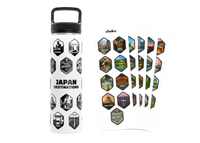
Pontocho is one of the Kyoto stops on the Traveler Bottle, the bucket-list map we built for first-time visitors who want the version of Japan that holds up after you do the research. This guide covers what Pontocho actually is, what to eat there, and how to time a visit so the alley looks the way you hoped it would.
What is Pontocho Alley?
Pontocho is a single pedestrian alley in central Kyoto, lined end to end with restaurants, teahouses and bars, and it functions as one of the city's historic geisha districts.
The name is written 先斗町 and read "pon-to-cho," which trips up most first-time readers. It sits between two of Kyoto's busiest streets, Sanjo-dori at the north end and Shijo-dori at the south, and runs the whole way without a single car. That is the first thing to understand about Pontocho: it is a walking street, and it was built to a human scale that nothing in modern Kyoto matches.
The merchants association frames its purpose plainly. Pontocho-dori is a hanamachi, and the association exists to "guard and transmit Pontocho's character" to the next generation. That character is partly architectural, the wooden machiya frontages and the lanterns, and partly social, the teahouses and the geiko and maiko who still work here.
By night the alley is lit by rows of paper lanterns hung along its length, and the effect is the reason Pontocho appears in so many photographs of Kyoto. It is a street designed to be walked slowly, after dark, on the way to dinner.
Where is Pontocho Alley in Kyoto, and how do you get there?
Pontocho runs along the west bank of the Kamogawa between Sanjo and Shijo bridges, in the Nakagyo and downtown area of central Kyoto. The nearest stations sit within a few minutes' walk.
The geography is simple once you have it. The Kamogawa runs north to south through central Kyoto. Pontocho hugs the river's west bank. One block further west, parallel to Pontocho, runs Kiyamachi-dori with its small canal. If you are walking the riverside and looking for the entrance, look for a narrow gap in the buildings rather than a grand gate. The alley announces itself with a small sign and not much else.
For access:
- Keihan Line: Sanjo Station or Gion-Shijo Station both put you a short walk from an end of the alley, on the east bank. Cross the bridge.
- Hankyu Line: Kyoto-Kawaramachi Station sits near the Shijo end.
- On foot: Pontocho pairs naturally with Kyoto's Higashiyama district, which is directly across the river. Many visitors spend the afternoon walking Higashiyama's temples and the evening at dinner in Pontocho.
If you are sequencing a wider Kyoto trip and want help with pacing, the 2-Week Japan Guide covers the order Japanese travel writers tend to recommend for first-time itineraries.
What can you eat in Pontocho?
Almost anything. Pontocho's 74-odd shops cover formal Kyoto kaiseki, casual izakaya, yakitori counters, tofu specialists, bars, and a scattering of Italian and Chinese kitchens.
This is the part most guides oversimplify. Pontocho is not a kaiseki-only street, and it is not a tourist-trap street either. Japanese restaurant platforms like Retty and Tabelog list the lane's restaurants across every price band and several cuisines. The merchants association's own dining directory runs the same range.
What that means in practice: you choose Pontocho for the setting, then pick the format that fits your night.
| Kaiseki / kyo-ryori | Izakaya & yakitori | Kawadoko platform (summer) | |
|---|---|---|---|
| The experience | Multi-course Kyoto cuisine in quiet rooms | Small plates and grilled skewers, casual | Any cuisine, served on a deck over the river |
| Best for | A special, slow dinner | A relaxed first night, or a smaller budget | Travelers visiting May–October who want the view |
| Reservation | Book ahead | Often walk-in; some take bookings | Book ahead in peak summer |
| Atmosphere | Formal, hushed | Lively | Open-air, breezy |
One practical note from Japanese dining sources: many Pontocho restaurants add a small per-person seating charge, the otoshi, which usually comes with a token first dish. It is normal, not a scam. Budget a little above the menu prices, carry cash as backup, and check whether a place has an English menu before you sit if that matters to you.
What is kawadoko, the riverside dining over the Kamogawa?
Kawadoko is the Kyoto summer tradition of building wooden dining platforms out over the Kamogawa. Pontocho restaurants on the river side open theirs from May to October, and dinner there is one of the city's signature seasonal experiences.
The platforms are called noryo-yuka, often shortened to yuka, and the practice along the Kamogawa is old. Kyoto City's tourism office traces the riverside-platform tradition back to the Momoyama period, and notes that around 90 establishments along the west bank, between Nijo and Gojo, build them each year.
For Pontocho specifically, the Kamogawa Noryodoko association confirms the 2026 season runs May 1 to October 15, though some restaurants close their platforms by the end of September. The Pontocho zone is one of four stretches the association manages along the river.
A few things worth knowing before you book a yuka dinner:
- The view is the point. You are eating above the river, looking across to the Higashiyama hills. Restaurants charge for that, so a platform seat usually costs more than the same kitchen's indoor table.
- Lunch platforms exist. Not every restaurant runs them, and hours vary by shop, but a daytime yuka meal is a quieter, often cheaper way to get the same setting.
- Book ahead in peak summer. July and August platform seats go fast.
If your trip lands outside the May-to-October window, you still get the alley, the lanterns and the food. You simply miss the decks.
Free for you: our Tokyo Google Maps list We keep a Google Maps list of the must-see spots around Tokyo - restaurants, cafes, shops, viewpoints, and streets worth the detour. Drop your email and we'll send it over.
Can you see geiko and maiko in Pontocho?
Pontocho is a working hanamachi, so geiko and maiko do pass through it, usually in the early evening. Sightings are brief and never guaranteed. The dependable way to see them perform is the Kamogawa Odori.
This is where honest expectations matter. Pontocho is not a performance set. It is a district where geiko and maiko genuinely live and work, and they move through the alley on their way to appointments at the teahouses. If you are walking Pontocho around dusk you may see one, walking quickly, clearly on her way somewhere. That is the correct way to experience it: as a glimpse, not a photo opportunity. Do not follow, crowd, or block anyone.
The reliable alternative is the stage. Every May, the geiko and maiko of Pontocho perform the Kamogawa Odori, the district's annual dance, at the Pontocho Kaburenjo theater at the north end of the alley. The Kamogawa Odori official site lists the run; the 2026 edition, the 187th, ran from May 5 to 22, with three performances a day. The dance returns each spring, so if your trip is built around seeing Pontocho's performers properly, plan it for May and book a seat rather than relying on the street.
When is the best time to walk Pontocho?
Go at dusk. The lanterns come on as the light drops, the alley shifts from a quiet lane to its lit-up evening self, and you can still walk it before the dinner crowd fills in.
Pontocho has two completely different daytime and night-time characters. During the day it is hushed and almost empty, most shutters down, and you can see the architecture clearly without anyone in the frame. After dark it becomes the street from the photographs. The window where you get both, the visible detail and the lit lanterns, is the half hour around sunset.
A photography note, since the alley is one of the most-shot streets in Kyoto: the lane runs roughly north to south and is very narrow, so it stays in shadow long before the sky does. Shoot it in the blue hour just after sunset, when the lantern light and the remaining sky light balance out. Frame it vertically, the proportions of the alley demand it, and stand at one end to compress the run of lanterns into a single line. Wet stone after rain reads especially well here. Be quick, stand to the side, and let people through. This is a working street, not a viewpoint.
What should you know before you go?
Pontocho rewards a little preparation: it is a working district with its own etiquette, a cash-friendly culture, and restaurants that range from walk-in casual to reservation-only.
A short checklist before you visit:
- Respect the teahouses. The ochaya and their private entrances are not for tourists. Look, do not enter, and do not photograph people without consent.
- Carry cash. More places take cards than used to, but smaller counters and bars still lean on cash.
- Expect the otoshi. The small seating charge is standard across much of the lane.
- Reserve for kaiseki and for summer yuka. Casual izakaya often take walk-ins; the formal end does not.
- Walk it twice. Once in daylight to read the architecture, once after dark for the lanterns. They are nearly different streets.
Pontocho is the kind of place the Traveler Bottle was built around: a destination that looks good in a photo and turns out to be even better when you actually understand what you are walking into. If Kyoto is on your route, give Pontocho an evening, not just a pass-through.
FAQ
What is Pontocho Alley in Kyoto?
Pontocho is a narrow stone-paved alley on the west bank of the Kamogawa, between Sanjo and Shijo in central Kyoto. It is one of Kyoto's historic geisha districts, and the merchants association counts around 74 restaurants, teahouses and bars along the single lane. At night it is lit by paper lanterns.
When is the best time to visit Pontocho?
Evening, around dusk, when the lanterns come on but the dinner crowd has not yet filled the alley. From May to October, restaurants on the river side also open their kawadoko platforms over the Kamogawa, so summer visitors get the alley and the open-air decks together.
Can you see geisha in Pontocho?
Pontocho is a working hanamachi, so geiko and maiko do move through it in the early evening. Sightings are brief and not guaranteed. The reliable way to see them perform is the Kamogawa Odori, the district's annual dance held every May at the Pontocho Kaburenjo theater.
Is Pontocho expensive?
It ranges widely. Pontocho has formal multi-course kaiseki that is a genuine splurge, but the same lane also has casual izakaya, yakitori counters and bars that suit a smaller budget. Many places add a small seating charge, and summer platform seats cost more than indoor tables.
Sources
- Pontocho Noren-kai — official merchants association: district description and member-shop count
- Kamogawa Noryodoko association — 2026 kawadoko season dates and Pontocho-zone listings
- Kyoto City Tourism Navi — noryodoko — history and scope of the Kamogawa riverside platforms
- Kamogawa Odori official — the annual Pontocho dance and its schedule
- Retty — Pontocho restaurants — confirms the lane's range of cuisines and price bands
Activities and tours in Tokyo
cheku is a GetYourGuide partner. We link to tours that handle the parts of travel that eat your time, getting there, booking ahead, language, context you'd otherwise miss. If you book through our link, we earn a small commission at no extra cost to you.


