
Japan has no enforced dress code for tourists, but it has strong unspoken norms. The clothes that work against you are very casual athleisure, beachwear away from the beach, anything that leaves you under-covered for a temple, and shoes that are hard to slip off. Aim for neat, comfortable and easy to layer, and you will fit in fine.
"What not to wear in Japan" is a question worth asking before you pack, not because Japan is strict, but because it is subtle. Nobody will stop you on the street or refuse you entry to a shop over your outfit. What happens instead is quieter: certain clothes simply mark you as a visitor, leave you uncomfortable, or fall short in the few places where coverage genuinely matters.
This guide covers what to leave at home and why, drawn from what experienced travelers consistently flag. The good news is that dressing well for Japan is mostly about comfort and a little awareness, not a rulebook.
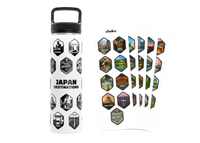
For the full season-by-season picture of what to bring, our free Japan packing tool builds a checklist around your travel dates, and for summer specifically our Japan summer packing list covers the heat-and-humidity kit. And the Traveler Bottle covers the 27 destinations you are dressing for.
Is there a dress code for tourists in Japan?
No, there is no enforced dress code, but there is a strong norm worth knowing. Japan is a put-together country. People dress neatly even when dressing casually, and the baseline on a Tokyo street is closer to smart-casual than to gym-casual.
This matters less as a rule and more as a comfort tip. You will not be judged or refused anything for wearing what you like. But very casual clothing, full athleisure, baggy loungewear, beach sandals in the city, simply reads as "tourist," and some travelers feel more at ease dressing a notch up. Think neat, simple and well-fitting over loud and logo-heavy.
The one place this shifts into something firmer is temples, shrines and traditional spaces, covered next.
What should you not wear to temples and shrines?
Skip anything you would wear to a beach or a nightclub, and wear shoes you can take off easily. Temples and shrines in Japan are generally relaxed and rarely enforce a dress code, but they are places of worship, and a little coverage is a sign of respect.
Avoid beachwear, very short shorts, bare midriffs and anything see-through. You do not need to cover up head to toe, Japan is more relaxed here than some other Asian destinations, but having your shoulders covered is a safe and respectful default. Carrying one light layer handles this without changing your whole outfit.
The shoes point is practical rather than about modesty. You will remove your shoes to enter many temple buildings, traditional restaurants and ryokan. Slip-on or easily unlaced shoes save you constant fiddling, and because your socks will be on display, pack ones without holes.
Is there a color you shouldn't wear in Japan?
No color is off-limits for tourists. The one nuance worth knowing: a stark all-black or formal black-and-white outfit reads as funeral or ceremonial dress in Japan, so it can look out of place for casual daytime sightseeing. A black t-shirt is completely fine — this is about a formal cut, not the color itself.
This comes up a lot, and the honest answer is reassuring: there is no color that will offend anyone or mark you as rude. The only cultural notes are minor:
- Formal black is the color of funeral dress in Japan, so a full black formal outfit worn casually can read as ceremonial rather than everyday. Casual black clothing is completely normal and worn everywhere.
- All-white formalwear carries a faint ceremonial and bridal association, but again only in formal cuts. Everyday white clothing is fine.
- Loud, costume-like brights stand out more than any single color. What actually marks you as a visitor is an outfit that reads as a costume rather than clothes, not its color.
The practical takeaway matches the rest of this guide: muted, coordinated colors blend in and photograph well. But you are free to wear color — Japanese street style in Harajuku and Shibuya is often bold and bright.
What marks you as a tourist in Japan?
The clearest tells are full athleisure, city-worn hiking gear, and loud beach clothing. None of these will cause a problem. They just stand out.
Athleisure is the big one. Leggings, gym shorts and hoodies as a daytime outfit are far less common in Japan than in much of the West. Full hiking kit, technical trousers, big boots, a large frame backpack, looks out of place for ordinary city sightseeing, even though you will be walking a lot. Bright beachwear, flip-flops and tank tops away from a beach or resort have the same effect.
You do not need to dress up. You need to dress neat and intentional. Simple, well-fitting clothes in calmer colors blend in, and they photograph better against Japan's backdrops too.
Two subtler tells are worth knowing. The first is dressing for the wrong season. Japanese fashion tracks the calendar closely, and people switch their wardrobe as the weather turns; a traveler in shorts on the first cool week of October, or in a heavy coat through a mild April afternoon, stands out as much for the timing as for the garment. Packing to your actual travel month, rather than to a vague idea of the season, quietly solves this. The second tell is over-equipping. A large frame backpack, a travel vest with a dozen pockets, a money belt worn outside the clothes, and a camera rig the size of a small dog all read as visitor far more loudly than any single item of clothing. Japan is a low-key, safe, easy country to move through, and a compact day bag is all the city asks of you. None of this is about looking Japanese, which no visitor will and nobody expects. It is about looking comfortable rather than braced for an expedition.
Is revealing clothing okay in Japan?
It is allowed, but Japanese norms run a little differently than you might expect. This is worth understanding before you pack, because the instinct travelers bring from home does not always match.
Japanese fashion tends to be relatively modest on top and more relaxed about legs. Short skirts and shorts are common and unremarkable. Low-cut tops, bare shoulders and visible cleavage are much less common and can draw attention. This is the reverse of the assumption many visitors arrive with.
None of this is a rule, and nobody will say anything. But if blending in matters to you, a top with some coverage is the easier choice, and it doubles as your temple-appropriate layer.
What about tattoos and the onsen?
Tattoos are fine on the street and a real consideration at the bath. Day to day, visible tattoos cause no issue in Japan and are increasingly common.
The exception is bathing culture. Many onsen, public baths and pools still do not admit guests with visible tattoos, a holdover from tattoos' historical associations in Japan. If using an onsen is on your list and you have tattoos, you have good options: seek out tattoo-friendly baths, which are growing in number, book a private family bath, or cover a small tattoo with a skin-tone patch. It is worth checking before you go rather than being turned away at the door.
What to leave home, and what to wear instead
Here is the swap, item by item. None of the left column is forbidden. The right column is simply what works better in Japan.
| Leave at home | Wear instead | Why |
|---|---|---|
| Full athleisure as daytime outfits | Neat, simple separates | Athleisure reads as tourist; smart-casual blends in |
| Beachwear and flip-flops in the city | Light, covered everyday clothing | Out of place away from beaches and resorts |
| Hard-to-remove laced boots | Slip-on or easily unlaced shoes | You will take shoes off at temples, restaurants and ryokan |
| Very revealing tops | A top with shoulder coverage | Matches local norms and doubles as a temple layer |
| Strong perfume or cologne | A light scent or none | Heavy fragrance is considered inconsiderate indoors and on trains |
| New, unworn shoes | Broken-in walking shoes | You will walk 10,000 to 20,000 steps a day |
The shoes line is the one travelers regret most. Comfortable, broken-in footwear is the single most important thing you will wear in Japan, in any season. Our autumn packing list and the packing tool both build the rest of the outfit around it.
Free for you: our Japan packing tool Pick your travel month and get a checklist built for it, with the clothing that works and the items to skip. Drop your email and we will send the full trip planner too.
Do you need to dress up to eat out in Japan?
For most meals, no, but Japan's range runs wider than many visitors expect, and a couple of settings genuinely ask for more. Knowing where the line sits saves you from feeling underdressed at one end or overpacked at the other.
The vast majority of eating out in Japan is casual and needs no special outfit. Ramen shops, izakaya, conveyor-belt sushi, curry houses, casual cafes and the depachika food halls all welcome you exactly as you are dressed for sightseeing. Neat everyday clothes are completely fine. You do not need to pack a separate dinner outfit for an ordinary trip, and travelers who do almost always report leaving it in the suitcase.
The exceptions are worth knowing. High-end restaurants, particularly fine kaiseki, upscale sushi counters and hotel restaurants, expect smart-casual at a minimum, and a few have an explicit dress code that rules out shorts, vests and visible athletic wear. If a special-occasion dinner is on your itinerary, check the restaurant when you book, and pack one outfit that can rise to it. A single smart layer, a collared shirt or a simple dress, covers almost any upscale setting Japan will put in front of a traveler.
A traditional ryokan is its own gentle case. You are usually given a yukata to wear around the inn and often to dinner, so the ryokan effectively provides your evening outfit. You do not need to pack anything special for a ryokan stay.
One restaurant detail catches visitors out: at many traditional restaurants, izakaya with tatami seating and ryokan dining rooms, you remove your shoes at the entrance. It is the dress-related thing most worth preparing for. Wear shoes you can slip off without sitting down to unlace, and keep your socks presentable, since they become part of the outfit the moment the shoes come off.
The thread here is the same one that runs through the rest of dressing for Japan: aim for neat and adaptable rather than either extreme. A wardrobe of mix-and-match separates that looks tidy by day and acceptable at a nicer dinner serves you far better than a dedicated formal outfit you wear once, and it leaves the suitcase space that, in Japan, you will be glad of.
FAQ
Is there a dress code for tourists in Japan? No enforced code, but a strong norm. Japanese people dress neatly even when casual, so leaning smart-casual rather than very casual helps you feel comfortable and stand out less.
Can you wear shorts in Japan? Yes, especially in the hot summer. They are fine for sightseeing. Bring one more covered option for temple visits, and note that beach-style shorts look out of place away from actual beaches.
What should you not wear to a temple in Japan? Avoid beachwear, very short shorts and bare midriffs; shoulders covered is a respectful default. Wear shoes that slip off easily, since you remove them to enter many temple buildings.
Can you show tattoos in Japan? On the street, yes. The exception is onsen and public baths, many of which still do not admit visible tattoos. Look for tattoo-friendly baths, book a private bath, or cover small tattoos with a patch.
What color should you not wear in Japan? No color is off-limits. The only nuance: a stark all-black or formal black-and-white outfit reads as funeral or ceremonial dress, so it can look out of place for casual daytime sightseeing. Casual black clothing is completely normal, and loud costume-like brights stand out more than any single color. You are free to wear color.
How we built this guide: the points above are digested from more than 100 recent Japan packing and travel-tip videos (2025 to 2026), focused on what experienced travelers consistently advised on dressing for Japan. Japan is welcoming to visitors; this is about comfort and fitting in, not rules.
Activities and tours in Tokyo
cheku is a GetYourGuide partner. We link to tours that handle the parts of travel that eat your time, getting there, booking ahead, language, context you'd otherwise miss. If you book through our link, we earn a small commission at no extra cost to you.


