
August is Japan's hardest month to visit comfortably and one of its most culturally layered. The heat is genuine, Tokyo regularly exceeds 35°C with humidity above 80%, and Obon week triggers the year's second-biggest travel surge. But there's a detail Japanese travel sources note that international guides mostly miss: the Obon reverse-commute empties central Tokyo and Osaka of their residents, leaving urban areas quieter than usual for the visitors who stay. Hokkaido in August is a different proposition entirely.
Japan in August rewards specific planning more than any other month. Going without knowing about Obon, the heat index, and the Hokkaido alternative is the version that produces difficult trips. Japanese travel writing in August is almost entirely about where to go to escape the conditions, which is itself useful framing.
For timing context across the whole year, the full best-time-to-visit guide covers every month with Japanese source data.
What is the weather like in Japan in August?
August is Japan's hottest month across all major regions. tenki.jp records Tokyo averages of 32–35°C with humidity above 80%, producing afternoon heat index readings that regularly exceed 38–40°C. The Japan Meteorological Agency issues 熱中症警戒アラート (heat stroke alert) on the majority of August days in Tokyo, Osaka, and Kyoto, this is the same system that triggers closures of outdoor events.
Kyoto's basin geography makes it particularly severe. Surrounded by mountains that trap heat and humidity, central Kyoto can reach 37–38°C in afternoon peaks. Japanese travel sources describe this with the phrase 盆地の暑さ (bonchi no atsusa / basin heat), a recognized specific condition, not a generalisation.
| Location | August avg high | Heat index feel | Best for |
|---|---|---|---|
| Tokyo | 33°C | 38–40°C | City access; demanding but walkable with shade |
| Kyoto | 36°C | 40°C+ | Basin heat; only with early-morning temple plans |
| Osaka | 34°C | 39°C | Similar to Tokyo |
| Sapporo | 26°C | 28°C | Anyone heat-sensitive; genuinely comfortable |
| Okinawa | 32°C | 34°C | Beach focus; sea breeze manages the humidity |
What is Obon, and how does it affect travel?
Obon (お盆) is Japan's summer festival of the dead, a Buddhist tradition of welcoming ancestral spirits back to the family home, observing them for three days, and sending them off again. It runs August 13–15 in most of Japan (some regions observe August 14–16). Most Japanese workers receive Obon Yasumi, typically a 3–5 day consecutive break that, when combined with weekends, often extends to a longer run.
For 2026 specifically, Japanese holiday-calendar coverage maps the break from Saturday August 9 through Sunday August 17, up to nine consecutive days for many workers, with the travel crush peaking August 13–15. The same coverage carries the timing trick Japanese commuters use on the peak days: move before 10:00 or after 20:00, and book anything long-distance the moment your dates firm up.
The travel effect works in both directions, which Japanese sources explain more clearly than international ones:
Outbound from cities: Japanese residents who live in Tokyo, Osaka, and other major cities return to family homes (実家 / jikka) in regional cities, rural towns, and smaller prefectures. Shinkansen from Tokyo heading south and west fill weeks in advance. Okinawa and resort destinations hit annual peak pricing.
The urban quiet: Simultaneously, central Tokyo's residential neighborhoods, local restaurants, and neighborhood bars become noticeably quieter. Asakusa, Yanaka, and Shimokitazawa, areas with strong residential populations, lose density during Obon. jalan.net booking data shows urban accommodation holding lower rates during Obon week than the weeks surrounding it, because demand shifts rather than simply peaks.
For international visitors: the Obon period is one of the few times Tokyo's visitor-heavy areas are walkable without major queues, because much of the foot traffic is Japanese domestic tourists who are instead traveling. Senso-ji in Asakusa, Shibuya Crossing, and Tokyo's major shopping districts are all meaningfully less congested during Obon week itself.
What Japanese travelers actually do in August
The clearest domestic travel pattern in Japanese August sources is the split between those seeking 避暑 (hisho / summer heat escape) and those attending specific cultural events.
Hisho travel, escaping the heat: Mountain resort towns do their peak business in August. Karuizawa (Nagano, 950m altitude) runs 7–10°C cooler than Tokyo and is Japan's most popular summer resort among Tokyo residents. jalan.net consistently ranks Karuizawa ryokan among August's most-booked properties. Nikko and the Nikkō area (including Oku-Nikko near Lake Yuno) offer forest hiking at altitude. The Northern Alps (Kamikochi, Tateyama) attract Japanese hikers specifically for high-altitude summer trekking.
Hokkaido is the major destination for those seeking genuine summer comfort. Sapporo averages 26°C. Furano's lavender fields, the most photographed subject in Japanese August travel writing, peak in mid-to-late July but carry into early August in some years, and Japanese escape-spot roundups put Furano's August days at a full ten degrees below Honshu's.
Two more names from the Japanese hisho lists that almost never reach English guides: Urabandai in Fukushima, a highland basin scattered with more than 300 lakes and ponds around the Goshikinuma "five-colored" pools, and Hakuba in Nagano, where the village sits at 700–800m and gondolas carry you to hiking country at 1,680m, roughly five degrees cooler than Tokyo before you even leave the valley floor. Both are where Japanese families actually go when August peaks.
Free for you: our Tokyo Google Maps list We keep a Google Maps list of the must-see spots around Tokyo, restaurants, cafes, shops, viewpoints, and streets worth the detour. Drop your email and we'll send it over.
Cultural events: Awa Odori in Tokushima (August 12–15) is Japan's most famous Obon dance festival. The official Awa Odori runs four days with street dance groups (ren) performing through the city center. Japanese travel media consistently ranks it among the country's top three summer events alongside Gion Matsuri and Nebuta Matsuri.
Nebuta Matsuri in Aomori (August 2–7) features massive illuminated float constructions of samurai and mythological figures. The floats run 5–9 meters tall and are pulled through the city with dancers and musicians. jalan.net data shows Aomori accommodation sold out months in advance for Nebuta dates, it draws visitors from across Japan specifically for this event.
Koshien high school baseball tournament (mid-to-late August in Osaka) is not a visitor attraction in the usual sense, but it is one of Japan's most-watched annual sporting events and culturally significant in ways the Japanese summer calendar cannot be understood without. Japanese colleagues returning to work in September will reference Koshien as a given point of shared cultural reference.
What sunflower fields and highland escapes do Japanese travelers plan around?
Two things shape August travel for Japanese families: chasing the sunflower fields, and heading to the highlands where it is genuinely cooler. The Japanese family-outing guide iko-yo maps out August spots that rarely reach English itineraries.
Sunflower fields (ひまわり畑). August is peak sunflower season, and Japanese travelers plan trips around specific fields. Hokuryū in Hokkaido grows around two million sunflowers across a 23-hectare "Sunflower Village," with a festival that typically runs from late July into mid-August. Sera in Hiroshima, a highland flower town at 350–450m, fills its farms with sunflowers, blue salvia, and "Heavenly Blue" morning glories. These are the images that say "Japanese summer" to locals, and almost none appear in English guides.
Highland retreats (避暑地). Okunikkō, above 1,200m in Tochigi, is described as up to ten degrees cooler than central Tokyo, a natural air conditioner of marshland, quiet lakes, and the 133-meter Kegon Falls, one of Japan's three great waterfalls. It is a long day trip or overnight from Tokyo and one of the classic Japanese answers to August heat.
The pattern is the July one, sharpened: in August, Japanese travelers go where the flowers are and where the elevation is.
Photography in August
August afternoon light is harsh and produces heat shimmer that makes cityscape photography frustrating. Japanese photographers covering summer matsuri events work almost exclusively in the evening and after dark, festival lanterns, bon odori dancing under paper decorations, and fireworks are all naturally suited to low-light shooting.
The aesthetic of Japanese summer photography in domestic media centers on 夏祭り (natsumatsuri / summer festival): yukata-clad figures against lantern light, ice in festival cups, paper tanzaku hanging from bamboo. This is a deliberately intimate visual register rather than landscape or architecture, and it's specific to August's cultural programming.
Hokkaido in August is the exception. Furano lavender at altitude, the Biei rolling hills, and the clear light of northern Japan's summer offer the kind of landscape photography that doesn't require either cultural access or heat tolerance.
How does August compare to surrounding months?
| July | August | September | |
|---|---|---|---|
| Heat | Building to peak | Peak | Starting to ease |
| Humidity | High | Highest | Decreasing |
| Major events | Gion Matsuri, Sumida fireworks | Obon, Awa Odori, Nebuta | Fewer major festivals |
| Urban crowds | Festival areas high | Obon quiet in cities | Recovering normal rhythm |
| Hokkaido | Excellent | Excellent (cooler) | Also good (lavender finished) |
| Best for | Festival-focused visitors | Cultural depth; Hokkaido; Obon timing | Transitional; easing conditions |
If the priority is festivals: August 12–15 (Obon and Awa Odori) and August 2–7 (Nebuta) are the specific targets. If the priority is avoiding both heat and crowds, September from the second week onwards is significantly more comfortable and dramatically less visited.
For a Japan trip that covers mainland summer experiences and sidesteps the worst heat, the 3 Weeks in Japan guide covers the sequencing that Japanese travel sources recommend, including how to build Hokkaido into a broader summer itinerary without back-tracking. And for the packing side of surviving 35°C, the Japan summer packing list covers the cooling kit Japanese commuters actually carry.
Where to go in Japan in August — a practical split
Go to Hokkaido if: - Comfortable temperatures are more important than city cultural access - You want Japanese summer scenery without summer city conditions - A self-drive road trip appeals (Hokkaido's road network is sparse and scenic in ways unlike Honshu)
Go to Tohoku (Aomori, Sendai) if: - Major summer festivals (Nebuta, Sendai Tanabata in early August) are the draw - You want to see a Japan that receives far fewer international visitors than the Honshu corridor
Stay in Honshu cities if: - Obon timing works in your favor (use the urban quiet during August 13–15) - Specific cultural or neighborhood access matters more than comfort - You're combining a city itinerary with air-conditioned cultural sites (museums, galleries, covered shotengai)
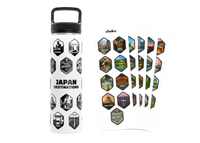
If you are going to Traveler Bottle destinations in mainland Japan in August, the Traveler Bottle covers 27 Japan destinations with practical context for each, useful for deciding which to prioritize in heat.
One more August tactic worth money: book the indoor hours. The midday block that the heat takes away is exactly what Tokyo's timed-entry experiences give back, and GetYourGuide's Tokyo lineup covers the three we'd actually use as heat shelters: teamLab's art spaces, the Asakusa sumo show with its chanko lunch, and a late-day Shibuya Sky slot for when the light softens. In August these sell out faster than the weather cools, so book the midday escape before you need it.
FAQ
Is August too hot to enjoy Japan? For many visitors, yes, particularly afternoon city walking. The heat index regularly exceeds 38–40°C in Tokyo and Kyoto, and it is physically tiring in a way that March, October, or November are not. The practical adjustment is planning outdoor activity before 10am and after 5pm, with air-conditioned breaks midday. Japanese travel sources frame this as standard August protocol, not a caveat.
When is Obon 2026 and how bad are the crowds? The Obon 2026 window runs roughly August 9–17, with weekends creating up to a nine-day national break and the peak travel crush on August 13–15. Shinkansen out of Tokyo, flights, and resort accommodation fill weeks ahead. The flip side: central Tokyo and Osaka get quieter as residents leave for hometowns, so city-focused visitors can use the week rather than avoid it.
What is the reverse-commute effect during Obon? During Obon week (August 13–15), the usual flow of domestic tourism reverses: instead of people arriving in Tokyo and Osaka, residents leave for regional hometowns. This produces a measurable quiet in urban centers that international visitors can use, shorter queues, more restaurant availability, lower weekend surcharges at some city hotels.
When should I book for an August Japan trip? For Obon week specifically: 2–3 months ahead for transport and accommodation in popular resort areas, beaches, and Okinawa. For urban August (Tokyo, Osaka, Kyoto): 4–6 weeks is generally sufficient, with more flexibility during Obon week itself.
What is Awa Odori? Awa Odori is a four-day Obon dance festival in Tokushima City, Shikoku, running August 12–15. Groups of performers (ren) in traditional costume dance through the streets to hayashi music (flute, taiko, shamisen). Tokushima's festival is the largest and most well-known, but Awa Odori groups perform across Japan in August as part of local Obon celebrations.
Sources
- tenki.jp, August temperature averages, heat index data, regional comparisons
- Japan Meteorological Agency, Official August temperature records, heat stroke alert data
- jalan.net, Obon booking patterns, August domestic travel demand, resort destination data
- iko-yo (いこーよとりっぷ), August spots and highland escapes, Japanese family-outing guide: sunflower fields (Hokuryu, Sera) and cool retreats (Okunikkō)
- JNTO Visitor Statistics, Monthly inbound visitor volume
- Awa Odori Official Site, Festival schedule, cultural background, ren group listings
- Trip.com Japan, Obon 2026 holiday calendar, the August 9–17 window, August 13–15 peak, and peak-day timing tactics
- Tripa (Nippon Travel Agency), hisho escape spots, Urabandai/Goshikinuma, Hakuba's 1,680m gondola country, Furano's ten-degree gap
Activities and tours in Tokyo
cheku is a GetYourGuide partner. We link to tours that handle the parts of travel that eat your time, getting there, booking ahead, language, context you'd otherwise miss. If you book through our link, we earn a small commission at no extra cost to you.


