
Sukajan (スカジャン) — the embroidered souvenir jacket originated by American sailors in postwar Yokosuka — is the most distinctive Japanese vintage clothing category. Authentic new sukajan from Toyo Enterprises makers (Tailor Toyo, Buzz Rickson's, Sugar Cane, Sun Surf, Whitesville) at ¥35,000–80,000+. Vintage 1950s–1980s pieces from Tokyo vintage shops at ¥25,000–120,000+. The neighborhoods where Japanese collectors actually shop: Koenji, Shimokitazawa, Nakameguro, plus Dobuita Street in Yokosuka where the tradition originated.
The sukajan story is one of the most documented in Japanese vintage clothing culture. After World War II, American sailors at the Yokosuka naval base wanted souvenirs that combined the Americana baseball-jacket form with Japanese imagery — Japanese seamstresses added embroidery (dragons, eagles, tigers, Mt. Fuji, place-name script) onto satin jackets in shops along Dobuita Street. The name combines "Yokosuka" with "jumper." The form spread from Yokosuka outward, became part of Japanese street fashion through the late 20th century, and has been reissued and reinterpreted by named Japanese makers ever since.
Japanese fashion platforms — Houyhnhnm, Popeye, Fashionsnap, WWD Japan — cover sukajan as a substantive vintage Americana category with named-maker hierarchies and a clear vintage-vs-new split. The community knows which makers carry weight (Tailor Toyo's reissue program is the canonical reference point) and which shops sell verified vintage pieces.
For the broader Tokyo vintage and resident-shopping landscape, the where locals shop in Tokyo guide covers the residential-cool districts in depth. For hidden-gem shopping neighborhoods including the Koenji and Nakameguro corridors, the hidden gem shopping guide is the deep-dive companion.
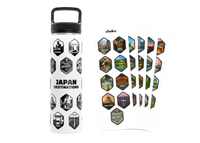
❤️ The Explorer Bottle (cheku Japan Destinations II) illustrates 46 destinations across 31 prefectures — including Yokosuka and the wider Kanagawa region where sukajan originated. Built for locals, residents, and repeat travelers who go beyond the major cities. Live on Kickstarter until July 26. Reserve yours now at the best prices we'll offer.
Where does the sukajan tradition come from?
Sukajan originated in Yokosuka, Kanagawa prefecture, in 1945–1946 — American sailors at the US naval base wanted Japanese embroidery on souvenir baseball jackets, and local seamstresses obliged. The form combines the American varsity / souvenir jacket silhouette with traditional Japanese embroidery imagery — dragons, eagles, tigers, koi, Mt. Fuji, "Japan" or place-name script.
The original sukajan shops clustered on Dobuita Street (どぶ板通り) near the Yokosuka naval base. Several of those shops still operate, and the street has been recognized by Yokosuka city as a cultural landmark. The tradition spread outward through the 1950s–1980s, became part of Japanese postwar and bōsōzoku youth fashion, and entered international streetwear consciousness through the late 1990s and 2000s as American and European brands began reissuing the form.
The continuous-production maker is Toyo Enterprises (東洋エンタープライズ), which owns the most-collected sukajan reissue line under the Tailor Toyo brand, plus parallel labels Buzz Rickson's (US military-spec reproductions), Sugar Cane (premium denim and Americana), Sun Surf (Hawaiian aloha shirts and casual Americana), and Whitesville (athletic Americana). Houyhnhnm and WWD Japan both treat Toyo Enterprises as the canonical reference maker for the modern sukajan category.
Where do Japanese collectors buy new sukajan?
For new sukajan at the maker tier, Tokyo collectors shop Toyo Enterprises brand stockists, the Tailor Toyo flagship and authorised retailers, and dedicated Americana-specialist shops in Aoyama, Daikanyama, and Shimokitazawa. Houyhnhnm and Fashionsnap cover the new sukajan landscape regularly.
Toyo Enterprises makers and where to find them in Tokyo:
- Tailor Toyo. The flagship sukajan reissue line. Stocked at Toyo Enterprises retailers across Tokyo — Lakota House and other Americana-specialist shops carry the full range. Premium reversible pieces at ¥45,000–80,000+; single-sided entry-tier at ¥25,000–40,000.
- Buzz Rickson's. US military spec-reproduction brand under Toyo. Mostly flight jackets and military Americana rather than sukajan, but the brand sits inside the same maker family.
- Sugar Cane. Premium denim and casual Americana. Carries some sukajan-adjacent reissues.
- Sun Surf. Aloha shirts and casual Americana. Some sukajan-tradition pieces.
- Whitesville. Athletic Americana — sweatshirts, varsity jackets.
Dedicated Americana-specialist shops in Tokyo:
- Aoyama / Harajuku Cat Street. Several Americana specialists carrying Toyo Enterprises across the corridor.
- Daikanyama. Premium Americana shops alongside Visvim, Kapital, and other premium Japanese workwear-Americana brands.
- Shimokitazawa. Mix of new Americana and vintage. The Disk Union-adjacent corridor has multiple shops carrying Toyo Enterprises alongside vintage pieces.
Where do Japanese collectors find vintage sukajan?
Authentic vintage sukajan from the 1950s–1980s are found at named vintage shops in Koenji, Shimokitazawa, Nakameguro, and Harajuku Cat Street — plus the 2nd Street secondhand chain for broader inventory. Popeye and the Houyhnhnm vintage coverage map the canonical shopping circuit.
Koenji — the canonical vintage neighborhood:
Multiple long-standing vintage clothing shops along the Koenji Pal shōtengai and the side streets behind Koenji Station's south exit. Vintage sukajan inventory tends to rotate. Pricing here is typically more accessible than Daikanyama or Nakameguro — the Koenji vintage scene is broader and less curated, with both budget and mid-tier pieces. A weekday afternoon walk through 4–6 shops gives a good sample of available vintage stock.
Shimokitazawa — broader vintage with stronger foot traffic:
The more-trafficked vintage neighborhood, with stronger marketing in English. The actual depth is in the side streets behind the main strip near the station. Vintage sukajan inventory varies; pricing slightly higher than Koenji on average for comparable pieces.
Nakameguro and Daikanyama — curated premium vintage:
Smaller selection but more curated. Premium vintage sukajan from collector-tier dealers, with prices to match. Worth visiting for one or two specific shops rather than as a vintage-saturated circuit.
2nd Street and other Japanese secondhand chains:
2nd Street — Japan's largest secondhand clothing chain — carries vintage and contemporary clothing across hundreds of branches. The major Tokyo branches (Harajuku, Shibuya, Shimokitazawa, multiple others) include vintage Americana sections where sukajan rotates through. The inventory is broad; the curation isn't deep, but the volume means good pieces appear regularly.
Dobuita Street, Yokosuka:
For the historical pilgrimage and the deepest sukajan-specific inventory, the original shopping street in Yokosuka where the tradition began is reachable by train from Tokyo (Keikyu Line to Yokosuka-Chūō, about 70 minutes). Several Dobuita Street shops still focus on sukajan and military Americana — both new from named makers and vintage pieces.
What's the best sukajan for your situation?
Format 3 quick-pick by buyer type:
First time buying a sukajan, want a reliable name: Tailor Toyo single-sided embroidered piece — ¥25,000–40,000, the canonical Japanese sukajan-reissue maker, available at Americana-specialist shops across Tokyo.
Want the premium reissue, will wear it for a decade: Tailor Toyo reversible — ¥45,000–80,000, the high-tier reissue with two embroidered sides (typically tiger on one side, dragon or eagle on the other), the cult Toyo Enterprises piece.
Want a vintage piece with documented age (1960s–1980s): Koenji or Nakameguro premium vintage shops — ¥35,000–80,000, depending on age, embroidery complexity, and condition. Bring a tape measure and check the lining and embroidery condition before paying.
Want a piece of postwar history (1940s–1950s vintage): Specialist Americana vintage dealers — ¥80,000–250,000+, with provenance documentation if possible. This is collector tier; ask about provenance and authenticate before paying.
Want a budget entry into the form: 2nd Street vintage Americana sections — ¥8,000–25,000 for non-collector-tier vintage Americana, with some genuine sukajan pieces appearing in inventory rotation. Quality varies; inspect before paying.
Want the historical pilgrimage: Travel to Dobuita Street, Yokosuka. The shopping experience and the cultural context are the value here. Combine with a half-day visit to the Yokosuka naval port area for the full historical setting.
Free for you: our Tokyo Google Maps list We keep a Google Maps list of the must-see spots around Tokyo — Koenji vintage corridor, Shimokitazawa side streets, Nakameguro vintage premium shops, the Americana specialists in Harajuku Cat Street, and the 2nd Street branches worth a stop. Drop your email and we'll send it over.
How do you avoid tourist-bait sukajan?
The cheap "sukajan" sold at souvenir shops near tourist districts and at online marketplaces at suspicious price points are not part of the Toyo Enterprises maker tradition — they're mass-produced merchandise using the sukajan form without the embroidery quality, fabric, or construction that defines the named-maker tradition. Houyhnhnm and Fashionsnap consistently distinguish maker-tier from tourist-tier in their coverage.
Markers of a maker-tier sukajan:
- Named maker on the inside label. Tailor Toyo, Buzz Rickson's, Sugar Cane, Sun Surf, Whitesville (all Toyo Enterprises), or vintage-era named makers (Kosho, Mike, Kansai Yamamoto early pieces, etc.).
- Real embroidery, not printed designs. Maker-tier sukajan embroidery has visible stitch density, three-dimensional thread depth, and consistent line weight. Printed "sukajan-style" jackets are flat and have no thread structure.
- Acetate or rayon satin shell. The traditional sukajan fabric. Some modern reissues use polyester for entry-tier pricing, but the maker tier consistently uses higher-quality satin.
- Lining and quilting consistent with the era. Vintage pieces have era-appropriate linings; modern reissues follow named-maker construction standards.
- Price tier matches the construction. Anything under ¥10,000 for a new piece, or under ¥15,000 for a vintage piece, is usually outside the maker tradition.
Skip:
- Cheap "sukajan" sold at tourist-district souvenir shops with no maker name.
- Polyester sukajan at suspicious price points sold as "authentic Japanese souvenir jackets" without maker attribution.
- Mass-produced sukajan-style jackets on overseas online marketplaces with no provenance.
The Toyo Enterprises maker tier and verified vintage from named vintage dealers are the two routes Japanese collectors actually use. Everything else sits in the tourist-merchandise category.
FAQ
What is a sukajan jacket? A sukajan (スカジャン) is the embroidered souvenir jacket that originated in Yokosuka, Japan immediately after World War II. American sailors stationed at the Yokosuka naval base had Japanese seamstresses add traditional Japanese embroidery — dragons, eagles, tigers, Mt. Fuji — to their satin baseball-style jackets as souvenirs to take home. The name combines "Yokosuka" (the port city) and "jumper" (jacket). The original sukajan tradition continues today through named makers like Tailor Toyo, Buzz Rickson's, Sugar Cane, and Sun Surf (all under Toyo Enterprises), and the form is collected internationally as both a streetwear and vintage Americana category.
Where can you buy an authentic sukajan in Tokyo? The authentic Japanese sukajan channels Tokyo collectors use: the Tailor Toyo flagship and other Toyo Enterprises brand shops (Buzz Rickson's, Sugar Cane, Sun Surf, Whitesville) for new production at the maker tier — ¥35,000–80,000+ for premium reversible pieces; vintage shops in Koenji, Shimokitazawa, and Nakameguro for actual vintage sukajan from the 1950s–1980s; 2nd Street and other Japanese secondhand chains for the broader vintage and Americana category; and traveling to Dobuita Street in Yokosuka itself for the historic shopping street where the tradition originated and several shops still operate.
How much should a real sukajan cost? Authentic new sukajan from Toyo Enterprises makers (Tailor Toyo, Buzz Rickson's, Sugar Cane, Sun Surf, Whitesville) run ¥35,000–80,000 for premium reversible embroidered pieces. Single-sided new sukajan at the entry tier from real makers start around ¥18,000–30,000. Vintage sukajan from the 1950s–1980s in good condition vary widely — Koenji, Shimokitazawa, and Nakameguro vintage shops sell verified vintage pieces at ¥25,000–120,000+ depending on age, embroidery quality, and condition. Anything labeled "sukajan" at suspicious price points (under ¥10,000 for a new piece, under ¥15,000 for vintage) is usually mass-produced merchandise rather than the named-maker tradition.
For the broader Tokyo vintage and resident shopping landscape, the where locals shop in Tokyo guide is the companion. For the hidden-gem Tokyo shopping neighborhoods including the vintage districts, the hidden gem shopping guide covers it.
Sources
- Houyhnhnm — Japanese men's fashion and culture platform, vintage Americana coverage
- Popeye — Magazine House men's lifestyle magazine
- Fashionsnap — Japanese fashion industry platform
- WWD Japan — fashion industry trade publication, Toyo Enterprises reporting
- 2nd Street — Japan's largest secondhand clothing chain
- note.com — Japanese longform writing on vintage clothing and sukajan tradition
Activities and tours in Tokyo
cheku is a GetYourGuide partner. We link to tours that handle the parts of travel that eat your time, getting there, booking ahead, language, context you'd otherwise miss. If you book through our link, we earn a small commission at no extra cost to you.


