
A Kyoto bucket list built around timing, not just landmarks, holds up better than a checklist of temples: the Fushimi Inari torii tunnels at dawn, the bamboo grove before the tour buses, riverside dining on a Pontocho yuka platform between May and October. These 20 experiences mix the big sights worth slowing down for with the smaller, specific moments that reward planning around a clock rather than just a map.
Kyoto's temple circuit is genuinely worth seeing, and this isn't an argument against it. It's an argument for timing and pacing. The single biggest difference between a good Kyoto day and a forgettable one is almost never which sight you chose. It's whether you got there before the tour buses, whether you built in time to actually sit somewhere instead of just photographing it, and whether you picked at least one experience that isn't on every other list.
We've curated this list across years of visiting and photographing Kyoto, and the pattern holds every time: the moments people actually remember are the ones with a specific hour attached to them, not the ones that just say "visit X temple."
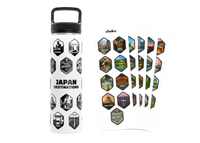
If Kyoto is part of a longer Japan route, the Traveler bucket-list bottle covers it among 27 destinations built for a first-time trip. For the practical side of planning the trip itself, see our Kyoto travel guide.
What makes a Kyoto bucket list experience worth planning around?
The strongest Kyoto experiences are the ones tied to a specific window of time, dawn, a particular season, an hour when the crowds thin, rather than a landmark you can technically visit any time of day. Plan the clock first, then the map.
Kyoto absorbs an enormous number of day-trippers and tour groups, and nearly every major sight has a predictable crowd curve: quiet early, packed by mid-morning, quiet again toward evening. The experiences below lean into that curve rather than fighting it.
What early-morning Kyoto experiences are worth waking up for?
Fushimi Inari's torii tunnels, the Sagano Bamboo Grove, and Nishiki Market all have a genuinely different character before the crowds arrive, and all three reward an early start over a mid-morning visit.
1. Walk the Fushimi Inari torii tunnels at dawn
The shrine grounds are open 24 hours and never close, so the Senbon Torii tunnels can be walked at dawn or after dark when they're nearly empty. Daytime, roughly mid-morning to mid-afternoon, is the busiest window by a wide margin.
2. Stand alone in the Sagano Bamboo Grove before the tour buses
The bamboo grove is a roughly 400-meter paved path, free and open 24 hours, that takes 15 to 30 minutes to walk. It's busiest in the middle of the day; early morning is the standout window for a quiet walk and photography.
3. Walk Nishiki Market at opening, not midday
Nishiki Market dates back roughly 400 years and holds about 130 shops along a 400-meter stretch known as "Kyoto's Kitchen." The narrow covered arcade turns into a slow shuffle by late morning; arriving closer to opening means actually being able to stop and look at a stall instead of being carried past it.
4. Sit through a full kissaten breakfast
Kyoto's old-style kissaten (retro coffee shops) serve a proper, unhurried breakfast set, the kind of thing a hotel buffet can't replicate. It's less a sight than a pace, and it's worth building into the first morning of a trip rather than grabbing a convenience-store rice ball on the way to the first temple.
❤️ If a Japan trip is shaping up around this kind of considered, timed sightseeing, the Traveler bucket-list bottle illustrates the 27 destinations that hold up after the research. Live on Kickstarter now.
What Kyoto neighborhood walks reward slowing down?
Ninenzaka and Sannenzaka's stone-paved slopes, the Philosopher's Path, and an evening walk through Gion's public streets are the walks worth treating as the destination itself, not just the route between two temples.
5. Walk Ninenzaka and Sannenzaka up to Kiyomizu-dera
These preserved stone-paved sloping streets run through Higashiyama up toward Kiyomizu-dera, lined with historic streetscape that's rare to find this intact and this walkable in one stretch.
6. Walk the Philosopher's Path between Ginkaku-ji and Nanzen-ji
A canal-side path connecting two of Kyoto's major temples, named for a 20th-century philosopher who used it for daily walking meditation. It's slower and less crowded than either temple's immediate surroundings.
7. Walk Gion's public streets at dusk
Gion's private alleys carry posted no-photography restrictions introduced in 2019 to protect geiko and maiko privacy, but the main public streets remain open, and dusk is when the district's lantern-lit character actually shows up. If you do see a geiko or maiko, the respectful move is to let them pass without a camera pointed at them.
8. Rent a kimono for a day in Higashiyama
Higashiyama's stone lanes were built for this: the streetscape, the temple backdrops, and the slower pace all suit a full day in kimono rather than a quick costume-rental photo stop.
What hands-on Kyoto experiences go beyond sightseeing?
Collecting a goshuin, eating obanzai at a Pontocho counter, tasting sake in Kyoto's Fushimi brewing district, and riding the Sagano Scenic Railway are the experiences that put you inside Kyoto's culture rather than in front of it.
9. Collect a goshuin at more than one stop
A goshuin is a hand-written, hand-stamped seal that shrines and temples provide, collected in a dedicated book called a goshuincho. Collecting more than one in a day turns a temple-hopping itinerary into something with a physical record attached to it.
10. Eat obanzai at a Pontocho counter
Obanzai is Kyoto's home-style cooking tradition, seasonal vegetables, tofu preparations like yuba and nama-fu, at counters tucked among Pontocho's more tourist-facing izakaya. It's a genuinely different meal from the riverside platforms the alley is known for.
11. Taste sake in Kyoto's Fushimi ward
Fushimi, the district around Fushimi Inari, is one of Japan's most historically important sake-producing areas, alongside Nada in Hyogo, thanks to the ward's soft groundwater. Several breweries in the district have shops and visitor facilities.
12. Ride the Sagano Scenic Railway and the Hozugawa River back
The Sagano Romantic Train covers 7.3 km between Torokko Saga and Torokko Kameoka in about 25 minutes along the Hozugawa Gorge. Riding the train up and the river boat back down is the classic pairing, and it turns a single sight into a half-day experience.
Free for you: our Tokyo Google Maps list We keep a Google Maps list of the must-see spots around Tokyo - restaurants, cafes, shops, viewpoints, and streets worth the detour. Drop your email and we'll send it over.
Which Kyoto landmarks reward more than a quick photo?
Sanjusangendo's 1,001 statues, Nijo Castle's "nightingale floors," the hike to Mt. Inari's Yotsutsuji viewpoint, and Iwatayama Monkey Park all ask for more time than most visitors give them, and pay it back.
13. Stand inside Sanjusangendo's hall of 1,001 Kannon statues
The hall runs roughly 120 meters end to end, with 1,000 standing Senju Kannon statues flanking a National Treasure central image carved by the sculptor Tankei. Photography isn't permitted inside, which if anything makes the slow walk down the hall more worth doing properly rather than rushing.
14. Listen for Nijo Castle's "nightingale floors"
Nijo Castle's floors were built to chirp underfoot, an intentional security feature meant to alert guards to intruders. It's a detail easy to miss if you walk through quickly rather than actually listening for it.
15. Hike to the Yotsutsuji viewpoint on Mt. Inari
Roughly halfway up Mt. Inari, Yotsutsuji is an open intersection with views over Kyoto, about an hour round trip from the shrine entrance. Crowds thin noticeably above this point, and it rewards going further than the standard 30-minute Senbon Torii loop.
16. Feed the macaques at Iwatayama Monkey Park
Home to around 120 wild Japanese macaques on the mountain above Arashiyama. The climb to the top is a steep 20 minutes, rewarded with wide views over Kyoto and a feeding area where visitors can feed the monkeys from inside an enclosure.
What seasonal Kyoto experiences are worth timing a trip around?
Pontocho's riverside yuka season, Gion Matsuri in July, autumn foliage illumination, and Kyoto's covered shopping arcades are all worth checking against your travel dates before you finalize an itinerary.
17. Dine on a Pontocho riverside yuka platform
Yuka are riverside dining platforms built out over the Kamogawa on Pontocho's west bank, a tradition dating to the Momoyama period. The 2026 season runs May 1 through October 15, with some restaurants closing toward the end of September.
18. Time a visit around Gion Matsuri in July
Gion Matsuri, one of Japan's most famous festivals, runs through July, centered on Yasaka Shrine and the streets around it. If your dates land in July, it's worth checking the festival calendar before you plan around it.
19. Catch the autumn illumination season
Several of Kyoto's temple gardens hold evening illumination events during the autumn foliage season, a different, quieter register than the same gardens in daylight. Check specific temple schedules close to your travel dates, since illumination periods vary year to year.
20. Shop Kyoto's covered arcades for everyday goods, not souvenirs
Shinkyogoku and Teramachi Kyogoku, two parallel covered arcades near Shijo-Kawaramachi, are where Kyoto actually shops, day to day, not a souvenir strip. Walking them is a different read on the city than the temple circuit.
How should you plan a Kyoto bucket list day?
Group experiences by time of day rather than by neighborhood. Mornings belong to Fushimi Inari, the bamboo grove, and Nishiki Market; afternoons suit museum-paced landmarks like Sanjusangendo and Nijo Castle; evenings belong to Gion, Pontocho, and a kissaten wind-down the next morning.
| Time of day | Best for | Examples |
|---|---|---|
| Early morning (before 9am) | Empty sights, quiet photography | Fushimi Inari, Bamboo Grove, Nishiki Market opening |
| Mid-morning to afternoon | Landmarks that reward unhurried time | Sanjusangendo, Nijo Castle, Sagano Railway |
| Evening | Atmosphere and food | Gion walk, Pontocho obanzai or yuka dining |
The mistake worth avoiding: trying to fit every entry on this list into one trip. Pick two or three per day, weighted toward the time-of-day pattern above, and leave real space between them. A Kyoto day with four rushed landmarks is worse than a Kyoto day with two done properly.
❤️ For the full route that pairs with this kind of Kyoto pacing, 3 Weeks in Japan is our 200+ page travel guide covering Tokyo, Kyoto, Osaka & Nara, and six Tokyo day trips, with our own photography of each destination. Live on Kickstarter now.
FAQ
What should be on a Kyoto bucket list?
The experiences that hold up are the ones timed around a specific moment: Fushimi Inari's torii tunnels at dawn, the Sagano Bamboo Grove before the day-trippers arrive, riverside dining on a Pontocho yuka platform between May and October, and a proper sit-down kissaten breakfast. Beyond the big landmarks, the goal is slowing down enough to actually experience a place rather than photograph it and move on.
Is Fushimi Inari worth visiting at a specific time of day?
Yes. The shrine grounds are open 24 hours and never close, so the torii tunnels can be walked at dawn or after dark when they're nearly empty. Daytime, roughly mid-morning to mid-afternoon, is the busiest window by a wide margin.
What is a Pontocho yuka?
A yuka is a riverside dining platform built out over the Kamogawa River on Pontocho's west bank, a Kyoto summer tradition. The 2026 season runs May 1 through October 15, with some restaurants closing their platforms toward the end of September.
Activities and tours in Tokyo
cheku is a GetYourGuide partner. We link to tours that handle the parts of travel that eat your time, getting there, booking ahead, language, context you'd otherwise miss. If you book through our link, we earn a small commission at no extra cost to you.


