
Kyoto from Tokyo is a 2-hour-13-minute Nozomi shinkansen ride, and most first-time visitors need 3 to 4 days to see the city properly. Downtown Kawaramachi is the easiest base, ICOCA plus an occasional day pass covers transit, and the district that rewards the most planning is the one most visitors rush: Higashiyama, Kyoto's walkable historic core.
We're Tokyo-based, not Kyoto residents, and we're not going to pretend otherwise in this guide. What we are is two photographers who've made the Tokyo–Kyoto trip more times than we can count, planned it for friends and family visiting from abroad, and learned the version of "everything you need to know" that actually matters versus the version padded out to fill a page. This is that guide.
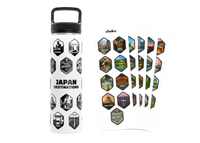
If Kyoto is part of a longer Japan trip, the Traveler bucket-list bottle covers it among 27 destinations built for a first-time route through the country. Everything below is the practical layer: getting there, where to stay, how long to spend, and how to actually move around once you land.
How do you get from Tokyo to Kyoto?
The Nozomi shinkansen is the fastest option at 2 hours 13 minutes, running every 5 to 10 minutes during the day. The Hikari takes about 2 hours 40 minutes with a few extra stops. One-way fares run roughly ¥13,300 to ¥14,200 depending on train and seat class.
The Tokaido Shinkansen line runs three train types between Tokyo and Kyoto, and the difference between them is purely how often they stop, not comfort or speed once moving.
Nozomi is the express: Tokyo, Shinagawa, Shin-Yokohama, Nagoya, Kyoto, Shin-Osaka, and nothing else. It's also the most frequent, departing roughly every 5 to 10 minutes from both Tokyo and Shinagawa stations at peak times, which in practice means you rarely need to plan much around a specific departure. A reserved seat runs about ¥14,170; Green Car is about ¥18,930.
Hikari adds a handful of extra stops (which ones vary by specific train, commonly Odawara, Atami, Hamamatsu, or Mishima) and takes closer to 2 hours 40 minutes. Reserved seats run about ¥13,850, unreserved about ¥13,320, both cheaper than Nozomi.
If you're traveling on a Japan Rail Pass: since October 2023, JR Pass holders can ride Nozomi by paying a supplement of about ¥4,960 for the Tokyo–Kyoto leg. Without paying that supplement, the pass only covers Hikari and Kodama (the slowest, all-stops option). For a single one-way trip, most visitors are better off just buying a standard Nozomi ticket than working around the pass restriction.
Where should you stay in Kyoto?
Downtown Kawaramachi is the most commonly recommended base for first-timers: central, walkable to Nishiki Market and Gion, and Kyoto's liveliest transit hub. Gion is the more atmospheric option. Kyoto Station is the pure-convenience pick if transit access matters more than neighborhood character.
| Downtown Kawaramachi | Gion | Kyoto Station area | |
|---|---|---|---|
| Best for | First-timers who want a central, walkable base | Atmosphere, waking up in the old streets | Pure transit convenience |
| Walk to Nishiki Market / Gion | ~20 minutes | Already there | Requires a bus or subway ride |
| Feel | Lively, dense with shops and restaurants | Quiet mornings, lantern-lit evenings | Functional, less character |
| Shinkansen access | Short bus or subway ride | Short bus or subway ride | Direct |
Our own preference leans toward Kawaramachi for a first Kyoto trip specifically because it removes a decision you don't need to make on day one: everything is walkable or a short ride away, so the neighborhood choice doesn't end up constraining the itinerary. Gion is worth choosing deliberately if the atmosphere of waking up inside the old streets matters more to you than convenience, since Gion's early mornings, before the day-trippers arrive, are genuinely one of the best times to experience the district.
How many days do you need in Kyoto?
Three days is the practical minimum for a first visit without feeling rushed. Four days is the sweet spot most itineraries converge on, enough for the core sights plus Arashiyama and one slower cultural experience. Five or more days makes sense for a second visit or for adding places further out like Ohara, Kurama, or Uji.
Two days is workable only if Kyoto is a stopover between Tokyo and Osaka and you've accepted you're seeing highlights only. Three days is where a first Kyoto visit starts to feel complete rather than rushed: enough time for the Higashiyama temple walk, Fushimi Inari, and central Kyoto (Nishiki Market, Pontocho), without treating every stop as a 20-minute photo op.
Four days is where we'd point most first-time visitors if the schedule allows it. It adds Arashiyama as its own half-day rather than a rushed add-on to another day, and it leaves room for one of the slower experiences, a proper kissaten breakfast, an obanzai dinner, a longer hike up Mt. Inari past the standard loop, that a tighter schedule forces you to cut.
How do you get around Kyoto once you're there?
Kyoto's subway and city bus network cover the whole city. An IC card (ICOCA, or a Suica/PASMO card from Tokyo) handles pay-as-you-go travel, and the Subway & Bus 1-Day Pass (¥1,100 adult) is worth it on the days you're moving between several districts.
Kyoto doesn't require a car, and driving isn't something we'd recommend for a first-time visitor even if you're used to it at home. The subway covers the north-south and east-west spines of the city, and the bus network fills in everything else, including the routes to Fushimi Inari, Arashiyama, and the temple circuit in Higashiyama.
For most trips, the simplest approach is an IC card for ordinary tap-and-go rides (an ICOCA picked up locally, or a Suica/PASMO card already loaded from Tokyo works fine), and the ¥1,100 Subway & Bus 1-Day Pass specifically on days with multiple stops across different districts. The city's flat bus fare is ¥230 per ride for adults, so the day pass pays for itself after about five rides. One practical note: city buses get genuinely crowded during peak tourist season on the routes serving the most popular temples, and the subway is worth defaulting to over a bus whenever a route exists for both.
What are Kyoto's essential districts, and what is each one actually for?
Higashiyama is Kyoto's walkable historic core. Downtown Kawaramachi is the shopping and food hub. Pontocho is the atmospheric dining alley. Fushimi Inari and Arashiyama sit further out and are each worth a dedicated half-day rather than a rushed stop.
Kyoto doesn't organize itself the way a first-time visitor's map suggests. The city's essential districts each do one thing well, and treating them as separate half-day trips rather than one long day covering everything is the single biggest quality-of-life improvement you can make to a Kyoto itinerary.
Higashiyama, the eastern district running along the base of the Higashiyama mountains, holds Kyoto's densest, most walkable concentration of temples and preserved historic streetscape: Kiyomizu-dera, Yasaka Shrine, Kodaiji (the temple founded by Nene, wife of Toyotomi Hideyoshi), the stone-paved Ninenzaka and Sannenzaka slopes, and Gion's Hanami-koji and Shirakawa canal lanes. Maruyama Park, beside Yasaka Shrine, is Kyoto's most popular cherry-blossom spot and a pleasant rest point mid-walk regardless of season. The appeal here, more than any other district in the city, is simply the joy of walking; almost everything worth seeing sits within comfortable distance of everything else. Our full Higashiyama guide covers the district in depth.
Downtown Kyoto, centered on the Shijo-Kawaramachi intersection, is the city's shopping and everyday-food hub. Nishiki Market anchors it: roughly 400 years old, about 130 shops along a 400-meter stretch known as "Kyoto's Kitchen," running east from Teramachi to Takakura with Nishiki Tenmangu shrine marking the east entrance. Just south, the covered Shinkyogoku (about 800 meters, roughly 180 shops) and Teramachi Kyogoku arcades run parallel to each other, Kyoto's busiest covered shopping streets, and Shijo-dori itself carries the city's major department stores, Kyoto Takashimaya and Daimaru among them. It's also the most convenient base for a first-time visitor, as covered above. See our downtown Kyoto guide for the full breakdown.
Pontocho, a narrow hanamachi (geisha district) alley on the west bank of the Kamogawa between Sanjo and Shijo, is Kyoto's best-known dining alley, home to riverside "yuka" platforms that run May through mid-October and a genuine obanzai (Kyoto home-style cooking) scene once you know which counters to look for. The tradition dates to the Momoyama period; roughly 90 establishments build platforms along the river between Nijo and Gojo each season, about 74 restaurants belong to the Pontocho merchants' association specifically. If your dates land in May, the annual Kamogawa Odori dance performance by Pontocho's geiko and maiko runs at the Pontocho Kaburenjo theater at the alley's north end. Our Pontocho guide covers both the food and the dance.
Sanjusangendo, in southern Higashiyama directly across from the Kyoto National Museum, holds a single, extraordinary sight: a roughly 120-meter hall containing 1,001 Kannon statues, including a National Treasure central image carved by the sculptor Tankei in the Kamakura period, flanked by 28 guardian deities. Hours run 8:30am–5pm (April–November) or 9am–4pm (winter months), admission ¥600 for adults, and photography isn't permitted inside. It's frequently rushed as a 20-minute stop between bigger-name temples, and it rewards more time than that. Full detail in our Sanjusangendo guide.
Fushimi Inari Taisha, the shrine with the famous thousands of vermilion torii gates, sits south of central Kyoto and is open 24 hours, free, year-round, reachable in about 5 minutes from Kyoto Station via the JR Nara Line to Inari Station. The standard loop through the Senbon Torii to the Okusha Hohaisho and back takes roughly 30 minutes; reaching the Yotsutsuji viewpoint about halfway up and back is closer to an hour; a full summit loop runs 2 to 3 hours. Crowds thin noticeably above Yotsutsuji, which is worth knowing if the standard loop leaves you wanting more. Our things to do at Fushimi Inari guide covers the shrine and the mountain hike in full.
Arashiyama, in western Kyoto, centers on the Sagano Bamboo Grove (a free, roughly 400-meter path, 15 to 30 minutes to walk), Tenryu-ji temple (a UNESCO World Heritage site, ¥500 for the garden and an extra ¥300 for the temple buildings), and the Togetsukyo Bridge, with the Sagano Scenic Railway and a Hozugawa River boat ride as the classic half-day pairing. Iwatayama Monkey Park, home to around 120 wild macaques, adds a steep 20-minute climb and wide views over Kyoto for ¥600 admission. It's about 15 minutes by train from Kyoto Station, far enough from the center that it deserves its own half-day rather than a rushed add-on. Full detail in our things to do in Arashiyama guide.
❤️ If your Kyoto stop is part of a longer route, 3 Weeks in Japan is our 200+ page travel guide covering Tokyo, Kyoto, Osaka & Nara, and six Tokyo day trips, with our own photography of each destination. Live on Kickstarter now.
What should first-timers know before they go?
Kyoto absorbs an enormous number of day-trippers, so timing matters more here than in most Japanese cities. Early mornings are consistently the best window at any major sight, Gion's private alleys have photography restrictions to protect geiko and maiko privacy, and eating well requires looking slightly past the temple-circuit food.
The single most useful piece of practical advice we can give: Kyoto's crowd curve at almost every major sight is the same shape, quiet early, packed by mid-morning, quiet again by evening, and building a trip around that curve does more for the quality of a visit than almost any other planning decision. Fushimi Inari, the bamboo grove in Arashiyama, and Nishiki Market are all measurably different experiences before 9am than at midday.
Gion deserves a specific etiquette note. The district's private alleys carry posted no-photography signage, introduced in 2019, to protect the privacy of geiko and maiko. Public streets remain fine for photos; the private alleys and any direct photographing of geiko or maiko without consent are not. It's a small thing to get right and an easy thing to get visibly wrong.
On food: the restaurants clustered immediately around the biggest sights are built for volume, not for the kind of meal Kyoto residents actually eat. Our non-touristy Kyoto restaurants guide, researched from Japanese food writing, covers the neighborhood shokudo (cafeteria-style diners), Pontocho's obanzai counters, and old-style kissaten mornings that don't show up in most English-language guides.
And for the experiences worth building a day around beyond the standard temple checklist, our Kyoto bucket list covers 20 of them, organized by time of day rather than by neighborhood.
Free for you: our Tokyo Google Maps list We keep a Google Maps list of the must-see spots around Tokyo - restaurants, cafes, shops, viewpoints, and streets worth the detour. Drop your email and we'll send it over.
What practical basics should you sort out before you go?
Carry cash alongside an IC card, since many of Kyoto's smaller shokudo, kissaten, and market stalls are cash-only even where the bigger shops and hotels take cards. Consider dropping bags at a coin locker or luggage forwarding service before a temple-heavy day, and treat shoes-off etiquette at temple buildings as a given.
Kyoto's biggest hotels, department stores, and chain restaurants take cards without issue, the same as anywhere in Japan by now. The gap shows up at exactly the places this guide points you toward: the neighborhood shokudo, the older kissaten, the smaller stalls inside Nishiki Market. Carrying enough yen for a full day's meals and a few small purchases avoids an awkward moment at a counter that only just started taking cards, if it has at all.
Temple and shrine buildings with tatami interiors require shoes off at the entrance, the same as any traditional Japanese interior; carrying a small bag for shoes makes days with several stops considerably easier than juggling shoes and a shopping bag at every entrance. Coin lockers at Kyoto Station and most major sights handle daypacks and small luggage if a day involves more walking than you want to do with a bag.
On timing across the year: Kyoto's spring cherry blossom season and autumn foliage season are, by a wide margin, the most crowded and the most expensive for accommodation. Neither is a reason to avoid visiting then, since both are genuinely spectacular, but it's worth knowing that hotel prices and crowd levels both spike well above the rest of the year, and booking further ahead than usual is worth the effort if a trip lands in either window.
How should you structure a Kyoto itinerary by day?
A 4-day structure that works well: day one in Higashiyama and downtown, day two at Fushimi Inari with an early start, day three in Arashiyama as its own half-day, day four as a flexible buffer for whichever district earned a second visit.
| Day | Focus | Why this order |
|---|---|---|
| Day 1 | Higashiyama + downtown Kawaramachi | Both are central and walkable; a natural first day close to most hotels |
| Day 2 | Fushimi Inari, early start | The shrine rewards a dawn or early-morning visit before the crowd curve peaks |
| Day 3 | Arashiyama, full half-day | Far enough from the center to deserve its own dedicated time, not a rushed add-on |
| Day 4 | Flexible: Pontocho evening, a second Higashiyama pass, or a slower experience from the bucket list | Buffer day for whatever the trip's pace actually needs by this point |
Day 1 works best as a walking day rather than a transit day: start in Higashiyama while the morning is still quiet, work through Kiyomizu-dera, Ninenzaka and Sannenzaka, and Yasaka Shrine, then drop down into downtown Kawaramachi in the afternoon for Nishiki Market and the covered arcades once the temple crowds have built up anyway.
Day 2 is the day to set an alarm for. Fushimi Inari's torii tunnels before 8am are a genuinely different experience than the same shrine at noon, and starting here means the rest of the day, back into central Kyoto for lunch and an afternoon at Sanjusangendo, follows naturally since both sit south and east of downtown.
Day 3 should be treated as its own trip rather than squeezed into a half-day alongside something else. Arashiyama's distance from the center means transit time eats into whatever's left if you try to combine it with a second district, and the bamboo grove specifically loses most of its appeal once the day-trip buses arrive mid-morning.
Day 4 is deliberately unplanned in this structure. By day four, most first-time visitors know whether they want more time in Higashiyama, a proper Pontocho dinner, or one of the slower experiences, a full kissaten breakfast, a longer hike past Fushimi Inari's standard loop, that the first three days didn't leave room for.
This is a starting structure, not a fixed rule. If food is the priority, swap in an evening in Pontocho earlier. If photography is the priority, weight the schedule even further toward early mornings at Fushimi Inari and the bamboo grove, since both are dramatically different in early light than at midday.
The honest summary: Kyoto rewards visitors who plan around time of day as much as geography. Get to Fushimi Inari and the bamboo grove early, give Higashiyama the slow walk it's built for, and treat Arashiyama as its own half-day rather than an afterthought. Everything else follows from getting those three things right.
FAQ
How long does it take to get from Tokyo to Kyoto?
The Nozomi shinkansen takes 2 hours 13 minutes and is the fastest option, running every 5 to 10 minutes at peak. The Hikari takes about 2 hours 40 minutes with a few extra stops. Standard one-way fares run roughly ¥13,300 to ¥14,200 depending on train and seat type.
How many days do you need in Kyoto?
Three days is the practical minimum for a first visit without feeling rushed. Four days is the sweet spot most itineraries converge on, enough for the core sights plus Arashiyama and one slower cultural experience. Five or more days makes sense for a second visit or anyone wanting to add Ohara, Kurama, or Uji.
Where should you stay in Kyoto for a first visit?
Downtown Kawaramachi is the most commonly recommended base: central, walkable to Nishiki Market and Gion, and a strong transit hub. Gion is the more atmospheric choice if you want to wake up inside the old streets. Kyoto Station is the pure-convenience pick if transit access matters more than atmosphere.
Do you need a car in Kyoto?
No. Kyoto's subway, city bus network, and IC card system (ICOCA, or Suica/PASMO from Tokyo) cover the entire city, and central Kyoto is dense enough that many sights within a district are walkable once you arrive.
Activities and tours in Tokyo
cheku is a GetYourGuide partner. We link to tours that handle the parts of travel that eat your time, getting there, booking ahead, language, context you'd otherwise miss. If you book through our link, we earn a small commission at no extra cost to you.


