
Non-touristy Kyoto eating happens outside Nishiki Market and the Gion izakaya strip, at neighborhood shokudo, Pontocho obanzai counters, and old kissaten. Japanese food writing consistently points to the same categories: cafeteria-style teishoku diners, home-style vegetable and tofu cooking, and a proper retro coffee-shop morning set. This guide names specific places in each.
Most Kyoto restaurant advice online routes you to the same few blocks: Nishiki Market, the Pontocho riverside platforms, the izakaya strip near Gion-Shijo. None of it is wrong, exactly. It's just the food written for people who have three hours in the city, not the food Kyoto residents actually eat on an ordinary Tuesday.
Japanese food writing, jalan's roundups, Tabelog matome, and local food blogs, points somewhere else: neighborhood shokudo (cafeteria-style diners), obanzai counters, and kissaten breakfast culture. Everything below is drawn from that Japanese-language coverage, not from English-language "hidden gem" lists.
The pattern holds across categories. Kyoto residents eat lunch at a shokudo because it's fast, cheap, and close to work, not because it photographs well. They eat obanzai because it's what a Kyoto kitchen actually cooks, vegetables in season, tofu prepared a few different ways, nothing plated for a camera. And they start the day at a kissaten because that's simply where the coffee and toast have always been. None of it is designed to be discovered. It's designed to be eaten.
For the practical side of a Kyoto trip, see our Kyoto travel guide.
Where do Kyoto locals actually eat lunch?
Japanese sources consistently point to shokudo, neighborhood cafeteria-style diners, as the everyday lunch format in Kyoto. Hatoya Shokudo (70+ years, Sakyo-ku), Kujira Shokudo (Ukyo-ku), and Shokudo Hibi (Nakagyo-ku) are three specific examples covered in current Japanese food writing.
A shokudo is not a restaurant in the tourist sense. It's a neighborhood diner, usually family-run, where you pick a soup base, then choose sides from a display case, and the whole meal runs under ¥1,100. It's the format Kyoto residents actually eat on a weekday, and it barely appears in English-language guides.
Hatoya Shokudo (はとや食堂), in front of Kumano Shrine in Sakyo-ku, has been running for over 70 years. The ordering style is cafeteria-first: choose a soup, pork-based or meat-broth, then pick sides from the case. The specialty is the kasujiru teishoku, a sake-lees soup set made with lees from Kyoto's Tamanosato brewery, at ¥830 for two sides or ¥1,050 for three. The signature side dish is saba-ni, simmered mackerel deboned and cooked in a secret sauce over three days. It opens at 6am and closes at 6pm, closed Saturdays, early enough that it functions as a genuine breakfast spot rather than a lunch-only stop.
Kujira Shokudo (くじら食堂), a ten-minute walk from Nishikyogoku Station in Ukyo-ku, is newer (opened December 2020) but built entirely around neighborhood repeat business rather than passing visitors. The signature dish is nikuzui teishoku, a beef-broth "meat soup" set at ¥850, served with fried chicken or fried horse mackerel and a spicy yannyon egg. It's run by a small team, and Japanese coverage describes it as a lunch queue on a residential street, not a guidebook stop.
Shokudo Hibi (食堂日々) in Nakagyo-ku takes the format upmarket slightly: Yamagata pork, Miyazaki beef, and jidori chicken instead of standard cafeteria-grade ingredients, and, unusually for the category, the same menu at lunch and dinner.
None of these three shops is hiding. They're simply not built for a visitor with three hours between temples, they're built for a neighborhood with somewhere to be back by 1pm. That's the actual test for whether a Kyoto restaurant is non-touristy: not whether it's hard to find, but whether the menu, hours, and pace assume a local customer rather than a passing one.
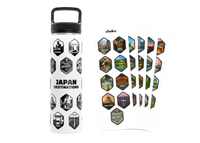
❤️ If a Japan trip is shaping up around this kind of considered, sourced eating, the Traveler bucket-list bottle illustrates the 27 destinations that hold up after the research, part travel guide, part souvenir. Live on Kickstarter now.
What is obanzai, and where can you eat it away from the tourist crowds?
Obanzai is Kyoto's home-style cooking tradition, seasonal vegetables, tofu preparations like yuba and nama-fu, simmered and grilled dishes. Pontocho, better known for its riverside dining platforms, has a handful of longstanding obanzai spots Japanese sources distinguish clearly from the alley's tourist-facing izakaya.
Pontocho's reputation abroad is built almost entirely on the summer riverside "yuka" platforms and the postcard image of the lantern-lit alley. Japanese restaurant coverage of the same street tells a slightly different story: a handful of specific obanzai counters that longtime regulars return to, separate from the tourist-menu izakaya that line the rest of the alley.
Pontocho Ichihana, roughly 20 years in business, builds its menu around what the chef finds seasonally, standard Kyoto obanzai and original dishes worked from whatever Kyoto vegetables are in season that week, not a fixed printed menu aimed at first-time visitors.
Pontocho Asari serves the same obanzai register, yuba and nama-fu among the seasonal Kyoto vegetable dishes, but is noted specifically as more approachable for a first visit than some of the alley's more insider-only counters, without dropping the home-style cooking itself.
The distinction matters for anyone walking Pontocho cold: the alley has real obanzai cooking and real tourist-menu izakaya standing next to each other, and nothing on the street signals which is which. Knowing the specific names ahead of time is the only reliable filter.
Free for you: our Tokyo Google Maps list We keep a Google Maps list of the must-see spots around Tokyo - restaurants, cafes, shops, viewpoints, and streets worth the detour. Drop your email and we'll send it over.
Where do Kyoto locals go for a proper kissaten morning?
Kissaten, Kyoto's old-style coffee shops, are where residents actually eat breakfast, and the ones worth seeking out sit away from the main sightseeing route. Kissa Lily, in the residential ward of Yamashina, is a specific example, more than 50 years old and described in Japanese coverage as locally rooted rather than visitor-facing.
Kyoto's kissaten culture runs deep, and a meaningful share of the most-written-about shops (the ones with the picture-perfect 1930s interiors) have become destinations in their own right, which somewhat defeats the point of a non-touristy pick. Kissa Lily (喫茶リリー), in Yamashina ward east of central Kyoto and off the main temple circuit, is the more useful example: over 50 years old, described in Japanese roundups as "地元密着型," locally embedded, patronized by longtime regulars rather than day-trippers.
The broader pattern, per jalan's coverage of what Kyoto residents actually eat day to day, is that kissaten morning sets, alongside neighborhood shokudo and small dashi-forward soba or oden counters, form the real everyday food culture of the city, distinct from the Nishiki Market and temple-circuit food most visitors encounter.
A kissaten morning set is a useful category to know even beyond one specific shop: a simple set built around toast, egg, and coffee, served slowly in a room that hasn't been redecorated since the Showa era. It's a genuinely different pace from a hotel breakfast buffet, and it's worth building slack into a morning to actually sit through one rather than treating it as a photo stop.
Which of these restaurants should you choose?
Choose Hatoya Shokudo for an early, old-school teishoku near Kumano Shrine; Kujira Shokudo for a residential-neighborhood lunch queue; Pontocho Ichihana or Asari for obanzai without the tourist-izakaya guesswork; and Kissa Lily for a genuine kissaten morning away from the postcard shops.
| Restaurant | Area | What it's for |
|---|---|---|
| Hatoya Shokudo | Sakyo-ku, Kumano Shrine | Early teishoku, kasujiru specialty, 70+ years |
| Kujira Shokudo | Ukyo-ku, Nishikyogoku | Residential lunch queue, nikuzui teishoku |
| Shokudo Hibi | Nakagyo-ku | Upmarket shokudo, quality ingredients |
| Pontocho Ichihana | Pontocho | Obanzai, seasonal chef-driven menu |
| Pontocho Asari | Pontocho | Obanzai, approachable for a first visit |
| Kissa Lily | Yamashina | Old-school kissaten morning |
The honest takeaway: Kyoto's everyday food culture is a short train or bus ride from the temple circuit, not hidden in some inaccessible corner of the city. The gap is simply that most English-language coverage never looks past Nishiki Market and Gion, and Japanese food writing does.
For the sights that pair naturally with this kind of eating, see our guides to where locals eat in Fushimi Inari and where locals eat in Arashiyama.
❤️ If your Kyoto stop is part of a longer route, 3 Weeks in Japan is our 200+ page travel guide covering Tokyo, Kyoto, Osaka & Nara, and six Tokyo day trips, with our own photography of each destination. Live on Kickstarter now.
FAQ
Where do locals actually eat in Kyoto, away from Nishiki Market and Gion?
Japanese food writing points to neighborhood shokudo (cafeteria-style diners) for lunch, obanzai counters in Pontocho for home-style Kyoto cooking, and old kissaten (retro coffee shops) for a proper morning set. Hatoya Shokudo near Kumano Shrine, Kujira Shokudo near Nishikyogoku, and Kissa Lily in Yamashina are three specific examples drawn from Japanese sources.
What is a Kyoto shokudo?
A shokudo is a neighborhood cafeteria-style diner, typically family-run, serving teishoku (set meals) built around a soup base and a choice of side dishes from a display case. Prices usually run under ¥1,100 for a full set. It's the everyday lunch format for Kyoto residents, distinct from the kaiseki and tourist-menu izakaya food clustered around the temple circuit.
What is obanzai and where can you eat it in Kyoto?
Obanzai is Kyoto's home-style cooking tradition: seasonal vegetables, tofu preparations like yuba and nama-fu, and simple simmered or grilled dishes, typically served at small counters and izakaya rather than formal restaurants. Pontocho, better known for its riverside dining platforms, has several longstanding obanzai spots that Japanese sources single out as distinct from the alley's tourist-facing izakaya.
Sources
- Digistyle Kyoto — Hatoya Shokudo — history, cafeteria-style ordering, kasujiru teishoku
- Gucci Japan Kyoto blog — Hatoya Shokudo — saba-ni side dish and ordering style
- Kyotopi — Kujira Shokudo — nikuzui teishoku, hours, neighborhood setting
- Kyotopi — Shokudo Hibi — ingredient sourcing, same lunch/dinner menu
- Tabelog — Pontocho Ichihana — obanzai and seasonal-ingredient sourcing
- Tabelog — Pontocho Asari — seasonal Kyoto vegetables and obanzai dishes
- jalan.net — everyday Kyoto food roundup — shokudo, machi-chuka, kissaten mornings as the real everyday food culture
Activities and tours in Tokyo
cheku is a GetYourGuide partner. We link to tours that handle the parts of travel that eat your time, getting there, booking ahead, language, context you'd otherwise miss. If you book through our link, we earn a small commission at no extra cost to you.


