
Ginza is Tokyo's most upscale shopping and dining district. The things to do here: walk Chuo-dori when it becomes a weekend pedestrian paradise, browse the grand department stores and Ginza Six, watch a single act of kabuki at the Kabukiza for around 2,000 yen, and eat extraordinarily well.
Ginza has a reputation that puts a lot of travelers off, and it should not. Yes, it is Tokyo's luxury district, lined with the global flagships of every fashion house. But the actual things to do in Ginza are mostly free or cheap: a street that becomes a park on weekends, department stores that are worth visiting as buildings, and a way to see real kabuki for about the price of a coffee.
We live in Tokyo, and Ginza is a district we send visitors to with one piece of advice: do not treat it as a shopping trip you cannot afford. Treat it as an elegant neighborhood to walk, with a few specific, accessible experiences built into it. Done that way, Ginza is one of the most rewarding afternoons in the city, whatever your budget.
This guide covers it properly: what Ginza is, how to get there and when, the weekend pedestrian paradise, where to shop at every price level, how to see kabuki without booking, where to eat, and how to put a visit together.
What is Ginza, and why is it worth visiting?
Ginza is Tokyo's most upscale shopping and dining district, in central Chuo ward. It is worth visiting for its weekend pedestrian street, its grand department stores and flagship architecture, the Kabukiza theater, and some of the best food in the city.
Ginza's name tells you where it came from. Ginza means "silver mint," and the district is named after a silver coin mint that operated on this spot from 1612 to 1800. Money has been the business of Ginza for four centuries, and after a Meiji-era fire it was rebuilt in brick as a showcase of Western-style modernity. It has been Tokyo's address for elegance and luxury ever since.
Today that means a dense concentration of high-end department stores, the flagship boutiques of essentially every major fashion brand, art galleries, and a famous restaurant scene. It is also one of Tokyo's main districts for luxury and vintage watches. It is, unapologetically, Tokyo's most expensive square mile.
So why visit, especially if you are not shopping for luxury goods? Because Ginza is genuinely worth experiencing as a place, and the experience is not the price tags. It is the architecture, the brand flagships compete with each other through the buildings they commission, so the streets are an open-air gallery of contemporary design. It is the department stores, which are institutions in their own right. It is the Kabukiza. And it is the particular, composed elegance of the district, which is a real and distinct flavor of Tokyo.
Crucially, the best things to do in Ginza cost very little. Walking it is free. The pedestrian paradise is free. Window-shopping the flagships is free. A single act of kabuki costs about ¥2,000. Ginza rewards a visitor with taste far more than a visitor with a big budget. For a completely different, and very nearby, slice of the city, our guide to things to do at Tsukiji Outer Market covers the food market a few minutes away.
How do you get to Ginza, and when should you go?
Ginza Station is served by three Tokyo Metro lines, so it connects to most of the city directly. Visit on a weekend afternoon if you can, when the main street closes to traffic and becomes a pedestrian zone.
Getting to Ginza is simple, because it is one of the best-connected districts in central Tokyo. Ginza Station sits on three Tokyo Metro lines, the Ginza, Marunouchi and Hibiya lines, which between them reach a huge share of the city. Higashi-Ginza Station is the stop for the Kabukiza theater, and JR Yurakucho Station, on the Yamanote Line, is a short walk from the district. Wherever you are based, Ginza is an easy ride.
The more important question is when to go, and Ginza has a clear best answer.
📍 Location: Ginza, Chuo ward, central Tokyo 💴 Cost: Free to walk and window-shop; pay only for shopping, food and theater tickets ⏰ Best time: A weekend afternoon, for the Chuo-dori pedestrian paradise 🚶 Access: Ginza Station (Tokyo Metro Ginza, Marunouchi, Hibiya lines); Higashi-Ginza for the Kabukiza
Go on a weekend afternoon if your schedule allows it. That is when Chuo-dori, the main avenue, closes to cars and becomes the pedestrian paradise, which is the single most pleasant way to experience the district, and the next section is all about it.
A weekday visit is not wrong. The shops, department stores and Kabukiza all operate normally, and the district is calmer. But the main street will be full of traffic rather than people. If you have any flexibility, aim for Saturday or Sunday after midday. If you do not, go anyway, and simply use the wide pavements.
What is the Chuo-dori pedestrian paradise, and what can you see along it?
On weekend afternoons, Ginza's main avenue, Chuo-dori, closes to traffic and becomes a roughly one-kilometer pedestrian zone. Walking down the center of the road, past the Wako clock tower and the flagship stores, is the definitive Ginza experience.
This is the thing to time your visit around, and it is free.
On weekends, the central stretch of Chuo-dori, about a kilometer of it, is closed to vehicles and opened to pedestrians. The Japanese name, hokosha tengoku, translates literally as "pedestrian paradise," and the effect is genuinely lovely: one of the most expensive streets in Japan, suddenly handed over to people, who walk down the middle of the road, sit at tables set out in the carriageway, and take their time. The hours are noon to 6:00pm from April to September, and noon to 5:00pm from October to March.
Walking Chuo-dori is the core of a Ginza visit, and there is plenty to see as you go. The landmark to orient by is the Wako building and its clock tower, the Seiko House clock tower, which is the symbol of Ginza. It stands at the Ginza 4-chome crossing, where Chuo-dori meets Harumi-dori, the central intersection of the district. The Wako department store, selling watches and jewelry, occupies the building. The clock tower is Ginza's meeting point and its most photographed structure.
The rest of the street is a slow procession of flagship stores, and this is where to look up. Ginza's luxury brands compete through architecture, hiring serious architects to design their buildings, so the street is effectively a free exhibition of contemporary design. You do not need to go inside, or buy anything, to enjoy this. Just walk and look up.
The honest framing of Chuo-dori: it is a walk, not a shopping obligation. The pleasure is the street itself, the buildings, the calm, the elegance of a district designed to be seen. Treat it as that, and it costs you nothing but an afternoon.
❤️ The cheku 9 Days in Tokyo guide is our deep-dive for first-time Tokyo visitors who want a full itinerary they can hand to themselves, with our photography embedded throughout. From $19.
What is Ginza's free art-gallery circuit?
Ginza runs a circuit of serious, free art spaces that Japanese guides route as a set: the Ginza Graphic Gallery, the Shiseido Gallery, and the Maison Hermès Forum. Add the Art Aquarium inside Mitsukoshi and the 1930s Ginza Lion beer hall, and you have a cultural afternoon that costs almost nothing.
This is the layer of Ginza that Japanese roundups treat as standard and English guides mostly skip: the district's brands maintain gallery spaces as part of their identity, and entry to the core circuit is free.
Ginza Graphic Gallery (ggg) is the graphic-design space, rotating exhibitions of Japan's and the world's leading poster, typography and book designers. For anyone with a design eye, it alone justifies the detour.
The Shiseido Gallery is the beauty house's contemporary art space, one of the oldest corporate galleries in Japan, a few minutes down Chuo-dori.
The Maison Hermès Forum sits atop the brand's glass-block building, an art space whose exhibitions change with the seasons; Japanese guides flag it as the quiet room above one of the district's most beautiful buildings.
Two paid-but-worth-it additions round out the circuit. The Art Aquarium inside Ginza Mitsukoshi stages goldfish in illuminated artistic tanks, a distinctly Japanese collision of tradition and spectacle. And Ginza Lion on Chuo-dori, Tokyo's oldest beer hall from the 1930s, is the place to end the circuit, a mosaic-tiled Showa-era room where the price of admission is a beer.
The photographer's eye: the gallery circuit doubles as an architecture walk. The Hermès glass-block facade glows from within at dusk, the Wako clocktower anchors the 4-chome crossing, and the Art Aquarium's tanks are the rare Ginza interior that welcomes a camera. Shoot the circuit late afternoon into evening and the district lights the frames for you.
Where should you shop in Ginza?
Ginza shopping runs from grand old department stores to the modern Ginza Six complex, from the enormous Itoya stationery store to one of the world's largest Uniqlo. There is excellent shopping here at every price level, not only the luxury end.
Ginza is a shopping district, but it is a mistake to think shopping here means luxury fashion only. The range is wide, and the best of it is accessible.
The department stores are the place to start, and they are worth visiting whether or not you buy anything. Ginza Mitsukoshi, which opened in 1930 and runs to twelve floors, and Matsuya Ginza are grand, long-established institutions. A Japanese department store is an experience in itself, and the basement food halls, covered below, are the highlight.
Ginza Six, which opened in 2017, is the district's largest shopping complex and the modern counterpoint to the old department stores. Beyond floors of fashion and cosmetics, it has a large Tsutaya art bookshop, dedicated food and interior-design floors, a rooftop garden that is free to visit and a good place to rest, and even a Noh theater in the basement. Go for the rooftop and the bookshop even if you skip the fashion.
For accessible, specific shopping, two stores stand out. Itoya is a famous stationery store spread over many floors, and Japanese stationery is one of the best-value, most giftable things a visitor can buy; our Japanese stationery souvenirs guide covers what to pick up there. And the Uniqlo Ginza flagship is one of the largest Uniqlo stores in the world, a destination in its own right for a brand you can actually afford.
So the shopping advice for Ginza is this: window-shop the luxury flagships for the architecture and the spectacle, and do your actual buying at the department-store food halls, at Itoya, and at Uniqlo. That way Ginza shopping is a pleasure rather than an intimidation.
Can you see kabuki at the Kabukiza Theatre?
Yes, and easily. The Kabukiza Theatre in Ginza sells single-act tickets, called hitomakumi, on the day for around 2,000 yen. They let you watch one act of a kabuki play without booking ahead, which is the simplest way for a visitor to experience kabuki.
This is the best-kept practical secret in Ginza, and it deserves its own section.
The Kabukiza is the principal theater for kabuki, the centuries-old, highly stylised form of Japanese theater, with its dramatic make-up, elaborate costumes and music. It stands in Higashi-Ginza, and it hosts performances through much of the year.
A full kabuki performance is a serious commitment. It can run several hours, tickets cost from ¥4,000 up to ¥22,000, and they need to be reserved in advance. For a traveler unsure whether kabuki is for them, that is a lot to gamble.
The Kabukiza's answer is the single-act ticket, called hitomakumi. These are sold on the day, at the theater, for around ¥2,000, and they let you watch just one act of the day's program. You do not reserve ahead. You do not commit to hours. You buy a same-day ticket, go in for a single act, and see real kabuki, in the real theater, for roughly the price of a nice lunch.
This is, genuinely, one of the best-value cultural experiences in Tokyo. Kabuki is visually extraordinary even if you do not follow the plot, and an act is the perfect dose: long enough to take in the spectacle, the music, the staging, short enough that it never becomes a slog. English audio guides are available to help you follow what is happening.
Our strong recommendation: build a Ginza visit around a single-act kabuki ticket. Check the day's act times and ticket details before you go, since they vary by program, and treat it as the cultural anchor of your afternoon.
Free for you: our Tokyo Google Maps list We keep a Google Maps list of the must-see spots around Tokyo - restaurants, cafes, shops, viewpoints, and streets worth the detour. Drop your email and we'll send it over.
What should you eat in Ginza?
Ginza dining runs from the world's most celebrated sushi counters to the food halls in department-store basements. You can eat at the very top of Tokyo's restaurant scene here, or eat superbly for a modest price. Both are genuine Ginza experiences.
Ginza has been a byword for fine dining in Tokyo for a very long time, and the food is one of the real reasons to visit. The key is knowing that "eating well in Ginza" does not have to mean "spending a fortune."
At the top end, Ginza is famous for sushi, specifically high-end Edomae sushi, the Tokyo style. Some of the most revered sushi counters in the world are in this district, intimate places where a master serves a set course at a price to match. If a special-occasion meal is part of your trip, Ginza is where to have it, and such places need booking well ahead.
But the everyday answer, and the one we would point most visitors to, is the depachika, the department-store food halls in the basements of stores like Mitsukoshi and Matsuya. These are vast, beautiful food markets: prepared dishes, bento, sweets, regional specialities, all to an extraordinarily high standard. You can assemble a superb lunch here for a very reasonable amount, and it is an experience in itself just to walk through. For a quick, high-quality, affordable meal in Ginza, the depachika is the answer.
In between, the district is full of cafes and restaurants at every level, from old-fashioned Ginza coffee houses to modern bistros. Ginza takes coffee and cake seriously, and an afternoon break in a proper Ginza cafe is part of the district's character.
The honest summary on food: have one memorable meal at whatever level your budget allows, and fill the rest of the day from the depachika and the cafes. Either way, you will eat well, because eating well is what Ginza does. For the specific counters and the ¥1,000 weekday lunch culture the office workers rely on, our guide to where locals eat in Ginza names names.
What are the key things to do in Ginza in one visit?
Come on a weekend afternoon, walk Chuo-dori during the pedestrian paradise, browse a department store and Ginza Six, see a single act of kabuki at the Kabukiza, and eat from a depachika food hall. Allow about half a day.
Ginza is compact and walkable, so a great visit is mostly about timing and a couple of bookable moments.
The right way to approach Ginza depends on what you want from it:
First-time visitor, want the essential Ginza: Come Saturday or Sunday afternoon, walk the Chuo-dori pedestrian paradise end to end, see a single act at the Kabukiza, and eat from a department-store food hall. You love design and architecture: Walk Chuo-dori slowly for the flagship buildings, go up to the Ginza Six rooftop garden, and lose an hour in the Tsutaya art bookshop and Itoya. You are here to eat: Book one serious sushi or kaiseki meal in advance, and build the rest of the day around the depachika and Ginza's cafes.
A standard half-day visit ties it together: arrive early weekend afternoon, walk Chuo-dori and find the Wako clock tower, dip into Mitsukoshi or Ginza Six, time a single-act kabuki ticket at the Kabukiza, and eat from a depachika.
If you only do three things in Ginza: 1. Walk Chuo-dori during the weekend pedestrian paradise. It is free, it is the essential Ginza experience, and it only exists on weekend afternoons. 2. See one act of kabuki at the Kabukiza. A same-day single-act ticket is around ¥2,000, needs no booking, and is one of the best-value cultural experiences in Tokyo. 3. Eat from a department-store depachika. It is how to eat brilliantly in Tokyo's luxury district without a luxury bill.
Ginza is far more welcoming, and far more affordable to enjoy, than its reputation suggests. Come on a weekend, walk the street that becomes a park, watch some kabuki, and eat well. That is a near-perfect Tokyo afternoon, and most of it costs almost nothing.
If you want to take a piece of the district's craft sensibility home rather than a shopping bag, the kintsugi workshop minutes from Ginza is the fit: ninety minutes gilding a repaired ceramic, the exact aesthetic the district's galleries celebrate, at a price closer to lunch than to luxury. It slots neatly between the depachika and the gallery circuit.
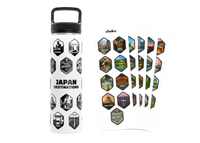
❤️ Even if your trip stays in Tokyo, the Traveler bucket-list bottle has plenty to mark off, its 27 destinations include Tokyo neighborhoods, day trips like Kamakura and Hakone, and the wider Japan route for whenever you go further. From $39.
FAQ
What is there to do in Ginza?
Ginza is Tokyo's upscale shopping and dining district. The main things to do are walking Chuo-dori during the weekend pedestrian paradise, browsing the grand department stores and Ginza Six, seeing a single act of kabuki at the Kabukiza Theatre, and eating well, from sushi counters to department-store food halls.
When is the Ginza pedestrian paradise?
Chuo-dori, Ginza's main street, closes to traffic on weekends and becomes a pedestrian zone. The hours are noon to 6:00pm from April to September, and noon to 5:00pm from October to March. A weekend afternoon is the best time to visit Ginza for this reason.
Can you watch kabuki in Ginza without booking ahead?
Yes. The Kabukiza Theatre sells single-act tickets, called hitomakumi, on the day for around 2,000 yen. They let you watch just one act of a kabuki play without reserving in advance or sitting through a full performance. It is the easiest, cheapest way to experience kabuki.
Is Ginza expensive to visit?
Ginza has a luxury reputation, but visiting it is free. Walking Chuo-dori, window-shopping the flagship stores, browsing department stores, and seeing a single kabuki act all cost little or nothing. Department-store food halls offer excellent food at reasonable prices, alongside the high-end restaurants.
How do you get to Ginza?
Ginza Station is served by the Tokyo Metro Ginza, Marunouchi and Hibiya lines, putting it on most Tokyo itineraries. Higashi-Ginza Station is the stop for the Kabukiza Theatre, and JR Yurakucho Station on the Yamanote Line is a short walk away.
What is there to do in Ginza at night?
Ginza is at its most elegant in the evening. The department stores and Ginza Six stay open into the night, the flagship-store architecture is beautifully lit, and the district is known for its upscale bars and restaurants, many tucked into basements and upper floors. It is calmer and more atmospheric than the daytime shopping rush, and the Kabukiza sometimes stages evening performances.
Is Ginza good for kids and families?
Ginza leans upscale and adult, but it works for families in short bursts. Hakuhinkan Toy Park on Chuo-dori is a multi-floor toy store children love, department-store food halls (depachika) are a hit for snacks, and the Sunday pedestrian paradise lets kids walk the car-free main street. It is not a theme-park district, but an hour or two fits easily into a Tokyo day.
Sources
- japan-guide.com, Ginza, the name's origin, the Chuo-dori pedestrian paradise, the Wako clock tower, department stores, Ginza Six, Kabukiza single-act tickets and access
- GO TOKYO, Ginza, the official Tokyo travel guide to the district
- GOOD LUCK TRIP, Kabukiza Theatre, overview of the Kabukiza and visiting information
- matcha-jp.com, Ginza shopping, department stores, malls and restaurants in Ginza
- Aumo, 16 Ginza spots, the Japanese roundup covering the Art Aquarium and the gallery spaces
- Tokyo Lucci, Ginza sightseeing 19, the free-gallery circuit incl. the Maison Hermès Forum
Activities and tours in Tokyo
cheku is a GetYourGuide partner. We link to tours that handle the parts of travel that eat your time, getting there, booking ahead, language, context you'd otherwise miss. If you book through our link, we earn a small commission at no extra cost to you.


