
Tokyo Tower is the city's 333-meter orange landmark, an Eiffel-inspired tower from 1958. The things to do here: ride up to the Main Deck at 150 meters or join the Top Deck Tour at 250 meters, explore the shops at the base, photograph the tower framed by Zojoji Temple, and come back at night for the illumination.
Tokyo has a taller tower now, and a newer one, and people sometimes treat that as a reason to skip Tokyo Tower. It is not. The things to do in Tokyo Tower are not really in competition with the Skytree, because Tokyo Tower offers something the Skytree cannot: it is itself beautiful, it is central, and it carries six and a half decades of the city's affection.
We live in Tokyo, and Tokyo Tower is the landmark we are most fond of. The Skytree is the impressive one. Tokyo Tower is the loved one. It is the orange lattice you see between buildings all over the center of the city, and it photographs better than any other structure in Tokyo.
This guide covers it fully: what Tokyo Tower is and why it still matters, how to get there, the real difference between the Main Deck and the Top Deck Tour, what is at the base, the temple next door that makes the famous photograph, and the best time to go.
What is Tokyo Tower, and why is it worth visiting?
Tokyo Tower is a 333-meter lattice tower in central Tokyo, completed in 1958 and inspired by the Eiffel Tower. It is worth visiting for its observation decks, but also as a landmark in its own right: central, beautiful, and the most photogenic structure in the city.
Tokyo Tower opened in 1958, and for the half-century that followed it was the tallest structure in Japan and the symbol of a country rebuilding and rising. It stands 333 meters tall, it was modelled on the Eiffel Tower, and it is painted in bands of white and bright orange, a color scheme required by aviation safety rules that has become the tower's signature look.
Since the Skytree opened in 2012, Tokyo Tower is the country's second-tallest structure. That fact leads some travelers to write it off, and that is a mistake, because height was never the whole point of Tokyo Tower.
Here is the case for visiting. First, it is central, sitting in Minato among the office towers and embassies, far easier to fold into a normal Tokyo day than the Skytree out east. Second, the view from it is genuinely excellent, and a 150-meter or 250-meter view of central Tokyo is more legible, more human-scaled, than the vast distant panorama from much higher up. Third, and most important, Tokyo Tower is itself a thing to look at. The Skytree is something you go up. Tokyo Tower is something you photograph, especially lit at night beside the temple at its feet.
The honest framing: visit the Skytree for the highest view, and visit Tokyo Tower for the tower. They are not the same experience, and a Tokyo trip has room for both. Our guide to things to do at Tokyo Skytree covers the other one.
How do you get to Tokyo Tower, and what are the hours?
Tokyo Tower is a short walk from Akabanebashi Station on the Toei Oedo Line, with several other stations nearby. The Main Deck is open 9:00 to 23:00, and the Top Deck Tour runs on a slightly shorter schedule.
Tokyo Tower is easy to reach, because central Minato is well served by the subway and several stations sit within walking distance.
The closest is Akabanebashi Station on the Toei Oedo Line, about a five-minute walk. Also within range are Kamiyacho Station on the Tokyo Metro Hibiya Line, Onarimon and Shibakoen on the Toei Mita Line, and the larger Daimon and Hamamatsucho stations. Whichever side of the city you are coming from, one of these connects.
📍 Location: Shiba-koen, Minato ward, Tokyo 💴 Cost: Free to enter the base; the observation decks are ticketed ⏰ Hours: Main Deck 9:00–23:00 (last entry 22:30); Top Deck Tour runs 9:00–22:45 🚶 Access: Akabanebashi Station (Toei Oedo Line), ~5 min walk; also Kamiyacho, Onarimon and Shibakoen
The Main Deck keeps long hours, generally 9:00 to 23:00 with last admission at 22:30, which is genuinely useful: it means a late-evening visit, after dinner, is entirely possible. The Top Deck Tour runs on a slightly tighter schedule, finishing a little earlier. Both operate year-round.
As with most Tokyo landmarks, the base of Tokyo Tower, the FootTown building, is free to enter. You only pay to go up, so you can arrive, look around the base, eat, photograph the tower from underneath, and decide about tickets on the spot.
Should you visit the Main Deck or the Top Deck of Tokyo Tower?
The Main Deck at 150 meters is the standard visit, with a glass floor and the city view, and it is enough for most people. The Top Deck at 250 meters is a guided, premium experience, the Top Deck Tour. Choose the Main Deck for a straightforward visit, the Top Deck Tour for the higher view and the produced experience.
Tokyo Tower has two observation levels, and unlike most towers, the difference between them is not only height. It is the type of experience.
| Main Deck (150 m) | Top Deck (250 m) | |
|---|---|---|
| What it is | The standard two-floor observation deck | A guided, timed experience: the Top Deck Tour |
| Includes | A glass-floor look-down window, cafe, shops | Priority entry, a welcome drink, a photo card, exhibits, the mirrored Top Deck |
| Ticket | The base ticket, buy on the day or online | A separate, higher-priced ticket, best booked with a time slot |
| Best for | Most visitors; a simple, flexible visit | Going higher, and wanting a more produced, special-occasion visit |
The Main Deck, at 150 meters, is the standard Tokyo Tower visit, and for most people it is the right one. It spreads over two floors, it has cafes and shops, and it includes a glass-floor Skywalk Window where you can stand and look straight down the tower. The view over central Tokyo from here is excellent, and you can come and go on your own schedule.
The Top Deck, at 250 meters, is a different proposition. You cannot simply ride up to it. It is reached through the Top Deck Tour, a guided, timed experience. The tour gives you priority entry on a dedicated lane, a welcome drink, a souvenir photo card, and exhibits about the tower's history and construction, before bringing you up to the Top Deck itself, which has a futuristic interior of geometric mirrors. It is more produced, more of an occasion, and it costs more.
So how to choose. If you want a straightforward trip up a tower with a great view, on your own timing, buy the Main Deck. If you want the highest point, and you like the idea of a guided, slightly VIP experience rather than just an elevator, book the Top Deck Tour, and book it in advance to secure a time slot.
The current numbers, per japan-guide's deck listings: the Main Deck runs ¥1,500, and the Top Deck Tour, which includes the Main Deck, runs ¥3,500 on the day or ¥3,300 booked in advance. Prices have moved before, so glance at the official fee page when you book.
And there is a third way up that almost nobody takes: the open-air stairs. Roughly 600 steps climb the outside of the tower to the Main Deck, ticketed like the elevator, and the fifteen-minute climb up through the orange lattice is its own small adventure with the city widening under you the whole way. Operating days vary, so check at the base, but if the stairs are open and your legs agree, take them up and the elevator down.
❤️ If you want a full nine-day Tokyo itinerary mapped out for you, our cheku 9 Days in Tokyo guide is local knowledge and our photography, designed for first-time visitors who want every day planned before they land. From $19.
What is there to do at the base of Tokyo Tower?
The base of Tokyo Tower is FootTown, a building with shops, cafes and restaurants. It is free to enter, it is where you buy tickets and board the elevators, and it is worth time in its own right, especially for souvenirs.
A Tokyo Tower visit is not only the ride up. The building at the foot of the tower, FootTown, is a destination in itself, and because it is free to enter, it is open to everyone whether or not they buy a deck ticket.
FootTown is a multi-story building packed with shops, cafes and restaurants. The souvenir shopping here is genuinely good, and Tokyo Tower merchandise, with that distinctive orange-and-white tower on it, is one of the more characterful souvenirs you can take home from Tokyo. There are places to eat at a range of prices, which makes FootTown a practical stop, somewhere to have a meal or a coffee built right into the visit.
It is also simply where the visit is organized: ticket counters, the elevators up to the Main Deck, and the entrance for the Top Deck Tour are all here. If you arrive with a timed Top Deck ticket, FootTown is where you wait, comfortably, with shopping and food to fill the time.
The building's newest layer is RED° Tokyo Tower, the esports and VR complex across FootTown's third to fifth floors, opened in 2022. It is a full indoor arena of VR attractions, simulators and gaming lounges, with all-day passes running roughly ¥3,200–5,400 depending on the day. It is the wet-weather answer at the tower, and for a family with teenagers it can absorb more of the day than the deck itself.
The practical takeaway: do not treat FootTown as just a lobby to pass through. Budget a little time for it, do your souvenir shopping here, and use it to eat, or check our guide to where locals eat around Tokyo Tower for the better meals a few streets out. It turns Tokyo Tower from a quick up-and-down into a fuller visit.
What can you see near Tokyo Tower?
Right beside Tokyo Tower stands Zojoji Temple, a major Buddhist temple, set in the green of Shiba Park. The view of the temple with the orange tower rising behind it is the classic Tokyo Tower photograph, and it costs nothing.
One of the best things about Tokyo Tower is not the tower at all. It is what stands next to it.
Zojoji Temple is a large and important Buddhist temple, and it sits directly at the foot of Tokyo Tower. This accident of geography, an old temple and a 1950s tower side by side, produces the single most iconic image of the area: the temple's great wooden gate or its main hall in the foreground, traditional and dark-timbered, with the bright orange lattice of Tokyo Tower rising directly behind it. Old Japan and modern Japan in one frame. It is one of the most photographed compositions in the city, and seeing it, and shooting it, costs nothing at all.
Zojoji is worth visiting as a temple in its own right, not just as a photo foreground. It is a calm, working temple with real history, and walking its grounds is a quiet counterpoint to the tower.
Around both of them is Shiba Park, one of the oldest public parks in Japan. It is green space in the middle of Minato, good for a stroll, a rest, and yet more angles on the tower.
Japanese photo guides go further and name the exact spots, and two are worth writing down. Shiba Park plot No. 4 holds the head-on composition: a tree-lined path aimed straight at the tower, the frame Japanese photography write-ups identify as the wedding-shoot and drama-location classic. And inside the Tokyo Prince Hotel's garden, the Prince Shiba Park rose arch is open around the clock, with the tower rising through the arch, the closest thing the area has to a secret angle. Both are free, both are minutes from the base, and neither appears in most English guides.
The point here is that a Tokyo Tower visit should always include the ground around it. Many visitors ride up, ride down, and leave, and they miss that the best photograph and a genuinely worthwhile temple are right there, free, in the tower's shadow.
Free for you: our Tokyo Google Maps list We keep a Google Maps list of the must-see spots around Tokyo - restaurants, cafes, shops, viewpoints, and streets worth the detour. Drop your email and we'll send it over.
When is the best time to visit Tokyo Tower?
Sunset into evening is the best time. Go up before dark to see Tokyo in daylight and watch the city lights come on. Then come back down, because Tokyo Tower is illuminated every night and the lit tower beside Zojoji Temple is the view that stays with you.
Tokyo Tower gives you two views, the view from it and the view of it, and the best time of day serves both at once.
Plan to go up in the late afternoon, timing it so you are on the Main Deck about an hour before sunset. That gives you Tokyo in daylight, the long color of dusk, and the city lights switching on, all from one deck. The Main Deck's late hours mean you are not rushed.
Then, crucially, come back down and look at the tower. Tokyo Tower is illuminated every night, its standard lighting a warm orange glow, and the lit tower is genuinely beautiful in a way the daytime tower is not. The thing to do after your descent is walk to Zojoji Temple and see the orange tower glowing behind the dark temple roofs.
The photographer's note: the Zojoji-and-Tokyo-Tower shot is the one to get, and the time to get it is the blue hour, the half-hour after sunset. Then the sky still holds deep blue, the tower's illumination is already on, and the temple is lit too, so every element of the frame has its own light and the picture has depth instead of a black sky. Position yourself so a temple gate or rooftop sits between you and the tower. From up on the Main Deck, the same blue-hour window is best for the city: shoot with your lens close to the glass to kill reflections, and brace it for the low light. Both the best photo of the tower and the best photo from it happen in the same thirty minutes, so pick which one matters more to you and plan the evening around it. For how the seasons affect clear-day views, see our guide to the best time to visit Japan.
What are the key things to do at Tokyo Tower in one visit?
Arrive in the late afternoon, explore FootTown at the base, go up the Main Deck or join the Top Deck Tour timed for sunset, then come down and photograph the lit tower from Zojoji Temple. Allow two to three hours.
A Tokyo Tower visit is short to plan and built around one piece of timing, the sunset ascent.
Come in the late afternoon to Akabanebashi or one of the nearby stations. Spend the first stretch at FootTown, the base building, doing souvenir shopping or having an early meal. Go up the Main Deck, or take your booked Top Deck Tour, timed for about an hour before sunset. Come back down after dark, and walk the few minutes to Zojoji Temple and Shiba Park to see, and photograph, the illuminated tower from the ground.
If you only do three things at Tokyo Tower: 1. Go up timed for sunset. Daylight, dusk and the lit city in one visit is the best value the tower offers, and the Main Deck alone delivers it. 2. Photograph the tower from Zojoji Temple. The temple-and-tower composition is the iconic image of the area, it is free, and it is best at blue hour after your descent. 3. Give FootTown and Shiba Park some time. The base building and the park around the tower turn a quick elevator ride into a proper, rounded visit.
Tokyo Tower is not the tallest thing in the city anymore, and it does not need to be. It is central, it is lovely, and it gives you both a fine view of Tokyo and the best photograph of Tokyo. Come at dusk, go up once, and look at the tower as much as you look from it.
One more way to see it, and it is the strange one: from the driver's seat. The street go-kart route that runs from Tokyo Tower past Shibuya Crossing starts in the tower's shadow, and gliding under the orange lattice at street level, in a costume, in traffic, is the version of the landmark nobody's deck photo captures. Do the deck first, then the drive.
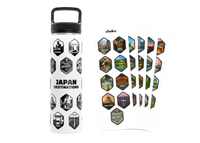
❤️ If you're planning a first Japan trip, the cheku Japan Destinations I Traveler bucket-list bottle illustrates the 27 destinations that hold up after the research, part travel guide, part souvenir, and a daily essential for the trip itself. From $39.
FAQ
Should you visit the Main Deck or the Top Deck of Tokyo Tower?
The Main Deck at 150 meters is the standard visit and is enough for most people, with the glass floor and the city view. The Top Deck at 250 meters is a guided, premium experience called the Top Deck Tour. Choose the Main Deck for a simple visit, the Top Deck Tour for the higher view and the produced experience.
How tall is Tokyo Tower and when was it built?
Tokyo Tower is 333 meters tall and was completed in 1958. It was inspired by the Eiffel Tower, and for decades it was the tallest structure in Japan. It is now the second tallest, after Tokyo Skytree, but remains the city's most nostalgic landmark.
Is Tokyo Tower or Tokyo Skytree better?
They are different. Tokyo Skytree is much taller at 634 meters and gives the highest view. Tokyo Tower is shorter at 333 meters but more central and more iconic, and it is itself a beautiful thing to photograph, especially lit at night beside Zojoji Temple. Many visitors do both.
What time should you visit Tokyo Tower?
Sunset into evening is the best time. Going up before dark lets you see Tokyo in daylight and watch the lights come on. Tokyo Tower is also illuminated every night, so it is worth seeing the tower itself after dark, framed by Zojoji Temple from the ground.
How much does Tokyo Tower cost?
The Main Deck at 150 meters costs ¥1,500. The Top Deck Tour, which includes both decks and the guided experience at 250 meters, costs ¥3,500 on the day or ¥3,300 booked in advance. The base building, Zojoji Temple next door, and the classic photo spots in Shiba Park are all free. Hours run 9:00 to 23:00 with last Main Deck entry at 22:30.
Sources
- japan-guide.com, Tokyo observation decks, Tokyo Tower's height and history, the Main and Top decks, Zojoji and access
- Tokyo Tower, official Main Deck page, the Main Deck at 150 meters, the glass floor and hours
- Tokyo Tower, official Top Deck Tour page, the Top Deck Tour at 250 meters and what the guided experience includes
- Tokyo Tower, official fee page, current ticket pricing and opening hours
- japan-guide.com, Tokyo Tower, deck prices, the 600-step staircase, RED° Tokyo Tower hours and passes
- KKday Japan, Shiba Park photo spots, plot No. 4's head-on composition and the Prince Shiba Park rose arch
Activities and tours in Tokyo
cheku is a GetYourGuide partner. We link to tours that handle the parts of travel that eat your time, getting there, booking ahead, language, context you'd otherwise miss. If you book through our link, we earn a small commission at no extra cost to you.


