
October. That's the answer Japanese travel sources give most consistently, good weather, lower crowds than spring, food at its seasonal peak, and autumn foliage beginning across the country. But the real question is which weeks within any season to target or avoid. In 2026 that includes a calendar event most guides haven't caught: Japan's first full Silver Week since 2015.
The standard English answer to "best time to visit Japan" is cherry blossom season. It's not wrong, sakura in late March and early April is genuinely extraordinary. But it's incomplete in ways that matter: it doesn't tell you which specific days within cherry blossom season are manageable versus chaotic, it doesn't mention the domestic holiday calendar that reshapes crowds and prices four times a year, and it doesn't explain why Japanese travel writers consistently pick autumn over spring when asked which season they'd choose for a first-time visitor.
We live in Tokyo, and we've watched friends visit in every season. The travelers who come back happiest aren't the ones who came for sakura week. They're the ones who came in late May, October, or January. What follows is the picture from Japanese sources, Jalan.net surveys, JMA seasonal data, the official holiday calendar, of which months they recommend, which specific weeks to avoid, and how the holiday rush periods change the calculus.
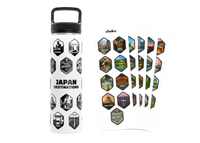
If you're planning a Japan trip and want a destination shortlist to pair with your timing, the Traveler Bottle maps 27 Japan destinations across the country, a framework for building the route once you've chosen the season.
When should you go, and when should you avoid Japan? (The short answer)
| Period | Weather | Crowds | Prices | Verdict |
|---|---|---|---|---|
| Late Mar–early Apr | 10–20°C, mild | High (sakura) | Elevated | Go — best seasonal draw |
| Late Apr–May 5 | 14–22°C, fine | Extreme (Golden Week) | Peak | Avoid or book extremely early |
| May 6–31 | 19–25°C, excellent | Low | Normal | Go — most underrated window |
| June | 22–27°C, humid | Low–moderate | Low | Go if budget-focused |
| Jul–early Aug | 28–33°C, very hot | Moderate–high | Normal | Festivals only |
| August 10–18 | 28–33°C, hot | High (Obon) | Elevated | Avoid unless Obon is the goal |
| Late Aug–Sep 18 | 25–30°C, easing | Low | Normal | Go — quiet post-Obon window |
| September 19–23 | 22–27°C | High (Silver Week 2026) | Elevated | Avoid in 2026 — see below |
| Oct–mid Nov | 12–23°C, ideal | Moderate–high | Normal–elevated | Go — best overall conditions |
| Dec 1–26 | 5–13°C, clear | Low | Low | Go — quiet and cheap |
| Dec 28–Jan 4 | 5–13°C, cold | High (New Year) | Elevated | Avoid (many closures) |
| Jan 5–Feb | 4–12°C, cold, dry | Lowest | Lowest | Go — cheapest, calmest Japan |
Temperature ranges from tenki.jp historical data. The pattern Japanese travel forums return to: the week after each holiday surge, May 6–20, August 19 onward, January 5–20, is the best-value, lowest-crowd window of its season.
What do Japanese travel sources actually recommend?
Autumn gets the most consistent recommendation in Japanese domestic travel content. Not spring.
On Jalan.net, Japan's largest domestic travel booking platform, September and October consistently rank highest in post-trip satisfaction surveys. The reasoning is practical: weather is more stable in autumn, humidity is lower, and the food calendar peaks. Autumn in Japan means chestnuts (栗), matsutake mushrooms, Pacific saury (秋刀魚) grilled at every izakaya, new-harvest rice (新米), and persimmon. Japanese food writers consistently describe autumn as the best season to eat in Japan, and that opinion filters into travel recommendations.
The second reason: international visitor pressure is lower than spring. Cherry blossom season draws enormous international volume; the koyo (autumn foliage) season is primarily a domestic event. Kyoto in November is still crowded, but Japanese travel writers note the experience at most sites is more manageable than at peak sakura.
First visit to Japan: October or early November, reliable weather, easier logistics, food at its seasonal best. Cherry blossom is a specific goal: Late March to early April, plan for crowds and book accommodation 6+ months out.
Cherry blossom season vs autumn vs winter — which trip is right for you?
| Cherry blossom (late Mar–early Apr) | Autumn (Oct–mid Nov) | Winter (Dec–Feb) | |
|---|---|---|---|
| Visual impact | Highest — iconic, unmissable | Very high — koyo color | Moderate — illuminations, snow |
| Weather | Mild (10–20°C), some rain | Excellent (12–23°C), dry | Cold (4–13°C), clear |
| Crowds | High at sakura spots | Moderate–high at koyo spots | Low (except New Year) |
| Prices | Elevated (hotels +40–80%) | Normal to elevated | Lowest of the year |
| Timing window | Narrow (5–10 days per location) | Wider (2–3 week window) | Flexible |
| Best for | First-timers, photographers, couples | Repeat visitors, hikers, comfort-seekers | Budget travelers, onsen focus |
The clearest argument for spring: if seeing cherry blossoms is a specific goal, no other season replicates it. The argument for autumn: better weather reliability, a longer window, and an aesthetic Japanese domestic writing rates as equal or superior. The argument for winter is below, and it's stronger than most guides admit.
The holiday calendar visitors don't account for
Japan's national public holidays are set by the Cabinet Office. Several times a year they cluster into multi-day runs that trigger mass domestic travel. Booking without knowing these dates means sold-out trains and 2–3x hotel prices alongside the year's highest crowds.
Golden Week (April 29–May 5). Four public holidays in eight days; most workers bridge them into a 9–10 day break. Japan's single largest domestic travel event. Shinkansen from Tokyo to Osaka sell out 30 days ahead; ryokan in Hakone and Nikko run peak rates; Kyoto's popular streets become difficult to walk. One nuance from Japanese sources: central Tokyo itself is often quieter than usual, because residents leave for resorts, if you're locked into these dates, base in Tokyo rather than competing for Kyoto.
Obon (August 10–18, centred on August 13–16). The Buddhist period of ancestor remembrance. Unlike Golden Week, Obon sends people home rather than out to resort destinations: transport is gridlocked in both directions, but some Tokyo neighborhoods actually quieten. The visitor circuits stay crowded. The culturally specific draw: bon odori dances in parks and neighborhoods across the country.
Silver Week, and 2026 has one: September 19–23. Silver Week only occurs when Respect for the Aged Day (Monday, September 21 in 2026) and Autumnal Equinox Day (Wednesday, September 23) sandwich a bonus Citizen's Holiday between them. That alignment is rare, it has happened only in 2009 and 2015, and won't recur until 2032. Japan's 2026 holiday calendar confirms it: five consecutive days off, September 19–23. Expect a Golden Week-scale domestic surge compressed into five days. If you're planning a September 2026 trip, aim for before September 18 or after September 24, the usual "late September is quiet" advice does not apply this year.
New Year (December 28–January 4). Japan's third major surge, flowing toward hometowns and shrines. Many restaurants, shops, and museums close December 30–January 3. First shrine visits (hatsumode) bring enormous crowds January 1–3, Meiji Shrine alone handles over 3 million visitors in three days. Arrive after January 4 and you miss all of it.
Spring in Japan (March–May)
tenki.jp publishes the authoritative sakura forecast each year, starting in January. Typical timing:
| City | Bloom start | Peak (満開) | Best viewing spots |
|---|---|---|---|
| Tokyo | March 23–28 | March 30–April 6 | Ueno, Shinjuku Gyoen, Meguro River |
| Osaka | March 25–30 | April 1–7 | Osaka Castle, Kema Sakuranomiya |
| Kyoto | March 27–April 1 | April 3–10 | Maruyama Park, Philosopher's Path |
| Sapporo | April 25–May 5 | May 1–10 | Maruyama Park, Hokkaido University |
These dates move 1–2 weeks either way depending on the winter. Full bloom lasts 7–10 days in good conditions; rain or wind can cut it to 4–5.
The timing advice from Japanese sources: arrive at the start of peak bloom rather than at full peak. At 80% bloom (七分咲き), trees are often more photogenic and crowds are 30–40% lower. The absolute peak Saturday in Tokyo is the year's single most crowded day at any park. And the week after peak, hazakura, when petals fall and green leaves emerge, is distinctly beautiful and almost entirely crowd-free; Japanese photographers specifically seek it.
The honest cost picture: hotel prices in Tokyo during peak sakura week run 40–80% above off-peak; Kyoto goes higher, and decent Kyoto accommodation books out by the previous November. The sakura front also moves southwest to northeast from late March through early May, Japanese travelers use this routing deliberately, following the bloom north through Tohoku and Hokkaido where crowds thin dramatically.
What comes before and after: early March is quiet and cheap, with ume (plum blossoms) as a lower-key alternative. And May 6–20, post-Golden Week, is the window Japanese writers call 穴場 (anaba, the hidden opportunity): Japan nearly empty, new-green countryside (新緑), 18–22°C, prices reset. Month detail: March · April · May
Summer in Japan (June–August)
Rainy season (梅雨/tsuyu): the Japan Meteorological Agency announces each region's dates; Tokyo's typically runs mid-June to early July. It's not continuous rain, high humidity with afternoon showers. Hydrangeas bloom at temples throughout June, prices are at their annual low, and Hokkaido has no rainy season at all. Budget-focused, indoor-and-food itineraries hold up well.
July and August: the heat is the constraint, Tokyo regularly exceeds 35°C in August with humidity above 70%. Japanese travel writers are blunt: outdoor activity before 10am and after 6pm. The positive case is festival season, with no equivalent in other months: Gion Matsuri runs the full month of July in Kyoto, Sumida Fireworks in Tokyo, Awa Odori in Tokushima in mid-August. Come for the matsuri if that's the priority; otherwise wait for autumn. Month detail: June · July · August
Autumn in Japan (September–November)
September is underused by international visitors. Temperatures ease to 25–28°C with falling humidity, and JNTO statistics show it as a low-volume inbound month. The typhoon reputation is real but overstated for Tokyo and Kyoto, most storms affect Okinawa and western Japan. The 2026 caveat: Silver Week (September 19–23) puts a Golden Week-scale surge in the middle of the month. Target September 1–18 or September 24–30 instead. Month detail: September
October is the month Japanese sources recommend most for a balanced trip: 20–24°C in Tokyo, no holiday clusters, koyo beginning in Hokkaido and Tohoku, and the JMA records it among Tokyo's driest months. Walker+'s koyo tracker follows the color front the way tenki.jp follows sakura, the window at any location is 2–3 weeks, meaningfully longer than cherry blossom season. Month detail: October
November brings koyo to Tokyo and Kyoto. Early November (before the 15th) is the better Kyoto window, color developing, crowds not yet peaked. Mid-November through December 1 is Kyoto's most concentrated autumn surge, with hotel prices up 30–60% and the top temples at capacity. Japanese writers' advice for peak koyo: weekdays only, and the quieter northern Higashiyama temples, Ohara, or Fushimi Inari at dawn over the central circuit. Month detail: November
Winter in Japan (December–February)
This is the season English sources undervalue and Japanese sources treat as genuinely viable, often preferable.
December 1–26 is one of Japan's emptiest visitor windows: post-koyo, pre-New Year, with some of the year's lowest hotel rates and the illumination season (Roppongi Hills, Marunouchi, Nabana no Sato) as the specific draw. January 5–31 is Japan's quietest month: ski season peaks in Niseko and Hakuba, onsen towns hit their best form (a rotenburo outdoor bath in cold air is the experience the country is designed for), and Kyoto operates with a fraction of its November visitors. February adds plum blossoms from late month and Sapporo's Snow Festival.
Two winter specifics worth planning around: Mount Fuji visibility is the clearest of the year in January–February, cold, dry air gives unobstructed views from Hakone, Lake Kawaguchi, and Tokyo's own observation decks that summer never offers. And prices: a mid-tier Kyoto ryokan that costs ¥20,000–25,000 per night in cherry blossom season often runs ¥10,000–13,000 in January. The savings versus sakura week run 30–50% across the board.
The catch is the cold (Tokyo 4–12°C, occasional freezing days) and that some rural ryokan in non-ski regions close. Month detail: December · January · February
Free for you: our Tokyo Google Maps list We keep a Google Maps list of the must-see spots around Tokyo, restaurants, cafes, shops, viewpoints, and streets worth the detour. Drop your email and we'll send it over.
A calendar of key Japan travel dates in 2026
| Period | 2026 Dates | Effect on visitors |
|---|---|---|
| Cherry blossom peak — Tokyo | ~March 30–April 6 | Highest international visitor week |
| Golden Week | April 29–May 5 | Domestic surge, prices spike, trains full |
| Post-Golden Week sweet spot | May 6–20 | Japan's emptiest spring window |
| Rainy season — Tokyo | ~June 15–July 10 | Humidity and showers, not continuous rain |
| Obon travel surge | August 10–18 | Transport chaos; some Tokyo areas quieter |
| Post-Obon window | August 19–September 18 | Quiet, cooling, normal prices |
| Silver Week 2026 | September 19–23 | Rare 5-day autumn surge — first since 2015 |
| Koyo peak — Nikko/Tohoku | ~October 15–25 | Day-trip crowds from Tokyo |
| Koyo peak — Kyoto | ~November 15–25 | Kyoto's most crowded autumn week |
| Post-koyo calm | December 1–26 | Low hotel rates, no major crowds |
| New Year's surge | December 28–January 4 | Shrine queues, closures, transport busy |
| Post-New Year sweet spot | January 5–31 | Japan's quietest month |
When is Japan cheapest to visit?
Mid-January to mid-February and early December consistently show the lowest hotel rates in major cities. June is similarly cheap with less reliable weather. Airfares follow a different pattern: school holiday periods (summer, March, December) command the highest fares from most Western departure cities regardless of in-country conditions, while September and October often pair mid-range airfares with strong in-country seasons.
The best cost-quality ratio in Japanese travel writing: early October. Weather is good, airfares moderate, hotels below spring peak, and koyo is beginning at elevation.
Best time to visit Tokyo and Kyoto specifically
Tokyo is less seasonal than Kyoto, the city is large enough that no single season defines it. Best for comfort and crowds: October, early November, and May 6–20. The case for winter Tokyo: January and February run at full urban speed with the year's smallest visitor footprint, and restaurant reservations that need months of lead time in other seasons open up. The best time to visit Tokyo guide covers the city-level calendar in depth.
Kyoto is more extreme in every direction. Best: early April (before the 10th), early November (before the 15th), and January, the city's emptiest month, when major temples operate with minimal queues. Most crowded: peak sakura, peak koyo (third week of November), Golden Week.
What the seasons look like through a camera
Winter has the clearest light of the year, low sun angle, long shadows, hard-edged clarity that reveals architectural detail summer foliage conceals. Spring brings harugasumi (春霞), the soft atmospheric haze Japanese photographers consider inseparable from the sakura aesthetic. Autumn delivers the year's most reliable light: warm, low-angle afternoons through October and November, with a color window three times longer than sakura's. Cherry blossoms photograph best in the first hour after sunrise (around 5:30–6:00am in late March), parks at opening time are dramatically more photogenic than at midday, and overcast light holds the pale pink better than direct sun.
Planning a longer Japan trip? The Traveler Bottle maps 27 destinations across the country, and the 3 Weeks in Japan guide sequences them into a route once you've chosen the season.
FAQ
What is the best month to visit Japan?
October. Consistent recommendation in Japanese domestic travel sources, good weather, lower crowds than spring, autumn food season at its peak, and koyo foliage beginning across the country. November has better foliage color but more crowds, especially in Kyoto.
When should you avoid visiting Japan?
Golden Week (April 29–May 5), Obon (August 10–18), and New Year's week (December 28–January 4). In 2026 add Silver Week, September 19–23, Japan's first five-day autumn holiday cluster since 2015. The week after each surge is the quietest, best-value window of its season.
What is the cheapest time to visit Japan?
Mid-January to mid-February and early December for hotels; June is similarly cheap with rainy-season trade-offs. A mid-tier Kyoto ryokan at ¥20,000–25,000 per night during sakura season often runs ¥10,000–13,000 in January. The weeks after Golden Week and Obon also reset to normal pricing.
Is autumn or spring better for a first visit?
Autumn, if reliable weather and a broad experience are the goal: predominantly dry, a 2–3 week color window, lower foreign visitor density. Spring, if cherry blossoms are the specific priority and you can book 6+ months ahead. The bloom window is 5–10 days and moves up to two weeks year to year, treat sakura as one element of a spring trip rather than its sole purpose.
What is Silver Week, and does it happen in 2026?
Silver Week occurs only when September's Respect for the Aged Day and Autumnal Equinox Day sandwich a bonus Citizen's Holiday, rare enough that it has happened only in 2009 and 2015. 2026 has one: September 19–23. Expect Golden Week-scale domestic travel; book early or aim for before September 18 / after September 24. The next one isn't until 2032.
Does Japan have a rainy season?
Yes, tsuyu runs roughly mid-June to mid-July across most of Honshu. Not continuous rain: humidity plus afternoon showers. Hokkaido skips it entirely; Okinawa's starts earlier, in May.
How far ahead should I book for Golden Week or peak sakura?
Golden Week hotels and shinkansen: 1–3 months for popular routes, 3+ months for Kyoto ryokan and Hakone onsen. Peak sakura Kyoto accommodation books out by the previous November; Tokyo is slightly more forgiving but still demands early booking. The same lead-time logic applies to timed-entry attractions: in the sakura and koyo peaks, teamLab and Shibuya Sky slots sell out days ahead, so book them with the hotels.
Sources
- Cabinet Office Japan, National Holiday Calendar, official public holiday dates
- Nippon.com, Japan's National Holidays in 2026, Silver Week 2026 (September 19–23) confirmation
- tenki.jp, Cherry Blossom Forecast, annual sakura timing by prefecture
- Walker+, Koyo Tracker, annual autumn color front tracking
- JNTO Visitor Statistics, monthly inbound visitor volume
- Japan Meteorological Agency, official climate data, tsuyu announcements
- jalan.net, seasonal booking demand and post-trip satisfaction data
Activities and tours in Tokyo
cheku is a GetYourGuide partner. We link to tours that handle the parts of travel that eat your time, getting there, booking ahead, language, context you'd otherwise miss. If you book through our link, we earn a small commission at no extra cost to you.


