
Yanaka Ginza is a 170-meter shotengai in north Tokyo that survived the war and the supermarket era. We read the Japanese sources — note.com posts, Tabelog reviews, and a じゃらん guide — to find what locals and regular visitors actually say about it: the food worth queueing for, the honest take on what it has become, and what the English-language guides consistently miss.
Most coverage of Yanaka Ginza presents the same loop: arrive at the Yuyake Dandan staircase, eat menchikatsu from one of the butcher shops, take a photo of the cats, leave. That account is accurate as far as it goes.
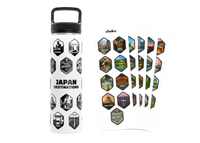
What it misses is the context. A note.com piece about Yanaka puts the number of visitors at around 10,000 on weekdays and 14,000 on weekends as of 2018. That same note.com article reproduces the shopping street's own official statement: 「残したいのは、商店街という文化です」 — "What we wish to preserve is shopping street culture itself." It is a careful, slightly worried sentence. If you're planning a first Japan trip and this is on your list, the Traveler Bottle I covers 27 destinations including Yanaka. But before you go, it's worth knowing what Japanese sources actually say about it.
What is Yanaka Ginza, really?
The shopping street formed around 1945 in a neighborhood that was spared the worst of the wartime bombing. That accident of survival is what makes it different. It kept the pre-war street pattern, the small family-run plots, and the physical scale of an older Tokyo.
The survival wasn't automatic. The note.com piece on the shopping street's history describes how the community nearly lost the street when the subway opened and supermarkets arrived, and how it recovered through organized effort: exterior improvements, a website, a mascot (Senchan, a black cat chosen from over 300 entries in 2015). Around 60 member shops now span food, sweets, accessories, and clothing.
The street's character is still real. It is also genuinely popular, and the shopping street association knows it. The official stated mission — preserving shopping street culture — reads like an organization that is aware of the pressure its own success creates.
What do Japanese sources say about visiting Yanaka Ginza?
One note.com writer is more direct than most. In a piece about Yanaka, they explicitly skip the shopping street, writing that "today we will stop here and not head toward Yanaka Ginza." The article is about the parts of Yanaka that mainstream guides overlook: the temple rows, the Kayaba Coffee (a 1938 café that closed, then reopened in 2008), the residential streets that still look the way Tokyo looked before most of it was rebuilt.
This is worth naming because it represents a genuine position among Japanese visitors. Yanaka Ginza is the recognisable, food-focused, tourist-accessible version of the neighborhood. The wider Yanaka is something else. Both are worth visiting. They are different trips. Our complete guide to things to do in Yanaka Ginza covers both layers, the street and the neighborhood walk around it.
For the shopping street itself, the honest consensus in Japanese sources is that it works best as part of a longer walk — a 30-to-45-minute stop on the way between Nippori and Nezu, not the point of the journey.
What should you eat at Yanaka Ginza?
The menchikatsu question dominates Japanese-language coverage. Two butcher shops compete directly:
| Shop | Item | Price | Notes |
|---|---|---|---|
| 肉のすずき (Niku no Suzuki) | Genki Menchi, shiitake menchi | ¥280 | Est. 1933. Tabelog rating 3.29, 122 reviews. Closed Mon–Tue. |
| 肉のサトー (Niku no Sato) | Yanaka Menchi | ¥220–230 | Shorter queue on weekdays. Closed Mon. |
| いか焼 やきや (Yakiya) | Squid pancakes | ¥350–430 | Weekends and holidays only. Forms lines every time. |
| 和栗や (Waguriya) | Chestnut soft serve / Montblanc | ¥450 / ¥864 | Best sit-down sweet on the street. |
| ひみつ堂 (Himitsudo) | Shaved ice (natural Nikko ice) | From ¥1,500 | Seasonal; worth it if open. |
The じゃらん 2024 guide has the full hours for each shop. Niku no Suzuki runs 10:30am–6pm Wednesday through Sunday. Niku no Sato is 10:30am–7:30pm, closed Monday.
One practical note from the same じゃらん guide: eating while walking is officially discouraged on the street. The convention is to eat at the shop's spot or step off to the side. Most visitors follow this without issue.
Free for you: our Google Maps list of every spot in this guide We've pinned all the shops, viewpoints, and side streets mentioned above into one shareable Google Maps list. Drop your email and we'll send it over so you can plan your day without copying addresses one by one.
What's the photography situation at Yuyake Dandan?
The staircase at the eastern end of the street is called Yuyake Dandan. Yuyake means sunset. The name tells you what to do with it.
The street runs roughly east to west. The staircase faces west, which means it catches direct afternoon and evening light. Morning visits put the sun behind you at the western entrance — fine, but ordinary. The staircase in the hour before the shops close is a different picture.
For people shots along the street itself, midday crowds make single-subject framing difficult. The density thins on weekday afternoons. Weekend mornings before 11am are the working window if you want the street without full tourist density.
How does Yanaka Ginza fit into a half-day in this part of Tokyo?
The shopping street by itself is 30 to 45 minutes. Japanese sources consistently frame it as part of a longer route through the Yanaka–Nezu area.
A route that comes up across multiple guides: arrive at Nippori Station, walk through or alongside Yanaka Cemetery, hit Yanaka Ginza for food in the early afternoon, then walk south toward Nezu Shrine. The cemetery and shrine are both quiet by comparison and take the walk somewhere beyond food tourism. Our Nezu Shrine post covers that end of the route in detail.
If this is a first Tokyo visit and you're packing multiple neighborhoods into a day, the combination works. If you have more time, the note.com writer who skips the shopping street entirely is pointing at something real: the streets behind and around Yanaka Ginza have a different quality that rewards slower walking.
From Nippori Station, the shopping street is a 5-minute walk. You can also approach from the south via Tokyo Metro Sendagi Station. The じゃらん guide notes there is no parking nearby. If you're building a full northeast Tokyo day, Yanaka pairs well with a morning in Asakusa — our Asakusa guide covers that neighborhood using the same approach.
What does the two-menchikatsu situation mean in practice?
Japanese-language coverage treats the two butcher shops as a deliberate comparison exercise. The note.com food-walk post documents both, and the note.com piece about the street's history suggests visitors "try both for comparison."
Niku no Suzuki (est. 1933) uses domestic Japanese beef blended with Australian beef for its menchikatsu. The Tabelog reviewers describe it as juicy, describe the texture as crispy, and use phrases like "the ace of Yanaka Ginza." At ¥280 for the standard and ¥280 for the shiitake variant, it is not expensive. The queue on weekends is real.
Niku no Sato's Yanaka Menchi is ¥220–230 depending on the source. Shorter queue, similar product. Most Japanese visitors seem to treat trying both as the point.
What should you avoid at Yanaka Ginza?
Weekend midday is the honest answer. The street is 170 meters long. When 14,000 people pass through on a weekend, it is not easy to move.
If you want Yakiya's squid pancakes — which the note.com guide describes as forming lines "every time" — you have to go on a weekend or holiday, because that's when they operate. It is the one reason a weekend visit has something a weekday does not.
For everything else: weekday afternoon, after 1pm. The food shops are all open, the light improves through the afternoon, and the street is navigable.
Final word
Yanaka Ginza is worth the trip if you go in knowing what it is: a surviving shotengai that is genuinely popular, genuinely good for food, and genuinely a surface-level entry point into a neighborhood that has more going on behind it. Eat the menchikatsu. Walk the staircase at the right time of day. Then keep walking south.
If this is going on your Japan itinerary, the Traveler Bottle I holds the destinations we'd recommend pairing with it — designed for first-time travelers building one trip that covers the essentials.
FAQ
Is Yanaka Ginza worth visiting? Yes, but treat it as a 30-to-45-minute waypoint inside a longer Yanaka neighborhood walk, not a standalone destination. Japanese sources consistently recommend pairing it with Yanaka Cemetery and Nezu Shrine to the south.
How do you get to Yanaka Ginza? Take the JR Yamanote Line or Keihin-Tohoku Line to Nippori Station. The shopping street is a 5-minute walk. You can also come from the south via Tokyo Metro Chiyoda Line to Sendagi Station.
What is the best time to visit Yanaka Ginza? Weekday afternoons. Weekends between 11am and 3pm draw the heaviest crowds. Most food shops open at 10:30am and close around 6pm; Yakiya (squid pancakes) only operates on weekends and holidays.
What should you eat at Yanaka Ginza? The menchikatsu from Niku no Suzuki (est. 1933, ¥280) is the most consistently mentioned single item across Japanese-language sources. Niku no Sato's Yanaka Menchi (¥230) is the smaller-queue alternative. For sweets, Waguriya's chestnut soft serve (¥450) and Himitsudo's shaved ice are the two items worth seeking out specifically.
Can you eat while walking at Yanaka Ginza? Technically no. The shopping street officially discourages eating while walking. The convention is to eat at the shop's designated spot or step to the side of the street. In practice most visitors follow this without issue.
Sources
- note.com — 猫とお寺の町、谷中銀座商店街について
- note.com — 観光、食べ歩きじゃない谷中のレトロな街歩き
- note.com — 商店街で食べ歩きin谷中
- じゃらん — 谷中銀座 食べ歩き9選 (2024)
- Tabelog — 肉のすずき
Activities and tours in Tokyo
cheku is a GetYourGuide partner. We link to tours that handle the parts of travel that eat your time, getting there, booking ahead, language, context you'd otherwise miss. If you book through our link, we earn a small commission at no extra cost to you.


