
Yokohama is the closest major day trip from Tokyo, under 30 minutes by train. It trades Tokyo's density for an open harbor: the Minato Mirai waterfront, Japan's largest Chinatown, a historic hillside district, and a traditional garden. Because it is so near, it also works as a half-day or an evening out.
A Yokohama day trip from Tokyo barely counts as a trip. The train runs under 30 minutes, and several lines go straight through. That proximity is the whole appeal: you get a genuine change of scene, an open port city with room to breathe, without losing an hour of your day to travel each way.
English-language guides tend to under-cover Yokohama, treating it as a lesser Tokyo. Japanese travel media does not make that mistake. Yokohama appears across the standard Japanese day-trip guides, from MATCHA's list to Jalan's Kanto ranking, as a reliable, easy escape from the capital.
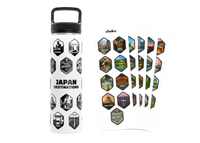
Yokohama is one of the destinations on the Traveler Bottle, the bucket-list bottle we built for first-time visitors planning a route. This guide covers what to actually do in Yokohama, how to reach it, and how to time the day.
Is Yokohama worth a day trip from Tokyo?
Yes. Yokohama is the easiest big day trip from Tokyo, under 30 minutes away, and it has a distinct character: an open waterfront, Japan's largest Chinatown, and historic districts shaped by the city's history as Japan's first major international port.
Yokohama earns its place for two reasons. The first is contrast. After a few days in central Tokyo, the open harbor, the wide promenades and the sense of horizon are a real shift. The second is range: a single day gives you a modern waterfront, a major Chinatown, a historic foreign-residential hill and a classical garden.
It is also forgiving. Because the journey is so short, a Yokohama day does not have to be efficient. You can arrive late, leave late, or come specifically for the evening, when the waterfront is at its best. Few day trips give you that flexibility.
How do you get from Tokyo to Yokohama?
Yokohama is less than 30 minutes south of Tokyo by train. From Shibuya, the Tokyu Toyoko and Minatomirai Line runs straight to the Minato Mirai district for around 310 yen. JR lines connect quickly from Tokyo and Shinagawa stations.
The access is so simple it barely needs a plan. Per japan-guide.com, Yokohama sits less than half an hour south of Tokyo by train.
The useful detail is which station you want, and what it costs:
- From Tokyo Station: JR Tokaido or Yokosuka line to Yokohama Station, about 30 minutes, ¥490.
- From Shinagawa: JR Tokaido or the Keikyu line, about 20 minutes, ¥310.
- For Minato Mirai directly, the Tokyu Toyoko Line from Shibuya runs through onto the Minatomirai Line, dropping you in the heart of the waterfront district for around ¥310.
- For Chinatown, stay on the same Minatomirai Line to Motomachi-Chukagai Station, the last stop.
Pick your first stop based on where you want to start the day, and the rest of Yokohama connects easily on foot or by the Minatomirai Line. The itinerary below starts at Sakuragicho, one stop past Yokohama Station, because that is where the Japanese model courses start too.
What should you do in Minato Mirai?
Minato Mirai 21 is Yokohama's modern waterfront, built on a former shipyard. The highlights are the Cosmo World amusement park and its Cosmo Clock 21 ferris wheel, the Red Brick Warehouse shopping complex, and the Yokohama Air Cabin gondola. Note that the Landmark Tower's observation deck is closed for renovation.
Minato Mirai, whose name means "harbor of the future," is where most Yokohama days begin. Japan-guide.com lays out the main attractions.
Cosmo World is a free-entry amusement park; individual rides cost between 300 and 900 yen. Its Cosmo Clock 21 ferris wheel doubles as a giant clock and is one of the defining shapes of the Yokohama skyline.
The Red Brick Warehouse is a pair of historic former customs warehouses by the water, now a shopping and dining complex that hosts seasonal events in its plaza. Most shops run 11:00 to 20:00.
The Yokohama Air Cabin is an urban gondola connecting Sakuragicho Station to Unga Park, a short, scenic ride over the waterfront for 1,000 yen one way or 1,800 yen return.
One honest planning note: the Landmark Tower's Sky Garden observation deck, on the 69th floor of the 296-meter tower, is closed for renovations and is not expected to reopen before 2028. A number of older guides still list it as a Yokohama highlight. For now, the views come from the waterfront, the ferris wheel and the Air Cabin instead.
What about Yokohama Chinatown and the Yamate hill?
Yokohama Chinatown is the largest in Japan, dense with restaurants and street-food stalls. Above it sits Yamate, the hillside where foreign residents settled after the port opened in 1859, lined with preserved Western-style houses. The two sit side by side and make a natural pairing.
This corner of Yokohama is where the city's history as Japan's first major international port is most visible.
Yokohama Chinatown is, per japan-guide.com, the largest of Japan's three historic Chinatowns. It is a tight grid of restaurants, food stalls and shops, and the standard advice is to come hungry and graze: steamed pork buns, dim sum, and more, eaten as you walk. It is busiest and best at meal times.
Yamate, the hill rising just behind Chinatown and Motomachi, is the quieter counterpart. After Yokohama's port opened to foreign trade in 1859, this is where many foreign residents built their homes, and the district still holds a collection of preserved Western-style houses, churches and gardens. It is a calm, green walk and a complete change of pace from the Chinatown crowds below.
Yamashita Park, along the waterfront between Chinatown and Minato Mirai, ties the area together with an easy harbor-side stroll.
Free for you: our Tokyo Google Maps list We keep a Google Maps list of the must-see spots around Tokyo - restaurants, cafes, shops, viewpoints, and streets worth the detour. Drop your email and we'll send it over.
What do Japanese visitors actually do in Yokohama?
Japanese day-trip guides point to Yokohama's waterfront and food as much as its sights: the Minato Mirai promenade, the Red Brick Warehouse, the Cup Noodles Museum, and Chinatown. For something slower, Sankeien Garden is the local pick that most foreign visitors skip.
Read the Japanese coverage and Yokohama comes across less as a checklist of sights and more as a place to walk, eat and enjoy the harbor.
The Cup Noodles Museum is a good example of what Japanese guides emphasize that English ones underplay. Jalan's Kanto ranking lists it directly, and japan-guide.com explains the appeal: you can design your own personalised cup noodle. Admission is ¥500 for adults and free through high-school age, the make-your-own-cup workshop is ¥400 more, it opens 10:00 to 18:00, and it is closed on Tuesdays.
The quieter local favorite is Sankeien Garden, in southern Yokohama. According to japan-guide.com, it was built by businessman Hara Sankei and opened to the public in 1904, and it collects historic buildings relocated from across Japan, including the main hall and three-story pagoda of an old Kyoto temple. Admission is 900 yen, and it opens 9:00 to 17:00. It rarely appears on foreign day-trip itineraries, which is exactly why it stays peaceful.
First trip, limited time: focus on Minato Mirai and Chinatown. Waterfront, ferris wheel, the Red Brick Warehouse, then dumplings in Chinatown. It is the most Yokohama in the fewest steps. You have already done central Tokyo: trade one waterfront hour for Sankeien Garden and the Yamate hill. Slower, greener, and the version of Yokohama domestic visitors quietly prefer.
What is the best Yokohama day trip itinerary?
Japanese model courses structure Yokohama two ways: a half-day of 4 to 5 hours covering Minato Mirai, Chinatown and Yamashita Park, or a full day of 8 to 9 hours that adds Motomachi and the Yamate western houses. Both start at Sakuragicho and end with the harbor lit up.
This is the structure Yokohama's official course rankings and JRE Media's walking model course use, and it works because the city lines up along one walkable waterfront arc.
The half-day version (4–5 hours):
10:00, Sakuragicho Station. Walk out to the waterfront. If you want the aerial view first, the Air Cabin gondola leaves from right outside the station (¥1,000 one way) and drops you by Cosmo World.
10:30–12:00, Minato Mirai. Cosmo World's Cosmo Clock 21, the Cup Noodles Museum if you booked the cup workshop, and the walk along the water to the Red Brick Warehouse.
12:30, Chinatown. Twenty minutes on foot along the harbor, or two stops on the Minatomirai Line. Arrive hungry and graze: steamed buns, dim sum, the standard advice.
14:00, Yamashita Park. Walk it off along the water back toward Minato Mirai, and decide whether your day ends here.
The full-day version (8–9 hours) adds, after Chinatown:
14:30–16:30, Motomachi and Yamate. The old shopping street, then the hill of preserved Western houses above it. This is the stretch domestic itineraries include and foreign ones skip, and it is the quietest hour of the day.
17:30, back to the water for dusk. The Minato Mirai towers, the Cosmo Clock and the Red Brick Warehouse are all lit after dark, and the ferris wheel at dusk is the closing shot of every Japanese Yokohama course for a reason.
If you want Sankeien Garden instead of the Yamate leg, bus out after Chinatown; it replaces rather than adds, since the garden closes at 17:00.
For sequencing day trips like this into a longer Japan route, the 3 Weeks in Japan guide covers the order Japanese travel writers tend to recommend. And for Yokohama beyond the classic arc, the Noge drinking streets and where residents actually go, our guide to what Japanese locals recommend in Yokohama covers that lane.
One note on tours: Yokohama is the day trip that needs no tour, which is exactly why we'd save the guided-day budget for the trips that do. If you want one bookable day out of Tokyo, the Mt Fuji day tour or a Kamakura and Enoshima day trip is where a guide earns the fee; our day trips comparison ranks them all.
Yokohama is the kind of low-effort, high-return day the Traveler Bottle was built around. If you are planning a first trip to Japan and want a day trip that needs almost no planning, Yokohama is the easiest call on the list.
FAQ
Is Yokohama worth a day trip from Tokyo?
Yes. Yokohama is the closest major day trip from Tokyo, under 30 minutes by train, and it offers a genuinely different feel: an open harbor, the Minato Mirai waterfront, Japan's largest Chinatown, and historic districts. Because it is so close, it also works as a half-day or an evening trip rather than a full commitment.
How do you get from Tokyo to Yokohama?
Yokohama is under 30 minutes south of Tokyo by train: about ¥490 and 30 minutes on the JR Tokaido or Yokosuka line from Tokyo Station, ¥310 and 20 minutes from Shinagawa, or the Tokyu Toyoko through-service from Shibuya straight to the Minato Mirai area for around ¥310.
How long do you need in Yokohama?
A full day comfortably covers Minato Mirai, Chinatown and one more area such as Sankeien Garden. Because Yokohama is so close to Tokyo, a half-day or an afternoon-into-evening visit also works well, and the waterfront is especially good after dark when the towers and ferris wheel are lit.
Sources
- japan-guide.com, Yokohama, overview, Chinatown, Yamashita Park, access
- japan-guide.com, Minato Mirai 21, Landmark Tower, Cosmo World, Red Brick Warehouse, Air Cabin
- japan-guide.com, Cup Noodles Museum, fee, hours, closing days
- japan-guide.com, Sankeien Garden, fee, hours, history
- MATCHA, day trips from Tokyo, Japanese day-trip guide on Yokohama
- Jalan, Kanto day trips within two hours, Japanese ranking including the Cup Noodles Museum
- Yokohama official, course rankings, the city's own most-used model courses
- JRE Media, Yokohama walking model course, the Sakuragicho-start day plan this itinerary follows
- Cup Noodles Museum, admission, ¥500 adults, free through high school, workshop ¥400
Activities and tours in Tokyo
cheku is a GetYourGuide partner. We link to tours that handle the parts of travel that eat your time, getting there, booking ahead, language, context you'd otherwise miss. If you book through our link, we earn a small commission at no extra cost to you.


