
Japanese sources have a very specific view on what counts as a proper Tokyo souvenir. The consensus starts with individually wrapped food gifts with clear Tokyo branding and ends with craft objects from Tokyo's own production traditions. The tourist-shop version of this list looks almost nothing like the local one.
Tokyo souvenir advice in Japanese is distinct from international travel coverage for one reason: Japanese domestic travel writing is optimised for omiyage culture — the obligation to bring back gifts for colleagues, family, and neighbours after any trip. This shapes the entire recommendation landscape. What makes a good Tokyo souvenir in Japanese sources isn't primarily what tourists want to look at; it's what holds up when 20 colleagues open it at the same office table.
On jalan.net and across Japanese lifestyle writing on note.com, Tokyo souvenir recommendations cluster around specific brands, specific shops, and a clear distinction between "things tourists buy" and "things you'd actually give someone." This post is based on that second list.
What do Japanese sources actually recommend as Tokyo souvenirs?
The consistent recommendation in Japanese travel writing: individually wrapped food gifts from depachika or Tokyo Station, from brands that have a clear Tokyo identity. For non-food: craft objects from Tokyo's own production traditions, particularly stationery from Ginza and ceramics with Tokyo maker provenance.
The framework Japanese sources apply to any Tokyo souvenir:
| Criteria | What this means in practice |
|---|---|
| Clear Tokyo provenance | The gift should be identifiable as specifically from Tokyo, not generic Japan |
| Individual wrapping | Essential for office distribution — each piece separately packaged |
| Shelf life | Minimum 5 days; 2–3 weeks for optimal flexibility |
| Quality relative to price | Japanese sources distinguish between depachika quality and tourist-shop quality |
| Best for | Colleagues and family when individual wrapping matters; craft gifts for specific recipients |
The two lists that most influence Tokyo souvenir advice in Japanese domestic travel: the jalan.net Tokyo shopping guides, which track what domestic tourists actually buy, and the ongoing note.com discussions by Tokyo residents about what they genuinely give versus what they buy only when stuck for time.
What are the best food souvenirs from Tokyo?
Tokyo Banana is the reference point. Not because it's the most sophisticated souvenir, but because it was designed to be the Tokyo omiyage — clear branding, proper shelf life (5–7 days), individually wrapped, available at every major station and both airports. Tokyo Banana's official site describes the brand as launched in 1991 specifically as a gift representing Tokyo, with banana as the shape chosen for its association with sweetness and warmth. The logic holds: it's immediately identifiable as a Tokyo product, the packaging signals care, and the shelf life works for travel.
What Japanese sources recommend alongside Tokyo Banana:
Yoku Moku cigare cookies Yoku Moku was founded in 1969 in Omotesando, Tokyo. Their signature cigare — a thin, rolled butter cookie — is the dominant corporate omiyage in Tokyo business culture. The gold tin is recognisable as a considered gift; the cookies are reliably good; the brand name signals you didn't grab something generic. Available at their Omotesando flagship and at depachika counters at Isetan, Mitsukoshi, and Shibuya Scramble Square.
Press Butter Sand Launched in 2018 at Tokyo Station and now one of the most in-demand contemporary Tokyo omiyage. Butter cookie sandwiches with caramel butter cream, designed with the station souvenir format in mind. The shelf life is around 10 days. Japanese lifestyle writers on note.com regularly cite Press Butter Sand as the current pick for something that feels current rather than traditional — the brand's popularity reflects the ongoing appetite for updated Tokyo omiyage formats.
Yatsuhashi and wagashi from depachika For more traditional gifting, the depachika wagashi counters at Mitsukoshi Ginza and Isetan Shinjuku carry selections that Japanese sources rate as meaningfully superior to anything available in tourist-zone shops. The packaging is part of the gift — department store counter staff wrap omiyage with a level of care that signals the transaction was thought through.
Tokyo Hiyoko A chick-shaped sweet originally from Fukuoka, now deeply associated with Tokyo omiyage culture through its Tokyo Station presence. Individually wrapped, shelf life of 2–3 weeks, recognisable packaging. The bird shape makes it immediately legible as a gift rather than a personal snack. A standard at Tokyo Station omiyage shops and a familiar sight in Japanese office culture.
What Tokyo-specific sweets and confections stand out?
The best Tokyo-specific confections are the ones Japanese sources describe as having a 'Tokyo story' — not just made in Tokyo, but specifically representative of the city's identity or a specific neighbourhood.
Photographer's note: the depachika counters at Mitsukoshi Ginza and Isetan Shinjuku are genuinely worth photographing as objects in themselves. The display logic — uniform boxes in seasonal colourways, individual wrapping visible through cellophane, gifts arranged by price tier — is its own form of Japanese retail design. The light in these basement floors is carefully controlled; the most photogenic moment is usually at opening time, when products are fully stocked and unworn by a day of handling.
Arumando (Tokyo Almonds) One of the classic Tokyo-branded station souvenirs. Sugar-coated almonds in gift tins, available in various seasonal flavours. Present in Tokyo Station and major station shops for decades. Japanese domestic travel writing mentions it less than newer products, but it remains a fixture because it works: individually wrapped portions, clear branding, solid shelf life.
Tokyo Mix Nuts A relatively recent addition to the Tokyo Station souvenir ecosystem. Mixed nuts in individual gift packaging with Tokyo branding. Occupies the "practical but still thoughtful" space that Japanese office culture demands — recognisable as a considered choice, not a desperate airport purchase.
Depachika wagashi from specific artisan counters On jalan.net and in Japanese lifestyle writing, the recommendation that appears most consistently for thoughtful gifting is: skip the branded confections and spend the same amount at a quality wagashi counter in a depachika. For the same ¥1,500–3,000, you get seasonal confections with genuine craft behind them — and the packaging still signals care. Toraya and Higashiya are the reference names for premium wagashi counter gifting in Tokyo.
What beauty and drugstore products do Japanese sources recommend from Tokyo?
Japanese lifestyle sources on note.com and Japanese beauty writing are consistent: the drugstore finds worth buying in Tokyo are worth buying because Japanese pharmacies carry formulations and ranges unavailable abroad, not simply because they're from Japan.
LuLuLun sheet masks The 32-pack at around ¥1,650 represents genuine value against imported equivalents. Japanese skincare writing consistently recommends LuLuLun as a reliable choice for people who use sheet masks regularly — well-formulated, designed for daily use, and available in Matsumoto Kiyoshi and Welcia branches across Tokyo. The packaging is functional rather than gift-oriented, so buy a decorative bag from any 100-yen shop if gifting.
Biore UV Aqua Rich sunscreen The most referenced Japanese sunscreen recommendation in Japanese lifestyle writing: lighter texture than most international SPF equivalents, effective formulation, significantly cheaper in Japan than imported versions abroad. Available at any Matsumoto Kiyoshi or Don Quijote. Tax-free purchasing applies on purchases over the threshold with a passport.
Sake kasu (lees) beauty products A specifically Japanese beauty tradition with a genuine functional basis. Products using sake fermentation byproducts are found throughout Japanese skincare and are significantly more accessible in Tokyo than anywhere outside Japan. Japanese skincare writing recommends them as gifts for people who are interested in the cultural story as well as the product.
What craft and design items from Tokyo are worth buying?
The craft tradition with the clearest Tokyo provenance is Edo Kiriko — hand-cut crystal glass from Tokyo's shitamachi districts, designated a Tokyo Traditional Craft in 1985. A single Edo Kiriko sake cup or tumbler, from a maker like Kimoto Glass (Asakusa, established 1931), is the Tokyo souvenir that no other city in Japan can replicate. Japanese sources recommend it specifically because the geometric cutting patterns and prism effects have no equivalent elsewhere. Price range: ¥5,000–20,000 per piece.
Midori stationery from Itoya Itoya in Ginza (12 floors, in business since 1904) is where Tokyo residents shop for stationery gifts. The Midori notebook range — particularly the Traveler's Notebook system — is the reference pick for anyone buying stationery as a Tokyo souvenir. It's made in Japan, it has a specific Tokyo retail heritage at Itoya, and the quality is recognisable to anyone who cares about notebooks. On note.com, Japanese stationery writers consistently recommend Itoya as the single best stationery destination in Tokyo.
Tenugui and furoshiki from specialist retailers Japanese writers recommend these specifically as souvenirs that function well and have a clear Japanese craft tradition. Both are flat, lightweight, versatile, and available in a wide range of prints from contemporary designers working within the traditional format. Tokyu Hands carries a reliable selection; specialist shops in Asakusa carry artisan versions.
Free for you: our Tokyo Google Maps list We keep a Google Maps list of the must-see spots around Tokyo — restaurants, cafes, shops, viewpoints, and streets worth the detour. Drop your email and we'll send it over.
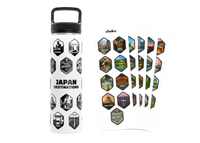
❤️ The Traveler bucket-list bottle features the 27 Japan destinations first-time visitors actually plan around — useful for sequencing a trip where every stop earns its place in the suitcase. Launching soon on Kickstarter.
Where do Japanese people actually shop for Tokyo souvenirs?
Department store basement food halls (depachika) are the consistent primary recommendation from Japanese domestic travel writing. Not because Japanese people are status-conscious about packaging — though packaging matters — but because the quality control at depachika counters is uniformly higher than tourist-zone alternatives, and the gift wrapping is complimentary and careful.
| Destination | Best for | Notes |
|---|---|---|
| Isetan Shinjuku depachika | Premium wagashi, Yoku Moku, high-end confections | Best overall selection in Shinjuku area |
| Mitsukoshi Ginza depachika | Wagashi, regional Japanese sweets, gift tins | Central location; easy after Ginza sightseeing |
| Shibuya Scramble Square basement | Contemporary brands, Press Butter Sand, trending omiyage | Best for current Tokyo food trends |
| Tokyo Station Gransta | All-in-one: Tokyo Banana, Yoku Moku, Hiyoko, regional brands | Most convenient; best single stop for omiyage shopping |
| Matsumoto Kiyoshi / Don Quijote | Beauty, drugstore finds, tax-free shopping | Multiple branches across Tokyo |
| Itoya Ginza | Stationery, Midori, washi tape, notebooks | 12 floors; the reference Tokyo stationery destination |
| Kappabashi Street | Ceramics, kitchen knives, professional cookware | Ueno area; 160+ specialist shops |
| Best for | Omiyage shopping in limited time | Tokyo Station Gransta covers the most ground fastest |
The consistent warning in Japanese travel writing: souvenir shops immediately adjacent to Senso-ji, Meiji Jingu, and other major temples carry products aimed at tourist foot traffic, not at Japanese gifting culture. The quality difference is real, and the prices are not lower.
Is Tokyo Station a good place to buy souvenirs?
Yes — for food souvenirs specifically, Tokyo Station's Gransta underground shopping area is the most efficient single location in Tokyo. Gransta carries the full range of Tokyo-branded omiyage: Tokyo Banana, Yoku Moku, Press Butter Sand, Tokyo Hiyoko, and regional Japanese specialty brands from across the country. Character Street covers anime and character merchandise for anyone shopping for that category.
Japanese domestic travellers use Tokyo Station omiyage shopping the same way international travellers use airport duty-free: as a convenient last stop before departure. The key difference is that Gransta's quality is comparable to depachika, not a compromise. The prices are consistent with what you'd pay at the brand's own shops elsewhere in Tokyo. The only trade-off is that the same brands are available at their home shops (Yoku Moku in Omotesando, for example) at slightly lower prices and with more product range.
The Tokyo Station recommendation from Japanese travel writing: arrive 45–60 minutes before your shinkansen or airport transfer, walk the Gransta basement first, then Character Street if relevant. Don't use it as your only souvenir opportunity if you have time to visit depachika — but as a one-stop option, it's legitimately good.
What should you avoid buying as a Tokyo souvenir?
Japanese travel writers apply a consistent filter: does this product have a genuine Tokyo story, or is it generic merchandise sold here because tourists pass through?
The list that fails this test appears consistently across Japanese travel writing:
Mass-produced maneki-neko (lucky cats) sold near Senso-ji and Meiji Jingu are almost invariably not made in Japan. The traditional maneki-neko production tradition is in Tokoname (Aichi Prefecture) and Imado-yaki (old Asakusa pottery). A mass-produced tourist lucky cat has no particular Tokyo connection and often no Japan connection.
Generic "TOKYO" merchandise — t-shirts, keychains, mugs bearing the city name. Available at every tourist checkpoint. No craft content, no Tokyo-specific story, no reason to exist as a gift.
Cheap chopstick sets from temple market stalls. The craft chopstick tradition in Japan is in Obama City (Fukui Prefecture), which produces around 80% of Japan's traditional lacquerware chopsticks. A quality pair of chopsticks from Kappabashi Street costs ¥3,000–8,000 and is a legitimate craft object. A ¥300 tourist set from a temple stall is not.
High-wattage Japanese appliances. Japan runs on 100V, which is incompatible with most international sockets without a step-up transformer. Any appliance-shaped souvenir — rice cookers, hair dryers — requires additional infrastructure to use. The notable exception: Japanese-made appliances sold for export at specific electronics retailers with the correct voltage, which is a different purchase context.
For the broader category breakdown of what's worth buying across all of Japan — not just Tokyo — our Japan souvenirs guide covers 25 specific picks across food, beauty, craft, and stationery with the same quality filter applied.
❤️ For the full Tokyo route that pairs with this kind of neighborhood walk, the cheku 10-Day Tokyo Travel Guide has 80+ pages of local knowledge and our photography — built around what to do, day by day. Launching soon on Kickstarter.
FAQ
What is the most popular Tokyo souvenir with Japanese people? Tokyo Banana is the most purchased Tokyo-branded omiyage among both domestic and international visitors, according to retail presence data. Yoku Moku is the most consistently recommended for corporate gifting at a higher price point. Among younger Japanese shoppers, Press Butter Sand and other contemporary station brands are gaining ground.
What Tokyo souvenirs are under ¥1,000? Under ¥1,000: individual Tokyo Banana pieces (¥150 approximately at station kiosks), washi tape rolls from Itoya or Tokyu Hands (¥150–400), tabi sock pairs at the lower end (some under ¥1,000), and small tenugui from non-specialist retailers. For gifting multiple colleagues under a tight budget, individually wrapped confections from the Tokyo Station range (¥200–400 per piece) are the standard recommendation.
Is it worth going to Kappabashi Street for Tokyo souvenirs? For craft objects — ceramics, kitchen knives, chopsticks, lacquerware — Kappabashi is the best destination in Tokyo. 160+ specialist shops, mostly wholesale or near-wholesale pricing, staff who know their products. The area is about 10 minutes walk from Ueno or Asakusa. Plan 1–2 hours to browse properly. Not worth the trip for convenience gifting; very worth it for a specific craft object.
Can I buy Tokyo souvenirs at the airport? Narita and Haneda both have extensive souvenir sections in the departure areas. Tokyo Banana, Yoku Moku, and most major Tokyo omiyage brands are represented. The prices are 10–20% higher than in-city equivalents for most products, and the range is narrower. As a last-resort option it works fine. If you have time in the city, the depachika version of the same products is better value and wider selection.
Sources
- jalan.net — Tokyo souvenir shopping guides, domestic traveller omiyage recommendations, depachika reviews
- note.com — Japanese lifestyle writing on Tokyo omiyage culture, resident recommendations for local shopping
- Tokyo Banana Official Site — Product range, shelf life information, retail locations
- Yoku Moku Official Site — Brand history (founded 1969, Omotesando), corporate gift range
- Gransta Tokyo Station — Full list of omiyage shops and food brands at Tokyo Station
- JNTO Visitor Statistics — Visitor spending data by category


Activities and tours in Tokyo
cheku is a GetYourGuide partner. We link to tours that handle the parts of travel that eat your time, getting there, booking ahead, language, context you'd otherwise miss. If you book through our link, we earn a small commission at no extra cost to you.


