
The best Japanese gifts to bring home for non-snack-eaters cluster around five non-food categories Japanese lifestyle and gift-culture sources cover consistently: traditional craft (lacquerware, named-region ceramics, tenugui), tea ware (Iwachu cast iron teapots, matcha bowl sets, Hasami Porcelain), premium stationery (Midori MD, Pilot and Sailor fountain pens, MT washi tape, Kakimori custom notebooks), Japanese beauty (Hada Labo, Senka, Curel, premium J-Beauty from depachika), and practical accessories (Porter bags and wallets, Snow Peak titanium). This guide covers the five categories with specific items inside each.
Every English-language "best Japanese gifts" list opens with snacks — Tokyo Banana, Yatsuhashi, KitKat regional flavors, Pocky. The omiyage food category is genuinely the dominant Japanese gift category, and for office colleagues and informal sharing it's the right answer. But for the specific gift for someone who doesn't eat snacks, or for an adult recipient who'd be more pleased by a small craft object than a box of cookies, the rest of the Japanese gift-culture register opens up.
Japanese gift culture has a long-standing structure around non-food objects too: the noshi (熨斗) decorative paper band and mizuhiki (水引) cord conventions for ceremonial gifts, the furoshiki (風呂敷) cloth wrapping tradition, and the centuries-old craft categories that exist specifically for gift contexts. Discover Japan, Hanako, and &Premium cover non-food gifts as an active feature category — and the names recur across coverage in a way that makes the canonical answers visible.
For the broader Japan souvenir landscape including snacks, the 25 best Japan souvenirs guide is the deep-dive companion. For the unique Japan gift category specifically (the design and craft tier), the unique Japan gifts guide covers it.
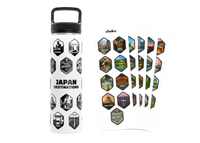
❤️ If you're planning a first Japan trip, the cheku Japan Destinations I Traveler bucket-list bottle illustrates the 27 destinations that hold up after the research — part travel guide, part souvenir, and a daily essential for the trip itself. Live on Kickstarter until July 26. Reserve yours now at the best prices we'll offer.
What non-food categories does Japanese gift culture cover?
Japanese non-food gift culture covers five main categories: traditional craft (lacquerware, named-region ceramics, tenugui and furoshiki), tea ware (cast iron teapots, matcha bowls, premium tea cups), premium stationery (notebooks, fountain pens, washi tape), beauty and personal care, and practical accessories (bags, wallets, design objects). Kogei Japan maintains the registered traditional craft directory; the lifestyle press treats the five categories as the canonical non-food gift landscape.
The cultural logic across categories is consistent: a Japanese gift, food or non-food, should carry regional specificity (where it comes from on a map of Japan), named-maker accountability (who produced it), and a daily-use function for the recipient. A Wajima-nuri lacquerware chopstick rest meets all three criteria the same way a Tokyo Banana box does — it's tied to Ishikawa prefecture, made by a documented maker, and gets used.
The five non-food gift categories with their canonical contents:
- Traditional craft. Lacquerware (Wajima-nuri, Aizu-nuri, Wakasa-nuri), named-region ceramics (Mino-yaki, Bizen-yaki, Hagi-yaki, Mashiko-yaki, Karatsu-yaki, Kiyomizu-yaki), tenugui from Eirakuya / Kamawanu / Musubi, furoshiki from named makers.
- Tea ware. Iwachu and other Nanbu Tekki cast iron teapots, matcha bowl and bamboo whisk sets, Hasami Porcelain stackable tea cups, premium loose-leaf tea from Ippodo and other Uji shops.
- Premium stationery. Midori MD notebooks, Pilot Custom 74 and Sailor 1911 fountain pens, MT washi tape, Kakimori custom-bound notebooks, premium Japanese paper goods from Mino / Echizen / Tosa washi traditions.
- Beauty and personal care. Japanese drugstore standards (Hada Labo, Senka, Curel) and premium J-Beauty (SK-II, Albion, premium depachika lines).
- Practical accessories. Porter / Yoshida Kaban wallets, pouches, and bags; Snow Peak titanium mugs, chopstick sets, and cutlery; design tableware from D&Department and Hasami Porcelain.
What traditional craft gifts work for adults who don't eat snacks?
Traditional Japanese craft gifts — lacquerware, named-region ceramics, and tenugui textiles — anchor the non-food gift category for adult recipients. Kogei Japan lists the 240+ registered traditional crafts; the categories below are the ones with the most accessible gift-tier price points.
Lacquerware (urushi) — small pieces at ¥2,500–6,500:
- Wajima-nuri (Ishikawa). The premier Japanese lacquerware tradition. Small chopstick rests at ¥2,500–4,500; small dishes at ¥3,500–6,500.
- Aizu-nuri (Fukushima). A more accessible-priced lacquerware tradition. Small bowls and dishes at ¥2,500–6,500.
- Wakasa-nuri (Fukui). A regional lacquerware tradition with distinctive iridescent finishes. Small dishes and chopstick rests at ¥2,500–5,500.
- Tsugaru-nuri (Aomori). Northern Japanese lacquerware with mottled-pattern finishes.
Lacquerware is one of the highest-cultural-weight gift categories in Japanese tradition. Small everyday pieces — chopstick rests, soup bowls, small dishes — work for almost any adult recipient and stay in daily use. Sold at depachika craft sections (Isetan Shinjuku, Mitsukoshi Nihonbashi, Takashimaya Nihonbashi) and dedicated lacquerware shops.
Named-region ceramics — small pieces at ¥1,500–4,500:
- Mino-yaki (Gifu). Most accessible-priced named-region ceramics. Small tea cups, dishes, and bowls at ¥1,500–4,500.
- Mashiko-yaki (Tochigi). Distinctive rustic glazes. Small tea cups and dishes at ¥1,500–4,500.
- Hagi-yaki (Yamaguchi). Premium kiln tradition with distinctive crackle glazes. Tea cups at ¥2,500–8,000.
- Karatsu-yaki (Saga). Traditional Saga kiln tradition.
- Kiyomizu-yaki (Kyoto). Kyoto's named kiln tradition. Tea cups and small dishes.
- Bizen-yaki (Okayama). Unglazed earthenware tradition.
A small tea cup or sake cup from a named kiln is a low-friction adult gift — usable daily, distinctively Japanese, regional and named.
Tenugui (cotton hand towels) — ¥800–2,500:
- Eirakuya (Kyoto, since 1615). The historic tenugui specialist. Traditional and contemporary designs at ¥800–2,500.
- Kamawanu (Tokyo, since 1987). Multi-location tenugui specialist with contemporary designs.
- Musubi (Kyoto). Tenugui and furoshiki specialist.
Tenugui function as hand towels, wraps, scarves, head wraps, and decorative pieces. The most flexibly-useful non-food Japanese gift at a low budget tier.
Furoshiki (cloth wrapping) — ¥1,500–6,500:
The Japanese cloth used to wrap gifts, lunches, and miscellaneous items. Doubles as a usable bag once unwrapped. Sold at Musubi, Furoshiki Tokyo, and depachika gift floors. The furoshiki itself is a gift; it also functions as the wrapping for any other small Japanese gift.
What tea ware gifts do Japanese sources recommend?
Iwachu small cast iron teapots from Morioka, matcha bowl and bamboo whisk sets, and Hasami Porcelain stackable tea cups are the canonical Japanese tea-ware gifts at the gift-tier price point. Iwachu and Hasami Porcelain maintain official product directories.
Iwachu cast iron teapot (¥4,500–25,000):
The Morioka cast iron teapot from Iwachu sits inside the registered Nanbu Tekki traditional craft from Iwate prefecture. The small kettle (around 0.4–0.6L) is the entry gift tier at ¥4,500–10,000. Enamel-lined interior holds heat for hours of tea drinking. Lasts a lifetime with basic care.
For a tea drinker recipient: Iwachu small cast iron teapot (0.4L) — ¥4,500–8,000, a registered Nanbu Tekki traditional craft, holds heat for hours, distinctive enamel interior.
Matcha bowl and bamboo whisk set (¥2,500–8,000):
A complete matcha-preparation set with matcha bowl (chawan), bamboo whisk (chasen), and bamboo scoop (chashaku). Sold at named tea shops (Ippodo, Tsujiri, Marukyu Koyamaen) and depachika craft sections.
Hasami Porcelain tea cups and small dishes (¥1,500–4,500):
The minimalist stackable porcelain line from Nagasaki's Hasami-yaki tradition. Small tea cups, mugs, and tea-time dishes. Daily-use design pieces.
For a design-minded recipient: Hasami Porcelain tea cup set (4 cups + 4 saucers) — ¥4,500–8,000, daily-use Japanese design, stacks into a sculptural object when not in use.
Premium loose-leaf tea (¥2,000–8,000 per 100g):
While technically food-adjacent, premium loose-leaf sencha or matcha pairs naturally with tea-ware gifts. Ippodo sencha (¥2,000–5,000 per 100g), Marukyu Koyamaen matcha (¥1,800–6,500 per 30g), Tsujiri tea.
What stationery gifts work as serious non-food Japanese souvenirs?
Premium Japanese fountain pens (Pilot Custom 74, Sailor 1911, Platinum 3776), Midori MD notebooks, MT washi tape gift sets, and Kakimori custom-bound notebooks anchor the serious Japanese stationery gift category. Hanako and &Premium cover stationery gifts regularly.
Premium fountain pens (¥10,000–35,000):
- Pilot Custom 74 (¥12,000–18,000). 14k gold nib in F, M, B widths. The canonical first premium Japanese fountain pen.
- Sailor 1911 (¥18,000–30,000). 14k or 21k gold nibs. Sailor's flagship model.
- Platinum 3776 Century (¥18,000–25,000). Platinum's flagship.
For a serious writer: Pilot Custom 74 in F or M nib — ¥12,000–15,000, lasts a lifetime with basic care, distinctly Japanese, the canonical premium fountain pen gift.
Midori MD notebook (¥800–2,500):
The premium cream-paper notebook line. The MD logo on the cover is the marker. Available at Itoya Ginza, Tokyu Hands, Loft, Maruzen.
MT washi tape gift sets (¥2,500–6,000):
The Kamoi Kakoshi premium washi tape brand in coordinated gift sets of 10–20 rolls. Hundreds of designs.
Kakimori custom-bound notebook (¥1,500–8,000):
The Kuramae bindery Kakimori — pick paper, cover, and binding to spec. The custom-bound notebook is a Tokyo-specific gift; the binding session at the shop takes about 30 minutes.
Pilot Frixion and Pilot Hi-Tec-C pen sets (¥150–400 each):
Affordable Japanese pen tier. A coordinated set of 10–12 Pilot pens in different colors runs ¥1,500–3,500.
What beauty and personal-care gifts work from Japan?
Japanese drugstore standards (Hada Labo, Senka, Curel) and premium J-Beauty (SK-II, Albion, depachika premium lines) anchor the non-food beauty gift category — Japan-exclusive formulations, often significantly cheaper than abroad. icotto and Hanako cover beauty gifts regularly.
Japanese drugstore standards (¥800–2,500):
- Hada Labo Gokujyun Hyaluronic Acid Lotion. The cult Japanese hydrating lotion. Drugstore price ¥800–1,500. Significantly cheaper in Japan than abroad.
- Senka Perfect Whip cleanser. The cult Japanese foaming face wash. ¥600–1,200.
- Curel. Japanese sensitive-skin skincare. ¥1,000–2,500 per item.
- Cure aqua gel exfoliant. Cult Japanese exfoliant.
- Naturie Hatomugi (Job's tears) skin conditioner. Cult Japanese skin lotion.
- Lululun sheet masks. Cult Japanese sheet-mask line. Multi-pack ¥1,000–2,500.
Sold at any major drugstore (Matsumoto Kiyoshi, Sundrug, Welcia, Tomod's) and at Don Quijote with tax-free shopping at major branches.
Premium J-Beauty (¥4,500–25,000 at depachika):
- SK-II Facial Treatment Essence. The cult Japanese essence. Cheaper at Japanese depachika than abroad.
- Albion Skin Conditioner. Premium Japanese skincare.
- Cosmedecorte, Shiseido premium lines, Pola — premium Japanese skincare at depachika beauty floors.
For a skincare-focused recipient: Hada Labo Hyaluronic Acid Lotion + Senka Perfect Whip + a Lululun sheet-mask pack — ¥2,500–4,500 total, the cult Japanese drugstore set.
For a premium-skincare recipient: SK-II Facial Treatment Essence (Japan duty-free or depachika) — ¥18,000–25,000, cheaper than abroad, the Japanese-domestic standard.
❤️ Tokyo and Japan landscapes are some of the spots we've shot most over the years. If a moment from a place like this is one you want to keep on a wall, our Premium Prints are printed from 42MP originals on gallery-grade paper.
What practical accessories make good Japanese gifts?
Porter / Yoshida Kaban wallets and small bags, Snow Peak titanium mugs and cutlery, and Hightide / Penco design stationery anchor the practical accessories category — daily-use objects with distinct Japanese design weight. Casa Brutus and &Premium cover these as the canonical daily-carry gift landscape.
Porter wallets and small bags (¥8,000–25,000):
- Porter Tanker wallet (¥8,000–15,000). Navy nylon bifold or zip wallet.
- Porter Healthy small backpack (¥18,000–25,000).
- Porter Tanker pouch (¥6,500–12,000). Small zipped pouches for daily-carry items.
For a daily-commute recipient: Porter Tanker wallet — ¥8,000–12,000, navy nylon, distinctly Japanese, lasts a decade.
Snow Peak titanium gear (¥2,500–6,500):
- Titanium mug. ¥3,500–6,500. The cult Snow Peak everyday item.
- Titanium chopstick set. ¥2,500–4,500. Light, lifetime gear.
- Titanium cutlery. ¥2,500–5,500.
Design stationery from Hightide and Penco (¥1,500–6,500):
Affordable design-led Japanese stationery and accessories. Sold at Tokyu Hands, Loft, and design-led retailers.
Free for you: our Tokyo Google Maps list We keep a Google Maps list of the must-see spots around Tokyo — depachika craft sections worth the detour, Eirakuya tenugui counters, Iwachu retailers, Hasami Porcelain stockists, Itoya Ginza, Kakimori Kuramae, Snow Peak Daikanyama, and Porter Tokyo Marunouchi. Drop your email and we'll send it over.
How do non-food Japanese gifts compare across categories?
| Category | Specific item | Price range | Where to buy | Best for |
|---|---|---|---|---|
| Lacquerware | Wajima-nuri or Aizu-nuri chopstick rests, small dishes | ¥2,500–6,500 | Depachika craft sections, named lacquerware shops | Adult recipient, registered traditional craft gift |
| Named-region ceramics | Mino-yaki, Mashiko-yaki, Hagi-yaki tea cups | ¥1,500–4,500 | Depachika craft sections, named ceramic shops | Tea drinker, adult recipient |
| Tenugui | Eirakuya, Kamawanu, Musubi designs | ¥800–2,500 | Eirakuya / Kamawanu / Musubi shops, depachika | Almost any adult recipient, flexible use |
| Furoshiki | Named-maker cloth wrap | ¥1,500–6,500 | Musubi Kyoto, depachika gift floors | Anyone — works as wrap and as gift |
| Iwachu cast iron teapot | Small kettle (0.4–0.6L) | ¥4,500–10,000 | Depachika craft, Iwachu retailers | Tea drinker, registered Nanbu Tekki craft |
| Matcha bowl and whisk set | Complete matcha-preparation set | ¥2,500–8,000 | Named tea shops, depachika | Tea-curious recipient |
| Hasami Porcelain tea cups | Stackable tea cup or small dish | ¥1,500–4,500 | D&Department, depachika, design shops | Design-minded daily user |
| Premium fountain pen | Pilot Custom 74, Sailor 1911, Platinum 3776 | ¥10,000–35,000 | Itoya Ginza, Sailor flagship, Loft | Serious writer or journaler |
| Midori MD notebook | Premium cream-paper notebook | ¥800–2,500 | Itoya, Tokyu Hands, Loft | Daily-use journaler |
| MT washi tape gift set | 10–20 coordinated rolls | ¥2,500–6,000 | Tokyu Hands, Loft, MT Lab | Creative, teen, light gift |
| Kakimori custom notebook | Custom-bound notebook | ¥1,500–8,000 | Kakimori Kuramae (only) | Notebook collector, one-of-a-kind gift |
| Japanese drugstore beauty | Hada Labo, Senka, Curel, Lululun | ¥800–2,500 each | Drugstores, Don Quijote (tax-free) | Skincare-focused recipient |
| Premium J-Beauty | SK-II, Albion, premium depachika lines | ¥4,500–25,000 | Depachika beauty floors, duty-free | Premium-skincare recipient |
| Porter wallet or pouch | Tanker wallet, pouches | ¥6,500–15,000 | Porter Tokyo, depachika | Daily-carry gift |
| Snow Peak titanium mug | Titanium everyday mug | ¥3,500–6,500 | Snow Peak branches, depachika | Camper, outdoor person |
| Casio G-Shock | Domestic-exclusive G-Shock | ¥10,000–50,000+ | G-Shock Pro Shop Harajuku/Shibuya | Watch person |
| Best for | Mixing one craft + one stationery + one beauty for a gift bundle | Most categories have a ¥3,000 entry tier | Two depachika visits cover most of the categories | One depachika + one stationery + one drugstore covers a complete gift run |
What's the best Japanese gift-shopping strategy for non-food gifts?
The most efficient non-food Japanese gift-shopping strategy: one major depachika visit covers the craft, tea ware, and premium beauty in one stop; add Itoya Ginza for premium stationery and a drugstore for accessible beauty; finish at Porter Tokyo, Snow Peak Daikanyama, or Kakimori Kuramae for accessory or one-of-a-kind pieces. Japanese consumer media on gift shopping consistently recommends this two-or-three-stop combination.
The depachika-first strategy:
- Visit one major depachika (Isetan Shinjuku, Mitsukoshi Nihonbashi, Takashimaya Nihonbashi, Daimaru Tokyo) for the broadest single-stop range — lacquerware, named-region ceramics, tea ware, premium tea, premium beauty, premium fountain pens.
- Stop at the depachika gift counter to ask for formal Japanese gift-wrapping (raapuingu / ラッピング) on any purchase. Department stores include this at no charge.
- Add Itoya Ginza if the gift list includes serious stationery — premium pens, premium washi paper, custom stationery.
- Add a drugstore (Matsumoto Kiyoshi, Don Quijote with tax-free) for accessible J-Beauty.
The neighborhood-walk strategy:
For visitors who'd rather walk a single neighborhood than concentrate at a depachika, the Aoyama / Omotesando corridor covers most categories within walking distance: Cibone Aoyama (design and ceramics), Spiral Aoyama (design objects), the Aoyama side streets (named ceramic shops, premium stationery), and the depachika at Aoyama-adjacent stations.
The artisan studio strategy:
For one-of-a-kind craft gifts, Kuramae and Yanaka concentrate small artisan studios in walkable districts. Kakimori for custom notebooks, Sui for leatherwork, Carmine for design objects, the Yanaka craft shops for traditional pieces.
❤️ If you're planning a first Japan trip, the cheku Japan Destinations I Traveler bucket-list bottle illustrates the 27 destinations that hold up after the research — part travel guide, part souvenir, and a daily essential for the trip itself. Live on Kickstarter until July 26. Reserve yours now at the best prices we'll offer.
FAQ
What are the best non-food gifts from Japan? The best non-food Japanese gifts to bring home, by Japanese lifestyle and gift-culture sources: a small Wajima-nuri, Aizu-nuri, or Wakasa-nuri lacquerware piece (¥2,500–4,500 for chopstick rests or small dishes); a tenugui from Eirakuya, Kamawanu, or Musubi (¥800–2,500); a Hasami Porcelain stackable tea cup or small dish (¥1,500–4,500); an Iwachu small cast iron teapot from Morioka (¥4,500–10,000); MT washi tape in a gift set (¥2,500–6,000); a Midori MD notebook or Kakimori custom-bound notebook (¥800–8,000); premium Japanese skincare from Hada Labo, Senka, or Curel (¥800–3,500); a Pilot Custom 74 fountain pen (¥12,000–18,000); small named-region ceramic pieces (Mino-yaki, Mashiko-yaki, ¥1,500–4,500); and a Snow Peak titanium mug or chopstick set (¥2,500–6,500).
What Japanese gifts work well for adults who don't eat snacks? For adults who don't eat snacks, Japanese lifestyle press recommends gifts in five categories: (1) traditional craft — lacquerware (Wajima-nuri, Aizu-nuri, ¥2,500–8,000), named-region ceramics (Mino-yaki, Mashiko-yaki, ¥1,500–4,500), tenugui from Eirakuya or Kamawanu (¥800–2,500); (2) tea ware — Iwachu cast iron teapot (¥4,500–25,000), matcha bowl and bamboo whisk set (¥2,500–8,000), Hasami Porcelain tea cups (¥1,500–3,500); (3) stationery — Midori MD notebook (¥800–2,500), Pilot or Sailor fountain pen (¥10,000–30,000), MT washi tape gift set (¥2,500–6,000); (4) beauty and personal care — premium J-Beauty (¥4,500–25,000 at depachika) or drugstore Japanese skincare (¥800–2,500); (5) practical accessories — Porter wallet or pouch (¥8,000–25,000), Snow Peak titanium mug or cutlery (¥2,500–6,500).
What's a good Japanese gift for someone older? Japanese gift culture for older recipients favors traditional craft and tea ware: a small Iwachu cast iron teapot from Morioka (Nanbu Tekki registered traditional craft, ¥4,500–15,000); a Wajima-nuri or Aizu-nuri small lacquerware dish or chopstick rest (¥2,500–6,500); a premium tenugui from Eirakuya or Kamawanu (¥800–2,500); a named-region ceramic tea cup (Mino-yaki, Hagi-yaki, Kiyomizu-yaki, ¥1,500–4,500); premium loose-leaf sencha from Ippodo or a Uji named-shop (¥2,000–6,500 per 100g); a small wagashi gift box from Toraya (¥1,500–4,500); or a premium furoshiki for wrapping gifts at home (¥1,500–6,500). Each is in the traditional Japanese gift-culture register.
What's a good Japanese gift for a younger adult? For younger adults Japanese lifestyle press recommends: MT washi tape in a gift set (¥2,500–6,000 — fun, infinitely useful, distinctly Japanese); a Hasami Porcelain mug or small dish (¥1,500–3,500 — design-led, daily-use); a Porter pouch, wallet, or small bag (¥8,000–22,000 — Japanese daily-carry standard); a Comme des Garçons Play t-shirt or wallet (¥9,500–15,000); Japanese drugstore beauty (Hada Labo, Senka, Curel — ¥800–2,500 per item, often cheaper than abroad); a Pilot Frixion or Pilot Hi-Tec-C pen set (¥150–400 each, ¥1,500–2,500 as a set); a small Snow Peak titanium mug or cutlery set (¥2,500–6,500); or a Hightide or Penco design stationery set (¥1,500–6,500).
How should you wrap Japanese gifts? Japanese gift-wrapping culture is built around furoshiki (cloth wrapping) and noshi (decorative paper bands tied with mizuhiki cords). For modern gifting: a furoshiki (¥1,500–6,500) wraps any small-to-medium gift cloth-style and stays useful as a bag or wrap afterwards; depachika gift counters wrap any purchase in formal store paper with mizuhiki on request. The mizuhiki and noshi conventions are formal — used for ceremonial gifts (weddings, condolences, seasonal exchanges) — but the cloth-furoshiki style works for any casual modern gift. For tourist purchases at depachika basement food halls and craft sections, asking for "gift-wrapping" (raapuingu / ラッピング) at the counter gets the formal department-store wrapping at no charge.
For the broader Japan souvenir landscape including snacks and food, the 25 best Japan souvenirs guide is the deep-dive companion. For unique Japan design and craft gifts specifically, the unique Japan gifts guide covers it.
Sources
- Kogei Japan — registered traditional Japanese crafts directory
- Discover Japan — Japanese culture magazine, named-maker craft journalism
- Hanako — Magazine House women's lifestyle magazine, gift features
- &Premium — Magazine House women's lifestyle magazine, gift features
- icotto — Japanese women's lifestyle media, gift roundups
- TABIZINE — Japanese travel magazine, non-food souvenir features
- Iwachu — official Iwachu site, Nanbu Tekki cast iron tradition
- Hasami Porcelain — official Hasami Porcelain site
- Eirakuya — Kyoto tenugui specialist since 1615
- Yoshida Kaban (Porter) — official Yoshida Kaban site
Activities and tours in Tokyo
cheku is a GetYourGuide partner. We link to tours that handle the parts of travel that eat your time, getting there, booking ahead, language, context you'd otherwise miss. If you book through our link, we earn a small commission at no extra cost to you.


