
Downtown Kyoto is the central shopping and dining area around the Shijo-Kawaramachi intersection. In a few walkable blocks it holds Nishiki Market, the covered Shinkyogoku and Teramachi arcades, and major department stores. It is the busiest shopping district in the city.
Most of Kyoto sends you outward, to temples on the hills and shrines in the forests. Downtown Kyoto does the opposite. It pulls everything into a tight grid of streets around one intersection, and it is where the city does its actual day-to-day shopping, eating and browsing. For a visitor, it is the part of Kyoto that works in any weather, at almost any hour, with no plan at all.
The anchor is the Shijo-Kawaramachi crossing. From there, the Shijo merchants association describes the surrounding streets as the most lively shopping area in Kyoto, with department stores, covered arcades and drugstores all gathered in one place. Within a ten-minute walk you can move from a 400-year-old food market to a luxury department store to a covered arcade selling cheap souvenirs.
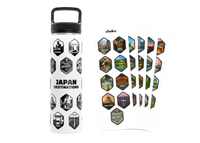
Downtown Kyoto sits beside the other Kyoto stops on the Traveler Bottle, the bucket-list map we built for first-time visitors. This guide covers what downtown Kyoto is, how its shopping streets differ, and how to spend a day there without wandering in circles.
What is downtown Kyoto?
Downtown Kyoto is the central commercial district built around the Shijo-Kawaramachi intersection, taking in Nishiki Market, the Shinkyogoku and Teramachi arcades, and the Shijo-dori department stores.
It helps to think of downtown Kyoto as a layered grid rather than a single street. Shijo-dori runs east to west and carries the big department stores. Kawaramachi-dori runs north to south and carries more department stores and brand shops. Where they cross is the busiest pedestrian point in the city. And tucked into the blocks just north and west of that crossing are the things most visitors actually come for: the food market and the covered arcades.
That density is the point. In other parts of Kyoto you plan a route. Downtown, you pick a starting corner and walk, and the next worthwhile thing is always a block away.
Where is downtown Kyoto, and how do you get there?
Downtown Kyoto centers on the Shijo-Kawaramachi intersection in central Kyoto, a short walk from the Hankyu and Keihan train lines and easy to reach from anywhere in the city.
The access points:
- Hankyu Kyoto-Kawaramachi Station sits directly beneath the Shijo-Kawaramachi intersection. This is the most central arrival point.
- Keihan Line: Gion-Shijo Station is just across the river to the east, a few minutes' walk over Shijo Bridge.
- Karasuma Station (subway and Hankyu) is one stop west along Shijo-dori, near the western department stores.
- From elsewhere in Kyoto: city buses converge on the Shijo-Kawaramachi and Shijo-Karasuma stops.
Downtown Kyoto also pairs naturally with the river. Pontocho, the lantern-lit dining alley, runs along the Kamogawa one block east, and Kyoto's Higashiyama district is a short walk across the bridge. A common rhythm is temples and Higashiyama by day, downtown for shopping and dinner in the late afternoon.
What is Nishiki Market, "Kyoto's Kitchen"?
Nishiki Market is a narrow covered food market running about 400 meters through the heart of downtown Kyoto, lined with around 130 shops. It has fed the city for centuries and is known as "Kyoto's Kitchen."
This is the single most visited part of downtown Kyoto, and the history is real. The official Nishiki Market site and Kyoto City's tourism office both trace the market back roughly 400 years, to the Tensho era, with the area flourishing in the Edo period as a fish-wholesale district. Today around 130 shops line Nishikikoji-dori, running east to west between Teramachi and Takakura.
The market is narrow, roofed, and shoulder to shoulder for much of the day. At the eastern entrance stands the small Nishiki Tenmangu shrine, which is the easiest landmark to navigate by: find the shrine and you have found the market.
Nishiki Market is a food market first and foremost. Its stalls sell fresh fish, seasonal vegetables, Kyoto pickles, tofu and yuba, tea, sweets, and the specialist ingredients Kyoto restaurants depend on. For a visitor, the practical reality is that most of this is not luggage-friendly, so Nishiki works best as a grazing walk: ready-to-eat snacks, small bites, things you can try on the spot rather than carry home.
A few honest notes from Japanese sources and basic market etiquette:
- Go in the morning. The market is calmest and freshest earlier in the day; by midday it is crowded.
- Eat where you buy. Walking and eating through the crowd is discouraged. Many stalls have a small spot to stand and finish a snack.
- It is a working market. Locals and restaurant buyers still shop here. It is not only a tourist attraction, and it is better for that.
What are the Shinkyogoku and Teramachi shopping arcades?
Shinkyogoku and Teramachi are two parallel covered shopping arcades running north from Shijo-dori. Together they form the busiest stretch of arcade shopping in Kyoto, and they are entirely indoors.
If Nishiki is the food market, these are the general shopping streets. The Shinkyogoku arcade runs roughly 800 meters between Sanjo-dori and Shijo-dori, with around 180 shops. The Teramachi Kyogoku arcade runs parallel to it, one street to the west. Walked together, they are the most concentrated shopping arcade in the city.
What they are good for is broad. Shinkyogoku leans toward souvenirs, casual fashion, character goods, sweets and the kind of shops aimed at visitors and students. Teramachi has a slightly older, more mixed character, with stationery, secondhand and specialist shops folded in among the rest. Neither is luxury shopping. Both are covered top to bottom, which makes them the obvious move when it rains.
The arcades also connect the dots downtown. Nishiki Market actually crosses Shinkyogoku near its southern end, so it is easy to combine a market walk with an arcade browse without ever stepping outside.
Free for you: our Kyoto Google Maps list We keep a Google Maps list of places worth your time in Kyoto, with the downtown shopping streets pinned in walking order. Drop your email and we'll send it over.
Where do you shop in downtown Kyoto?
It depends what you are after. Downtown Kyoto has three distinct shopping experiences, and knowing which is which saves you a lot of aimless walking.
Here is the honest breakdown:
| Nishiki Market | Shinkyogoku & Teramachi arcades | Shijo-dori department stores | |
|---|---|---|---|
| What you'll find | Food, snacks, tea, knives, kitchen goods | Souvenirs, casual fashion, character goods, sweets | Department stores, brand flagships, depachika food halls |
| Best for | Grazing and food gifts | Rainy days, souvenirs, easy browsing | A focused shop, gifts, or air-conditioned comfort |
| Roof or open | Covered | Covered | Mostly indoor stores |
| Pace | Slow, crowded | Steady, browsing | Calm, structured |
The department stores deserve a specific mention. Shijo-dori carries Kyoto's major department stores, including Kyoto Takashimaya and Daimaru Kyoto. Beyond fashion floors, each has a basement food hall, a depachika, which is one of the best and least stressful places in Kyoto to buy beautifully packaged sweets and food gifts. If you want a Kyoto present that survives a flight and looks the part, the depachika beats the market for packaging every time.
The simple rule: Nishiki for food you eat now, the arcades for browsing and souvenirs, the department-store depachika for gifts you carry home.
When should you visit downtown Kyoto?
Morning for Nishiki Market, any time for the arcades and department stores. Downtown Kyoto is one of the few parts of the city that holds up in bad weather and after dark.
Timing downtown is mostly about Nishiki Market. The market is at its best, and least crowded, in the morning, and it begins to wind down in the late afternoon as shops close. If Nishiki is a priority, build the rest of your downtown day around an early market visit.
Everything else is flexible. The arcades and department stores run into the evening, so downtown is a natural late-afternoon or rainy-day plan. After temple-heavy days that end when temples close, downtown Kyoto is often the only district still fully open and worth your time. That alone makes it useful to keep in your back pocket.
How do you plan a downtown Kyoto day?
Start with Nishiki Market in the morning, drift through the arcades it connects to, and finish among the Shijo-dori department stores. The geography does the planning for you.
A workable sequence:
- Morning: Nishiki Market, entering from the Nishiki Tenmangu shrine end, walking its full length.
- Late morning: step into Shinkyogoku where it crosses the market, and browse the arcades north.
- Lunch: the downtown grid is dense with restaurants; you will not need a reservation for a casual meal.
- Afternoon: Shijo-dori department stores, ending in a depachika for food gifts.
- Evening: dinner downtown, or cross to Pontocho along the river.
If you only do three things in downtown Kyoto: 1. Walk Nishiki Market end to end in the morning, grazing as you go. 2. Step into one covered arcade, Shinkyogoku or Teramachi, even just to see how much shopping Kyoto folds under one roof. 3. Visit a department-store depachika and buy one properly packaged Kyoto food gift.
For fitting a downtown day into a wider trip, the 2-Week Japan Guide covers the pacing Japanese travel writers recommend, so a shopping afternoon balances the temple-heavy days rather than competing with them.
Downtown Kyoto is the practical heart of a city full of postcard sights, and it is exactly the kind of place the Traveler Bottle was built to help you make the most of. Give it a morning, eat your way through Nishiki, and let the rest of the grid pull you along.
FAQ
What is downtown Kyoto?
Downtown Kyoto is the central shopping and dining district around the Shijo-Kawaramachi intersection. In a few walkable blocks it holds Nishiki Market, the covered Shinkyogoku and Teramachi arcades, and major department stores. It is the busiest shopping area in the city.
What can you buy at Nishiki Market?
Nishiki Market is a food market, "Kyoto's Kitchen." Its roughly 130 shops sell fresh fish, produce, pickles, tofu, sweets, tea, knives and Kyoto-cuisine ingredients. Many stalls also sell ready-to-eat snacks, so most visitors treat it as a place to graze.
Where should you shop in downtown Kyoto?
Nishiki Market for food; the Shinkyogoku and Teramachi arcades for souvenirs, casual shopping and rainy days; Shijo-dori for department stores and brand flagships. All three sit within a 10-minute walk of the Shijo-Kawaramachi intersection.
How long do you need in downtown Kyoto?
A half-day covers Nishiki Market and one or two arcades. A full day adds the department stores and an unhurried browse. Because it is walkable and largely indoors, downtown Kyoto also works as a rainy-day plan or an evening after temple days.
Sources
- Nishiki Market official site — market history and shop directory
- Kyoto City Tourism Navi — Nishiki Market — overview and history
- Shinkyogoku Shopping Street official — the Shinkyogoku covered arcade
- Teramachi Kyogoku official — the Teramachi Kyogoku covered arcade
- Shijo Merchants Association — central Kyoto's main shopping street
Activities and tours in Tokyo
cheku is a GetYourGuide partner. We link to tours that handle the parts of travel that eat your time, getting there, booking ahead, language, context you'd otherwise miss. If you book through our link, we earn a small commission at no extra cost to you.


