
May is two entirely different trips. May 1–5 is Golden Week — Japan's largest domestic holiday rush, with packed trains, tripled hotel prices, and the longest queues of the year. May 6–20 is the opposite: low crowds, ideal temperatures, wisteria in bloom. Which version you get depends entirely on when you arrive.
Japan in May splits at Golden Week. Most foreign visitors land somewhere in the April 28–May 7 window because spring flights are easy to find. Japanese travel sources treat this timing carefully for a reason international guides rarely explain: Golden Week is when Japan's workforce takes annual leave in unison, and the effect on transport, accommodation, and popular sites is severe.
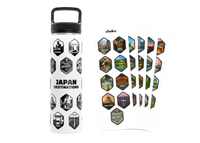
If you're building a May itinerary and want a shortlist of destinations to consider, the Traveler Bottle covers 27 Japan destinations that hold up well across seasons — useful for planning once you've picked your window.
What is Japan like in May?
Weather-wise, May is Japan's most comfortable month for travel. tenki.jp records average highs of 22–24°C in Tokyo by late May, with humidity still low and skies mostly clear. No rainy season yet — tsuyu begins mid-June. Evenings cool to 12–15°C in early May, warmer by month's end.
Visually, May is 新緑 (shinryoku) season: the fresh green of new spring growth. Cherry blossoms finish in Tokyo and most of Honshu by early May, but the parks and mountains shift to a different kind of beautiful — new leaves in vivid green against clear blue sky. Japanese writers and photographers treat shinryoku as its own distinct seasonal experience, referenced in poetry and print back through the Meiji period.
Cherry blossoms in May are possible only in Hokkaido. Sapporo's trees peak in late April to early May — about three weeks later than Tokyo. If seeing cherry blossoms is the goal and you're arriving in the first week of May, Hokkaido is the destination.
How crowded is Japan in May?
The month divides into two crowd regimes with almost nothing in between.
April 29–May 5 — Golden Week: The official national holiday calendar places four public holidays across eight days: Showa Day (Apr 29), Constitution Day (May 3), Greenery Day (May 4), Children's Day (May 5). Most workers bridge the gap days with paid leave, creating a 9–10 day consecutive break. Shinkansen from Tokyo to Osaka sell out 30 days in advance. Accommodation in Hakone, Nikko, and Kyoto surges 2–3× in price. Popular sites run their longest annual queues.
May 6–20 — post-Golden Week: In Japanese domestic travel writing this window is consistently described as 穴場 (anaba) — an underused sweet spot. Workers return to their desks. International tourist volume drops from its April peak. Hotels return to normal rates. JNTO statistics show May as a moderate visitor month overall, but that volume is front-loaded into Golden Week; mid-May is among the quietest periods of the year.
| Period | Crowds | Prices | Notes |
|---|---|---|---|
| Apr 29–May 5 | Peak annual | +50–200% | Book months ahead or avoid |
| May 6–10 | Very low | Normal | Best window of the month |
| May 11–20 | Low | Normal | Still excellent |
| May 21–31 | Moderate | Normal | Slight uptick toward summer |
What Japanese travelers actually do in May
Japanese domestic travel in Golden Week goes to established destinations — Kyoto, Hakone, Okinawa — or overseas (Hawaii and Southeast Asia are consistently popular Japanese family destinations in GW). The week after Golden Week, workers who couldn't take GW leave take their own trips in a quieter second wave, often targeting the same destinations at normal rates.
On Jalan.net, the most popular Japanese domestic destinations for non-Golden-Week May are mountain ryokan in Nikko, Hakone, and the Japanese Alps — where prices normalise immediately after GW ends. Hokkaido bookings spike in this window: the island offers shinryoku, late cherry blossoms, and no June rainy season, which Japanese travelers specifically cite as the logic.
Sanja Matsuri (三社祭), Asakusa's most significant festival, runs on the third Saturday and Sunday of May. Around 100 portable shrines (mikoshi) are carried through Asakusa's streets by participants in traditional dress. It draws Japanese visitors from across the Kanto region. If you're in Tokyo on that weekend it's worth planning around — the scale and specificity of the event is unlike anything on the regular tourist circuit.
Free for you: our Tokyo Google Maps list We keep a Google Maps list of the must-see spots around Tokyo - restaurants, cafes, shops, viewpoints, and streets worth the detour. Drop your email and we'll send it over.
May in Tokyo
Tokyo in May delivers the version of the city that photographs well and is actually comfortable to walk: warm days, cool evenings, parks at their freshest. Wisteria (藤/fuji) is the flower season that replaces cherry blossoms for Japanese viewers. tenki.jp tracks bloom timing by site; in Tokyo, Kameido Tenjin Shrine in Kōtō ward is the most-cited spot in Japanese sources — a wisteria canopy over water that peaks from late April into mid-May.
Shinjuku Gyoen and Yoyogi Park work well as full-day destinations in May. No cherry blossom crowds; the parks are in full green growth and used by Japanese families and office workers on lunch breaks. For food around Tsukiji in May, the market's morning eating scene remains the same — the May context matters only in that the morning photography window (8–9am) is now in full daylight.
May in Kyoto
Kyoto after Golden Week is one of the more accessible windows to visit. Sakura crowds from April are gone, autumn crowds are months out, and temperatures are 22–25°C. Japanese domestic travel content describes the city in mid-May as a different place from the April version — same sites, far more space.
Aoi Matsuri, one of Kyoto's three major festivals, takes place on May 15. It's a procession of over 500 participants in Heian court dress walking from the Imperial Palace to Shimogamo and Kamigamo Shrines. Japanese sources describe it as the most historically specific of Kyoto's festivals — less tourist infrastructure than Gion Matsuri, more culturally dense. Attendance is free along the route.
Practical notes for May
Early May evenings are cool: Bring a light jacket. Tokyo's first week of May can reach 12°C at night even when days are warm.
Golden Week logistics: If your dates overlap April 29–May 5, book shinkansen and accommodation at least 6 weeks ahead. Popular ryokan and the busiest Shinkansen routes (Tokyo–Shin-Osaka) sell out fastest.
Hokkaido in May: The island runs 2–4 weeks behind Honshu seasonally. Late cherry blossoms, no rainy season in June, and lower visitor numbers than the mainland make it a logical May–June destination for travelers who want to dodge both Golden Week and tsuyu.
May is one of Japan's best months — if you plan around Golden Week rather than into it. For a broader guide to timing across all of Japan's seasons, see The Best Time to Visit Japan. And for a shortlist of destinations that hold up in May and beyond, the Traveler Bottle covers 27 Japan destinations across the country.
FAQ
Is May crowded in Japan? Extremely crowded April 29–May 5 (Golden Week), then very quiet May 6–20. The same sites that had 2-hour queues during Golden Week may be nearly empty the following Monday.
Do I need to book Golden Week accommodation far in advance? Yes — 4–8 weeks minimum for popular spots. Kyoto ryokan, Hakone onsen hotels, and shinkansen seats on the Tokyo–Osaka route fill fastest. If your dates are in this window, book immediately after deciding to go.
Are cherry blossoms still visible in May? Not in Tokyo or Kyoto — those finish in mid-April. In Hokkaido (Sapporo, Hirosaki in Aomori) cherry blossoms peak late April to early May.
What is the best week to visit Japan in May? May 6–14 is the most consistently recommended window in Japanese travel writing — immediately after Golden Week ends, crowds drop sharply, hotel prices normalise, and the weather is ideal.
Sources
- Japan Weather — May Data — tenki.jp, Japan's major weather service and seasonal tracker
- National Holiday Calendar — Cabinet Office Japan, official Golden Week dates
- Japan Tourism Statistics — JNTO, monthly inbound visitor volume
- Jalan May Travel Guides — Japan's largest domestic booking platform, GW demand data and post-trip surveys
Activities and tours in Tokyo
cheku is a GetYourGuide partner. We link to tours that handle the parts of travel that eat your time, getting there, booking ahead, language, context you'd otherwise miss. If you book through our link, we earn a small commission at no extra cost to you.


