
November is the month Kyoto earns its reputation. Peak koyo transforms the temple gardens that are beautiful any time of year into something that produces a specific visual language — red maple canopies over moss, orange ginkgo against stone lanterns — that Japanese autumn photography has refined for decades. The weather is Japan at its most comfortable. The crowds at peak spots in the third week of November are Japan at its most demanding.
Planning a November Japan trip means understanding two things Japanese travel sources are direct about: koyo timing is not fixed, and Kyoto peak week is genuinely crowded in ways that require adjustment rather than avoidance.
For full-year context and month-by-month comparisons, the best-time-to-visit guide covers every month with Japanese source data. For the October lead-in — and where to go for koyo before the Kyoto window — Japan in October covers Hokkaido and Nikko timing.
What is the weather like in Japan in November?
November is the cleanest weather month in the calendar. tenki.jp records Tokyo averaging 15–17°C in early November and 12–14°C by month's end, with humidity dropping to 50–60% — the lowest of any month except February. Skies are consistently clear. Rain is uncommon.
Kyoto runs similar to Tokyo. The cold arrives faster in the mountain-enclosed basin, and late November evenings in Kyoto can drop to 7–9°C — cold enough that the combination of koyo viewing and warmth makes outdoor onsen in the Arashiyama area specifically appealing to Japanese visitors after dark.
| Location | Nov avg high | Nov avg low | Notes |
|---|---|---|---|
| Tokyo | 16°C | 9°C | Ideal city walking; koyo late Nov |
| Kyoto | 16°C | 8°C | Koyo peak third week; cold evenings |
| Osaka | 17°C | 10°C | Slightly warmer; less crowded than Kyoto |
| Sapporo | 8°C | 1°C | Cold; possible snow by month's end |
| Best for | Who should prioritize | ||
| Kyoto | Peak koyo; willing to manage crowds | ||
| Osaka | Koyo without Kyoto's congestion | ||
| Tokyo | Late koyo (ginkgo + maple); excellent weather |
When does koyo peak in November, and which spots are best?
Koyo timing is tracked daily by Japanese weather services and dedicated apps during the season. tenki.jp and Walker Plus Koyo both publish color-intensity ratings on a scale from 始まり (start) through 見頃 (peak) to 散り (falling) for specific named locations. The peak window at any site is typically 7–10 days.
November koyo progression in central Honshu:
Early November (1–10): Color is beginning in higher-altitude Nikko and the Tohoku holdovers. Central Kyoto is still green or very early. Osaka Castle Park's ginkgo trees are early-stage.
Mid-November (11–20): Progression arrives in earnest. Tokyo's ginkgo avenues (Meiji Jingu Gaien is the most famous) begin turning. Kyoto's outer mountain temples (Rurikouin in Ohara, some Higashiyama spots) hit peak. This is the optimal Kyoto window if you want koyo without the single most congested week — though it requires year-specific verification of actual color progress.
Late November (21–30): This is the peak Kyoto window in most years. jalan.net booking data shows the third and fourth weekends of November as Kyoto's most heavily booked nights of the entire year — surpassing even Golden Week in accommodation demand at some properties.
Kyoto peak-week reality check: Tofukuji (東福寺), Eikan-do (永観堂), and Kinkakuji are operating at maximum capacity during the peak weekend. Japanese travel sources consistently recommend arriving at Tofukuji before 8am, after 4pm, or accepting crowds as part of the experience. Eikan-do extends its opening hours during peak season specifically for this reason. The crowds are real — but the experience at these sites at peak color is also real, and Japanese visitors come specifically for it.
What Japanese travelers actually do in November
jalan.net domestic November booking data organises around a single axis: timing the koyo peak at the destination that matters most to each traveler.
Kyoto koyo circuit: The most heavily booked November domestic trip in Japan is a Kyoto overnight or two-night stay timed for peak color. Japanese domestic visitors combine Tofukuji, Eikan-do, Arashiyama, and Kinkakuji into a compressed two-to-three-day circuit. Trains from Osaka and Tokyo fill for the peak weekends.
Osaka's underrated koyo: Minoo Park (箕面公園) in northern Osaka is the most cited koyo destination in Osaka-area Japanese travel writing — a narrow valley gorge with maple lining a hiking trail up to a waterfall. Significantly less crowded than Kyoto's major sites, it peaks a few days before or alongside central Kyoto. jalan.net data shows it as one of Osaka's highest-rated November destinations for domestic visitors.
Tokyo ginkgo: The ginkgo avenues of Tokyo peak in mid-to-late November. Meiji Jingu Gaien's ginkgo row is the most photographed — 146 ginkgo trees lining a 300-meter avenue. Shinjuku Gyoen's maples and ginkgo peak slightly later. Japanese park authorities publish daily color reports during the season.
Free for you: our Tokyo Google Maps list We keep a Google Maps list of the must-see spots around Tokyo — restaurants, cafes, shops, viewpoints, and streets worth the detour. Drop your email and we'll send it over.
Shichi-Go-San and November shrine photography
Shichi-Go-San (七五三) is Japan's children's milestone ceremony — families bring children aged 3, 5, and 7 to shrines in formal kimono and haori, typically on and around November 15. It is observed throughout November (most visibly on the weekends closest to the 15th) at shrines across the country.
For photography, this is one of the most culturally specific opportunities in the autumn calendar. The combination of children in formal traditional dress with the autumn light and the color of shrine grounds is specific to this window. Major shrines in Tokyo (Meiji Jingu, Hie Shrine) and Kyoto (Fushimi Inari, Yasaka Shrine) see family visits throughout the month. Unlike major festivals, Shichi-Go-San is a family event — photographing respectfully and from a distance is the understood protocol.
Photography in November
November's low sun angle and dry, clear skies produce the warmest autumn light of the year. Japanese photographers working the koyo circuit describe the hour before sunset at Tofukuji's famous 通天橋 (Toten Bridge) overlooking the maple valley as one of the most technically demanding and visually rewarding situations in the calendar year — the angle of light through the canopy changes rapidly, and the crowds require positioning well ahead of time.
For less competitive photography: Rurikouin temple in Ohara (北区) requires advance ticketing but limits visitors, making it one of the few Kyoto koyo locations where unhurried composition is possible. The combination of the moss garden and autumn reflection through the shoji screens is a frequently cited example of 枯山水 (karesansui) aesthetics applied to koyo photography.
Tokyo in November is accessible for koyo photography without the logistics of Kyoto — the Meiji Jingu Gaien ginkgo avenue, Shinjuku Gyoen's late maples, and the combination of autumn color with Tokyo's urban backdrop are distinct subjects that Japanese architectural and street photographers specifically work in November.
How does November compare to surrounding months?
| October | November | December | |
|---|---|---|---|
| Weather | Ideal | Excellent; cooling | Cold, clear |
| Koyo | Hokkaido + Nikko peak | Central Japan + Kyoto peak | Mostly finished |
| Crowds at top spots | High in Hokkaido | Very high (Kyoto peak week) | Low |
| Kyoto koyo | Not yet | Peak — third week | Finished |
| Tokyo koyo | Early | Peak — late month | Finishing |
| Best for | Hokkaido; ideal weather | Kyoto peak color; temple gardens | Quiet; winter onset |
If the decision is October versus November: October has better general weather and fewer crowds but misses Kyoto's koyo. November has Kyoto at its best and one of Japan's most rewarding travel experiences — but requires planning around peak week crowds at the major sites.
The sequencing Japanese travel sources recommend for an autumn trip is Hokkaido in early-to-mid October, then moving south as the koyo front follows — arriving in Kyoto for the final week of November. The 2-Week Japan Guide covers how to build this itinerary without duplicating effort or backtracking.
Where to go in Japan in November
Go to Kyoto for peak week if: - Seeing Japan's most famous koyo is the primary goal and crowds are an acceptable trade-off - You book accommodation 6–8 weeks in advance for the third and fourth weeks - You're willing to start early (before 9am) at major sites
Go to Osaka instead of Kyoto if: - Koyo is important but the Kyoto peak week feels too managed - Minoo Park appeals as a hiking-and-koyo combination - You want a city base with easier accommodation access and lower prices
Go to Tokyo for koyo if: - You're already based in Tokyo and want to extend the autumn experience - Urban koyo (ginkgo avenues, park maples) suits your interests alongside city access - You want to time a Shichi-Go-San shrine visit without a separate trip
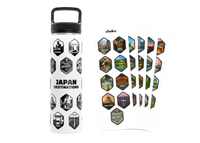
If you're deciding which Japan destinations deserve a dedicated visit versus which work better as additions to a longer itinerary, the Traveler Bottle covers 27 Japan locations with the practical context for autumn specifically.
FAQ
Is November too crowded to enjoy Japan? At specific peak-week spots in Kyoto — no more so than Ueno Park during cherry blossom peak. The experience is still worthwhile and remains the reason people make the trip. Away from the three or four most famous Kyoto koyo sites, November is very manageable. Tokyo, Osaka, and smaller Kyoto temple gardens are all significantly quieter.
What should I book in advance for a November Japan trip? For Kyoto during the third and fourth weeks: accommodation 6–8 weeks ahead minimum. Shinkansen can be reserved up to a month ahead. Specific temples with limited ticketing (Rurikouin, Kokedera) require advance application. For Tokyo and Osaka: 3–4 weeks is typically sufficient.
Can I see autumn leaves in Tokyo in November? Yes. Tokyo's koyo peaks in late November — roughly the last two weeks of the month. Ginkgo avenues (Meiji Jingu Gaien) peak first, followed by maple areas in Shinjuku Gyoen and Ueno Park. The combination with December's first cold is a different aesthetic from Kyoto's mountain maples.
What is the best koyo spot in Kyoto? Japanese sources most consistently cite Tofukuji (東福寺) for scale — the 通天橋 bridge view over the maple valley is Kyoto's most dramatic single koyo view. Eikan-do (永観堂) is cited for its variety of maple types and extended autumn period. Both require early arrival or evening visits during peak week. Smaller gardens like Rurikouin require advance ticketing but offer a more controlled experience.
Sources
- tenki.jp — November temperature averages, koyo front tracking, peak date data by location
- Japan Meteorological Agency — November seasonal records and temperature averages
- Walker Plus Koyo — Real-time and historical koyo peak progress tracker for Japan
- jalan.net — November domestic travel booking data, Kyoto koyo demand, accommodation patterns
- JNTO Visitor Statistics — Monthly inbound visitor volume
Activities and tours in Tokyo
cheku is a GetYourGuide partner. We link to tours that handle the parts of travel that eat your time, getting there, booking ahead, language, context you'd otherwise miss. If you book through our link, we earn a small commission at no extra cost to you.


