
September is Japan's best-kept shoulder season. Summer heat is fading, crowds are well below October peak, and Hokkaido is entering its first autumn color. The two things to know going in: typhoon season peaks in September, so weather disruption is a real planning factor; and Silver Week — a full five-day run in 2026, Saturday 19 to Wednesday 23 September — sends domestic travel into Golden Week-level demand. Between those two variables, September rewards flexibility more than any other month.
The heat that makes August difficult doesn't disappear overnight. Early September in Tokyo still reaches 28–30°C, and the humidity lingers. But the shift is noticeable by mid-month — the Japan Meteorological Agency's seasonal data shows Tokyo dropping to the low-to-mid 20s by late September, which is the point where city walking becomes genuinely comfortable again.
For a month-by-month comparison covering the full Japan calendar, the best-time-to-visit guide uses Japanese source data across all twelve months.
What is the weather like in Japan in September?
Two halves, separated roughly by mid-month.
Early September (1–15 approx.): Still summer in Honshu. tenki.jp records Tokyo averages of 28–30°C with humidity around 70–75% — significantly less oppressive than August but still demanding for prolonged outdoor activity. Rain arrives in typhoon-related bands rather than the steady drizzle of the earlier rainy season.
Late September (16–30 approx.): The seasonal shift. Temperatures drop noticeably — Tokyo averages 24–26°C by month's end, Kyoto and Osaka similar. Evenings cool enough for a light layer. This is when Japanese media marks the start of 行楽シーズン (kōraku season / travel and leisure season), the autumn window before koyo peaks in October and November.
| Location | Sept avg high | Change from August | Notes |
|---|---|---|---|
| Tokyo | 27°C | −6°C from Aug | Still warm early; comfortable late |
| Kyoto | 29°C | −7°C from Aug | Basin heat eases; great late Sept |
| Osaka | 28°C | −6°C from Aug | Similar pattern to Tokyo |
| Sapporo | 22°C | −4°C from Aug | Early koyo; excellent conditions |
| Okinawa | 30°C | −2°C from Aug | Sea still warm; beach season extends |
| Best for | Who should prioritize | ||
| Hokkaido | Autumn color; much lower crowds | ||
| Okinawa | Beach without peak summer prices |
Typhoon note: The Japan Meteorological Agency consistently records September as the month with the highest number of typhoons making landfall in Japan. Most visitors are not directly affected — systems often track through quickly — but travel disruption (flight cancellations, shinkansen suspension, outdoor event closures) is a real possibility. Travel insurance is particularly relevant for September bookings.
What is Silver Week, and how does it affect travel?
Silver Week (シルバーウィーク) is Japan's second consecutive-holiday period, created by the intersection of two September public holidays:
- Respect for the Aged Day (敬老の日): Third Monday of September, part of the Happy Monday law
- Autumnal Equinox Day (秋分の日): Varies by astronomical calculation, typically September 22–23
The official holiday calendar determines whether a 国民の休日 (citizens' holiday) can fall between these two, bridging them into three to five consecutive days. Unlike Golden Week — which always falls in the same window — Silver Week depends on the year's specific calendar. In years when the bridge day applies, it produces Japan's only other extended consecutive holiday period of this length.
The travel effect mirrors Golden Week in proportion. jalan.net booking data shows Silver Week years producing significant spikes in resort accommodation (Hakone, Nikko, Karuizawa), beach destinations (Okinawa), and Hokkaido. In non-Silver Week years, late September is among the quietest periods of the autumn calendar.
For international visitors: check whether your specific September travel dates include Silver Week. If they do, book transport and accommodation weeks in advance and expect resort pricing. If they don't, September 10–20 is one of the calmest, most affordable windows of the second half of the year.
Free for you: our Tokyo Google Maps list We keep a Google Maps list of the must-see spots around Tokyo — restaurants, cafes, shops, viewpoints, and streets worth the detour. Drop your email and we'll send it over.
What Japanese travelers actually do in September
jalan.net domestic September booking data shows three main patterns:
Okinawa for the late beach window: Japanese domestic travel treats September as the last viable beach month before autumn sets in. Okinawa's sea temperature stays above 28°C through September, typhoon risk notwithstanding. Accommodation costs drop compared to August peak pricing, and the crowds are the lowest of the summer beach season. Japanese travel media consistently flags September as the optimal Okinawa timing for those willing to accept weather uncertainty in exchange for price and space.
Hokkaido for early autumn: tenki.jp koyo tracking shows Hokkaido's northern areas (Daisetsuzan mountains, Sounkyo) entering color change in mid-to-late September. The Sapporo area peaks in early October. For Japanese travelers who visit Hokkaido specifically for autumn scenery, late September is the start of the season — and significantly less crowded than the October peak across central Japan.
City escapes for Silver Week: Mountain resort towns (Karuizawa, Nikko, Oku-Nikko) absorb the Silver Week domestic surge. In non-Silver Week years, these same areas are quieter and often better value.
How do Japanese travelers "preview autumn" during Silver Week?
Where English guides frame September as the end of summer, Japanese travelers frame it as the start of autumn. The phrase that recurs in Japanese Silver Week guides is 秋を先取り (aki wo sakidori), "getting a head start on autumn." A 2026 aumo Silver Week guide frames the holiday exactly this way, and confirms the point above — 2026's Silver Week is a rare five-day run, stretching to as many as nine days for anyone who takes a strategic weekday off, which is why domestic demand climbs.
The "autumn preview" plays out in two ways Japanese travelers plan around:
- The season's first autumn colors (紅葉先取り). Autumn arrives first in the north and the highlands, so Silver Week is when Japanese travelers catch the earliest koyo — around Sapporo (Nakajima Park) and in Hokkaido's mountains, weeks before the mainland turns.
- Kochia and cosmos. At Hitachi Seaside Park in Ibaraki, the kochia bushes begin shifting toward crimson while cosmos and pampas grass come into their own, one of the season's signature landscapes and an easy day trip from Tokyo.
Treating September as "autumn preview" rather than "late summer" is the local mindset shift that changes where you would point a trip.
Photography in September
September creates a brief window that Japanese photographers specifically reference: the transition between summer and autumn light. The harsh midday glare of July and August softens as the sun angle changes. By late September, afternoon light in Tokyo and Kyoto is noticeably warmer and more directional than the flat overhead light of high summer.
Hokkaido in late September is the clearest photographic opportunity — early koyo against still-green lower slopes, with the quality of northern autumn light that photographers working in Biei and the Daisetsuzan range time their trips specifically to catch.
For urban photography: the return of comfortable outdoor temperatures means street photography becomes possible again at midday, which isn't true in July or August. Festivals are less concentrated than in summer, but local autumn matsuri begin in September — neighborhood events that are photographically accessible without the mass crowds of the major summer festivals.
How does September compare to surrounding months?
| August | September | October | |
|---|---|---|---|
| Heat | Peak (hottest) | Fading fast | Comfortable |
| Humidity | Highest | Decreasing | Low |
| Major events | Obon, Awa Odori | Silver Week (calendar-dependent) | Koyo begins |
| Typhoon risk | High | Highest | Mostly over |
| Crowds | High (Obon) | Low-moderate (Silver Week spike) | High (koyo + tourists) |
| Hokkaido | Excellent | Early autumn color | Peak autumn color |
| Best for | Cultural depth; Obon timing | Budget travel; Okinawa; Hokkaido early color | Foliage-focused visitors |
If the goal is avoiding both heat and crowds: late September (avoiding Silver Week dates) is the clearest window in the calendar. October is more scenic for foliage but significantly busier and pricier, particularly in Kyoto.
A Japan trip built around late September into early October — starting with Hokkaido for early koyo, then moving south as the color front follows — is the sequencing Japanese travel sources consistently recommend for autumn. The 2-Week Japan Guide covers how to build this itinerary without backtracking.
Where to go in Japan in September
Go to Okinawa if: - A final beach window matters and you're comfortable with typhoon contingency planning - August prices put Okinawa out of reach — September rates are meaningfully lower - You want to swim in still-warm water without August's crowds
Go to Hokkaido if: - Early koyo appeals and you don't need peak color - You want to drive the Hokkaido road network in comfortable (not cold) temperatures - Budget matters — Hokkaido accommodation is calmer than the October rush
Go to central Honshu cities (Tokyo, Kyoto, Osaka) if: - You're arriving in late September specifically — the weather is excellent by then - Silver Week doesn't affect your dates - You want to position for a koyo trip starting in mid-October without returning to the airport
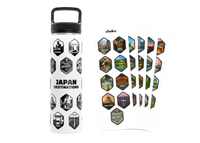
If you're planning which Japan destinations are worth the journey in autumn, the Traveler Bottle covers 27 Japan destinations with the practical context for deciding which ones hold up in shoulder season.
FAQ
Should I worry about typhoons in September Japan? Yes, but in proportion. The Japan Meteorological Agency records more typhoon landfalls in September than any other month, but most visitors to Japan are not significantly disrupted. Travel insurance with trip interruption cover, flexible accommodation booking, and realistic expectations about outdoor plans are the practical adjustments. One disrupted day in seven is a reasonable planning assumption — not guaranteed, but worth preparing for.
Is September cheaper than October for Japan travel? Generally yes. Accommodation in popular koyo destinations (Kyoto, Nikko, Hakone) is significantly lower in September than in the October peak. Flights are similar or lower. Silver Week is the exception — hotel prices in resort towns spike in Silver Week years to levels approaching Golden Week rates.
When exactly does Silver Week fall? Silver Week depends on the year's calendar. Check the specific year you're visiting — the third Monday of September (Respect for the Aged Day) and Autumnal Equinox Day (usually September 22–23) need to fall in a specific pattern to create a bridge holiday. The Cabinet Office holiday calendar publishes official dates.
Is September good for seeing autumn leaves in Japan? In Hokkaido, yes — the northernmost mountains (Daisetsuzan) begin color in mid-to-late September, and this is one of the earliest autumn foliage opportunities in Japan. For central Honshu (Tokyo, Kyoto, Osaka), koyo doesn't arrive until October and November.
Sources
- tenki.jp — September temperature averages, typhoon tracking, koyo front start dates in Hokkaido
- Japan Meteorological Agency — Official September typhoon data, autumnal equinox dates
- Cabinet Office Japan — National Holiday Calendar — Silver Week mechanism, official holiday dates
- jalan.net — September domestic travel booking data, Silver Week demand, Okinawa and Hokkaido patterns
- aumo — 2026 Silver Week destinations — Japanese guide framing September as "previewing autumn"; 2026 five-day run, early koyo and kochia/cosmos spots
- JNTO Visitor Statistics — Monthly inbound visitor volume
Activities and tours in Tokyo
cheku is a GetYourGuide partner. We link to tours that handle the parts of travel that eat your time, getting there, booking ahead, language, context you'd otherwise miss. If you book through our link, we earn a small commission at no extra cost to you.


