
Japanese winter is cold but mostly dry and bright, and milder than its reputation across Tokyo, Kyoto and Osaka. Pack a warm coat, thermal base layers, and accessories for your hands, ears and neck. The real skill is layering, because Japan heats its trains and shops hard, and you will be peeling clothes off indoors.
A good Japan winter packing list has to do two jobs at once: keep you warm on the street, and let you cool down fast inside. Japan heats its trains, shops and restaurants generously, so the traveler sealed into one immovable thick coat spends the season overheating between stops. The answer, in winter as in every Japanese season, is a layering system rather than a single heavy garment.
Winter is also gentler than many first-timers fear, at least on the classic route. Tokyo, Kyoto and Osaka are cold but largely dry and sunny, a long way from the deep snow most people picture. The snow country is real and spectacular, but reaching it is a deliberate choice, not the winter default.
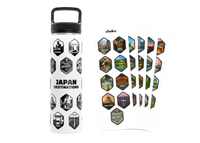
We built this list from more than 100 recent Japan packing videos, focused on what travelers said they actually wore and wished they had brought. For a checklist that adjusts to your exact dates, our free Japan packing tool builds one around your travel month. And the Traveler Bottle maps 27 of Japan's destinations, several of them at their quiet best under winter light.
What is winter like in Japan?
Japanese winter is cold, dry and bright on the main route, and genuinely severe in the snow country. Knowing which Japan you are visiting is the first packing decision.
In Tokyo, Kyoto and Osaka, expect daytime temperatures around 5 to 12°C, falling to near or just above freezing overnight. The defining feature is not extreme cold but clear, dry, sunny days, with cold that bites most in the wind and after dark. December is the mildest of the three months, January the coldest, and February cold but with the first faint hints of the turn toward spring.
Then there is the other Japan. Hokkaido, the Tohoku region, the Japan Sea coast and the mountains receive some of the heaviest snowfall of any populated places on earth. If your trip includes Sapporo, the ski resorts, the snow festivals or Shirakawa-go, you are packing for serious winter: deep cold, snow underfoot, and wind. Pack for the coldest place on your itinerary and shed layers everywhere milder.
Two features of the classic-route winter shape what you pack. The first is the dryness. Japanese winter air, especially on the Pacific side, is notably dry. That is easier to dress for than a damp cold, but it is hard on skin and lips, so hand cream and lip balm stop being optional extras. The second is the sunshine: winter days in Tokyo, Kyoto and Osaka are often crisp and brilliantly clear, lovely for sightseeing, but the sun does little to warm you once it drops, and the cold arrives fast at dusk.
That evening chill matters more than the daytime numbers suggest, because winter is illumination season. Japan's cities fill with light displays that pull you outdoors well into the cold night, and the wind, which is where winter cold genuinely bites, is sharpest then. Pack as though every day has a cold-snap evening attached, because in practical terms it does. A warm layer carried since morning, a scarf and gloves are what let you stay out for the lights rather than retreating early. Warm socks belong in the same category: cold reaches you through your feet on a long day of standing and walking, and it is a small, cheap thing to get right.
What to pack for Japan in December?
December is the mildest winter month, so pack warm but not heavy. Early December still carries a little of late autumn, and the cold settles in as the month goes on.
Bring a warm coat, a couple of sweaters, and long-sleeve tops to layer underneath. A scarf earns its place, and gloves become useful in the second half of the month. Thermal base layers are worth packing for the colder days and the evenings, even if you do not wear them every day.
December is also illumination season. Japan's cities fill with winter light displays, which means evenings spent outdoors after dark, when the temperature drops sharply. The layer you can add for an evening walk is the one that makes December magical rather than merely cold. Comfortable, warm walking shoes round it out.
What to pack for Japan in January?
January is the coldest month, and the one to pack most seriously for. This is deep winter on the classic route, and the month where layering pays off most.
Pack a genuinely warm coat, thermal base layers you will wear most days, several sweaters, and the full set of accessories: gloves, a warm scarf and a hat that covers your ears. The dry winter air is harsh on skin, so hand cream and lip balm are small items that prevent a real annoyance. Warm socks matter too, since cold reaches you through your feet on long sightseeing days.
January is bright and often beautifully clear, which makes it a fine month to travel, but the cold is constant. The traveler who layers well is comfortable; the one who relies on a single coat is either too cold outside or too hot in the heated trains.
What to pack for Japan in February?
February is cold but turning, and packs almost identically to January. Treat it as a deep-winter month and you will not be caught out.
Bring the same warm coat, thermal layers, sweaters and accessories. February holds Japan's coldest stretches, and northern regions are still deep in snow, with the famous snow festivals falling in this month. Late February brings the very first plum blossoms and a faint softening of the cold, but it is a winter month, not a spring one. Do not be tempted to pack light by the calendar.
If your February trip leans north for the snow festivals, pack as for full snow country: waterproof boots, heavier insulation, and proper gloves.
How does each winter month compare?
Here is winter in one view, so you can pack for your exact window.
| December | January | February | |
|---|---|---|---|
| Tokyo daytime | 8–12°C | 5–10°C | 5–11°C |
| Feels like | Mild early winter, cold by month's end | Deep winter, cold and clear | Coldest stretches, slowly turning |
| Coat | Warm coat | Warm coat, worn daily | Warm coat, worn daily |
| Thermals | Useful on cold days | Most days | Most days |
| Best for | Winter illuminations and a milder cold | Travelers who pack to layer properly | Snow festivals in the north |
The table's message: across all three months your coat and layering plan stay the same. What changes is simply how often you reach for the thermals.
How do you pack for Japan's heated indoors?
This is the winter detail that surprises visitors most: Japan's interiors are warm, sometimes very warm. Trains, department stores, restaurants and museums are all heated generously, and you move between cold streets and toasty interiors all day long.
The traveler in a single heavy coat with a thick jumper underneath has no way to adjust. They sweat through every train ride and shop, then step back into the cold slightly damp, which is the fastest way to actually feel miserable in winter. The fix is to build warmth in thin, removable layers: a thermal base, a light-to-medium sweater, and a warm coat over the top. On the train, the coat comes off. In a long museum visit, the sweater might too.
This is also why thermal base layers beat bulky knitwear. A thin HeatTech-style layer adds real warmth without volume, and it is easy to keep on or strip off. Plan your winter wardrobe as a system you operate through the day, not a costume you put on in the morning.
What can you leave at home for a winter trip?
The winter over-pack is bulk: too many heavy items, when thin layers do the job better. A few honest cuts free up space and weight.
You do not need expedition-grade gear for a Tokyo, Kyoto and Osaka winter. It is cold, not arctic, and a normal warm coat with good layers handles it. Leave the heaviest parka for an actual snow-country itinerary. You also do not need many thick sweaters: two or three thin-to-medium layers you can combine outperform a stack of bulky jumpers, and pack far smaller.
Snow boots are the classic unnecessary item for a classic-route trip, where there is little or no lying snow. Warm, comfortable, water-resistant walking shoes are enough. And the usual year-round Japan over-packs still apply: skip the voltage converter, since modern chargers are dual-voltage; skip the hair dryer, which hotels provide; and keep toiletries light, because Japan's drugstores are excellent. If you do find yourself cold, Japan is the easiest country on earth to fix it in, with cheap, excellent HeatTech and coats on sale everywhere. Our guide to what you actually need for Japan covers the full skip list.
Free for you: our Japan packing tool Pick your exact travel month and get a checklist built for it, with the winter items that matter and the ones to skip. Drop your email and we will send the full trip planner too.
FAQ
Is Japan very cold in winter? On the classic route it is cold but manageable: Tokyo, Kyoto and Osaka sit around 5 to 12°C by day, mostly dry and sunny, with nights near freezing. Northern Japan, the Japan Sea coast and the mountains are far colder and snowy.
What should I pack for Japan in January? A warm coat, thermal base layers, a few sweaters, and gloves, a scarf and a hat. Layering matters because the trains and shops are heated. Add hand cream and lip balm for the dry air, and warm walking shoes.
Do I need snow boots for Japan in winter? Not for Tokyo, Kyoto and Osaka, where comfortable water-resistant walking shoes are enough. You only need proper snow boots for the snow country: Hokkaido, the Japan Sea coast, ski resorts and the snow festivals.
What is the best way to stay warm in Japan in winter? Layer, and use Japan's own kit: thin, cheap HeatTech-style thermals and convenience-store hand warmers (kairo). A warm coat over thin layers beats one bulky jacket, because it lets you adjust between cold streets and heated interiors.
How we built this list: the items above are digested from more than 100 recent Japan packing videos (2025 to 2026), weighted toward what travelers reported actually wearing and wishing they had brought. Temperatures are typical ranges for Tokyo, Kyoto and Osaka; northern Japan and the mountains are considerably colder.
Activities and tours in Tokyo
cheku is a GetYourGuide partner. We link to tours that handle the parts of travel that eat your time, getting there, booking ahead, language, context you'd otherwise miss. If you book through our link, we earn a small commission at no extra cost to you.


