
Japan has thousands of castle sites but only 12 original keeps, the genson tenshu that survived war, fire, and the Meiji demolition order. Five are National Treasures. This guide ranks 15 castles worth a trip, anchored to a 2024 survey in which 1,100 Japanese travelers named the castles they were glad they visited.
Japanese castles sort into two honest categories: the 12 keeps that are actually old, and everything else, which is 20th-century concrete wearing a historical silhouette. Neither category is a scam. But knowing which one you're buying a ticket for changes how you plan, and most English guides never tell you.
Japanese sources do. Mapple's castle guide opens with the framework before it ranks anything: genson tenshu, the 12 surviving original keeps, and the five among them designated National Treasures. Its line is worth translating directly: the castle in your head is almost certainly one of these 12.
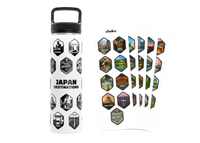
If castles are becoming the spine of your Japan route, the Traveler Bottle I covers 27 first-trip destinations in one piece — designed for first-time visitors who want the route that actually fits in two weeks.
Which Japanese castles do Japanese travelers rate highest?
In jalan.net's 2024 survey of 1,100 Japanese men and women, the top five castles people were glad they visited were Himeji, Matsumoto, Goryokaku, Kumamoto, and Osaka. Himeji's lead is the closest thing Japanese travel has to a unanimous verdict.
The jalan survey is the moat of this guide: not an algorithm's list, but what Japanese travelers reported after actually going. That distinction matters for castles more than for most sights, because a castle's photo and a castle's experience diverge. Some legendary silhouettes hide a concrete stairwell; some modest keeps deliver the best hour of a trip. The survey measures the second thing.
1. Himeji Castle (Hyogo). The White Egret. White-plaster walls, a main keep of five tiers and six floors plus a basement, linked to its smaller keeps by roofed passages, all surviving from the early Edo period. World Heritage since 1993. Entry ¥1,000, last admission 16:00. One surveyed visitor's tip: see it first from the rooftop garden of the building facing the gate, to take in the scale before you climb.
2. Matsumoto Castle (Nagano). A National Treasure keep in black lacquer and white plaster with the Northern Alps behind it. Look for the moon-viewing turret, added in the peaceful Edo years, an act of confidence on a war building. ¥700. A surveyed visitor recommends night, when the keep doubles itself in the moat.
3. Goryokaku (Hokkaido). Not a keep at all: a star-shaped Western-style fortress in Hakodate, finished at the end of the Edo period, now a park with about 1,500 cherry trees. The star only resolves from the adjacent tower (¥1,000; the park itself is free).
4. Kumamoto Castle (Kumamoto). Built by Kato Kiyomasa, the era's master castle-builder, with the curved musha-gaeshi walls that made his name. The 2016 earthquake damage is still being repaired, and the castle turned that into the exhibit: an elevated walkway lets you watch the stonework being rebuilt. The keep interior reopened in 2021. ¥800.
5. Osaka Castle (Osaka). Hideyoshi's statement, rebuilt twice since; today's keep is a history museum with an elevator and an eighth-floor observation deck. ¥600, and children of junior-high age and under enter free, which tells you exactly what it is: the most accessible castle experience in Japan, not the most authentic.
The rest of the survey's top 20 supplies most of this list's picks, and one theme repeats in the visitor comments: the castles people remember pair the building with a view, a moat reflection, an Alps backdrop, a lake from the top floor.
Which castles are the real, original ones?
Nine of our 15 hold surviving architecture: Himeji, Matsumoto, Hikone, Inuyama, Matsue, and Matsuyama with original keeps, Hirosaki's rebuilt-in-1810 keep, plus Bitchu-Matsuyama and Marugame for the purists. The five National Treasure keeps are Himeji, Matsumoto, Hikone, Inuyama, and Matsue.
Beyond Himeji and Matsumoto, the original-keep circuit runs like this:
6. Hikone Castle (Shiga). National Treasure, hereditary seat of the Ii clan, with its keep, turrets, and palace surviving from the early Edo period and Lake Biwa filling the top-floor view. The Genkyuen stroll garden below is included in the ¥1,000 ticket.
7. Inuyama Castle (Aichi). Built in 1537 and often cited as Japan's oldest surviving keep; a National Treasure that remained privately owned by one family until 2004. Small, steep, and worth it for the top-floor balcony over the Kiso River. ¥550.
8. Matsue Castle (Shimane). The keep survived the Meiji demolition order because local citizens bought it back, a fact jalan reports and the town is still proud of. National Treasure, with an open watchtower floor giving 360 degrees over Lake Shinji. ¥680.
9. Matsuyama Castle (Ehime). A surviving keep above Dogo Onsen's town, reached by ropeway, defended by 14-meter folding-screen stone walls and interior stairs jalan measures at about 55 degrees. ¥520.
10. Hirosaki Castle (Aomori). The keep burned by lightning in 1627 and was rebuilt in 1810, which still makes it two centuries old; keep, turrets, and gates are Important Cultural Properties, inside one of Japan's top cherry-blossom parks. ¥320 for the inner grounds. A surveyed visitor's line rings true outside blossom season too: quiet, beautifully kept, trees like escaped bonsai.
For the castle-obsessed, Mapple's enthusiast ranking adds two the surveys under-count: 11. Bitchu-Matsuyama Castle (Okayama), the only mountain castle among the 12 originals, and 12. Marugame Castle (Kagawa), whose four stacked tiers of stone walls Mapple calls the finest ishigaki in Japan.
Photographer's note. Original keeps are dark-timber interiors and bright exteriors, so the picture is almost always outside. Matsumoto wants the blue hour, when the black lacquer holds its edge against the sky and the moat goes still enough to mirror. Himeji wants morning side-light that models the plaster instead of flattening it. Climb every keep anyway: the top floor's view over the moat lines is the photograph the daimyo designed for you.
Which rebuilt castles are still worth the trip?
Goryokaku, Kumamoto, Osaka, Shuri, Tsuruga, and Nagoya all reward a visit if you go for what they actually are: museums, parks, and restoration sites in castle form. Japanese sources are refreshingly blunt about the concrete.
Rebuilds earn their place three ways. Some, like Kumamoto and 13. Shuri Castle (Okinawa), jalan's number six, make the restoration itself the story: Shuri, the red-lacquered Ryukyu royal seat, burned in 2019 and now runs a "visible rebuild" with a public deck at roof height (¥400). Some carry history heavier than their materials: 14. Tsuruga Castle (Fukushima), rebuilt in 1965, wears the only red-tiled keep in Japan, restored in 2011 to its Boshin War appearance (¥410). And some are simply spectacular objects: Nagoya's twin golden shachi carry 88 kg of gold between them, though jalan notes the keep itself is closed for seismic work, so the draw is the fully restored Honmaru Palace and its wall paintings (¥500).
The honest arrow guide, from the sources:
Kumamoto → the walls and the comeback story — go now, while the special walkway shows the repair Osaka → easiest logistics in Japan, museum inside — go for context, not age Nagoya → palace paintings, skip disappointment by knowing the keep is shut Shuri → a different kingdom entirely — go for Ryukyu, not samurai, history
The survey's lower ranks show how deep the domestic habit runs. Jalan's respondents put the Edo Castle ruins in Tokyo's Imperial Palace East Gardens at 16, free to walk, with the base of what was once Japan's tallest keep still climbable; Gifu Castle at 19, Nobunaga's mountaintop perch reached by ropeway; and Oshi Castle at 18, the "floating castle" that outlasted a famous water siege. None of these needs a detour, but each rewards an hour if you're already there.
Two more castles this guide deliberately leaves as mentions: Nijo Castle in Kyoto, whose nightingale floors we cover in our Kyoto bucket list, and Odawara, the Hojo clan's day-trip stronghold south of Tokyo, whose 9-kilometer earthwork ring once held off the era's best generals. Both are good; neither needs a trip built around it.
❤️ If a Japan trip is shaping up around this kind of considered, timed sightseeing, the Traveler bucket-list bottle illustrates the 27 destinations that hold up after the research. Live on Kickstarter now.
Where can you see the castle in the sky?
15. Takeda Castle ruins (Hyogo): stone walls on a 353-meter ridge that float above a sea of clouds on clear mornings from late September to early December. Japanese media calls it the castle in the sky and Japan's Machu Picchu, and views it from the facing mountain at Ritsuunkyo.
No keep survives at Takeda, and it doesn't matter. What remains is a complete mountaintop skeleton of stone walls, which Mapple rates a nationally rare survival, nicknamed Torafusu-jo, the crouching tiger.
The logistics come straight from jalan: the cloud sea forms at dawn in the late-September-to-early-December window, and the classic photograph is taken not from the castle but from the Ritsuunkyo viewpoint on the mountain opposite, about a 40-minute walk up from its car park. Entry to the castle site itself is ¥500, and it closes entirely from January 4 through February. A surveyed visitor's honest report: the clouds had thinned by the time they climbed across to the castle, and it was still worth it.
Takeda is the list's test of intent. Every other entry works as a stop on a bigger route. This one asks for a pre-dawn alarm in rural Hyogo, and pays it back with the single most cinematic castle image in Japan.
It's also the entry that best explains why Japanese castle culture runs deeper than keep-spotting. Nothing at Takeda is a building. What 1,100 survey respondents put in their top 20 is a shape on a mountain: the walls, the mist, and the walk up in the dark. Once ruins count, Japan's castle map roughly triples, and jalan's list quietly makes that argument with Edo Castle's bare keep base ranking above several intact reconstructions.
Free for you: our Tokyo Google Maps list We keep a Google Maps list of the must-see spots around Tokyo - restaurants, cafes, shops, viewpoints, and streets worth the detour. Drop your email and we'll send it over.
What should you know before visiting a Japanese castle?
Three things: the vocabulary that sorts castles by terrain, the stairs, and the seasons. Japanese castle guides classify every site as a plains, hilltop, water, or mountain castle, and the type predicts both the view and the climb.
Mapple's glossary is worth carrying. A hirajiro (plains castle, like Matsumoto) sits at street level with its moat doing the work. A hirayamajiro (hilltop castle, like Himeji) commands a low rise. A mizujiro (water castle) borrows a sea or lake for its defenses, and a yamajiro (mountain castle, like Takeda or Bitchu-Matsuyama) makes you earn it on foot. The type tells you what to expect: plains castles give you reflections, mountain castles give you panoramas, and everything in between trades between the two.
Inside an original keep, expect ladders in stair form. Jalan measures Matsuyama's at about 55 degrees, and its surveyed visitors mention the climb at Matsumoto too. You'll take your shoes off, carry them in a bag, and be glad you wore socks without holes. None of this is a complaint; the interiors survive precisely because nobody modernised them.
Seasons do real work in the survey comments. Hirosaki is one of Japan's most famous cherry-blossom sites, Goryokaku rings its star with about 1,500 blossoming trees, and Matsumae, completed in 1854 at the tip of southern Hokkaido for northern coastal defense, runs roughly 10,000 trees of 250 varieties from April into May. Time a spring castle trip north as the blossom front climbs the country. Serious collectors go year-round anyway: the Japan Castle Foundation maintains an official 100 Fine Castles list, and Japanese castle travelers work through it the way pilgrims work through a temple circuit.
How do you build a castle trip through Japan?
Pick by trip stage, not by ranking. First-timers get Himeji free with the Golden Route and should take it. Repeat travelers should route the National Treasure five, and specialists chase the originals into Shikoku and the mountains.
First trip to Japan: Himeji, done as a half-day between Kyoto and Hiroshima on the shinkansen, plus Osaka Castle for the museum. Zero detour cost, maximum payoff. Second trip: the National Treasure run. Matsumoto from the Alps side, Hikone and Inuyama off the Nagoya-Kyoto corridor, Matsue with an onsen night on the Sea of Japan coast. Castle specialist: Matsuyama and Marugame across Shikoku, Bitchu-Matsuyama's mountain climb, and a Takeda dawn. You'll see almost no foreign travelers on this route.
Prices help the math: nothing on this list costs more than Himeji's ¥1,000, and most originals run ¥320 to ¥700 (all figures from jalan's 2024 article, so confirm before you travel). Castles are the cheapest World-Heritage-grade sightseeing in the country.
They also organize a map. Castles were built to control regions, so a castle route naturally walks you through Japan's prefectures the way the country actually connects: Hyogo to Hiroshima, Nagano over the Alps, Shikoku across the Inland Sea.
A final planning note from the survey data: castles close earlier than you think. Last admission at Himeji is 16:00, and most keeps stop entries between 16:00 and 16:30. Pair a castle with an early start, leave the afternoon for the castle town below it, and check the winter calendars, since Takeda shuts entirely for two months and several northern sites reduce hours. The castle towns repay the leftover afternoon: Matsue's lakeside tea culture, Hikone's old streets down to Lake Biwa, Matsuyama's Dogo Onsen an easy tram ride from the ropeway.
FAQ
How many original castles are left in Japan? Twelve. The genson tenshu survived war, fire, earthquakes, and the Meiji demolition order. Five are National Treasures: Himeji, Matsumoto, Hikone, Inuyama, and Matsue. Every other keep in Japan is a reconstruction.
What is the best castle to visit in Japan? Himeji, by Japanese consensus. It topped jalan.net's 2024 survey of 1,100 travelers, holds World Heritage status, and its early-Edo keep survives as built. ¥1,000, last entry 16:00, so plan a morning.
Is Osaka Castle original? No. Today's keep is the third generation, a modern rebuild housing a history museum, with an elevator. Go for the grounds, walls, and museum, expecting exactly that.
If this list is turning into an itinerary, the Traveler Bottle I holds the destinations we'd recommend pairing with it — designed for first-time travelers building one trip that covers the essentials. Live on Kickstarter now.
Sources
- jalan.net — 2024年版「全国の行ってよかった日本のお城ランキングTOP20」
- Mapple — 日本の城ランキングTOP40
- Rakuten Travel — The Traveler's Guide to Japan's Castles
Activities and tours in Tokyo
cheku is a GetYourGuide partner. We link to tours that handle the parts of travel that eat your time, getting there, booking ahead, language, context you'd otherwise miss. If you book through our link, we earn a small commission at no extra cost to you.


