
Hokkaido weather runs a full register the rest of Japan doesn't: JMA data shows January averaging −3.2°C in Sapporo under 137 cm of monthly snowfall, while August tops out at a civilized 26.4°C. Summer is the escape from Honshu's heat; deep winter is the festival and drift-ice season. Spring and autumn are short, sharp, and underrated.
Hokkaido is the one part of Japan where the weather is the itinerary. The island does nothing by halves: meter-deep city snow in January, lavender fields in July, and a springtime that arrives a full season after Tokyo's.
This guide is the when-to-go companion to our rural Hokkaido guide, which covers the where. The numbers below come from JMA's Sapporo climate normals, and one caveat travels with all of them: Sapporo is Hokkaido's mild corner, and the east and the interior run colder. Either way, this is Explorer Bottle country: the Japan that starts after the Golden Route.
What is Hokkaido's weather actually like, month by month?
Four true seasons, offset cold: winter runs December through March with heavy snow, spring compresses into April and May, summer peaks at Sapporo highs around 26°C in August, and autumn is over by early November, when the snow returns.
The JMA normals for Sapporo, 1991–2020:
| Sapporo (JMA) | Avg high | Avg low | Snowfall | Feel |
|---|---|---|---|---|
| January | −0.4°C | −6.4°C | 137 cm | Full winter, all month |
| February | 0.4°C | −6.2°C | 116 cm | Festival season, still deep |
| April | 11.7°C | 3.4°C | 6 cm | Spring finally lands |
| May | 17.9°C | 9.0°C | — | Blossoms, weeks after Tokyo |
| July | 25.4°C | 17.9°C | — | Lavender, long days |
| August | 26.4°C | 19.1°C | — | Warmest month, mild nights |
| October | 16.4°C | 8.0°C | 1 cm | Fast, bright autumn |
| November | 8.7°C | 1.6°C | 30 cm | Winter's opening act |
Two structural notes from the data. First, Hokkaido has no real rainy season: June, Honshu's soggiest month, is one of Sapporo's drier warm months at 60.4 mm. Second, the wettest stretch is late summer (August 126.8 mm, September 142.2 mm), which is worth knowing for hiking plans but rarely trip-breaking.
When is Hokkaido's winter worth the cold?
Late January through mid-February, when the snow is deepest, the drift ice arrives, and the Sapporo Snow Festival runs. Winter here isn't an obstacle to the trip; it is the trip.
The season's anchor has dates: the 77th Sapporo Snow Festival runs February 4–11, 2027, across its three sites, the great snow sculptures of Odori Park, the ice statues of Susukino, and the family-oriented Tsudome. Book Sapporo beds months out for that window; the city fills.
The rarer spectacle is on the northeast coast: per JAL's Skyward feature, drift ice from the Amur reaches the Shiretoko and Okhotsk shore between January and March, walkable with a guide and cruisable through it. Pair either with the north's steaming bath towns, Noboribetsu foremost, from our onsen towns guide, and the cold starts working for you.
Pack accordingly: January's average low of −6.4°C in mild Sapporo means insulated waterproof boots, real gloves, and layers under a serious coat. City sidewalks are polished ice by February; slow small steps are a local skill.
Why is summer Hokkaido the smartest trip in Japan?
Because from June to August, Hokkaido has the weather the rest of the country wishes it had: highs in the mid-20s, low humidity by Japanese standards, no rainy season, and 19°C summer nights.
While Tokyo and Kyoto grind through the season we describe in Japan in August, Sapporo's August tops out at an average 26.4°C and cools to 19.1°C after dark, per the JMA normals. That gap is the whole pitch. This is when the lavender rows of Furano and the Patchwork Hills of Biei, covered in our Hokkaido guide, do their July performance, and when the island's national parks open their best hiking.
The packing list flips to long-sleeve layers and one real jacket: the data's 17.9°C July nights are genuinely cool, and mountain weather runs colder. The one caution the numbers give: August into September is the island's wettest stretch, so build one flexible day into any hiking week.
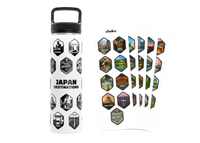
❤️ If you've already done Tokyo and Kyoto and want to go deeper, the Explorer bucket-list bottle covers 46 Japan destinations across 31 prefectures — with stickers to check off as you visit, from Hokkaido to Okinawa. Live on Kickstarter until July 26. Reserve yours now at the best prices we'll offer.
What are Hokkaido's spring and autumn like?
Short and worth catching. Spring lands in late April and May, cherry blossoms weeks after Honshu's; autumn burns through October, with first snow possible before Halloween and 30 cm falling in November.
Spring in the data: April jumps to an 11.7°C average high from March's 4.5°C, and May reaches 17.9°C. The practical translation is that Hokkaido gives Japan its second cherry-blossom season; miss the Honshu bloom and the north offers a rerun. It's also the quietest tourism window of the year.
Autumn moves fast. October's 16.4°C highs come with the island's famous clear light, and by November (8.7°C, 30 cm of snow) the season is functionally over. The reward for the compressed calendar is intensity: the foliage turns hard and all at once, and the crowds of Kyoto's November are nowhere in sight.
Free for you: our Tokyo Google Maps list We keep a Google Maps list of the must-see spots around Tokyo - restaurants, cafes, shops, viewpoints, and streets worth the detour. Drop your email and we'll send it over.
What should you pack for Hokkaido?
Pack for the season you're actually entering, not the one Honshu is having. Winter needs insulated boots and real gloves; summer needs a jacket you'd never carry in Tokyo; the shoulders need both mindsets in one bag.
Winter (December–March). The JMA numbers set the brief: sub-zero averages and meter-scale monthly snowfall mean waterproof insulated boots with real tread (Sapporo's February sidewalks are polished ice), a knee-length insulated coat, gloves, a hat that covers ears, and thermal base layers. Indoors runs hot, so layers you can shed matter as much as layers you can add. Our winter packing list covers the full kit; for Hokkaido, upgrade every item one grade.
Summer (June–August). The 17.9–19.1°C nights in the data are the packing memo: bring the light jacket and one warm layer that Tokyo's summer would laugh at, especially for mornings, mountains, and the coast. Otherwise the summer list applies, minus the heat-survival gear; you won't need the cooling towel.
Spring and autumn. The compressed shoulders swing hard: April can open at 11.7°C and close near freezing after dark, and October does the same in reverse. Layer for a 15-degree daily range, and from mid-October onward, treat the winter boots question as already answered.
One item earns its space in every season: sunglasses. Winter snow-glare and the island's long clear summer light both punish bare eyes on the road.
How does Hokkaido compare season by season?
Summer for first-timers and comfort, deep winter for spectacle, May and October for quiet. The only genuinely weak months are the slushy shoulder weeks of late March and November.
First Hokkaido trip: July or August. The island at full capability, every road open, the famous fields performing, and weather that makes Honshu jealous. The spectacle trip: February 4–11, 2027, Snow Festival plus drift ice in one week, packed and priced accordingly. The quiet trip: late May or early October. Shoulder-season rates, real weather, and the island mostly to yourself.
The months to avoid are the melts: late March's greying snowpack and November's freeze-up, when the data shows winter arriving (30 cm) but the winter attractions haven't. If those are your only options, aim the trip at onsen and food, which never close.
For how Hokkaido's calendar slots against the rest of the country, our season-by-season Japan guide holds the national picture: broadly, Hokkaido is the counter-season play, best exactly when the famous cities are at their worst.
FAQ
What is the best time to visit Hokkaido? Late June–August for the mild summer and lavender; late January–mid-February for deep winter, drift ice, and the Snow Festival (February 4–11, 2027).
How cold does Hokkaido get in winter? Sapporo's January averages −3.2°C with lows around −6.4°C and 137 cm of snowfall in the month, per JMA, and the interior runs colder. Pack for real winter.
Is Hokkaido cooler than Tokyo in summer? Yes: August highs average 26.4°C with 19.1°C nights in Sapporo, and there's no June rainy season. It's Japan's standard summer escape.
When is the Sapporo Snow Festival? February 4–11, 2027, the 77th edition, at Odori Park, Susukino, and Tsudome.
If the north is calling, the Explorer Bottle II features 46 destinations across 31 prefectures — including the Hokkaido stops worth building a season around. Live on Kickstarter now.
Sources
Activities and tours in Tokyo
cheku is a GetYourGuide partner. We link to tours that handle the parts of travel that eat your time, getting there, booking ahead, language, context you'd otherwise miss. If you book through our link, we earn a small commission at no extra cost to you.


