
Japan has 47 prefectures, grouped into eight traditional regions from Hokkaido in the north to Kyushu in the south, with Okinawa often counted as a ninth. Every prefecture has a distinct identity, and most trips only touch three to five of them. This guide walks the whole map, then narrows it to the ones worth a bucket list.
Most Japan itineraries are written city by city. The country itself is organized prefecture by prefecture, and once you start reading the map that way, planning gets easier. Prefectures are how Japanese people describe where food comes from, where onsen towns sit, and where they're going for the long weekend.
We've spent years traveling and photographing Japan by prefecture, and this is the guide we wish existed when we started: all 47 Japan prefectures, region by region, with an honest line on what each one actually offers a traveler.
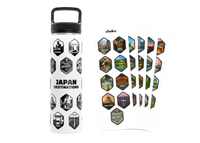
It's also the thinking behind our own products. When we distilled the whole country into the Explorer bucket-list bottle, 46 destinations across 31 prefectures made the cut. The last section of this guide shows that cut, region by region.
How many prefectures does Japan have?
Japan has 47 prefectures. They come in four historical types: one to (Tokyo), one dō (Hokkaido), two fu (Osaka and Kyoto), and 43 ken. For travelers, all four types work identically; the labels are leftovers from the 19th-century reorganisation of the country.
The Japanese term is todōfuken, which is just the four types said in one breath. Each prefecture has an elected governor and a capital city, and each guards its own identity hard: its regional dish, its sake, its dialect, its one thing it insists you try before you leave.
That pride is useful. Ask where anything good comes from, a melon, a knife, a hot spring, and the answer is a prefecture name. Yubari melons, Sakai knives, Kusatsu waters. Learn even ten prefecture names and Japan starts sorting itself.
One naming habit trips up first-time planners: many prefectures share a name with their capital city. Kyoto city sits inside Kyoto prefecture, Hiroshima city inside Hiroshima prefecture, and so on. When a guide says "Kyoto has a beach town," it means the prefecture, whose northern coastline is hours from the temples. Check which one a listing means before you promise anyone a day trip.
A note on scale: prefectures are small. You can cross most of them by train in an hour or two. The exception is Hokkaido, one prefecture that covers roughly a fifth of the country's land area and behaves like a region on its own.
How do Japan's eight regions work?
Regions are geographic groupings of prefectures, not governments: Hokkaido, Tohoku, Kanto, Chubu, Kansai, Chugoku, Shikoku, and Kyushu, with Okinawa often listed separately as a ninth. They're the vocabulary Japan itself uses, and the fastest way to plan at country scale.
Here's the whole country in one table:
| Region | Prefectures | Character | Best for |
|---|---|---|---|
| Hokkaido | 1 | Big-sky farmland, wilderness, snow | Landscape trips, second visits |
| Tohoku | 6 | Rural north: festivals, onsen, samurai towns | Travelers who want Japan without crowds |
| Kanto | 7 | Tokyo and everything around it | First trips, day trips |
| Chubu | 9 | The mountainous middle: Alps, Fuji, old post towns | Scenery + culture in one route |
| Kansai | 7 | The old capital region: Kyoto, Nara, Osaka | First trips, food, temples |
| Chugoku | 5 | Western Honshu: Hiroshima, the Inland Sea | Second trips, islands |
| Shikoku | 4 | Smallest main island: pilgrimage, udon, rivers | Slow travel |
| Kyushu + Okinawa | 8 | Volcanic south + subtropical islands | Onsen, food, beaches |
Regions matter for one planning reason above all: rail routes and weather run along them. A trip that stays within one or two regions flows. A trip that samples four fights the map. Our guide to the best time to see Japan covers how the seasons move across these regions.
The regions also explain Japan's internal rivalries, which are half the fun of traveling here. Kanto and Kansai disagree about broth, escalator etiquette, and comedy. Shikoku and Kyushu each consider their own version of hospitality the real one. You'll eat better once you realize the country argues about food along regional lines, and order accordingly.
What's in Japan's north: Hokkaido and Tohoku?
Seven prefectures of space, snow, and festivals. Hokkaido is Japan's landscape at maximum scale; Tohoku's six prefectures hold the summer festival circuit, samurai districts, and some of the country's best onsen, with a fraction of the visitors.
Hokkaido. One prefecture, one island, about a fifth of Japan's land. Lavender valleys at Furano each July, the patchwork hills of Biei, World Heritage wilderness at Shiretoko, Japan's largest wetland at Kushiro with its red-crowned cranes, and a winter identity built on powder snow and drift ice. It tops domestic want-to-visit surveys year after year, and one visit explains why. We wrote a full guide to rural Hokkaido, because it deserves one.
Tohoku, the six prefectures filling northern Honshu, is the region most first-time visitors skip and most repeat visitors rank first afterwards. Its summer festival week in early August moves from city to city, its onsen towns still look like the postcards, and its shinkansen line makes the whole spine reachable from Tokyo.
Aomori. The northern tip of Honshu. Known for the Nebuta festival's illuminated float parades in August, apples, and Hirosaki's castle town, one of Japan's most famous cherry blossom sites.
Iwate. Hiraizumi's temple gardens, a World Heritage site built as a Buddhist vision of paradise, and the dramatic cliffs of the Sanriku coast. Wanko soba, the all-you-can-eat noodle ritual where a server refills your bowl until you cap it, is the food story.
Miyagi. Sendai, the north's biggest city and its best transit base, and Matsushima Bay, whose pine-covered islets earned a place among Japan's traditional Three Views and a spot on our Explorer list. Beef tongue, grilled over charcoal, is the local obsession.
Akita. Deep-snow country: the samurai district at Kakunodate under its weeping cherries, Lake Tazawa's improbable blue, and the Namahage folk demons who visit houses at New Year. Akita's rice and sake reputation is national, and earned.
Yamagata. Mountain worship at Yamadera's cliff temple, a thousand steps up to the view, and the Dewa Sanzan's pilgrimage peaks, plus Ginzan Onsen, the gaslit hot-spring street that looks lifted from a film set and photographs best under snow. Cherries in summer, deep powder in winter.
Fukushima. Aizu-Wakamatsu's samurai history and red-tiled castle, the Ouchi-juku post town under thatched roofs, and peaches all summer. The largest prefecture in Tohoku and one of the most varied.
What surrounds Tokyo in Kanto?
Kanto's seven prefectures hold the capital and its entire day-trip belt: Ibaraki, Tochigi, Gunma, Saitama, Chiba, Tokyo, and Kanagawa. If it's your first trip, you'll land here, and you'll probably leave the region less than you think.
Tokyo. Its own prefecture, Tokyo-to, containing the 23 wards, western mountain towns around Mt. Takao and Okutama, and a 1,000-km chain of Pacific islands. The most documented city on earth still hides quiet neighborhoods; that contrast is its real subject, and it's where we live and shoot, so most of this site is Tokyo evidence.
Kanagawa. Yokohama's harbor, Kamakura's Great Buddha and hydrangea temples, and Hakone's onsen with Fuji views. Pound for pound the strongest day-trip prefecture in Japan; our day trips from Tokyo guide leans on it heavily.
Chiba. Narita's airport and temple town, the Boso Peninsula's beaches and fishing harbors, and, administratively at least, Tokyo Disneyland. Most travelers only see the airport express window; the peninsula's coastal ramen towns argue for one detour.
Saitama. Kawagoe's Edo-period warehouse street, "Little Edo," is a half-day trip Tokyo visitors consistently underrate, plus the Chichibu mountains, their shrine festivals, and a winter icicle valley.
Ibaraki. Hitachi Seaside Park, where whole hillsides turn blue with nemophila in spring and red with kochia in autumn, plus Kairakuen, one of Japan's three great gardens.
Tochigi. Nikko: the Toshogu shrine complex carved and gilded in its cedar forest, then the waterfalls and lake country of Oku-Nikko above it, a full two-day trip pretending to be a day trip. Ashikaga Flower Park's wisteria tunnels draw their own season of travelers each spring.
Gunma. Onsen royalty. Kusatsu's hot-spring fields steam in the middle of town while bathhouse crews perform the yumomi water-cooling ritual, and Ikaho's stone stairway climbs past bathhouses. Winter adds serious skiing.
What's in Chubu, Japan's mountainous middle?
Nine prefectures between Tokyo and Kyoto, holding the Japan Alps, Mt. Fuji's best sides, and the old merchant and post-town routes. Chubu is where the scenery happens on the way, and the strongest argument for slowing a Golden Route trip down.
Chubu is the region we most often tell people to slow down for. The shinkansen treats it as three hours of tunnels between Tokyo and Kyoto; the traveler who gets off finds the highest mountains in the country, two coastlines, and towns that kept their Edo-period shape because the industrial century happened elsewhere.
Yamanashi. Fuji's north face: the Fuji Five Lakes, Lake Kawaguchi's mirror reflections, and vineyards around Kofu. The classic Fuji photograph is usually taken from here, which is why it earns its place on both of our bottles.
Shizuoka. Fuji's south face, green tea terraces, and the Izu Peninsula's coastal onsen. The shinkansen runs through it; the coastline argues for getting off.
Nagano. The heart of the Alps: Kamikochi's river valley, open spring through autumn and worth a night rather than a coach stop, Matsumoto's black castle, the snow monkeys of Jigokudani, and Karuizawa's forest resort streets an hour from Tokyo by shinkansen.
Gifu. Shirakawa-go's thatched gassho-zukuri farmhouses, a World Heritage site, and Takayama's preserved merchant streets. Gujo Hachiman dances all summer.
Aichi. Nagoya's industrial confidence, miso-everything food culture, morning-coffee traditions, and castle, plus Inuyama's original keep upriver. The transit hub of the middle, and a deeper stop than its reputation admits.
Niigata. Rice and snow. Japan's sake heartland, the terraced Hoshitoge rice fields, and the Kiyotsu Gorge tunnel with its mirror-pool lookout. Sado Island sits offshore.
Toyama. The Tateyama Kurobe Alpine Route, famous for the Yuki no Otani snow corridor, walls of spring snow cut higher than a bus. Toyama Bay's seafood is quietly elite.
Ishikawa. Kanazawa: Kenrokuen garden, geisha and samurai districts, gold leaf on everything. The Noto Peninsula extends north into fishing-village coastline.
Fukui. Zen training at Eiheiji temple, dinosaur fossils, and the Tojinbo cliffs. The least-visited stop on the middle route, which is exactly its appeal.
❤️ For travelers building a longer Japan itinerary, the Explorer Bottle illustrates 46 destinations across 31 prefectures — with stickers to mark off each one as you visit, designed for locals, residents, and repeat travelers. Live on Kickstarter now.
Which prefectures make up Kansai?
Seven prefectures around the old capitals: Mie, Shiga, Kyoto, Osaka, Hyogo, Nara, and Wakayama. Kansai packs more first-trip essentials per square kilometer than anywhere in Japan, and still hides pilgrimage country in its south.
Kyoto. The prefecture runs from the former capital's temples to Amanohashidate, the pine sandbar counted among the Three Views, on the northern coast, with the tea fields of Uji between. The city needs no introduction, only pacing; our Kyoto bucket list covers how to time it around the crowds.
Osaka. Japan's kitchen and its comedy capital. Dotonbori's neon, street food eaten standing, takoyaki and okonomiyaki defended like family recipes, and a castle museum in the middle of it all. The best base for eating your way through Kansai, and the friendliest big city in the country by a comfortable margin.
Nara. Japan's first permanent capital. The Great Buddha at Todai-ji, sacred deer roaming the park, and quieter temple country south of the city.
Hyogo. Himeji Castle, the White Egret, Japan's consensus number-one castle and a World Heritage site, plus Kobe's harbor and beef, and Arima Onsen in the hills. More on the castle in our guide to Japanese castles.
Shiga. Lake Biwa, Japan's largest lake, ringed by cycling routes, Hikone's original-keep castle on the shore, and the lake-standing torii of Shirahige Shrine for the photographers.
Mie. Ise Grand Shrine, the most sacred site in Shinto, rebuilt from scratch every 20 years as an act of renewal, plus the pearl divers and oyster huts of the Shima coast and the pilgrim's snack street of Okage Yokocho.
Wakayama. Pilgrimage country: Mt. Koya's temple lodgings, the Kumano Kodo trails, and Nachi's waterfall beside the Seiganto-ji pagoda, one of Japan's most photographed views.
What's west: Chugoku and Shikoku?
Nine prefectures across the Seto Inland Sea from each other. Chugoku's five hold Hiroshima, Miyajima, and Japan's largest sand dunes; Shikoku's four are the slow island of pilgrimage, udon, and art. This is second-trip Japan at its best.
Hiroshima. The Peace Memorial Park and Dome ask for an unhurried morning; Miyajima's floating torii gate offshore answers it in the afternoon. Okonomiyaki here is a layered, noodle-filled meal with its own downtown food halls, and the argument with Osaka over whose version is correct will outlive us all.
Okayama. Kurashiki's canal quarter, white walls and willows over the water, plus Korakuen garden and the Bizen pottery kilns.
Tottori. Japan's largest sand dunes running into the Sea of Japan, camel silhouettes included, and the Mizuki Shigeru yokai street in Sakaiminato.
Shimane. Izumo Taisha, the shrine where Japan's gods are said to gather each autumn, and Matsue's original-keep castle over a lakeside tea culture.
Yamaguchi. The five-arched wooden Kintaikyo bridge at Iwakuni, the blue Motonosumi shrine gates stepping down to the sea, and fugu cuisine in Shimonoseki.
Kagawa. Japan's smallest prefecture and its udon capital. The ferry hub for Naoshima and the art islands, and Ritsurin, arguably the finest garden in the country.
Ehime. Matsuyama's original-keep castle and Dogo Onsen's grand old bathhouse, plus the Shimanami Kaido, the island-hopping cycling route across the Inland Sea.
Tokushima. The Awa Odori dance festival each August, when the whole city joins in, the whirlpools of the Naruto strait seen from a glass-floored walkway, and the vine bridges of the deep Iya Valley.
Kochi. The wild Pacific side: the Shimanto River's clear water, Katsurahama beach and its statue of local hero Sakamoto Ryoma, seared-bonito tataki, and a Sunday street market that has run for centuries.
What's south: Kyushu and Okinawa?
Eight prefectures of volcanoes, onsen, and islands. Kyushu's seven run on geothermal heat and bold food; Okinawa is a subtropical kingdom of its own, closer to Taipei than to Tokyo.
Fukuoka. The south's big city, famous for yatai street-food stalls along the river at night and tonkotsu ramen at its source. The airport is minutes from downtown, which makes it Japan's easiest big-city landing and the natural gate for a Kyushu loop.
Saga. Porcelain country: Arita and Imari, the towns whose names became the ware, with kiln visits and shard-lined alley walls to prove it. Balloon festivals fill the sky over the plains each autumn.
Nagasaki. A port shaped by centuries of foreign trade, church spires, a Chinatown, and the Peace Park. Gunkanjima, the abandoned battleship island, sits offshore.
Kumamoto. Mt. Aso's vast caldera, one of the world's largest, active and grazed by horses, plus the castle Japanese travelers rank among their favorites even mid-restoration.
Oita. Beppu, Japan's most productive onsen town, where steam rises from street grates and the "hells" are for viewing, not bathing. Yufuin adds the boutique version under Mt. Yufu.
Miyazaki. Takachiho Gorge, where boats row beneath a waterfall between basalt cliffs, and a Pacific coastline that grows surf and mangoes.
Kagoshima. Sakurajima, the volcano that ashes the city across the bay, and Yakushima, the mossy World Heritage island of ancient cedars a ferry ride south.
Okinawa. A former kingdom with its own language, food, and music, annexed into the prefecture system only in the 19th century and still visibly its own place. Shuri Castle's reconstruction in Naha, the Churaumi Aquarium's whale sharks, goya and soki soba on every menu, and the outer islands, Miyakojima and Ishigaki, with some of Asia's clearest water. Fly, don't ferry; the distances are real.
Free for you: our Tokyo Google Maps list We keep a Google Maps list of the must-see spots around Tokyo - restaurants, cafes, shops, viewpoints, and streets worth the detour. Drop your email and we'll send it over.
Which prefectures belong on a bucket list?
All 47 have a reason to exist on a map. Not all 47 belong on a bucket list. When we committed Japan to glass, 46 destinations across 31 prefectures made the cut, weighted toward landscape, pilgrimage, and places that reward the effort of reaching them.
Curation means choosing, so here is how we choose. A bucket-list prefecture needs at least one destination you'd plan a trip around, not just stop at. A pleasant castle town you'd visit if you happened to be passing doesn't qualify. A gorge you'd book a night bus for does. The test is whether the place changes your route, and it filters harder than you'd expect.
It also cuts both ways. Some famous prefectures earn their place on one destination alone (Tottori's dunes carry the whole prefecture onto the list), while some genuinely pleasant ones fall just outside the cut because everything in them is a stop, not a destination. That's not an insult; it's what makes a bucket list mean something.
Applying that test across the regions above gives you a country-sized shortlist:
First trip to Japan: stay with Kanto and Kansai, then add one reach: Hiroshima and Miyajima, or Hakone for Fuji. That's the ground the Traveler bucket-list bottle covers in 27 destinations. Second trip or beyond: this is Explorer territory. Hokkaido's valleys, Tohoku's onsen streets, the Alps, the Inland Sea's art islands, Kyushu's volcanoes, Okinawa's outer islands.
Pace matters more than coverage. The travelers we know who've been happiest with Japan over the years run it as one region per trip: a Kyushu autumn, a Hokkaido July, a winter built around Tohoku snow and onsen. Each trip gets a theme, a base, and slack in the schedule for the place you didn't plan. Counting prefectures is a satisfying habit, and plenty of Japanese travelers keep a 47-count of their own, but the count is the souvenir of good trips, not the goal of them.
The Explorer cut, by region: Shiretoko, Daisetsuzan, Furano, Sapporo, Otaru, and Hakodate in the north; Ginzan Onsen and Matsushima Bay in Tohoku; Nikko, Kusatsu Onsen, Ashikaga Flower Park, and Hitachi Seaside Park in Kanto's outer ring; Kamikochi, Karuizawa, Shirakawa-go, Kiyotsu Gorge, Yuki no Otani, Kanazawa, and the Noto Peninsula through the middle; Ise Grand Shrine, Amanohashidate, Seiganto-ji, and Himeji Castle in Kansai's reach; the Tottori Sand Dunes, Kurashiki, Miyajima, the Shimanami Kaido, and Naoshima across the west; Mount Aso, Beppu, Takachiho Gorge, Sakurajima, and Yakushima in Kyushu; Miyakojima, Ishigaki, and Churaumi in Okinawa.
Read that list against the region walkthrough above and a pattern shows: the cut is weighted toward landscape and pilgrimage over cities, and toward places where arriving takes intent. Forty-six destinations, thirty-one prefectures, one country you will not finish in a lifetime. That's the point of a bucket list, and it's why ours lives on a bottle you fill in over years rather than a checklist you complete in a fortnight.
FAQ
How many prefectures does Japan have? 47. One to (Tokyo), one dō (Hokkaido), two fu (Osaka and Kyoto), and 43 ken. The four types work the same way for travelers.
What are Japan's eight regions? North to south: Hokkaido, Tohoku, Kanto, Chubu, Kansai, Chugoku, Shikoku, and Kyushu, with Okinawa often listed as a ninth. They're geographic groupings, not governments, and they're how the whole country talks about itself.
What is the difference between a prefecture and a state? Japan is a unitary country, so prefectures don't legislate the way US states do. Each has an elected governor, a capital, and a strong local identity: food, sake, dialect, festival.
Which prefecture is Tokyo in? Tokyo is its own prefecture, Tokyo-to. It includes the 23 wards, the western mountains, and Pacific islands stretching over 1,000 km south.
How many prefectures should a first Japan trip cover? Three to five in two weeks. Tokyo, Kanagawa, Kyoto, Nara, and Osaka is the classic count. More than that and you're collecting train stations.
❤️ If you've already done Tokyo and Kyoto and want to go deeper, the Explorer bucket-list bottle covers 46 Japan destinations across 31 prefectures — with stickers to check off as you visit, from Hokkaido to Okinawa. Live on Kickstarter now.
Activities and tours in Tokyo
cheku is a GetYourGuide partner. We link to tours that handle the parts of travel that eat your time, getting there, booking ahead, language, context you'd otherwise miss. If you book through our link, we earn a small commission at no extra cost to you.


