
Kabukicho is Tokyo's largest entertainment district, a few hundred meters of neon, cinemas, food halls, bars and host clubs on the northeast side of Shinjuku Station. It is loud, overwhelming and genuinely worth seeing. We live in Tokyo and photograph it. Here's how to do Kabukicho well, and how to avoid its one real trap.
Kabukicho has a reputation, and the reputation is half right. Yes, it is Tokyo's red-light district. Yes, it is the densest concentration of neon, bars and host clubs in the country. But the version most first-time visitors actually experience in 2026 is a walkable, photogenic, mostly harmless block with a giant Godzilla on the skyline and a brand-new entertainment skyscraper at its center.
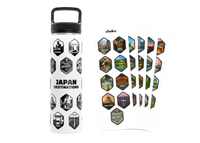
The trick is knowing what to walk toward and what to walk past. Kabukicho rewards the curious visitor and quietly fleeces the careless one, and the difference between those two outcomes is about three rules you can learn in a paragraph. Kabukicho sits in Shinjuku, one of the Tokyo destinations on the Traveler Bottle, the bucket-list bottle we built for first-time visitors who want the version of Japan that holds up after the research.
After seven years living and shooting in Tokyo, here is our honest guide to Kabukicho: what to do, where to eat, what to skip, and how to keep the night fun rather than expensive.
What is Kabukicho, and what is it actually like?
Kabukicho is the entertainment and nightlife district immediately northeast of Shinjuku Station. It packs cinemas, a major entertainment tower, izakaya, ramen shops, karaoke, game arcades, host and hostess clubs and bars into a few tight blocks. It runs 24 hours and is often called Tokyo's 'sleepless town.'
The name confuses people, so here is the quick history. After the Second World War, the area was earmarked for redevelopment, and the plan included a kabuki theater. The theater was never built. The name stuck anyway, and Kabukicho became an entertainment district of a very different kind.
What it is actually like depends entirely on the hour. By day it is an ordinary, slightly worn city block: people running errands, cinema-goers, delivery vans. From late afternoon the signs switch on and the character changes. By 9pm it is the Kabukicho of the photographs, a canyon of light with touts on some corners and crowds flowing toward the cinemas, the bars and the tower.
For a visitor, the honest framing is this. Kabukicho is a spectacle first and a destination second. You do not come here to tick off monuments. You come to walk through one of the most intense streetscapes on earth, eat well, maybe sing or drink, and leave. Treated that way, it is one of the most memorable couple of hours in Tokyo.
It is also compact. The core of Kabukicho is a grid you can cross in ten minutes. That is worth knowing, because the sheer wattage of the place makes it feel bigger and more chaotic than its actual footprint.
Where is Kabukicho, and how do you get there?
Kabukicho is on the northeast side of Shinjuku Station. From the station's East Exit it is a three to five minute walk north. The clearest landmark to aim for is the large red Kabukicho arch gate over the main entrance street. Omoide Yokocho sits on the opposite, western side of the same station.
Shinjuku Station is the busiest in the world, but reaching Kabukicho from it is simple if you commit to one direction. Follow signs for the East Exit. Once outside, head north, away from the station. Within a few minutes you reach the famous red Kabukicho gate arch, which marks the main approach street.
A few practical pointers:
- From JR lines (Yamanote, Chuo, Saikyo), the East Exit is your target. Seibu-Shinjuku Station, on the Seibu line, actually sits even closer to Kabukicho's northern edge.
- From the Tokyo Metro, the Marunouchi, Fukutoshin and Oedo lines all serve Shinjuku or Shinjuku-sanchome, and Kabukicho is a short walk from any of them.
- Coming from Omoide Yokocho, you simply cross from the west side of the station to the east. The two districts get paired in every guide, but they sit on opposite flanks of Shinjuku Station, about a ten-minute walk apart.
One orientation note that saves confusion: Golden Gai, the famous cluster of tiny bars, is on Kabukicho's eastern edge, near Hanazono Shrine. People often expect it in the bright core and then cannot find it. It is quieter and a couple of blocks east of the neon.
What are the best things to do in Kabukicho?
The headline stops are the Tokyu Kabukicho Tower, an entertainment skyscraper with a themed food hall and cinemas; Godzilla Road, the street watched over by the Godzilla head on Hotel Gracery; and the simple act of walking the neon core after dark. Add karaoke, a game arcade or a hot-spring bathhouse depending on your energy.
Kabukicho is not a list of monuments, so think of it as a set of experiences rather than sights. Here are the ones worth your time.
Tokyu Kabukicho Tower. Opened in 2023, this is the district's newest landmark, a tall entertainment skyscraper near the center of Kabukicho. The lower floors are the part most visitors want: a food hall themed around Japan's regional cuisines and festivals, an entertainment and games complex, and premium cinema screens. Upper floors hold hotels and live-music and theater venues. It is the easiest, most family-friendly entry point into Kabukicho, and a useful weather-proof anchor for an evening.
Godzilla Road and the Godzilla head. The street officially called Central Road is universally known as Godzilla Road, because a huge Godzilla head looks down from the terrace of the Hotel Gracery building partway along it. The hotel also houses one of Tokyo's big cinemas. The head lights up and, at scheduled times through the day, produces a roar and a little show. It is free, it is genuinely fun, and it is the most reliable photo in Kabukicho.
Walking the neon core. Do not underrate this. The single best thing to do in Kabukicho is simply walk its main streets after dark with no agenda, looking up. The density of signage is the attraction.
Karaoke, arcades and a bathhouse. Kabukicho has large karaoke buildings open very late, multi-floor game arcades, and a multi-story hot-spring bathhouse where you can soak after a long day of walking. Any of these turns a walk-through into a proper night out.
Here is how the three main zones compare, so you can plan a route:
| Tokyu Kabukicho Tower | Godzilla Road & core | Golden Gai | |
|---|---|---|---|
| What it is | Modern entertainment skyscraper | The bright, busy neon heart | Six lanes of tiny bars |
| Best for | Families, first-timers, bad weather | Photos, the spectacle, dinner | Drinks with character, late |
| When to go | Afternoon into evening | After dark, from 7pm | Later, from 9pm onward |
| Good to know | Indoor, easy, no touts | Stick to the main streets | Some bars charge a cover |
One landmark that is no longer here, because guidebooks still list it: the Robot Restaurant, the neon dinner show that defined Kabukicho's image for foreign visitors through the 2010s, closed in 2020. Its operators have since opened a successor show in the district along similar lines, so the genre lives on, just not at the old address.
Is Kabukicho safe, and what should you watch out for?
Kabukicho is generally safe to walk through, including late at night, and violent crime against tourists is rare. The genuine risk is financial: touts who steer you into bars with hidden charges, and overcharging scams called bottakuri. Three rules cover you completely — never follow a tout, only enter places you picked yourself, and check that prices are posted before you sit.
This section matters more than any other, so we are going to be direct about it.
Kabukicho's reputation makes people picture danger as muggings and violence. That is not the real risk. As a visitor walking the main streets, you are very unlikely to face anything threatening. The actual risk is your wallet, and it works through scams, not force.
Touts (kyakuhiki). You will be approached, especially after dark, by people offering bars, clubs and shows. They are usually friendly and persistent. Touting is restricted under local rules, but it happens anyway. The rule is absolute: do not follow a tout anywhere. A bar a tout walks you to is a bar designed to overcharge you. A bar you found yourself is just a bar.
Bottakuri (overcharging scams). The classic version: a cheap drink or a low cover is advertised, and the final bill is enormous, padded with seating fees, service charges and surprise table charges, sometimes enforced aggressively. This is the single thing that ruins visitors' nights in Kabukicho.
How to stay completely clear of it:
- Never follow a tout. This alone removes most of the risk.
- Avoid unmarked bars up unmarked stairs. If you cannot see the venue and its prices from the street, do not go up.
- Choose ground-floor places with menus and prices posted, or known chains, or somewhere you researched in advance.
- Be skeptical of "free" anything. A free drink or free entry offered by someone on the street is the hook.
Follow those and Kabukicho is a fun, safe night out. Ignore them and it can be an expensive lesson. Families and first-timers should simply stay on the bright main streets, around the Tokyu Kabukicho Tower and Godzilla Road, where there is nothing to worry about at all.
Where should you eat and drink in Kabukicho?
For food, Kabukicho is full of reliable choices: ramen shops, izakaya, the themed food hall inside the Tokyu Kabukicho Tower, and the restaurants lining Godzilla Road. For drinks with real character, Golden Gai on the eastern edge is the standout. Pick places yourself, check prices, and you will eat and drink well.
Kabukicho will not leave you hungry. The challenge is choosing well in a place built to grab your attention.
Ramen and casual food. Kabukicho and the streets immediately around it are dense with ramen, gyoza, donburi and curry shops. Many run very late, which is part of the point of a 24-hour district. Look for the small shops with a queue of locals and a ticket machine at the door. Ordering from a ticket machine removes any pricing surprise entirely, which is a quiet bonus here.
The Tokyu Kabukicho Tower food hall. The themed food hall on the tower's lower floors gathers regional Japanese dishes under one roof in a lively, festival-styled setting. It is a genuinely good option for groups who cannot agree, for families, and for anyone who wants variety without walking the streets. Prices are clear and there are no touts indoors.
Godzilla Road restaurants. The street under the Godzilla head is lined with restaurants, many of them larger izakaya and chain dining. It is convenient and it is fine, with the usual rule applying: read the menu and prices before you sit.
Drinks. For a straightforward drink, the izakaya and standing bars across Kabukicho do the job. For something memorable, walk east to Golden Gai, covered in its own section below. It is the most characterful place to drink in the district by a wide margin.
If your trip is being planned around food stops as much as sights, the Traveler Bottle features the 27 destinations first-time visitors plan around, including the food cities worth a full day.
Free for you: our Tokyo Google Maps list We keep a Google Maps list of the must-see spots around Tokyo - restaurants, cafes, shops, viewpoints, and streets worth the detour. Drop your email and we'll send it over.
What is there to do in Kabukicho during the day?
Daytime Kabukicho is calmer, tout-free and underrated. The Tokyu Kabukicho Tower's food hall and entertainment floors are open, Thermae-yu is a multi-floor hot-spring bathhouse you can sink into for hours, Hanazono Shrine sits quietly on the eastern edge, and Godzilla Road photographs beautifully without the night crowds. It is the best window for families and nervous first-timers.
Almost every guide treats Kabukicho as a night-only district. That is a mistake. The daytime version is a completely different, much gentler place, and for some travelers it is the better visit.
The Tokyu Kabukicho Tower runs through the day. The food hall, the games and entertainment floors and the cinemas are all daytime-friendly, and the tower works well as a rainy-afternoon plan.
Thermae-yu is a large hot-spring and sauna complex right in Kabukicho, with several floors of indoor and outdoor baths. Soaking in a natural hot spring in the middle of one of the world's busiest entertainment districts is exactly the kind of contrast Tokyo specializes in. It is open very late as well, so it also works as a wind-down after a long evening.
Hanazono Shrine, on Kabukicho's eastern edge near Golden Gai, is a working Shinto shrine that most Kabukicho visitors walk straight past. It is quiet, free, and a genuine pocket of calm. In November it hosts the lively Tori-no-Ichi fair, when stalls sell decorated rakes believed to bring good fortune.
Godzilla Road by day is the easiest time to get a clean photograph of the Godzilla head, with daylight on it and far fewer people in the frame.
There is also a long-running rooftop batting center in the area for anyone who wants a genuinely offbeat hour. Daytime Kabukicho will not overwhelm you, and there are no touts before dark. If Kabukicho's reputation has made you hesitant, come in the afternoon first.
What is Golden Gai, and should you go?
Golden Gai is a small grid of six narrow alleys on the eastern edge of Kabukicho, crammed with around 200 tiny bars, each seating only a handful of people. It is the most atmospheric place to drink in Shinjuku. Go if you want character and conversation over scale; check for a cover charge, and respect that these are very small rooms.
Golden Gai is the single most distinctive corner of the whole Kabukicho area, and it deserves its own section because it works on completely different rules from the neon core.
Picture six tight lanes, two stories of tiny bars stacked along each one. Most bars seat between five and ten people. Many have a theme, a tradition, a particular owner's personality. Historically, a number of them were effectively members' clubs for regulars, which is why Golden Gai had a slightly closed reputation. In 2026 that has softened considerably, and many bars now openly welcome visitors, often with a sign by the door making that clear.
A few things to know before you go:
- Cover charges are common. A lot of Golden Gai bars add a small seating charge. This is normal and openly part of how a five-seat bar survives. It is not a scam as long as it is posted, and in Golden Gai it usually is. Look for the sign.
- Look for tourist-friendly signs. Bars that want passing visitors say so. Bars that prefer regulars also say so. Respect both.
- These rooms are tiny. A group of six can fill an entire bar. Travel in small numbers, keep your voice at the room's volume, and do not bar-crawl with a large group.
- It is a later stop. Golden Gai comes alive from around 9pm. Earlier than that, many bars are still closed.
Should you go? If you want a polished cocktail in a big stylish room, no. If you want to sit knee-to-knee with an owner and a few strangers in a bar the size of a walk-in cupboard, it is one of the best nights out in Tokyo. The lanes are also a photographer's gift, dense with hand-painted signs and warm light, but they are narrow and the bars are private, so shoot the alleys, not through doorways, and keep moving.
Visiting Kabukicho with kids or on a first Tokyo trip: come in the late afternoon, stick to the Tokyu Kabukicho Tower and Godzilla Road, eat in the food hall, and head out before the late crowd builds. Nothing to manage, all the spectacle. You want the genuine nightlife: come after 9pm, ignore every tout completely, eat at a ticket-machine ramen shop, then pick your own bar in Golden Gai. That is the real Kabukicho, on your terms.
How do you plan a Kabukicho night, and what's nearby?
Build Kabukicho into a Shinjuku evening rather than treating it as a whole night on its own. A strong sequence: an early-evening start on Godzilla Road, dinner, the Tokyu Kabukicho Tower or karaoke, then a drink in Golden Gai. Omoide Yokocho, the Tokyo Metropolitan Government Building and the rest of Shinjuku are all a short walk away.
Kabukicho's core is small, so the skill is in pacing and pairing rather than racing a checklist. Here is a sequence that works.
Early evening. Arrive around 6pm to 7pm, when the neon is on but the streets are not yet at full crush and the touts are fewer. Start on Godzilla Road, get the Godzilla photo, and walk the main streets to absorb the scale.
Dinner. Eat next, while you are hungry and clear-headed. A ticket-machine ramen shop or the Tokyu Kabukicho Tower food hall both remove any pricing guesswork.
The middle of the night. This is your flexible block. Karaoke, a game arcade, a film at one of the big cinemas, or a long soak at Thermae-yu. Pick by energy level.
Late. Finish in Golden Gai with a drink or two in a bar you chose yourself.
What is nearby. Kabukicho rewards being treated as one stop in a bigger Shinjuku evening. On the opposite side of the station, Omoide Yokocho offers the narrow-lane, charcoal-grill counterpart to Kabukicho's wide-open neon. The Tokyo Metropolitan Government Building, with its free observation decks, is about fifteen minutes west. And Shibuya, three minutes south by train, is the natural pairing if you want a second night of Tokyo at full volume.
If you would rather have the whole Tokyo picture mapped out before you land, the cheku Tokyo Travel Guide goes deep on how Shinjuku connects to the rest of the city and how to pace a trip across its districts.
Kabukicho is exactly the kind of place the Traveler Bottle was built around: a destination that looks unreal in a photo and turns out, with a little local knowledge, to be even better in person. If Tokyo is on your route, give Kabukicho an evening, go in with the three rules, and enjoy the loudest few hours in Japan.
FAQ
What is Kabukicho famous for?
Kabukicho is Tokyo's largest entertainment and nightlife district, on the northeast side of Shinjuku Station. It is famous for wall-to-wall neon, the Godzilla head looming over Hotel Gracery, the Tokyu Kabukicho Tower entertainment skyscraper, host and hostess clubs, and a 24-hour energy that has earned it the nickname "the sleepless town."
Is Kabukicho safe for tourists?
Kabukicho is generally safe to walk through, including at night, and violent crime against visitors is rare. The real risk is financial: touts who steer people into bars with hidden charges, and overcharging scams known as bottakuri. The simple rule keeps you safe — never follow a tout, and only enter places you chose yourself with prices clearly posted.
What is there to do in Kabukicho during the day?
Daytime Kabukicho is calmer and tout-free. The Tokyu Kabukicho Tower has a themed food hall, an entertainment complex and cinemas; Thermae-yu is a multi-floor hot-spring bathhouse; Hanazono Shrine sits quietly on the eastern edge; and Godzilla Road is easy to photograph without the night crowds. It is the best window for families and first-timers.
How long should you spend in Kabukicho?
An evening is enough for most visitors — two to four hours covers Godzilla Road, the Tokyu Kabukicho Tower, dinner, and a drink in Golden Gai. Kabukicho is a district you experience rather than tick off, so the right length depends on how much of the nightlife you want, not on a list of must-see sights.
What is the difference between Kabukicho and Golden Gai?
Golden Gai is a small cluster of six narrow alleys on the eastern edge of Kabukicho, packed with around 200 tiny bars that each seat only a handful of people. Kabukicho is the much larger entertainment district around it. Golden Gai is the quieter, more characterful drinking corner; the rest of Kabukicho is brighter, bigger and louder.
Activities and tours in Tokyo
cheku is a GetYourGuide partner. We link to tours that handle the parts of travel that eat your time, getting there, booking ahead, language, context you'd otherwise miss. If you book through our link, we earn a small commission at no extra cost to you.


