
Omoide Yokocho is a knot of narrow lanes beside Shinjuku Station, lined with dozens of tiny eateries that mostly seat under ten people each. The draw is charcoal-grilled yakitori and motsu, cold beer, red lanterns and a thick wall of smoke. We live in Tokyo and photograph it. Here's how to actually do it well.
If you have seen one photo of Tokyo nightlife, there is a good chance it was shot in Omoide Yokocho. The lane is barely wide enough for two people to pass. Red lanterns hang the length of it. Smoke from the grills sits in the air and catches the light. It looks, in a single frame, like every idea a first-time visitor has of Tokyo.
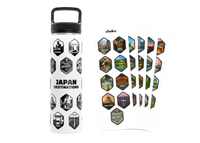
The good news is that the reality holds up. Omoide Yokocho is not a film set. It is a working row of grills and bars that has been feeding Shinjuku since the late 1940s, and people eat here every night because the food is genuinely good. Omoide Yokocho sits inside Shinjuku, one of the Tokyo destinations on the Traveler Bottle, the bucket-list bottle we built for first-time visitors who want the version of Japan that survives the research.
After seven years living and shooting in Tokyo, here is our honest guide to Omoide Yokocho: what to eat, when to go, how to order without stress, and what most guides skip.
What is Omoide Yokocho, and why does it matter?
Omoide Yokocho is a small grid of alleys on the northwest side of Shinjuku Station, filled with dozens of tiny restaurants and bars. Most are counter-only and seat under ten people. It started as a post-war black market in the late 1940s and grew into a yakitori and izakaya district that survived while the rest of Shinjuku rebuilt itself in glass and steel.
The name translates to "Memory Lane." For decades it carried a blunter nickname, Shomben Yokocho, which politely means something close to "Piss Alley," from the years before the lane had proper toilets. Both names still get used. The official one is on the signs; the older one is in a lot of guidebooks.
The history is the point. After the Second World War, Shinjuku's open-air black market filled the space beside the railway. Food stalls clustered where the crowds were, and that cluster slowly hardened into permanent shops. A fire in 1999 destroyed part of the north end, and that section was rebuilt. What you walk through today is a mix of shops that have been in the same families for generations and newer ones that took over after the fire.
What makes it matter for a visitor is contrast. Step out of Shinjuku Station's west side and you are surrounded by department stores, electronics floors and skyscrapers. Walk two minutes and you are in a lane that has not changed shape in generations. Tokyo does this better than almost any city: the very old and the very new sitting one doorway apart.
It is also small. The whole district is a handful of connecting lanes you can walk end to end in five minutes. That compactness is why it works as an evening stop rather than a destination you plan a day around.
Where is Omoide Yokocho, and how do you get there?
Omoide Yokocho sits directly beside Shinjuku Station on its northwest side, wedged between the station building and the JR rail tracks, near the West Exit and Ome-kaido. From inside the station it is a one to two minute walk. It is the opposite side of the station from Kabukicho.
Shinjuku Station is the busiest railway station in the world, and that can make the approach sound harder than it is. It is not. Aim for the West Exit and then for the corner of the station nearest Ome-kaido. Omoide Yokocho is the low, lantern-strung block right there, pressed up against the train lines. You will likely smell the grills before you see the entrance.
There are several entrances into the lane network, because the district is a small grid rather than a single street. Any of them work. Walk in from one side and you will come out the other within a couple of minutes.
A few practical notes on getting there:
- From the JR Yamanote or Chuo lines, follow signs for the West Exit. Omoide Yokocho is among the closest things to that exit.
- From the Tokyo Metro Marunouchi Line or the Odakyu and Keio lines, the West Exit area is again your target. Shinjuku Station's signage is good once you commit to one exit.
- Coming from Kabukicho, you cross under or around the station to the west side. The two districts get mentioned together constantly, but they sit on opposite flanks of Shinjuku Station.
If you are walking the wider area, the Tokyo Metropolitan Government Building, with its free observation decks, is about ten minutes further west on foot. It pairs neatly with an Omoide Yokocho dinner: viewpoint at sunset, grills afterwards.
What should you eat in Omoide Yokocho?
Lead with the grills. Omoide Yokocho is built on charcoal-cooked yakitori, which is skewered chicken, and motsu-yaki, which is skewered pork or beef offal. Beyond the grills you will find soba and ramen counters, gyoza, oden in the colder months, and a scattering of small bars. The move is to order a few skewers, a drink, and let the smoke do the rest.
Here is what the food landscape actually looks like, shop type by shop type.
Yakitori and motsu-yaki. This is the heart of it. Yakitori is grilled chicken, usually ordered by the skewer: thigh, skin, meatball, and cuts most travelers never see at home. Motsu-yaki, sometimes called horumon, is grilled offal, mostly pork, and it is a Shinjuku speciality with real depth of flavor. If offal is not for you, plain chicken skewers are everywhere. Order two or three to start, see how you feel, order more. Skewers are cheap individually and the bill builds gently.
Soba and noodle counters. Several shops do soba, udon or ramen, and a few of these open for lunch as well as the evening. A bowl of noodles at a standing or counter shop is one of the fastest, cheapest, most honest meals in Tokyo. It is also the lowest-pressure way to experience the lane if a smoky izakaya feels like a lot.
Bars and izakaya. Some shops are less about a full meal and more about a drink and a small plate. These are where the lane gets loud and convivial after about 8pm. A few have leaned into international visitors with English menus and Thai or other non-Japanese dishes, which is fine, but the classic Omoide Yokocho experience is a Japanese grill counter.
Use this to decide where to sit:
| Yakitori & motsu grills | Soba & noodle counters | Bars & small izakaya | |
|---|---|---|---|
| What you get | Charcoal skewers, ordered a few at a time | A fast bowl of noodles, one sitting | Drinks and small plates, slow pace |
| Best for | The full Omoide Yokocho experience | A quick, cheap, low-pressure meal | Settling in for a couple of hours |
| When to go | Early evening for a seat | Lunch or early evening | After 8pm when the lane fills |
| Good to know | Expect smoke and a seating charge | Often the easiest first stop | Some are tiny and regulars-heavy |
One honest note on value: most counters add a small seating charge, the otoshi, which usually arrives as a token first dish. It is normal Japanese izakaya practice, not a tourist scam. Budget a little above the skewer prices and carry cash, and the bill will land roughly where a casual izakaya anywhere in Tokyo would.
When is the best time to visit Omoide Yokocho?
Go in the early evening, between about 5pm and 7pm. The lanterns are lit, every grill is working, and you can still get a counter seat before the after-work rush. Visit later and the atmosphere peaks but seats get hard to find. For the quietest version, a few noodle counters open at lunch.
Omoide Yokocho has three distinct moods across a day, and which one you want depends on what you are there for.
Lunchtime is the quiet version. Not every shop opens, but the soba and ramen counters that do are calm, easy and cheap. There is no queue energy, no smoke haze yet. This is the right slot if you want to see the lane without committing to a full izakaya evening, or if your evenings are booked with something else.
Early evening, roughly 5pm to 7pm, is the sweet spot and the slot we would send a first-time visitor to. The light is dropping, the lanterns come on, the grills are at full output, and you can still walk into most shops and find a stool. You get the full sensory version of Omoide Yokocho with the practical advantage of actually getting a seat.
Later evening, from 8pm onward, is Omoide Yokocho at maximum. The lane is loud, full and properly atmospheric, especially Thursday through Saturday. The trade-off is real: many counters will be full, and with shops this small there is no waiting area, just the lane. If you come at this hour, be ready to walk the grid and take whatever seat opens.
Weather matters too. A light rain actually improves the place. Wet ground doubles every lantern and every neon sign, and the lane stays busy because it is mostly covered. The one combination to avoid is a hot, humid August night, when standing-room crowds plus charcoal grills plus no air conditioning in the lane itself is a lot to ask of anyone.
How do you order and pay in Omoide Yokocho?
Most shops are tiny counters run by one or two people. Sit where you are pointed, order a drink first, then a few skewers or a dish, and expect a small seating charge. Carry cash. Some shops take cards and have English menus now, but cash and a few pointing gestures will get you through any of them.
The mechanics of Omoide Yokocho intimidate people more than they should. Here is the whole process, demystified.
Getting a seat. Shops seat four to ten people. If there is a stool free, you can usually just take it; if the owner is managing the counter, wait a beat for a nod. If a shop is full, do not hover in the doorway, just move on. There are dozens of others a few steps away.
Ordering. Order a drink first. Beer, a highball, sake, oolong tea if you are not drinking. Then look at what the counter next to you is eating, because that is the menu working better than any translation. Many shops now have English or photo menus. Where they do not, pointing is completely normal and nobody minds. Order in small rounds rather than all at once.
The seating charge. Expect the otoshi, the small cover charge with a token dish. It is standard. It is not a scam, and being annoyed by it just marks you as someone who did not read this paragraph.
Paying. Carry cash. More shops take cards every year, but the smallest counters still run on cash, and the last thing you want is to discover this at the end of the meal. Pay at the counter when you are done. Tipping is not a thing in Japan, so do not do it.
Etiquette that keeps it pleasant. These counters are small and the turnover matters to a one-person business. Eat, drink, enjoy it, and do not camp on a stool for three hours over one beer. Keep bags on your lap or under the counter. Ask before photographing the owner or other diners. Smoking rules vary shop to shop, so glance for signs.
Free for you: our Tokyo Google Maps list We keep a Google Maps list of the must-see spots around Tokyo - restaurants, cafes, shops, viewpoints, and streets worth the detour. Drop your email and we'll send it over.
What is it actually like to visit, and is it worth it?
Omoide Yokocho is loud, tight, smoky and brilliant, and it is not for everyone. If you want atmosphere, grilled food and a piece of old Shinjuku, it is one of the best evenings in Tokyo. If you need space, quiet or a calm sit-down dinner, it can feel like a lot. Going in with the right expectation is the whole game.
Let us be honest about the experience, because the photographs only tell half of it.
The lane is genuinely narrow. You will brush past people. The smoke gets in your clothes and your hair, and it will still be there tomorrow. The shops are small enough that you are effectively eating with strangers, sometimes elbow to elbow. It is warm near the grills. None of this is a flaw. It is the entire character of the place, and it is why a meal here feels like something rather than just dinner.
What you get in return is one of the most alive corners of Tokyo. The owner working a grill they have worked for thirty years. The office workers two stools down loosening their ties. The particular sound of a place where everyone is close enough to hear everyone else. That density is the product.
The Traveler Bottle we mentioned earlier exists for exactly this kind of stop. If you are stringing together a first Japan trip and ticking off the places that turn out to be worth it, the Traveler Bottle covers 27 of them across the country, designed for first-time visitors building a route that fits in two weeks.
The photographer's eye. Omoide Yokocho is one of the most rewarding lanes in Tokyo to shoot, and most people get it slightly wrong. The mistake is shooting at full dark. Come instead in the blue hour, the half hour after sunset, when the sky still holds a deep blue and the lanterns and grill-glow read warm against it. Stand at one end of a lane and shoot straight down it: the proportions are tall and narrow, so frame vertically and let the run of red lanterns compress into a line. The smoke is your friend. A grill exhaling into a shaft of lantern light is the shot. Shoot slightly into the light sources rather than with them behind you, expose for the lanterns, and let the shadows fall. Be quick and courteous, because this is a working lane, not a set. Step to the side, let people through, and ask before you photograph anyone behind a counter.
First night in Tokyo: Omoide Yokocho early, around 6pm, for a few skewers and a beer. It is the fastest way to feel like you have arrived, and an early seat removes all the stress. You have spent time in Tokyo before: come at 9pm on a weeknight, skip the shops with picture menus out front, and settle in at a quieter counter for the version regulars actually keep coming back for.
What can you do near Omoide Yokocho?
Omoide Yokocho is small, so build an evening around it. Within a short walk you have the free observation decks of the Tokyo Metropolitan Government Building, the full neon sprawl of Kabukicho on the other side of the station, and the rest of Shinjuku's food and shopping. Treat the lane as one stop in a Shinjuku evening, not the whole night.
Because you can eat your way through Omoide Yokocho in under two hours, the question is what brackets it. Here are the natural pairings.
The Tokyo Metropolitan Government Building is roughly ten minutes west on foot. Its two observation decks are free, open into the evening, and give you a wide night view over the city, with Mount Fuji on clear days. Doing the deck at sunset and the grills afterwards is one of the best-value evenings in Shinjuku, because the expensive part costs nothing.
Kabukicho is the other obvious move. Tokyo's largest entertainment district sits on the opposite side of Shinjuku Station, a brighter, louder, later counterpart to Omoide Yokocho's narrow lanes. If you want to keep the night going, our guide to things to do in Kabukicho covers what is worth your time there and what to walk past.
The rest of Shinjuku is simply enormous. Department store food halls, izakaya, bars, cinemas and shopping radiate out from the station in every direction. Omoide Yokocho is one small, concentrated flavor of a district you could spend days in.
If you are based further out and want the wider Tokyo picture rather than just one neighborhood, the cheku Tokyo Travel Guide goes deep on how the city's districts connect and which ones reward a full day. Omoide Yokocho is the kind of stop it slots into a Shinjuku evening, not a thing you cross the city for on its own.
For a different but related slice of Tokyo street life, the lanes and street food of Harajuku one stop south make a good daytime counterweight to a Shinjuku night.
If Omoide Yokocho is going on your Tokyo list, the Traveler Bottle holds the destinations we would pair with it, designed for first-time travelers building one trip that covers the essentials without backtracking.
FAQ
What is Omoide Yokocho famous for?
Omoide Yokocho is a cluster of narrow lanes beside Shinjuku Station packed with dozens of tiny eateries, most of them counter-only with four to ten seats. It is famous for charcoal-grilled yakitori and motsu-yaki, its post-war black-market origins, and the smoke, red lanterns and cramped atmosphere that make it one of Tokyo's most photographed alleys.
Is Omoide Yokocho expensive?
It is mid-range, not cheap and not a splurge. Most yakitori and motsu skewers are priced per piece, drinks are standard izakaya prices, and many shops add a small seating charge called otoshi that comes with a token first dish. A typical visit of a few skewers and a drink or two lands in the same range as a casual izakaya meal anywhere in Tokyo.
What is the best time to visit Omoide Yokocho?
Early evening, from around 5pm to 7pm, is the best window. The lanterns are lit, the grills are going, and you can still get a counter seat before the after-work crowd fills every shop. Later in the evening the atmosphere is at its peak but seats are scarce. A few soba and noodle counters also open for lunch.
Is Omoide Yokocho worth visiting?
Yes, if you want one of the most atmospheric meals in Tokyo and you go in knowing what it is. It is a tight, smoky, loud row of tiny shops, not a polished restaurant district. If you want space, quiet or an English-heavy menu it can feel overwhelming. For the experience of old Shinjuku and good grilled food, it is worth an evening.
Activities and tours in Tokyo
cheku is a GetYourGuide partner. We link to tours that handle the parts of travel that eat your time, getting there, booking ahead, language, context you'd otherwise miss. If you book through our link, we earn a small commission at no extra cost to you.


