
Meiji Shrine is Tokyo's grandest Shinto shrine, set inside a 100,000-tree forest that was planted by hand a century ago. It sits one minute from Harajuku, yet the moment you pass the first torii the city falls silent. We live in Tokyo and photograph it. Here's how to visit it well.
The most surprising thing about Meiji Shrine is the forest. You step off the platform at Harajuku, one of the busiest, loudest corners of Tokyo, walk under a vast wooden torii gate, and within a hundred meters the city is simply gone. Birdsong, gravel underfoot, tall trees on every side. It is one of the most abrupt and complete transitions in any city in the world.
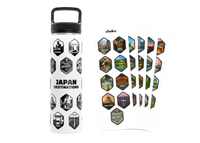
What makes it remarkable is that the forest is entirely man-made. Around 100,000 trees were donated from across Japan and planted by volunteers in the 1910s, designed to grow over generations into a forest that looks ancient. A century later, it does. Meiji Shrine sits beside Harajuku, one of the Tokyo destinations on the Traveler Bottle, the bucket-list bottle we built for first-time visitors who want the version of Japan that holds up after the research.
After seven years living and shooting in Tokyo, here is our honest guide to Meiji Shrine: what to see, when to go, how to visit respectfully, and what most guides leave out.
What is Meiji Shrine, and why visit it?
Meiji Shrine, or Meiji Jingu, is a Shinto shrine in central Tokyo dedicated to Emperor Meiji and his wife, Empress Shoken. It was completed in 1920 and sits inside a 70-hectare forest of roughly 100,000 trees. It is one of Japan's most important shrines and the most-visited shrine in the country at New Year.
A little history makes the visit far richer. Emperor Meiji reigned during the era when Japan transformed from a closed feudal country into a modern nation. After he died in 1912, and the Empress in 1914, the shrine was built to honor them, and it opened in 1920. The original buildings were destroyed in air raids in 1945 and rebuilt in the late 1950s with public donations.
The forest is the part that stops people. When the shrine was planned, the site was largely open and bare. Foresters and volunteers designed and planted a woodland intended to become self-sustaining over roughly 150 years, eventually needing no human help at all. Trees came as donations from every corner of Japan. What you walk through today is that plan, matured: a deliberate forest that now behaves like a wild one.
Why visit? Three reasons. First, it is genuinely beautiful and genuinely peaceful, a rare thing this close to the center of Tokyo. Second, it is the best, most accessible introduction to Shinto a first-time visitor can get. Third, it is free, and it sits a one-minute walk from Harajuku, so it costs you almost nothing to fold into a day you were already spending in the area.
Where is Meiji Shrine, and how do you get there?
Meiji Shrine sits between Harajuku and Yoyogi, next to Yoyogi Park, in central Tokyo. The most-used entrance is right beside Harajuku Station on the JR Yamanote Line, also served by Meiji-jingumae station on the Tokyo Metro. From the ticket gates to the first torii is about a one-minute walk.
Getting to Meiji Shrine is about as easy as Tokyo gets. The shrine has more than one entrance, because the grounds are large, but most visitors use the southern one.
- JR Yamanote Line: Harajuku Station. The southern torii is right outside, by the Omotesando exit. This is the classic approach and the one we recommend for a first visit.
- Tokyo Metro: Meiji-jingumae 'Harajuku' Station on the Chiyoda and Fukutoshin lines opens directly onto the same area.
- Other entrances: there are northern and western entrances near Yoyogi and Sangubashi stations, useful if you are combining the shrine with something on that side, but the southern Harajuku entrance is the most straightforward.
One thing worth knowing: from any entrance, there is a long forested walk to reach the main shrine buildings, usually ten to fifteen minutes on flat, wide gravel paths. That walk is not dead time. It is one of the best parts of the visit, the slow decompression from city to forest, so build it into your timing rather than rushing it.
What are the best things to do at Meiji Shrine?
The core experiences are the forest approach, the main shrine where people pray, the displays of donated sake and wine barrels, the Inner Garden, and the Meiji Jingu Museum. The forest, the main shrine and the barrels are free; the Inner Garden and the museum each charge a small fee.
Meiji Shrine is not a checklist of buildings. It is a sequence of experiences along a forest walk. Here is what to do, in the order you naturally meet them.
Walk the forest approach. From the torii at the entrance, a wide gravel path winds through the trees to the main shrine. Take it slowly. This is where the shift from Tokyo to forest actually happens.
Visit the main shrine. At the heart of the grounds is the main shrine complex, built around a wide courtyard. This is where visitors pray, buy ema plaques and fortunes, and where you may see Shinto priests and, on weekends, wedding processions. It is calm and dignified rather than showy.
See the barrel displays. Along the approach you pass two famous walls of barrels, covered in their own section below. They are free and they are one of the most photographed spots in the shrine.
Explore the Inner Garden. The Gyoen is a landscaped garden inside the grounds, with a small admission fee of around 500 yen. It holds an iris garden that is spectacular in June, a spring-fed well, and a quiet pond.
See the Meiji Jingu Museum. This modern museum, opened in 2019 and designed by the architect Kengo Kuma, displays objects connected to the Emperor and Empress. Admission is around 1,000 yen.
Use this to decide how to spend your time:
| Main shrine & forest | Inner Garden (Gyoen) | Meiji Jingu Museum | |
|---|---|---|---|
| What it is | The free core of the visit | A landscaped garden, small fee | A modern museum, small fee |
| Best for | Everyone, every visit | June iris bloom, quiet walkers | History and architecture fans |
| Time needed | 60–90 minutes | 30–45 minutes | 30–45 minutes |
| Cost | Free | Around ¥500 | Around ¥1,000 |
If you only have an hour, do the forest approach, the main shrine and the barrels, and skip the paid extras. If you have a half-day and you are visiting in June, the Inner Garden becomes essential.
What should you know about the forest, the torii and the barrels?
The forest is a planted, man-made woodland of roughly 100,000 trees. The torii gates are among the largest wooden gates in Japan, built from cypress. Along the approach, two displays stand opposite each other: a wall of decorative sake barrels donated by brewers across Japan, and a wall of wine barrels donated from France.
These three things are the visual signature of Meiji Shrine, and each has a story worth carrying with you.
The forest. We have said it already, but it bears repeating because it changes how the place feels: this woodland was designed and planted, not preserved. Knowing that as you walk it turns a pretty forest into something quietly astonishing, a hundred-year civic project you are walking through the middle of.
The torii gates. A torii marks the boundary between ordinary space and sacred space. Meiji Shrine's main torii are huge, built from cypress, and counted among the largest wooden torii in the country. There is a small custom worth knowing: many Japanese visitors give a slight bow before passing through a torii, and walk slightly to the side rather than straight up the center, which is traditionally reserved as the path of the gods. You do not have to, but it is a graceful thing to do.
The sake barrels. Partway along the approach stands a wall of beautifully decorated barrels, called kazaridaru. These are empty display barrels, offered by sake brewers from all over Japan as a gesture of respect, since sake has a long role in Shinto ritual. It is one of the most colourful, most photographed spots in the shrine.
The wine barrels. Directly opposite the sake stands a wall of wine barrels, donated from the Burgundy region of France. This pairing is not random. Emperor Meiji's reign was the era Japan opened to the West, and he himself embraced many Western customs, wine among them. The two walls facing each other quietly tell that whole story.
How do you visit a Shinto shrine respectfully?
Bow lightly as you pass under the torii. Cleanse your hands and mouth at the water pavilion before approaching the main hall. To pray, the custom is two bows, two claps, then a final bow. Speak quietly, photograph people only with care, and treat the grounds as a working religious site, because they are.
Meiji Shrine is one of the best places in Japan to learn shrine etiquette, because it is large, used to visitors, and clearly signposted. Here is everything you need.
At the torii. A small, optional bow before passing through acknowledges that you are entering sacred ground. Walk to one side of the path rather than straight down the middle.
At the temizuya, the water pavilion. Before reaching the main hall you pass a roofed basin with ladles. The purification ritual is simple: take a ladle in your right hand, rinse your left hand, swap and rinse your right, then pour a little water into a cupped left hand to rinse your mouth, and finally tip the ladle upright so the last water runs down the handle. Do not drink directly from the ladle.
At the main hall, to pray. The standard sequence is: a small offering of a coin into the box, two deep bows, two claps of the hands, a moment of quiet thought or a wish, and one final bow. It takes ten seconds and it is the heart of a shrine visit.
Ema and fortunes. You can write a wish on a wooden ema plaque and hang it with the others, often around the great camphor trees. Meiji Shrine's fortune slips are unusual and worth knowing about: instead of ranking your luck as good or bad, each one carries a waka poem composed by the Emperor or Empress, with a gentle interpretation. It is a kinder, more reflective version of the custom.
The married camphor trees. Near the main hall stand two large camphor trees joined by a sacred rope, known as the meoto kusu, or 'husband and wife' trees. They are associated with marriage, good relationships and family harmony, and they are a popular and lovely spot to pause.
General respect. Keep your voice low. If you see a wedding procession, watch quietly from a distance and do not block it. Photography of the grounds is fine; close-up photography of priests, worshippers and wedding parties needs real discretion. This is a living shrine, not a museum exhibit.
Free for you: our Tokyo Google Maps list We keep a Google Maps list of the must-see spots around Tokyo - restaurants, cafes, shops, viewpoints, and streets worth the detour. Drop your email and we'll send it over.
When is the best time to visit Meiji Shrine?
Arrive at opening, which is around sunrise, for the quietest and most beautiful visit. Meiji Shrine opens at dawn and closes at dusk, so hours shift month to month. Early morning gives soft forest light and almost no crowds. Weekends often bring traditional weddings; June brings the irises; New Year brings the biggest crowds in Japan.
Meiji Shrine never charges admission to the main grounds and never feels rushed, but timing still changes the experience a lot.
Time of day. The shrine's hours follow the sun: it opens roughly at sunrise and closes roughly at sunset, which means earlier opening in summer and later in winter. Check the current month's times before you go. The single best decision you can make is to arrive at opening. Early morning is when the forest is misty and quiet, the light is soft and low through the trees, and you can stand at the main shrine almost alone. By late morning the crowds build steadily.
Here is the quick logic for choosing your slot:
Early morning at opening → quiet forest, soft light, space at the main hall — the best all-round visit. Weekend late morning → busier, but the highest chance of seeing a traditional Shinto wedding procession. Late afternoon near closing → calmer again as day-trippers leave, with warm low light.
Time of year. Each season offers something different. June is the month for the Inner Garden, when its iris garden is in full bloom and the small fee is most worth paying. Autumn brings rich color to the forest and, in early November, the shrine's grand festival with displays of horseback archery and traditional arts. New Year is extraordinary and overwhelming in equal measure: Meiji Shrine draws the largest hatsumode crowds in Japan, with millions of visitors in the first days of January. If you want calm, avoid that window; if you want to witness one of Japan's biggest shared rituals, it is unforgettable.
The photographer's eye. Meiji Shrine is, for our money, the best forest light in central Tokyo, and it has a narrow golden window. Come within the first hour after opening. The sun is still low, and it comes through the tall trees along the approach in long, soft shafts, with a little haze near the ground if you are lucky. Shoot down the gravel path with a person walking away from you for scale and depth. The torii gates want a low angle and a wide frame to register their size. The sake and wine barrels reward a tighter, straight-on composition that lets the rows of pattern and color do the work. And if a wedding procession passes through the main courtyard, the bride under a red parasol against the dark shrine timber is one of the great Tokyo photographs, but shoot it from the edge, with a longer lens, and never step into the procession's path.
What can you do near Meiji Shrine?
Meiji Shrine sits in one of the richest corners of Tokyo for combining things. Yoyogi Park is directly next door, Harajuku and Takeshita Street are one minute from the southern entrance, the Omotesando luxury boulevard is a short walk, and Shibuya is one train stop or a 20-minute walk south.
The location is part of why Meiji Shrine is so easy to recommend. You can build a full, varied day around it without ever getting on a train more than once.
Yoyogi Park shares a border with the shrine and is the natural pairing. Where the shrine is quiet and formal, the park is open, casual and free, especially lively on weekend afternoons with buskers, picnics and people simply enjoying the space. Doing the shrine first and the park second is a near-perfect morning.
Harajuku and Takeshita Street are one minute from the southern torii, and they are the shrine's complete opposite: a narrow, loud, kinetic street of youth fashion, crepes and crowds. The contrast in a single short walk is one of Tokyo's best. Our guide to things to do in Harajuku covers how to do that side well.
Omotesando, the tree-lined boulevard a few minutes east, is the elegant counterweight: architecture, design, cafes and flagship stores. It is a calmer, more grown-up register than Takeshita Street.
Shibuya is one stop south on the Yamanote Line, or a walkable 20 minutes. If you want to continue from a peaceful morning into one of the most intense urban experiences on earth, our guide to things to do in Shibuya picks up exactly there.
If you would like the whole area sequenced for you rather than assembled piece by piece, the cheku Tokyo Travel Guide lays out how Meiji Shrine, Harajuku, Omotesando and Shibuya fit together into a single well-paced day.
Meiji Shrine is the kind of place the Traveler Bottle was built around: a destination that earns its spot on a first Japan trip and quietly turns out to be a highlight. If Tokyo is on your route, give Meiji Shrine a slow morning, ideally right at opening, and let the forest do its work.
FAQ
What is Meiji Shrine famous for?
Meiji Shrine is the Tokyo Shinto shrine dedicated to Emperor Meiji and Empress Shoken, set inside a forest of around 100,000 trees planted by volunteers in the 1910s. It is famous for that man-made forest beside Harajuku, its towering cypress torii gates, the walls of donated sake and wine barrels, and for drawing the largest New Year crowds of any shrine in Japan.
Is Meiji Shrine free to visit?
Yes. Entry to the shrine grounds and the main hall is free. Two areas inside charge a small fee: the Inner Garden, or Gyoen, costs around 500 yen and is best in June for its irises, and the Meiji Jingu Museum costs around 1,000 yen. The forest, the torii gates, the barrel displays and the main shrine cost nothing.
How much time do you need at Meiji Shrine?
Allow one to one and a half hours for the forest approach, the main shrine and the barrel displays. Add 30 to 45 minutes if you visit the Inner Garden, and another 30 to 45 for the Meiji Jingu Museum. A relaxed visit covering everything runs to roughly two and a half hours, including the long walk in through the trees.
What is the best time to visit Meiji Shrine?
Arrive at opening, which is around sunrise, for the quietest and most atmospheric visit. The shrine opens at dawn and closes at dusk, so hours shift through the year. Early morning gives you soft light in the forest and few people. Weekends often bring traditional Shinto weddings, and June is the month to see the Inner Garden's irises.
Activities and tours in Tokyo
cheku is a GetYourGuide partner. We link to tours that handle the parts of travel that eat your time, getting there, booking ahead, language, context you'd otherwise miss. If you book through our link, we earn a small commission at no extra cost to you.


