
Harajuku holds a contradiction: it's one of the most visited neighborhoods in Tokyo, and it also contains some of the least-visited spaces in the city. Meiji Shrine's forest, the Omotesando architecture walk, the iris garden that even regular shrine visitors miss, the Ura-Harajuku vintage scene where Tokyo streetwear culture was invented. This guide covers the full range, what to prioritize, what order to do it in, and what's genuinely new in 2026.
Harajuku is four distinct zones within walking distance of each other. The forest and shrine. The kawaii strip. The local side. The design district. They're joined by geography but feel completely different, and each has its own best time to visit. Getting all four right in a single day is possible. It just requires starting early. Harajuku turns over faster than any neighborhood in Tokyo, so we re-check every listing in this guide; the current pass is July 2026.
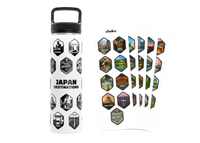
Harajuku is one of the destinations on the Traveler Bottle, which we built for first-time visitors who want the Japan route that actually holds up when you do the research. If you're also planning time in Shibuya, our Shibuya guide covers the neighboring ward in the same level of detail.
Getting to and around Harajuku
The neighborhood has two main station hubs.
JR Harajuku Station (Yamanote Line): two exits. The Takeshita Exit deposits you at the top of Takeshita-dori, steep slope, enter from the Meiji-dori bottom if you want an easier approach. The Omotesando Exit leads toward Meiji Shrine's torii gate, Yoyogi Park, and the design district.
Meiji-jingumae (Harajuku) Station (Tokyo Metro Chiyoda and Fukutoshin lines): Exit 2 is closest to Takeshita-dori (3-min walk). Connects directly to Omotesando boulevard.
Omotesando Station (Hanzomon, Ginza, Chiyoda lines): best starting point if you're arriving at the Omotesando Hills / Nezu Museum end.
The recommended order for a full day, built around crowd logic:
- Meiji Shrine + Inner Garden before 9am
- Yoyogi Park, then Takeshita-dori before 11am
- Kiddy Land, Laforet, Harakado from 11am
- Lunch in Cat Street / Ura-Harajuku
- Cat Street vintage shopping, afternoon
- Omotesando architecture walk, late afternoon
- Nezu Museum or Ota Memorial Museum
- Dinner in Aoyama
Zone 1: Meiji Shrine and Yoyogi Park
1. Walk Meiji Shrine at sunrise
The 700-meter forested path into Meiji Shrine is, in practical terms, the only place in central Tokyo where you can forget Tokyo exists. It works because the forest was planted, 100,000 trees donated from across Japan when the shrine was consecrated in 1920, and a century of growth has made it feel ancient.
The shrine is dedicated to Emperor Meiji and Empress Shoken, the imperial couple who oversaw Japan's rapid modernisation in the late 19th century. The grounds cover 70 hectares inside Harajuku, larger than the Louvre complex, set inside a loop of the Yamanote Line.
What to actually do: walk the sandō (参道) approach path. Note that the center of the path (正中, shōchū) is traditionally reserved for the gods, locals walk to the side. If you're there on a weekend, you will almost certainly encounter a Shinto wedding procession crossing the grounds. Genuine ceremony, not a performance.
The temizuya hand-purification fountain is at the inner gate before the main shrine. The ritual is: ladle, rinse left hand, rinse right hand, rinse mouth (with water poured into your left hand, not directly from the ladle). Do it properly, not for a photo.
Practical: Opens at sunrise; closes at sunset (roughly 5:00am open in summer, 6:40am in winter; 16:00–18:30 close depending on season). Free admission. From JR Harajuku Station Omotesando Exit, 1 minute to the South Torii Gate.
Best time: weekday before 9am. Avoid New Year's, Meiji Shrine hosts the largest New Year's crowd in Japan, 3+ million visitors over three days.
2. Meiji Shrine Inner Garden and the Iris Season
Inside the shrine grounds, almost nobody finds the Inner Garden. It is a separate, ticketed space, a traditional strolling garden with a spring-fed pond, woodland paths, and in late May to mid-June, 1,500 iris plants across 150 varieties.
Originally built as a retreat for Empress Shoken, the Inner Garden (明治神宮御苑) is the kind of place that regular Meiji Shrine visitors walk past for years without noticing. The entrance gate is small, set into the shrine's inner fence, easy to miss. Inside: woodland quiet, a koi pond with stone bridges, irises in shades of royal purple, lavender, white, and deep violet when they bloom.
Outside the iris season it's still a good quiet garden. During iris season it genuinely justifies a special visit, it's one of the better iris displays in Tokyo.
Practical: Hours 9:00am–4:30pm (last entry 4:00pm); extended during peak iris season. Admission: ¥500. Follow signs to 御苑 inside the shrine grounds.
The photographer's eye: the iris pond at 9am in June, light filtering through the surrounding trees. Shoot low with the irises in foreground and the traditional pavilion across the water. The combination of Japanese garden geometry and the density of color is unmatched anywhere closer to central Harajuku.
3. Yoyogi Park: Tokyo's actual living room
Yoyogi Park is 54 hectares, roughly 11 Tokyo Dome stadium footprints, and it functions as a literal neighborhood commons for the surrounding wards. On any weekend morning you'll find: families picnicking, runners on the outer loop, frisbee games, yoga groups, street musicians, and the rockabilly dancers at the Harajuku Gate entrance.
The rockabilly scene specifically: every Sunday morning, men in 1950s American-style pompadours and leather jackets dance to rockabilly music near the Harajuku Gate entrance. This has been happening for decades. It is not staged. It is a subculture that Tokyo has absorbed, preserved, and runs every week as a community ritual regardless of audience.
The Yoyogi Flea Market runs on an irregular schedule with 300–800 vendors selling vintage clothing, ceramics, records, and household goods. Check yoyogipark.info for current dates.
In 2025, Yoyogi Park BE STAGE opened in a previously restricted section of the park, cafes and event space now available in the area that previously had no commercial programming. Worth checking current events.
Practical: Free entry, open all day. Access: JR Harajuku Station Omotesando Exit, 5-minute walk. Cherry blossom season (late March to early April) is by far the busiest period, arrive before 8am.
Zone 2: Takeshita-dori and the kawaii strip
4. Walk Takeshita-dori — before the crowds arrive
Takeshita-dori is a 350-meter pedestrian street running parallel to JR Harajuku Station. It's not a shopping destination, it's a cultural phenomenon that happens to have shops in it. The birthplace of Tokyo's youth street culture, the place where Harajuku fashion was invented, and a street that has been absorbing and reinventing trends continuously for 50 years.
The right way to experience it: go on Sunday morning before 10am, or any weekday morning. At that hour the street is nearly empty. You can see the layering of signs, the density of visual information, the oddity of a street this narrow handling this much visual noise, without having to process it while being physically compressed by a crowd.
What's worth stopping for: - TOTTI CANDY FACTORY (2F, near the station entrance): rainbow cotton candy, 45cm tall in five pastel colors, ¥900–¥1,000. The definitive Takeshita photo opportunity. - Marion Crepes: Japan's first crepe shop, since 1976 (see below). - Chicago Thrift Store (at the Meiji-dori end): multi-floor vintage, better curated than the exterior suggests. Locals come for American vintage.
In 2025–2026, several Korean lifestyle brand flagships opened along Takeshita, reflecting the sustained K-culture influence on Harajuku's street aesthetic. The street is not static; it keeps absorbing. The newest arrival on the otaku side: the hololive production official shop opened at OMOKADO in April 2026, the VTuber agency's first permanent Harajuku store. And one departure worth knowing so you don't walk to a closed door: IKEA Harajuku, the small-format store facing the station, closed in February 2026.
Practical: Pedestrian-only weekends and holidays 11am–6pm. Access: JR Harajuku Station Takeshita Exit → immediate.
5. Marion Crepes: a genuine Harajuku original
Marion Crepes opened as a food cart in 1976 and invented the Japanese crepe format, ice cream, whipped cream, and fresh fruit wrapped in a paper cone for walking. Every crepe shop you've seen anywhere in Japan exists because of this shop.
Over 70 varieties. The classic: fresh strawberry + whipped cream + custard. More local: matcha cream + red bean. Price ¥400–¥800. Made to order, handed through a small window.
The format is the experience. The crepe is good by any measure but the ritual of ordering at the window, getting the cone, and walking the street with it in hand is what the shop designed and what hasn't changed in 50 years.
6. Laforet Harajuku: Harajuku's fashion cathedral
Open since 1978, Laforet is 8 floors numbered in half-increments (1F, 1.5F, 2F, 2.5F), each with a distinct aesthetic identity. The building operates on a different logic from standard retail, it's closer to a curated fashion institution than a shopping mall.
Floor breakdown by what matters: - Basement: Gothic and alternative fashion, official Sailor Moon store - 1F–2F: Trending and emerging Tokyo brands - Upper floors: Avant-garde, genderless, streetwear, vintage-inspired labels, brands you cannot find anywhere else - Laforet Museum (6F): Rotating exhibitions covering fashion, music, and subculture art. Usually free or low-cost admission. Consistently worth checking.
What Laforet stocks has reliably predicted what Harajuku street style looks like six months later. That curatorial function is why it matters beyond the individual shops.
Practical: 11am–9pm daily. Access: 1-minute walk from JR Harajuku Station Omotesando Exit; directly at Meiji-jingumae Station Exit 5.
7. Harakado — the best new building in Harajuku
Harakado (formally Tokyu Plaza Harajuku) opened in April 2024, directly across Jingumae Crossing from Laforet. It's the most significant new building in Harajuku in a decade, and it got the programming right: 75 stores with a deliberately creative-first identity, including a few spaces that have no equivalent elsewhere in Tokyo.
What's worth going for specifically:
COVER Magazine Library (2F): A lounge with around 3,000 old and new magazines, rare back-issue Japanese design, fashion, and culture publications. You can browse freely. Tokyo designers and editors treat this as a regular destination. It's the kind of amenity that signals what kind of building Harakado is trying to be.
Rooftop garden (6F–7F): Free to the public. Panoramic view over Jingumae Crossing, the best free view in Harajuku. Shoot from the corner facing back toward the intersection: Laforet in the foreground, the shrine forest behind it, the Yamanote Line tracks in the distance.
Kosugiyu sento (B1): A traditional Showa-era public bathhouse inside a modern building, one of the more surreal juxtapositions in recent Tokyo retail. ¥500–¥800 for a bath. It's a real functioning sento, not a design installation.
Practical: 11am–9pm (dining until later). Access: Jingumae Crossing, Meiji-jingumae Station Exit 5.
| Laforet | Harakado | |
|---|---|---|
| Opened | 1978 | April 2024 |
| Best for | Fashion, Laforet Museum | Magazine library, free rooftop, sento |
| Floor count | 8 | Multiple, plus rooftop |
| Best for first visit | Fashion-focused visitors | Everyone — the rooftop and library are free |
Zone 3: Ura-Harajuku / Cat Street
8. Walk Cat Street: the local side of Harajuku
Cat Street, officially the Old Shibuya River Pedestrian Lane (旧渋谷川遊歩道), runs 1.25km south from Harajuku toward Shibuya, parallel to Omotesando. It's the direct inverse of Takeshita-dori: slow, intentional, fashion-literate. Ura-Harajuku (裏原宿, "back Harajuku") is where Tokyo streetwear culture was literally invented.
In the 1990s, brands like NEIGHBORHOOD, WTAPS, and UNDERCOVER operated out of tiny shops here, selling to a local devotee following before the rest of Tokyo caught up. The scene has evolved but the DNA is intact. These blocks still attract Tokyo's most genuinely fashion-literate residents.
Key shops: BEAMS (multiple outposts in the Ura-Harajuku area, each with a distinct sub-label identity, BEAMS Plus, BEAMS Boy, BEAMS T, TOKYO CULTUART by BEAMS); United Arrows for refined contemporary Japanese basics; The Mass (Cat Street, Jingumae 5-11-1) for rotating contemporary art exhibitions with an onsite café (12:00–19:00, closed Mon–Tue).
The street itself is a former riverbed, it was the Shibuya River before the waterway was diverted. The gentle curves that give it character come from following the old water route.
9. Vintage shopping: BerBerJin and VOSTOK
Two names come up consistently when Japanese fashion people in Harajuku talk about vintage: BerBerJin and VOSTOK.
BerBerJin (ベルベルジン): Founded 1993. Five locations in Harajuku alone, each focused on a different category, American vintage denim and workwear, military, sportswear, band tees. GQ Japan covered their most recent opening sale as a genuine fashion event, with industry insiders queuing. Web store at berberjin.com; flagships in the Jingumae area. Daily new arrivals; serious stock rotation. Levi's vintage jeans from ¥8,000 to ¥50,000+ depending on era and condition.
VOSTOK (ボストック): American vintage specialist, denim, military, workwear. Monthly large-scale restocking that vintage collectors follow by schedule. More editorial in selection than BerBerJin; lower quantity but higher curation. Also in the Jingumae area.
For anyone visiting Harajuku specifically for vintage, these two are where Tokyo's vintage buyers go.
10. Kiddy Land Harajuku
Kiddy Land is a five-story character goods and toy store that has been here since the 1950s. It is not a children's toy store. It is where adult Japanese people buy meticulously designed character goods that they display, collect, and gift.
Floor breakdown: Basement has the Snoopy Town Shop, entirely Peanuts. 1F changes frequently with the latest trending items. 2F is Disney Avenue. 3F has Tomica and Plarail. 4F has Rilakkuma Store, Hello Kitty Shop, and Sanrio. The store carries exclusive limited-edition items only available at this Harajuku flagship, genuine scarcity value for collectors.
Practical: Mon–Fri 11am–9pm; Sat–Sun 10:30am–9pm. Tax-free on purchases over ¥5,000. Meiji-jingumae Station Exit 4.
Zone 4: Omotesando and Aoyama
11. The Omotesando architecture walk
The 400-meter stretch of Omotesando boulevard from Jingumae Crossing to Omotesando Station, and its side streets, contains one of the highest concentrations of significant contemporary architecture in Tokyo, all of it free to look at from the street.
The key buildings, in walking order from the Harajuku end:
Omotesando Hills (2006, Tadao Ando): a luxury shopping complex built into the slope of the boulevard, with a continuous spiral ramp running its full height. The exterior integrates with the zelkova trees that line Omotesando, a design constraint Ando accepted from the city. Worth going inside to see the ramp geometry even if you don't buy anything.
Prada Aoyama (2003, Herzog & de Meuron): the diamond-grid glass facade that looks different from every angle and in every light condition. A building that became a reference in architecture schools within two years of opening.
Tod's Omotesando (2004, Toyo Ito): expressed concrete structure that mimics the branching pattern of the zelkova trees on the boulevard in front of it. Literally tree-shaped columns as a facade system.
GYRE (2007, MVRDV): five staggered floors, offset slightly from each other, the building looks like someone shuffled a stack of cards. Contains MoMA Design Store on 3F, one of the best places in Tokyo to buy Japanese design objects.
None of these require admission. The architecture walk is free, and each building is within 5 minutes of the next.
The photographer's eye: early morning on Omotesando, before the shops open. The zelkova trees that line both sides of the boulevard create a canopy that the low morning light cuts through. Shoot from the center of the boulevard looking toward Meiji Shrine at the far end, there's a visual axis from the shopping district to the shrine forest that only works before the crowds arrive.
12. MoMA Design Store at GYRE
The MoMA Design Store on GYRE 3F is one of the best places in Tokyo to buy Japanese design objects that will survive the flight home. The selection skews toward functional objects: ceramics, glassware, tools, desk objects, small furniture, architectural books. Prices are real, this isn't souvenir pricing, but the curation is serious.
If you're looking for a design-forward souvenir that has a museum's curatorial credential behind it, this is the stop. The Omotesando building adds context, you're buying an object in a building that is itself a design reference. For the full shopping picture, from Kiddy Land exclusives to the vintage racks, our Harajuku souvenirs guide covers what's worth the suitcase space. And if the street-fashion energy has you second-guessing your own packing, our guide to what not to wear in Japan settles it.
13. Nezu Museum
The Nezu Museum holds one of Japan's finest collections of East Asian antiquities, Japanese, Chinese, and Korean decorative arts spanning 2,000 years, in a Kengo Kuma-designed building with a traditional garden that is itself worth the admission.
The national treasure in the collection: the Ogata Korin Irises (燕子花図), two pairs of six-fold screens from the early 18th century, irises in gold and blue, on a gold ground, painted with the flat pattern geometry that influenced European Art Nouveau a century later. The screens are on display for approximately three weeks in May each year, timed to the iris season. At other times, the permanent collection rotates.
The Kuma-designed garden is open with the museum ticket: traditional strolling garden with stone lanterns, bamboo groves, and a tea house. One of the better hidden gardens in the central Harajuku/Aoyama area.
Practical: 10am–5pm (last entry 4:30pm), closed Mondays. Admission ¥1,300. Access: Omotesando Station Exit A5 → 8-minute walk.
14. Ota Memorial Museum of Art (ukiyo-e)
The Ota Memorial Museum is the most serious ukiyo-e collection in Tokyo that isn't a national museum, and it's in a converted traditional townhouse, which means the scale is right for the subject.
Ukiyo-e (浮世絵) woodblock prints, the imagery of Edo-period Japan (1603–1868) that influenced Van Gogh, Monet, and every Western artist who encountered Japanese woodblock prints in the late 19th century. The Ota collection covers 12,000 works including significant Hokusai and Hiroshige pieces.
The space is small enough to see properly in 45–60 minutes. The rotating exhibitions mean the permanent collection is always showing a different set of works. If Harajuku is where you come for contemporary fashion culture, this is the counterpoint, the same aesthetic sensibility for composition and color, 200 years earlier.
Practical: 10am–5pm (last entry 4:30pm), closed Mondays and for exhibition changeovers. Admission ¥700–¥1,000 depending on exhibition. 3-minute walk from Meiji-jingumae Station.
15. Coffee: KOFFEE MAMEYA + Higuma Doughnuts
Two stops worth making in the same Omotesando backstreet area.
KOFFEE MAMEYA: The coffee specialist's coffee specialist. A tiny shop stocking 15+ single-origin roasts from Japan's most respected roasters, sold both as pour-over and as beans to take home. The staff will ask you what kind of flavor profiles you want and match you to a bean. No menu. You describe; they recommend. The experience is calibrated toward people who think about coffee seriously.
Higuma Doughnuts: French-style brioche doughnuts made daily in small batches, flavors rotate, usually 4–5 available. Lines form. The doughnuts are genuinely excellent in the way that very simple things executed properly are excellent. Gets busy after 11am; go early or accept the wait.
Both are in the Omotesando backstreet area, findable from the map.
One thing changing in 2026: Harajuku Station
The original Harajuku Station wooden building, a 1924 structure that was one of the last remaining historic wooden train stations in central Tokyo, was demolished in 2020 to allow line modernisation. A recreation is being built on the old site, reusing original components where possible, as part of a new commercial development. Per Shibuya Keizai Shimbun, the opening is scheduled for the winter of fiscal 2026, which in practice means around the end of 2026 or early 2027.
When it opens, it will be the only station in Tokyo with a deliberate architectural recreation of a pre-war wooden station. Whether that's worth celebrating or lamentation is a separate question, but it will be a notable addition to the neighborhood's heritage architecture.
Free for you: the full Harajuku day mapped out, every stop, every address We've put every place in this guide into a Google Maps list with timing notes and our recommended order. Drop your email and we'll send it over.
How do you fit the best things to do in Harajuku into one day?
The logic is crowd-avoidance × daylight × energy. Start in the forest; end in the design district.
Morning (6am–11am): Meiji Shrine at dawn, Inner Garden if irises are in season, into Yoyogi Park, tamago sando from somewhere nearby, Takeshita-dori before 11am.
Midday (11am–2pm): Laforet and Harakado at the Jingumae Crossing intersection. Lunch from one of the Cat Street food options, the area has ramen, soba, and casual cafes that don't require queueing if you're strategic about timing. For the specific places, our guide to where locals actually eat in Harajuku covers the Ura-Hara backstreets where the neighborhood's residents lunch away from Takeshita.
Afternoon (2pm–6pm): Cat Street walking south, vintage shops, The Mass gallery if anything's running. KOFFEE MAMEYA when you need a reset.
Late afternoon (4pm–7pm): Omotesando architecture walk as the light drops. Omotesando Hills, then Nezu Museum or Ota Memorial (if you went earlier, skip the museums in favor of Higuma Doughnuts and the Harakado rooftop at sunset).
Evening: Aoyama for dinner. The area around Omotesando Station has a density of good restaurants that doesn't require planning in advance.
If you only do three things in Harajuku: 1. Meiji Shrine before 9am, walk the full sandō path to the shrine and back, stay 45 minutes. 2. Harakado rooftop, free, best in late afternoon when the light hits the Jingumae Crossing from the west. 3. One vintage shop in Ura-Harajuku, BerBerJin or VOSTOK, regardless of whether you buy anything.
If it's your first morning in Tokyo and you'd rather be shown the lay of the land before exploring alone, the Asakusa, Meiji Shrine, Harajuku and Shibuya walking tour strings the four districts into one guided orientation day. Meiji Shrine sits at Harajuku's edge, so the tour drops you exactly where this guide begins, and everything above becomes your second visit.
If Harajuku is on your Japan itinerary, the Traveler Bottle marks 27 destinations like it, built for first-time visitors who want the route that holds up after research, not the one designed for maximum throughput.
FAQ
What are the best things to do in Harajuku?
The non-negotiables: Meiji Shrine in the morning before 9am, Takeshita-dori before 11am, the Harakado rooftop for the best free view in the area, and Cat Street / Ura-Harajuku for vintage in the afternoon. For a full day, add the Omotesando architecture walk and Nezu Museum.
How long do you need in Harajuku?
A half-day gets you Meiji Shrine, Takeshita-dori, and one of: Laforet, Cat Street, or the Omotesando architecture walk. A full day covers all four zones. If you're combining with Shibuya (10 minutes by train), plan a full day for both together.
Is Harajuku worth visiting in 2026?
Yes. Harakado (opened April 2024) added a real cultural hub. The Harajuku Station recreation is expected to open around the end of 2026 or early 2027. The vintage scene in Ura-Harajuku has expanded. The Omotesando architecture and museum district remains among the best in Tokyo.
What time should you visit Harajuku?
Meiji Shrine: as early as possible, before 9am. Takeshita-dori: Sunday 9am is the least crowded. Omotesando: late afternoon when the zelkova trees filter the light. Yoyogi Park Sunday mornings for rockabilly dancers from around 10am.
What is Ura-Harajuku?
Ura-Harajuku (裏原宿, "back Harajuku") is the neighborhood west of Omotesando where Tokyo streetwear culture was invented in the 1990s. Today it centers on Cat Street, the Old Shibuya River pedestrian lane running from Harajuku toward Shibuya. Slow, fashion-literate, the inverse of Takeshita-dori.
Sources
- Japan Guide, Meiji Shrine
- Meiji Shrine official
- Japan Travel, Meiji Shrine iris season
- Truly Tokyo, Yoyogi Park guide
- Yoyogi Park official
- Magical Trip, Marion Crepes history
- Laforet Harajuku official
- Truly Tokyo, Laforet guide
- Go Tokyo, Harakado opening
- Tokyo Weekender, Harakado full guide
- Japan Experience, Cat Street guide
- BerBerJin official
- Vintage Bros, Harajuku vintage guide
- Good Luck Trip, Kiddy Land Harajuku
- JR Rail Pass, Harajuku Station guide
- Matcha JP, Harajuku area guide
- Go Tokyo, Laforet listing
- Shibuya Keizai Shimbun, Harajuku Station recreation
- hololive production, Harajuku shop opening
- Time Out Tokyo, IKEA Harajuku closure
Activities and tours in Tokyo
cheku is a GetYourGuide partner. We link to tours that handle the parts of travel that eat your time, getting there, booking ahead, language, context you'd otherwise miss. If you book through our link, we earn a small commission at no extra cost to you.


