
Ueno Park is Tokyo's cultural heart: six museums, Japan's oldest zoo, the lotus-covered Shinobazu Pond, and Ueno Toshogu Shrine, all in one walkable park. It is also Tokyo's most famous cherry-blossom spot. The things to do here easily fill a full day, or one focused half-day.
Most Tokyo parks are places to walk through. Ueno Park is a place to spend a day in. Within a single set of paths it holds six museums, four of them among the most important in Japan, the country's oldest zoo, a temple-topped pond, an ornate Edo-period shrine, and more than a thousand cherry trees. Figuring out the things to do in Ueno Park is really a question of what to leave out.
We live in Tokyo and treat Ueno as a reliable answer to a few different problems: a rainy afternoon, a culture-heavy day, a cherry-blossom outing, somewhere to take visitors who want a lot of Japan in one place. It works for all of them, because the park is less a green space than a cultural district that happens to have trees.
This guide covers the whole park: which museums are worth your ticket, the honest state of the zoo, the pond and its temple, the shrines, the best time to come, and how to put it together into a half-day or full-day route.
What is Ueno Park, and why is it worth visiting?
Ueno Park is a large public park in central Tokyo that holds the densest cluster of major museums in Japan, alongside a historic zoo, Shinobazu Pond, and Ueno Toshogu Shrine. It is worth visiting because it puts a full day of culture, nature and history inside one free, walkable park.
The park opened to the public in 1873, which makes it one of Japan's first Western-style public parks. The land was not empty before that. It had been the grounds of a large temple complex, Kan'ei-ji, and a few temple buildings still stand among the museums as a reminder. The official name, Ueno Onshi-Koen, translates as the Ueno Imperial Gift Park, from when the land was granted to the city.
What makes Ueno genuinely unusual is the concentration. Plenty of cities have a good museum and a separate zoo and a nice park. Ueno stacks all of it into one place. You can see Japan's foremost collection of national art, then walk five minutes to a Le Corbusier building, then five minutes more to a pond covered in lotus flowers. Nothing requires a train in between.
That is the case for visiting, especially on a first trip with limited days. Ueno is efficient. It rewards a traveler who wants depth without a lot of transit, and it flexes to the weather: museums when it rains, the park and pond and zoo when it is fine. The park itself costs nothing to enter, so you only pay for the specific attractions you choose.
It pairs naturally with the rest of the old east side of Tokyo, too. Ueno and Asakusa sit on the same Tokyo Metro Ginza Line, a few minutes apart, so many travelers do both in a day. If that is your plan, our guide to things to do at Senso-ji Temple covers the Asakusa half.
How do you get to Ueno Park?
Ueno Park sits directly beside Ueno Station, one of the best-connected stations in Tokyo. Use the JR Park Exit and you step straight into the park. Tokyo Metro and Keisei lines also stop at Ueno, all within a few minutes' walk.
Getting to Ueno is about as easy as Tokyo travel gets, because Ueno Station is a major hub. It is served by a long list of JR lines, including shinkansen routes heading north, plus the Tokyo Metro Ginza Line and Hibiya Line. Keisei Ueno Station, on a separate line, is the one to know if you are coming from or going to Narita Airport.
The single most useful piece of navigation: from the JR station, follow signs for the Park Exit. It delivers you to the southern end of the park, near the museums and the zoo entrance, rather than out into the streets. From the Tokyo Metro exits or Keisei Ueno, it is a short, signed walk uphill into the park.
📍 Location: Ueno, Taito ward, Tokyo 💴 Admission: Free to enter the park; museums, zoo and the inner shrine charge separately ⏰ Park grounds: Open through the day; individual attractions keep their own hours 🗓️ Closed: The park never; the museums and zoo close Mondays (Tuesday if Monday is a holiday) 🚶 Access: Ueno Station — JR lines (use the Park Exit), Tokyo Metro Ginza & Hibiya lines; Keisei Ueno Station nearby
One layout note worth knowing before you arrive: the park is essentially one long plateau. The museums spread across the northern half, the zoo sits in the middle and west, and Shinobazu Pond is down at the southern, lower end. Knowing that shape helps you plan a route that does not double back, which we come to at the end of this guide.
Which museums should you visit in Ueno Park?
Ueno Park holds six museums: the Tokyo National Museum, the National Museum of Western Art, the National Museum of Nature and Science, the Tokyo Metropolitan Art Museum, the small Shitamachi Museum, and the Ueno Royal Museum. For most visitors, one or two is the right number. The Tokyo National Museum is the one to choose if you choose only one.
This is the real reason Ueno earns a full guide. Few places in the world put six museums within one park. The trap is trying to do too many of them. Museum fatigue is real, and three serious museums in a day is a slog rather than a pleasure. Pick deliberately.
| Museum | What's inside | Admission | Best for |
|---|---|---|---|
| Tokyo National Museum | Japan's largest collection of Japanese art and antiquities | ¥1,000 | The one to choose if you only do one |
| National Museum of Western Art | European art in a Le Corbusier building, a UNESCO World Heritage Site | ¥500 | Architecture fans, and a shorter visit |
| National Museum of Nature and Science | Natural history and science exhibits | ¥630 | Families and children |
| Tokyo Metropolitan Art Museum | Rotating special and touring exhibitions | Varies | Whatever major show is on |
| Shitamachi Museum | Everyday life in Tokyo's old working-class districts | ¥300 | A quick, cheap dose of pre-war Tokyo |
| Ueno Royal Museum | Special exhibitions only, no permanent collection | Varies | Checking what's on, not a default stop |
The Tokyo National Museum is the headline. It is Japan's oldest and largest museum, and its collection of Japanese art, from swords and ceramics to scrolls and Buddhist sculpture, is the single best place in the country to understand what you are looking at everywhere else on your trip. If you have one museum visit in you, make it this one.
The National Museum of Western Art is a different kind of recommendation. Yes, it holds European art, built around the Matsukata Collection with works by Monet, Van Gogh, Degas and Rodin. But the reason to go is the building itself: the main building was designed by Le Corbusier, completed in 1959, and in 2016 it became a UNESCO World Heritage Site as one of the architect's works. It is the only Le Corbusier building in this part of the world. Architecture travelers should treat the museum as a stop in its own right.
The National Museum of Nature and Science is the family pick, broad and hands-on enough to hold children for an hour or two. The Tokyo Metropolitan Art Museum runs touring and special exhibitions, so it is worth a check before you go: when a major international show is in Tokyo, this is often where it lands.
Rounding out the six: the Shitamachi Museum, at ¥300 and half an hour, recreates everyday life in Tokyo's old working-class neighborhoods, a good palate cleanser between the heavyweights. The Ueno Royal Museum has no permanent collection and only matters when a special exhibition interests you, so check the schedule rather than defaulting to it.
Most museums here open around 9:30 and close at 17:00, with later hours on Fridays and weekends at several of them. That late-Friday window is genuinely useful if you want a quieter visit.
One scheduling rule outranks everything else in this section: almost all of it closes on Mondays. Per japan-guide.com's current listings, the Tokyo National Museum, Western Art, Nature and Science, the Shitamachi Museum and the zoo all close Monday, sliding to Tuesday when Monday is a national holiday, and the Metropolitan Art Museum closes the 1st and 3rd Mondays. The park stays open, but an Ueno day planned for a Monday loses most of its reasons to exist. Plan it for any other day.
❤️ The cheku 9 Days in Tokyo guide handles the broader Tokyo planning — routing, local restaurant picks, and our photography, designed for a full trip, not just an afternoon. From $19.
Is Ueno Zoo worth visiting, and what happened to the pandas?
Ueno Zoo is Japan's oldest zoo, opened in 1882, and it is still worth a visit, especially with children. One honest update: it no longer has pandas. Japan's last pandas left Ueno for China in January 2026, so ignore older guides that lead with them.
For decades, Ueno Zoo and giant pandas were the same sentence. That era has ended, and it is worth being straight about it because most travel content online has not caught up. The Ueno-born panda twins, Xiao Xiao and Lei Lei, were returned to China in January 2026. For the first time since 1972, Japan has no pandas at all, and a replacement looks unlikely in the near term. If you arrive at Ueno expecting pandas, you will be disappointed, and that disappointment is entirely avoidable.
So visit the zoo for what it actually is. Opened in 1882, it is the oldest zoo in Japan, and it still houses around 3,000 animals across roughly 400 species. It is a real, full zoo, divided into an East and West Garden, and for families traveling with younger children it is one of the better-value half-days in central Tokyo at ¥600 admission.
For adults traveling without kids, the zoo is genuinely optional now. The panda draw was the thing that made it a near-default stop, and without it, your museum ticket or an unhurried walk around Shinobazu Pond may be the better use of the same hour. There is no wrong answer here. Just go in with the current facts rather than a guidebook from two years ago.
What is there to see at Shinobazu Pond?
Shinobazu Pond is the large pond at the southern end of Ueno Park. In summer its surface fills with blooming lotus. On an island in the middle stands Bentendo, an octagonal temple hall dedicated to Benten, and you can rent a boat on a separate section of the water.
After the museum-heavy northern half of the park, Shinobazu Pond is where Ueno slows down. It is big, and it is divided into distinct parts, which is the key to understanding it.
One section is the lotus pond, and in summer it is the reason to time a visit. From roughly early July into late August the water disappears under a dense cover of lotus leaves and pink flowers, some of them taller than a person. A raised path runs out into it, so you walk through the lotus rather than just looking at it from the bank. It is one of central Tokyo's most distinctive summer sights.
Timing matters more than most guides admit, because lotus flowers are a morning event. One 4travel diarist who holds a lotus-viewing gathering here every year has settled on mid-July at 9:30 after years of experimenting with dates and hours, and that is good guidance: come in the first half of the morning, while the flowers are open, and treat mid-July as the sweet spot.
In the middle of the pond, reached by a causeway, sits Bentendo, a striking octagonal hall. It is dedicated to Benten, also called Benzaiten, the goddess associated with fortune, music, knowledge and water. The hall is free to visit and open through the day, and the short walk out to the island is one of the most pleasant five minutes in the park.
A third section of the pond is given over to boating, where you can rent rowing boats and pedal boats, including the swan-shaped ones. It is a simple, low-effort thing to do with children or on a slow afternoon, and it gives you a view back at the park's tree line and the city beyond.
Free for you: our Tokyo Google Maps list We keep a Google Maps list of the must-see spots around Tokyo - restaurants, cafes, shops, viewpoints, and streets worth the detour. Drop your email and we'll send it over.
What shrines and temples are in Ueno Park?
The park's main religious site is Ueno Toshogu, an ornate shrine dedicated to Tokugawa Ieyasu, the founder of the Edo shogunate. The park also holds Kiyomizu Kannondo, a temple hall surviving from the old Kan'ei-ji complex, alongside Bentendo on Shinobazu Pond.
Ueno Park reads as a museum district, but it sits on temple land, and the religious buildings are some of the most rewarding things to do here precisely because most museum-focused visitors skip them.
Ueno Toshogu is the one to prioritize. It is a shrine dedicated to Tokugawa Ieyasu, the first Tokugawa shogun, and it belongs to the same family of Toshogu shrines as the famous one in Nikko. Founded in the early Edo period, it is known for a heavily gilded gate and gold-leaf decoration, and it came through later wars and earthquakes intact, which makes it one of the genuinely old structures in the park. The outer grounds are free. There is a separate paid inner area, and a peony garden that opens on a seasonal schedule, in winter from January to mid-February and in spring from mid-April to early May.
Kiyomizu Kannondo is a temple hall that survives from Kan'ei-ji, the temple complex that occupied this hill before the park existed. It takes its name and some of its design cues from the far larger Kiyomizu-dera in Kyoto. It is a short, worthwhile stop rather than a long one, and it is on the natural path between the museums and the pond.
Kan'ei-ji itself still exists, quieter and further north behind the museums. Its main hall is open 9:00 to 17:00 and free, and standing in its near-empty grounds makes the park's history legible: this whole hill was once one of Edo's most powerful temple complexes, and the museums are the newcomers.
One more landmark to know: the statue of Saigo Takamori, near the park's southern entrance. The bronze of the samurai walking his dog is one of Tokyo's classic meeting spots, and if you arrive from Ueno Station's southern side it makes a natural first stop before climbing into the park.
Together these add up to a useful habit at Ueno: when you finish a museum, do not head straight for the exit. The shrine and the temple halls are a few minutes' walk away, they are free or cheap, and they break up a museum-heavy day with something completely different.
When is the best time to visit Ueno Park?
Ueno Park is at its most spectacular, and most crowded, during cherry blossom season in late March and early April. For a calmer visit, choose a weekday morning. Summer brings the lotus bloom, autumn brings color, and rainy days are ideal for the museums.
Ueno is one of the rare Tokyo sights where the season changes not just the look of the place but what you actually do there.
Cherry blossom season, in late March and early April, is the headline. More than 1,000 cherry trees line the park's central avenue, and Ueno is one of the most famous hanami spots in Tokyo, which means it is also one of the busiest. The atmosphere is genuinely something to experience once: crowds picnicking under the trees, the path a tunnel of pink. Just go in knowing it will be packed, and arrive early. For how cherry season fits the rest of the year, our guide to the best time to visit Japan lays out the trade-offs.
The rest of the year sorts itself out cleanly:
Spring, late March to early April → cherry blossoms, crowds, the park at its peak and its most chaotic Summer, July to August → lotus in full bloom on Shinobazu Pond, hot and humid but quieter Autumn → leaf color through the park, comfortable walking weather Winter and rainy days → the time to give the museums a full, unhurried day
The general rule, whatever the season: come on a weekday and come in the morning. The museums are calmest when they open, the park is at its best in early light, and you stay ahead of the school groups and tour buses that build through the day.
What are the key things to do in Ueno Park in one visit?
Allow a half-day for the park, the pond and one museum or the zoo, or a full day to add a second museum and unhurried walking. Move north to south: museums first, then the zoo or the shrines, then down to Shinobazu Pond.
Ueno rewards a route that follows the land. The park is a long plateau with the museums at the top and the pond at the bottom, so the efficient plan is simply to start high and finish low.
Come in through the JR Park Exit and start with whichever museum you have chosen, while you are fresh and it is quiet. From there, decide between the zoo, if you have children, and the shrines, Ueno Toshogu and Kiyomizu Kannondo, if you do not. Walk the central cherry-tree avenue as you head south. Finish at Shinobazu Pond, with the walk out to Bentendo and, if the season is right, the lotus. If you still have appetite, the Ameyoko market street runs just beyond the park's southern edge and is a good place to eat.
That sequence is a comfortable half-day, or a genuine full day if you add a second museum and take the walking slowly.
What's just outside Ueno Park?
Three things, all walkable: the Ameyoko market street along the south edge, the shopping around the station, and the old Yanaka neighborhood fifteen minutes north. Japanese day-trip guides pair the park with at least one of them, and they are right to.
Ueno's Japanese-language model courses rarely treat the park as the whole day. The standard pairing runs park plus Ameyoko plus Yanaka, and it turns a museum visit into a full east-Tokyo day.
Ameyoko starts just beyond the park's southern edge: a market street under the train tracks, loud where the park is calm, and the right place to eat when you come down off the hill. We keep a full guide to where locals actually eat around Ueno Park, from the standing bars under the tracks to the old shokudo.
Shopping deserves its own hour if you have one; our guide to Ueno Park souvenirs covers what is worth carrying home from the area, and what to skip.
Yanaka Ginza, about fifteen minutes' walk north past the art school, is old low-rise Tokyo: a shotengai shopping street that survived the war, croquette shops, cats. Japanese cafe guides like co-trip's Ueno roundup treat this whole stretch as one continuous outing, with quiet cafes inside the park grounds and old jun-kissa coffee houses between Ueno and Yanaka. Our Yanaka Ginza guide covers the street the way Japanese locals recommend it.
If you would rather make something than buy something, there is a fitting option a few minutes from the station: Wanariya, a small workshop where you dye a tenugui or tote bag in natural indigo, about an hour and a quarter of your day. It appears on GetYourGuide's Tokyo arts and crafts workshops, and it is the rare souvenir that comes with a story about the afternoon you made it. A good rainy-day pairing with the museums, too.
If you only do three things at Ueno Park: 1. Choose one museum and give it proper time. For most visitors that is the Tokyo National Museum; for architecture travelers, the National Museum of Western Art. One museum done well beats three rushed. 2. Walk out to Bentendo on Shinobazu Pond, and in summer take the lotus path. It is the part of the park that most museum-focused visitors skip, and it is free. 3. Stop at Ueno Toshogu on the way through. The gold gate is a complete change of register from the museums, and the outer grounds cost nothing.
Ueno Park is free to enter, open all day, and impossible to finish in one visit. Treat that as a feature. Choose deliberately, walk the plateau from top to bottom, and it is one of the most rewarding days in Tokyo.
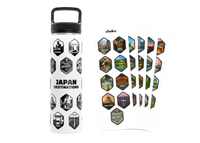
❤️ If you're planning a first Japan trip, the cheku Japan Destinations I Traveler bucket-list bottle illustrates the 27 destinations that hold up after the research — part travel guide, part souvenir, and a daily essential for the trip itself. From $39.
FAQ
How much time do you need at Ueno Park?
Half a day covers the park itself, the pond and a shrine, with a single museum or the zoo. A full day is realistic if you want two museums, the zoo, and time to walk. The park grounds are free, so you can come and go as the day allows.
Does Ueno Zoo still have pandas?
No. Japan's last pandas, the Ueno-born twins Xiao Xiao and Lei Lei, were returned to China in January 2026, leaving Japan with no pandas for the first time since 1972. Ueno Zoo is still worth visiting as Japan's oldest zoo, but no longer for pandas.
Is Ueno Park free to visit?
Yes. Entry to Ueno Park itself is free and the grounds are open through the day. The museums, the zoo, and the inner shrine at Ueno Toshogu charge separate admission, but the park, Shinobazu Pond, and the main shrine grounds cost nothing.
What is the best time to visit Ueno Park?
Cherry blossom season, in late March and early April, is the most spectacular and by far the most crowded. For a calmer visit, come on a weekday morning, or in summer when lotus flowers cover Shinobazu Pond. Rainy days are ideal for the museums.
Is Ueno Park open on Mondays?
The park itself is open every day and free. But nearly everything inside it closes on Mondays: the Tokyo National Museum, the National Museum of Western Art, the Nature and Science museum, the Shitamachi Museum and Ueno Zoo all take Monday off, shifting to Tuesday when Monday is a holiday. Plan Ueno for any day except Monday.
Sources
- japan-guide.com — Ueno Park — park overview, museums with hours and prices, zoo, Shinobazu Pond, Toshogu, cherry blossoms, access
- National Museum of Western Art — official site — the Le Corbusier building, UNESCO World Heritage status, the Matsukata Collection
- The Japan Times — Ueno's pandas — Ueno Zoo's giant pandas returning to China in January 2026
- GO TOKYO — Ueno Park — the official Tokyo travel guide entry for the park
- JNTO — Ueno Park — Japan National Tourism Organization visitor overview
- 4travel — Shinobazu lotus-viewing travelogue — a lotus-viewing regular's timing: mid-July, 9:30 in the morning
- co-trip — Ueno cafes and kanmi-dokoro — quiet cafes inside the park and the jun-kissa between Ueno and Yanaka
- Time Out Tokyo — Ueno Park guide — the six-museum count including Shitamachi and Ueno Royal
- Time Out Tokyo — Tokyo craft workshops — Wanariya indigo dyeing near Ueno Station
Activities and tours in Tokyo
cheku is a GetYourGuide partner. We link to tours that handle the parts of travel that eat your time, getting there, booking ahead, language, context you'd otherwise miss. If you book through our link, we earn a small commission at no extra cost to you.


