
Tokyo on a budget is a system, not a sacrifice: base in the cheaper northeast, eat the konbini-morning and lunch-set rhythm at ¥2,000 to ¥3,000 a day, walk one area per day with ¥150 to ¥180 train hops, and let Tokyo's astonishing free tier, observatories, galleries, gardens, fill the itinerary. A careful week lands under ¥80,000 on the ground.
We host budget-minded friends constantly, and the same conversation repeats: they arrive braced for the world's most expensive city and leave having spent less than they would in London or Sydney. Tokyo on a budget works because the city's own residents live affordably here, and a visitor who borrows resident habits inherits resident prices.
This guide is those habits, with every venue fact verified in current Japanese listings and the costs framed honestly: verified numbers where we have them, and our own resident estimates clearly labeled where we do not.
Our cheku 9 Days in Tokyo guide is the 106-page version of "what would two photographers in Tokyo actually do every day" — built to save you the research time first-time visitors usually spend. Live on Kickstarter until July 26. Reserve yours now at the best prices we'll offer.
Where should you stay to keep Tokyo cheap?
The northeast corridor: Ueno, Asakusa, Nippori and the Akihabara fringe. Beds run consistently cheaper than the western hubs, the food around them is the city's best value, and the train lines put everywhere else in easy reach.
Accommodation is the budget's one heavyweight line, and the lever is geography. The western icons, Shinjuku, Shibuya, charge for their postcodes. The northeast, Ueno, Asakusa, Nippori, and the streets around Akihabara, has long been where budget stays cluster, and in our years of hosting it is where every cost-conscious visitor has ended up happiest.
The trade is not what people fear. These neighborhoods are dense with exactly the Tokyo most visitors want anyway: Senso-ji at dawn, Ueno's museums and park, old shopping streets where dinner costs less than a western-hub coffee. And the Yamanote loop plus a couple of metro lines make Shibuya a direct ride, not a compromise. Base cheap, visit everywhere: that is the whole strategy, and our Tokyo area guide maps the rest.
How do you eat well in Tokyo for ¥2,000 to ¥3,000 a day?
Our resident rhythm: konbini breakfast, a set-lunch splurge at noon when the good kitchens are half price, and a modest evening. Labeled honestly, these are our estimates, and they feed you better than most cities' double budget.
The figures in this section are our own hosting rules of thumb rather than published data, so take them as the resident estimate they are. The rhythm they describe, though, is simply how this city eats.
Morning → konbini: onigiri, the famous egg sandwich, decent coffee; excellent, fast, a few hundred yen Noon → the day's restaurant moment: lunch sets at serious kitchens run a fraction of their dinner prices, so aim your ambitions here Evening → modest and local: a bowl, a standing counter, or depachika pickings taken back to the room
Two structural allies make the arithmetic work. First, lunch is objectively when Tokyo's restaurants discount themselves; the same food at noon simply costs less. Second, drinking is the stealth budget-killer, and the konbini beer on a river bench is a legitimate, even beloved, local institution. Our 30 travel tips carry the wider eating playbook.
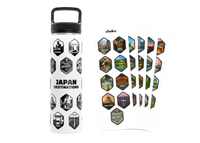
❤️ Even if your trip stays in Tokyo, the Traveler bucket-list bottle has plenty to mark off — its 27 destinations include Tokyo neighborhoods, day trips like Kamakura and Hakone, and the wider Japan route for whenever you go further. Live on Kickstarter until July 26. Reserve yours now at the best prices we'll offer.
What can you do in Tokyo completely free?
A genuinely deep tier, verified in current Japanese listings: the 45th-floor government observatory, three Ginza art galleries, the Currency Museum, the Ad Museum, a free zoo, and the great free defaults, Senso-ji, Meiji Shrine's grounds and Ueno Park.
This is where Tokyo quietly outclasses every expensive-city stereotype, and we verified the tier against enjoytokyo's 2026 free-spots roundup:
The Tokyo Metropolitan Government Observatory, 45 floors up and direct from Tochomae station, is the budget answer to every paid skyline deck in the city, free to everyone. Ginza, of all places, runs a free art circuit: the Shiseido Gallery, Canon Gallery and the POLA building's gallery, all steps apart, all ¥0. The Ad Museum Tokyo in Shiodome and the Bank of Japan's Currency Museum are free and genuinely excellent; Anime Tokyo Station near Ikebukuro is the free stop for anime pilgrims; and the Edogawa Nature Zoo is, remarkably, a free zoo.
Stack those on the permanent free tier, Senso-ji's grounds, Meiji Shrine's forest, the Imperial Palace approaches, and Ueno Park, open around the clock per Rakuten Travel, with its zoo at just ¥600 when you do spend, and a full sightseeing week barely needs an admissions budget at all.
Free for you: our Tokyo Google Maps list We keep a Google Maps list of the must-see spots around Tokyo - restaurants, cafes, shops, viewpoints, and streets worth the detour. Drop your email and we'll send it over.
How does transit math work for budget travelers?
Singles are ¥150 to ¥180, so walking one area per day beats passes. The ¥1,600 day pass only pays on deliberately train-heavy days, per mapple's published figures.
The transport numbers are verified and pleasingly small. Mapple's Tokyo guide puts base fares at ¥150 to ¥180, notes most area-to-area moves inside the Yamanote loop take about thirty minutes, and prices the all-lines Tokyo Free Kippu day pass at ¥1,600.
The budget pattern falls straight out of those figures: adopt the one-area-per-day rhythm Japanese guides recommend anyway, walk inside the area, and your transit day is two or three taps, well under ¥700. Save the ¥1,600 pass for the single deliberate everywhere-day. An IC card on your phone handles all of it, and the wider cash strategy keeps the rest of the money system simple.
What does the under-¥80,000 week actually look like?
Our worked resident estimate: a northeast bed as the anchor cost, ¥2,000 to ¥3,000 food days, minimal transit, one splurge, and the free tier doing the sightseeing. Two styles below; both land under the line.
| Shoestring week | Comfortable-budget week | |
|---|---|---|
| Bed | Hostel/capsule, northeast | Budget business hotel, northeast |
| Food | ~¥2,000/day, konbini-led | ~¥3,000/day with daily lunch sets |
| Transit | Walking-first, ~¥500/day | ~¥700/day plus one day-pass day |
| Attractions | Free tier + Ueno Zoo | Free tier + 2–3 paid entries |
| One splurge | A great lunch set | One special dinner or day trip |
| Best for | Solo travelers, maximizers | Couples, first-timers |
We label this plainly: the accommodation slice varies with season and booking lead, and it is the number to lock early, because everything else above is stable. Booked sensibly, the whole ground game, bed, food, transit, sights, sits under ¥80,000 for the week in our experience hosting exactly these trips, with flights and shopping on top. Which leaves the question of what to do with the week itself, and that is what our 10-day itinerary answers at full length; compress its area-days into seven and the budget version loses nothing that matters.
❤️ If you want a full nine-day Tokyo itinerary mapped out for you, our cheku 9 Days in Tokyo guide is 106 pages of local knowledge and our photography — designed for first-time visitors who want every day planned before they land. Live on Kickstarter until July 26. Reserve yours now at the best prices we'll offer.
FAQ
Is Tokyo expensive to visit?
Less than its reputation. Accommodation is the one genuinely big line; nearly everything else scales down gracefully. Trains cost roughly ¥150 to ¥180 a ride, konbini meals are excellent, lunch sets halve restaurant prices, and a deep tier of attractions, from the Metropolitan Government observatory down, is completely free.
How much does a week in Tokyo cost on a budget?
Our resident estimate for a careful traveler: under ¥80,000 on the ground, excluding flights. The levers are a budget bed in the northeast neighborhoods, food around ¥2,000 to ¥3,000 a day on the konbini-and-lunch-set rhythm, walking-first transit, and free attractions doing the heavy lifting.
What is actually free to do in Tokyo?
More than most paid itineraries include: the 45th-floor Metropolitan Government observatory, Shiseido, Canon and POLA galleries in Ginza, the Ad Museum, the Bank of Japan Currency Museum, Anime Tokyo Station, a free zoo in Edogawa, plus Senso-ji, Meiji Shrine's grounds and Ueno Park. All verified in current Japanese listings.
Where should budget travelers stay in Tokyo?
The northeast corridor: Ueno, Asakusa, Nippori and around Akihabara. Rates run consistently below the western hubs, the areas are dense with cheap food and character, and the Yamanote and Hibiya lines put the whole city in reach. Shinjuku and Shibuya are train rides, not necessities.
Should budget travelers get a transit day pass in Tokyo?
Only on heavy days. Singles cost about ¥150 to ¥180, so the ¥1,600 Tokyo Free Kippu needs many rides to pay off. The budget pattern that actually works is one area per day on foot with two or three train hops, which rarely clears ¥700.
Sources
- enjoytokyo.jp — 東京の無料スポット15選【2026】 — the verified free tier: Tocho observatory, the Ginza galleries, Currency Museum, Ad Museum, Anime Tokyo Station, Edogawa Nature Zoo
- mapple.net — 東京観光の定番スポット — fares, the ¥1,600 day pass, and area pacing behind the transit math
- Rakuten Travel — 東京観光おすすめスポット76選 — Ueno Park hours and Ueno Zoo pricing
Activities and tours in Tokyo
cheku is a GetYourGuide partner. We link to tours that handle the parts of travel that eat your time, getting there, booking ahead, language, context you'd otherwise miss. If you book through our link, we earn a small commission at no extra cost to you.


