
Useful Japanese souvenirs are the ones that stay in daily rotation a year later. Japanese kitchen knives from Kappabashi or Aritsugu in Kyoto, Midori MD notebooks and Pilot pens, Hada Labo lotion and Kose sheet masks, MT washi tape, tenugui towels, and small lacquerware dishes are the categories Japanese lifestyle writing consistently flags as worth bringing home. This guide focuses specifically on what gets used, not what gets displayed.
The honest test of a souvenir is whether it's still being used a year later. Most generic souvenirs fail this test — keychains and printed t-shirts end up in drawers within months. The Japanese souvenir categories that pass it are functional objects designed for daily use, made well enough that the design quality is what makes them feel Japanese.
Japanese domestic lifestyle writing on jalan.net, note.com, icotto, and TABIZINE treats this practical category as distinct from decorative souvenirs. The framing is consistent: a Japanese kitchen knife, a Midori notebook, or a Hada Labo lotion is bought to be used, not to commemorate a trip.
For the broader Japan souvenir picture, the Japan souvenirs guide covers 25 categories. For the broader "what's worth buying" question, the best things to buy in Japan guide covers it across price tiers.
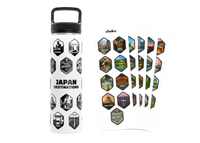
The Traveler Bottle maps the 27 Japan destinations with the strongest shopping, including the source regions for the most useful daily-use crafts.
What makes a Japanese souvenir actually useful?
Useful, in the Japanese souvenir context, means three things together: genuinely Japanese in origin, transportable in luggage, and likely to stay in daily rotation after the trip. Japanese lifestyle writing on note.com and icotto consistently distinguishes this practical category from decorative items.
The categories that pass this test: - Kitchen tools — knives, silicone onigiri molds, drop lids, specialized graters, chopsticks - Stationery — notebooks, pens, washi tape, brush pens, sticky notes - Personal care — skincare, sheet masks, sunscreen, premium toothbrushes - Textile goods — tenugui hand towels, furoshiki wrapping cloths, microfibre cleaning cloths - Tableware — small lacquerware dishes, ceramic plates from regional kilns, chopstick rests - Tea and pantry — green tea, soy sauce, miso, specialty seasonings
What these have in common: each is the kind of object that gets pulled out daily or weekly and reminds the owner where it came from through use rather than display. The decorative tier — keychains, printed merchandise, mass-produced kokeshi — fails the test because nothing about the object brings it back into use.
Are Japanese kitchen knives the best practical souvenir?
Japanese kitchen knives are the single most consistently useful souvenir for anyone who cooks. Discover Japan and Japanese craft writing on jalan.net consistently rank Japanese knife-making as one of the country's strongest current craft traditions.
Kappabashi (Tokyo) — the main knife-buying district. A 1-kilometer street near Asakusa lined with specialist knife shops. Entry-level Japanese kitchen knives start around ¥3,000 (Tojiro is a reliable starter brand); mid-range pieces run ¥6,000–15,000 (Masamoto, Sakai Takayuki, Sugimoto); premium handmade knives reach ¥20,000+ and continue upward to ¥100,000+ for named smiths. Many shops will sharpen the knife before purchase and engrave the buyer's name on the blade.
Aritsugu (Kyoto, Nishiki Market). Knife-making shop in Nishiki Market dating to 1560. Mid-range to premium pricing; the shop will engrave names on knives and sharpen them on the spot. The combination of historical provenance and current production quality makes Aritsugu one of the most direct ways to buy a piece of Japanese craft tradition that still functions as a daily-use tool.
Sakai and Seki — the named knife-production regions. Sakai in Osaka and Seki in Gifu Prefecture are Japan's two major knife-making cities, both with long histories. Knives from named makers in either region are the substantive purchase tier.
Knife types worth knowing: - Santoku — general-purpose knife, the most versatile single-knife purchase - Petty — small utility knife, the most-used knife in many home kitchens - Gyuto — chef's knife, longer blade, more Western in profile - Nakiri — vegetable knife, rectangular profile - Sashimi/yanagiba — sashimi knife, long and single-bevel, specialist use
For someone buying one knife: a Japanese petty (¥4,000–8,000) or santoku (¥6,000–10,000) covers most home kitchen tasks and stays in use for decades. The same money on a generic kitchen knife outside Japan buys significantly less knife.
What Japanese stationery is worth buying as a useful souvenir?
Japanese stationery is the category where the gap between Japanese design quality and overseas equivalents is widest at every price point. Tabimaniajapan's stationery guide and Japanese lifestyle writing on note.com cover this as a distinct shopping category.
Notebooks. Midori MD notebooks (¥800–2,500) are the standard premium-paper Japanese notebook — cream-colored paper, sewn binding, available in lined, blank, and grid versions. Hobonichi Techo planners (¥3,500–4,500 for the year version) are the cult Japanese daily planner — extremely thin paper, daily-page layout, available at Tokyu Hands, Loft, and dedicated Hobonichi pop-ups. Kokuyo Campus notebooks are the everyday workhorse at lower price points (¥150–400). All available at Tokyu Hands, Loft, Itoya, and major bookstores.
Pens. Pilot Juice (¥150–250) and Pilot Hi-Tec-C (¥150–250) are the standard Japanese gel pens — multiple colors, ultra-fine tips, widely available at every drugstore and stationery shop. Pilot Frixion (¥250–400) are the erasable pens. Uni Kuru Toga mechanical pencils (¥400–1,500) rotate the lead while writing for an even point — the engineering is genuinely Japanese in design quality. Tombow Mono Graph correction tape and Tombow brush pens round out the daily-use set.
Washi tape. MT brand washi tape from Kamoi Kakoshi (¥250–600 per roll) is the standard premium washi tape — hundreds of designs, dozens of seasonal limited editions, available at Tokyu Hands, Loft, and Itoya. The 100-yen shop washi tape is the budget version; the MT brand is the design-grade version.
Premium specialist shopping. Itoya Ginza is the multi-floor stationery flagship dating to 1904. Each floor covers a specific category: paper, pens, leather goods, wrapping, traditional Japanese paper. For someone serious about Japanese stationery as a category, Itoya is the deep-dive store.
Brush pens and traditional writing tools. Pentel Brush Pens, Kuretake brush pens, and Japanese calligraphy brushes (¥500–5,000) are functional for both Western and Japanese writing. Sumi (ink) sticks and ink stones cross over from daily use into more serious calligraphy practice.
Are Japanese skincare and beauty products useful souvenirs?
Japanese skincare is one of the most consistently useful gift categories — light to pack, used daily, and not always available in the same formulations outside Japan. Japanese lifestyle writing on icotto and TABIZINE covers Japanese drugstore skincare as a substantive shopping category.
Drugstore tier (available at Matsumoto Kiyoshi, Welcia, Don Quijote, and major drugstores): - Hada Labo — lotions, gels, and serums focused on hydration (¥800–1,800) - Curel — sensitive skin line, gentle cleansers and creams (¥1,200–2,500) - Shiseido Senka — Perfect Whip face wash and basic skincare (¥600–1,500) - Kose Clear Turn — sheet masks at multiple price points, often sold in 7- or 30-packs (¥300–1,500) - Biore UV Aqua Rich — Japanese sunscreen, widely considered better-formulated than Western equivalents (¥600–1,200) - Lululun — sheet masks in multiple formulations (¥1,200–2,500 per pack)
Department store / depachika beauty floors. Mid-tier and premium Japanese skincare brands — Shiseido (premium lines), SK-II, Albion, Decorté — available at department store beauty floors. The depachika and ground-floor beauty floors at Isetan, Mitsukoshi, Daimaru, and Takashimaya carry the full range.
Specialist Japanese drugstores. Matsumoto Kiyoshi is the largest Japanese drugstore chain, with branches in every major shopping district. The English-language signage at central Tokyo branches makes navigation easy. Don Quijote also carries Japanese drugstore skincare at slight discount but with broader selection across hours.
Other personal care worth considering: - Premium toothbrushes — small-headed, ultra-fine bristle Japanese toothbrushes (¥300–800) - Japanese hair products — Tsubaki, Honey, Bond Touch lines (¥800–2,500) - Bath products — Yu hot spring salts (¥200–500 per pack), Japanese body soaps
Free for you: our Tokyo Google Maps list We keep a Google Maps list of the must-see spots around Tokyo — drugstores worth the detour, stationery shops, craft districts, restaurants, and viewpoints. Drop your email and we'll send it over.
What Japanese textile and home goods are practical souvenirs?
Japanese textile traditions produce functional daily-use goods at every price point. Keiko Furoshiki and Kogei Japan cover these traditions.
Tenugui. Thin Japanese cotton hand towels with printed designs. ¥800–2,500 for quality versions. Functional as kitchen cloths, face towels, wrapping, and decorative hangings. The thin weave makes them quick-drying and packable; the printed designs vary from traditional (botanical, seasonal, geometric) to modern (food motifs, abstract). Available at Tokyu Hands, specialist tenugui shops, and craft districts. Daily-use category — they don't replace bath towels but do replace everything in the kitchen towel role.
Furoshiki. Square wrapping cloths in cotton or silk. ¥1,500–8,000 for quality pieces. Used to wrap gifts, carry items, wrap bento boxes, and as decorative cloths. Available at Tokyu Hands, specialist furoshiki shops in Tokyo and Kyoto, and depachika. The functional use case is real — once someone learns to tie furoshiki, the cloth replaces gift bags and produce bags for years.
Microfibre cleaning cloths. Japanese cleaning culture produces functional microfibre cloths at the 100-yen shop tier and above. Available at Daiso, Tokyu Hands, and supermarket household sections. The standard Japanese microfibre cloth is noticeably better-designed than equivalents outside Japan.
Tabi socks. Split-toe socks in cotton or wool (¥800–3,500). Functional with traditional Japanese footwear (geta, zori) and as standalone socks. Available at specialist tabi shops in Tokyo and Kyoto, Tokyu Hands, and Harajuku fashion shops.
Japanese towels (cotton). Imabari towels from Ehime Prefecture are Japan's premier bath and face towel tradition (¥1,200–6,000). Available at Tokyu Hands, department stores, and specialist Imabari shops. Used daily for years; significantly outperform mass-produced towels at the same price.
What Japanese tea, pantry, and food souvenirs get actually used?
Japanese pantry goods bridge the practical/edible divide — they're consumable but get used in cooking for months. Japanese culinary writing on note.com and travel writing on jalan.net covers these as substantive shopping categories.
Green tea. Premium loose-leaf sencha and matcha from Uji or Shizuoka shops (¥1,500–8,000 per 100g). Ippodo Tea has counters in Kyoto and Tokyo; Maruichi, Tsujiri, and other specialist tea shops in Uji and Kyoto carry premium product directly from named tea-growing regions. A 100g tin of premium sencha makes 30–40 cups of tea — months of daily use from a single souvenir.
Soy sauce and miso. Regional soy sauces (Yamaroku from Shodoshima, Kikkoman Naturally Brewed lines) and specialty miso (Hatcho from Aichi, white miso from Kyoto, red miso from Sendai) are pantry items that get used over months. ¥800–3,000 per bottle/container. Available at department store food halls, specialist food shops, and at the source regions.
Specialty seasonings. Yuzu kosho (Kyushu), shichimi togarashi (the Japanese seven-spice — Kyoto's Hara Shichimi-ya is the famous version), furikake (Marumiya and other brands), and Japanese curry roux blocks are all functional pantry items.
Cup Noodle limited editions and regional ramen. Lower-tier but functional: Cup Noodle has Japan-exclusive flavors that don't appear overseas, and regional ramen shop instant ramen partnerships (¥278–500 per cup) are genuinely good entry-level food souvenirs.
Wagashi (Japanese sweets). Wrapped wagashi from established makers — Toraya (premium, ¥800–3,000), Kameya Yoshinaga, Tsuruya Yoshinobu — keep for several weeks unrefrigerated and function as both food and gift. Available at depachika and at the makers' own shops.
How to compare useful Japan souvenirs by daily-use category
| Category | Top picks | Price range | Where to buy |
|---|---|---|---|
| Kitchen knives | Tojiro, Sakai Takayuki, Aritsugu | ¥3,000–30,000 | Kappabashi (Tokyo), Aritsugu (Kyoto Nishiki) |
| Stationery (premium) | Midori MD, Hobonichi, Pilot, Uni, MT washi tape | ¥150–4,500 | Tokyu Hands, Loft, Itoya Ginza |
| Skincare (drugstore) | Hada Labo, Curel, Senka, Kose, Biore UV | ¥600–2,500 | Matsumoto Kiyoshi, Welcia, Don Quijote |
| Skincare (premium) | Shiseido, SK-II, Albion, Decorté | ¥3,000–25,000 | Department store beauty floors, depachika |
| Tenugui (cotton hand towels) | Specialist tenugui shops, Tokyu Hands | ¥800–2,500 | Tokyo and Kyoto specialist shops, Tokyu Hands |
| Furoshiki (wrapping cloths) | Cotton ¥1,500–4,000, silk ¥3,000–8,000 | ¥1,500–8,000 | Specialist furoshiki shops, depachika |
| Imabari towels | Imabari makers, department store towel floors | ¥1,200–6,000 | Tokyu Hands, department stores |
| Green tea (premium) | Ippodo, Uji shops (Tsujiri, Maruichi) | ¥1,500–8,000/100g | Ippodo Kyoto/Tokyo, Uji specialist shops |
| Soy sauce / miso (regional) | Yamaroku, Hatcho miso, regional makers | ¥800–3,000 | Depachika food halls, specialist food shops |
| Small lacquerware | Wajima, Aizu small dishes and bowls | ¥2,000–8,000 | Regional craft shops, Tokyu Hands craft section |
| Best for | Daily-use lifecycle | One Japanese knife + one Midori notebook + one Imabari towel covers most kitchens, desks, and bathrooms | Tokyu Hands + Kappabashi + depachika |
What Japanese lacquerware and tableware is useful for daily life?
Small lacquerware and regional ceramic tableware bridge daily-use and traditional craft. Kogei Japan and Discover Japan cover these traditions as the substantive functional craft category.
Small lacquerware dishes and bowls. Wajima (Ishikawa), Aizu (Fukushima), and Kyoto lacquerware in everyday-sized pieces — small dipping bowls, rice bowls, soup bowls, miso bowls. ¥2,000–8,000 for everyday-quality pieces, going significantly higher for major work. Lacquerware is dishwasher-cautious but otherwise extremely durable and stays in daily rotation for years.
Regional ceramic tableware. Mino-yaki (Gifu), Bizen-yaki (Okayama), Karatsu-yaki (Saga), Hagi-yaki (Yamaguchi), Kiyomizu-yaki (Kyoto), and Mashiko-yaki (Tochigi) all produce daily-use bowls, plates, and tea cups at the ¥1,500–8,000 range. Each kiln tradition has its own aesthetic — Bizen's unglazed natural finish, Hagi's pale glazes, Kiyomizu's intricate patterns — meaning a single dish from a named kiln reads as Japanese craft every time it appears on the table.
Chopstick rests. Small ceramic, lacquer, or glass chopstick rests (¥300–1,500) are the lowest-tier functional Japanese tableware. A set of four named chopstick rests packs flat in luggage and stays in use indefinitely.
Chopsticks. Functional Japanese chopsticks at the ¥1,500–5,000 tier (Wakasa-nuri lacquer chopsticks, Tsugaru-nuri, and other named regions) significantly outlast generic chopsticks and have proper lacquer finishing that doesn't wear off.
Hashioki and shoyu sara (small soy sauce dishes). Small ceramic or lacquer dishes (¥500–2,500) for dipping sauces and soy sauce — functional daily tableware that adds Japanese-craft texture to any meal.
FAQ
What is the most useful gift to bring back from Japan? By the daily-rotation test, a Japanese kitchen knife (¥6,000–15,000 from Kappabashi or Aritsugu) is the single most useful Japanese souvenir for most recipients. It gets used every time someone cooks; it lasts for decades with reasonable care; and it's recognisably Japanese craft in a way that mass-produced merchandise isn't. For non-cookers, the equivalent picks are a Midori MD notebook + premium Pilot pen for writers, or an Imabari towel for everyone.
Are Japanese knives hard to bring home on a plane? Yes, in carry-on. Japanese kitchen knives must go in checked luggage on flights — they are confiscated at airport security if found in carry-on. Wrap them in the original packaging, place them in checked luggage, and arrive at the airport with extra time in case of additional security screening. The shops in Kappabashi and Aritsugu are familiar with traveling buyers and will package knives appropriately.
What Japanese souvenirs are good for non-cookers and non-writers? For someone who doesn't cook and doesn't write much: Japanese skincare (Hada Labo lotion, Curel cream, Kose Clear Turn masks), Imabari towels, tenugui hand towels, a small lacquerware dish or chopstick rest, premium green tea from Ippodo, and Japanese bath products. All are daily-use items that don't require any specific hobby or interest.
Where can you buy useful Japanese souvenirs in one stop? Tokyu Hands Shibuya or Tokyu Hands Shinjuku is the single best one-stop store for useful Japan souvenirs — stationery, kitchen tools, small craft items, beauty products, and traditional textiles all in one building. For a two-stop loop, add the Shinjuku Isetan depachika or Tokyo Station's Daimaru for food/tea/wagashi. Three stops adds Kappabashi for kitchen knives specifically. With three stops, a traveler can cover almost every useful-souvenir category in central Tokyo.
For the full Japan souvenir picture across all categories, the Japan souvenirs guide covers 25 categories. For the broader "what's worth buying" angle by price tier, the best things to buy in Japan guide is the companion piece.
Sources
- Kogei Japan — official directory of traditional Japanese crafts, functional craft categories
- Discover Japan — Japanese culture magazine, daily-use traditional craft coverage
- Keiko Furoshiki — furoshiki and tenugui craft traditions, functional use cases
- Itoya Ginza — Ginza flagship stationery store, multi-floor stationery specialist since 1904
- Tabimaniajapan — Stationery guide — Midori, Hobonichi, Pilot, Uni, MT washi tape coverage
- jalan.net — Japan domestic travel platform covering practical souvenir guides
- TABIZINE — online Japanese travel magazine, practical souvenir roundups
- Tripnote — Japanese travel guide platform, practical Japan shopping lists
- icotto — Japanese women's lifestyle and travel media, practical souvenir features
- note.com — Japanese longform lifestyle writing on daily-use Japanese goods, Tokyu Hands category reviews
Activities and tours in Tokyo
cheku is a GetYourGuide partner. We link to tours that handle the parts of travel that eat your time, getting there, booking ahead, language, context you'd otherwise miss. If you book through our link, we earn a small commission at no extra cost to you.


