
What to buy in Japan splits into two lists: gifts (regional food, craft, stationery — the things Japanese sources recommend) and things for yourself (drugstore beauty, clothing basics, konbini food, camera gear — the things that are genuinely cheaper or better here). This guide covers both, by category and budget, with the tax-free rule change arriving November 2026.
Mid-trip and standing in front of a shop? The short answer: food omiyage from a depachika or Tokyo Station (Tokyo Banana, wagashi, regional confections), sunscreen and sheet masks from Matsumoto Kiyoshi, one quality craft item from Kappabashi (ceramics, chopsticks, a knife), and stationery from Itoya in Ginza if you have time. Budget ¥5,000–15,000 for gifts, ¥3,000–10,000 for beauty, more for craft.
The best things to buy in Japan are not all in the same place, and they're not all for the same traveler. Someone with a carry-on and a ¥5,000 budget has completely different options from someone checking a bag and spending ¥30,000. This guide organises by category and by budget, using data from Japan's primary domestic travel and lifestyle sources, so you can map your shopping before you arrive.
For the full souvenir and gift list — 30 curated picks plus the omiyage gift-giving system Japanese people use — the Japan souvenirs guide is the companion. For Tokyo-specific picks, the Tokyo souvenirs guide covers the Tokyo version.
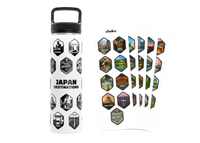
The Traveler Bottle maps 27 key Japan destinations, including the ones with the strongest craft and food souvenir scenes, useful if you're planning which cities to actually spend shopping time in.
What's cheaper in Japan than at home?
The question behind most Japan shopping lists, so here it is directly. The categories with a real, repeatable price advantage:
Japanese sunscreen → Biore UV Aqua Rich retails at ¥800–1,200 in Japan; imported versions cost 3–4x internationally. Anessa is the prestige pick at ¥2,000–3,000. Sheet masks → LuLuLun 32-packs at around ¥1,650 cost significantly more anywhere outside Japan. Stationery → Kuru Toga pencils (¥400–1,500) and Midori notebooks price far below their imported equivalents. Sake → the same labels (Dassai, Dewazakura) price significantly lower in Japan than in import markets. Clothing basics → Uniqlo and Muji sell their full home-market ranges here, including lines and collaborations that never reach overseas stores, at home-market prices before tax-free savings.
Electronics are the category people expect on this list and mostly shouldn't (see the electronics section below). And everything above gets 10% better with tax-free purchasing — rules below, including the November 2026 change.
What are the best things to buy in Japan for under ¥1,000?
The category delivering the most value per yen under ¥1,000 is stationery. Washi tape from MT brand runs ¥150–400 per roll at Itoya in Ginza or any Tokyu Hands branch. Each roll is a craft object in its own right: traditional washi paper in contemporary print designs, often seasonal or regionally limited. Multi-packs run ¥1,500–3,500. Tabimaniajapan's stationery guide lists them as among the most practical carry-out stationery purchases in Japan.
For food under ¥1,000: Kit Kat regional flavors. Tokyo Cheapo's Kit Kat guide documents over 300 flavors released since 2000, with regional exclusives you cannot replicate elsewhere: matcha from Kyoto, melon from Hokkaido, strawberry from Kyushu. Individual bars run ¥100–200 at 7-Eleven, Lawson, and FamilyMart across Japan. The Kit Kat Chocolatory at Seibu Ikebukuro and Daimaru Tokyo Station sells the premium selection at around ¥324 per piece.
The precision stationery pick in this range: Uni Kuru Toga mechanical pencils (¥400–1,500). The self-rotating tip mechanism keeps graphite evenly worn, a detail that made them standard among Japanese architects and designers. Available at Itoya and any stationery shop.
What are the best Japanese food souvenirs worth buying?
The consistent recommendation across Japanese domestic travel writing: buy food omiyage at depachika (department store basement food halls), not at temple souvenir shops. The quality gap is real. Isetan Shinjuku, Mitsukoshi Ginza, and Shibuya Scramble Square carry the same brands for comparable prices, with better product knowledge from staff and careful gift wrapping included.
Wagashi. Tokyo Cheapo's wagashi guide documents the price range: ¥200 for basic dango, ¥2,300–5,800 for Toraya gift boxes. Toraya is Japan's premium wagashi reference — one of the oldest confectionery houses in Japan, operating counters at major depachika. For a thoughtful food gift, a Toraya yokan or seasonal namagashi from a depachika counter outperforms any tourist-area sweet on both quality and presentation.
Tokyo Banana. The quintessential Tokyo omiyage and the one Japanese domestic travelers actually buy at Tokyo Station before heading home. Banana-shaped sponge cakes with custard cream, gift boxes of 8–10 pieces at ¥1,200–2,000, 5–7 day shelf life. Available at every major train station and both airports.
Matcha powder. The quality gap between ceremonial-grade Japanese matcha from Uji and what's available internationally is significant and real. A sealed tin of quality ceremonial grade (¥2,000–8,000) is one of the most consistently recommended Japan purchases in Japanese lifestyle writing — what's available abroad is almost invariably either lower grade or significantly more expensive.
Premium sake. Entry quality runs ¥2,000–5,000; premium junmai daiginjo ¥5,000–15,000. The brands Japanese sources most often recommend for gifting: Dassai (the internationally recognized label), Dewazakura (reliable value alternative), Hatsumago (strong gift value at a lower price point). Department store sake sections and BicCamera Ginza carry reliable selections.
Convenience store food. Konbini items — regional ramen collaborations (¥278–400 per premium cup), seasonal Kit Kat flavors, and Japanese energy drinks — are genuinely Japan-specific and cheap enough to buy in bulk. Not prestige gifts, but specific to Japan in a way that mass-produced souvenirs aren't.
What Japanese beauty and drugstore products are worth buying?
Two products dominate Japanese lifestyle recommendations for beauty shopping: LuLuLun sheet masks and Biore UV Aqua Rich sunscreen. Both represent a genuine quality-to-price advantage over buying the same categories abroad.
Tsunagu Japan's sheet mask guide rates LuLuLun as the consistent pick for daily-use sheet masks: ¥385 for a 7-pack, ¥1,650 for a 32-pack. Available at Matsumoto Kiyoshi and Welcia branches throughout Japan. Kose Clear Turn Babyish is the value alternative at ¥300 for a 7-pack.
Biore UV Aqua Rich (¥800–2,000 for standard sizes) is the most referenced Japanese sunscreen recommendation in lifestyle writing, and the texture difference is real: Japanese sunscreen chemistry uses a different UV filter approach, producing SPF50+ formulations with no white cast and a near-invisible finish. This is why Japanese sunscreen has an international following. Anessa (by Shiseido) is the prestige pick at ¥2,000–3,000.
Sake-kasu skincare — serums built on sake fermentation byproducts, ¥2,500–6,000 per bottle — is the specifically Japanese beauty tradition with no real equivalent abroad. The fermentation approach has a documented history in Japanese skincare dating to sake brewery workers' famously smooth hands. Look for 酒粕 (sake kasu) on the ingredient list. Available at department store beauty counters and specialty skincare shops.
What Japanese craft items are worth the suitcase space?
The craft category where Japan has no equivalent: Wakasa-nuri lacquerware chopsticks from Obama City in Fukui Prefecture. Japan Wonder Travel's chopstick guide documents the production: Obama City produces around 80% of Japan's traditional lacquerware chopsticks, with abalone shell and eggshell embedded in polished lacquer. A quality pair runs ¥3,000–8,000; ornate sets with rests and boxes ¥8,000–15,000. Available at Kappabashi Street in Tokyo.
Japanese ceramics from regional traditions (Arita, Bizen, Kiyomizu-ware) run ¥3,000–15,000 for quality pieces. Tokyo Cheapo's Kappabashi guide covers the 160+ specialist shops on Kappabashi Street, the wholesale kitchen district between Ueno and Asakusa. Cover Nippon at Tokyo Midtown is the curated retail alternative; Japanese Traditional Crafts Aoyama Square carries government-certified traditional craft pieces for visitors who want provenance made explicit.
Kitchen knives from Kappabashi specialists run ¥3,000–8,000 at the entry level; quality gyuto (chef's knife) from ¥10,000–50,000 at shops like Kama-asa (established 1908). The knife is both a functional purchase and a craft object: the same forging tradition applied to cooking that Japan has refined for centuries.
Tenugui (¥800–2,500) and furoshiki (¥1,000–3,500) are the lightweight textile picks. Both flat, practical enough to actually use, and available in contemporary designs alongside traditional motifs. Keiko Furoshiki's guide covers the functional distinctions. Tokyu Hands carries reliable selections of both.
Free for you: our Tokyo Google Maps list We keep a Google Maps list of the must-see spots around Tokyo — restaurants, cafes, shops, viewpoints, and streets worth the detour. Drop your email and we'll send it over.
What Japanese stationery is worth buying?
Japanese precision stationery represents the clearest quality advantage over non-Japanese equivalents in any price range. Midori's official site covers 70+ years of notebook production: the MD notebook uses fountain-pen-friendly paper that most Western alternatives don't match. Traveler's Notebook leather covers run ¥4,000–8,000; A5/A6 notebooks ¥1,000–3,000; refill inserts ¥500–1,500. Available at Itoya in Ginza (12 floors, in business since 1904), Tokyu Hands, and Traveler's Factory in Nakameguro — the specialist destination for Midori products specifically.
MT brand washi tape (¥150–400 per roll) covers the low-budget entry. The seasonal and regional limited editions are the pick for anything that can't be ordered online from home.
What clothing and fashion should you buy in Japan?
Two lists: the craft accessories with a genuine Japanese tradition behind them, and the everyday basics that are simply better bought here.
The craft accessories: tabi socks (split-toe, rooted in traditional Japanese footwear, now produced in contemporary patterns — ¥1,000–3,500 per pair at Tokyu Hands and Harajuku retailers), tenugui and furoshiki (above), and sensu folding fans (¥2,000–8,000 quality; ¥8,000–20,000 artisan).
The everyday basics: Uniqlo and Muji in Japan carry their full home-market ranges — cuts, collaborations, and lines that never reach overseas stores — at home-market prices, with tax-free purchasing on top for qualifying purchases. If you already wear either brand, the flagship stores (Uniqlo Ginza, Muji Ginza) are worth an hour; the selection difference from overseas branches is immediately visible.
Is it worth buying electronics in Japan?
Less than it once was, with two exceptions. The yen's level has made Japan look tempting for electronics, but compatibility kills most of the category: Japan runs 100V power, incompatible abroad without a step-up transformer, and appliance interfaces are often Japanese-only.
The exceptions: cameras and gaming. Cameras from Japanese brands (Fujifilm, Canon, Sony) can be price-competitive with tax-free purchasing at Yodobashi Camera or Bic Camera — check prices against your home market before assuming a saving, but the selection (particularly for Fujifilm) is the deepest anywhere. Gaming and collectibles reward the trip differently: Japan-only editions and merchandise that simply don't exist in other markets.
How does tax-free shopping work — and what changes in November 2026?
The rules are changing mid-trip-planning season, so date-check any advice you read (including this: verified July 2026 against JNTO's official announcement).
Until October 31, 2026 (the current system): present your passport at participating stores and the 10% consumption tax is removed at the register on purchases over ¥5,000. Matsumoto Kiyoshi, Don Quijote, Tokyu Hands, and most department stores participate.
From November 1, 2026 (the new system): you pay the full tax-inclusive price at the store and receive a refund after completing the necessary procedures before departure. Same saving, different mechanics — budget for the full price upfront and expect the refund after you leave.
Already in effect: items shipped home by international parcel stopped qualifying for tax exemption in April 2025. If you want the tax-free price, the goods travel with you.
How much should you budget for shopping in Japan?
JNTO visitor spending statistics show shopping as one of the top three spending categories for international visitors to Japan. Japanese sources suggest thinking in tiers:
Omiyage budget (office and family gifts): ¥5,000–15,000 covers a meaningful amount of individually wrapped confections for multiple recipients. At ¥300–500 per piece, ¥10,000 buys 20–30 pieces — enough for a small to medium office.
Personal purchases: one or two quality items. A ¥6,000 kitchen knife, a ¥3,000 ceramic cup, and a ¥1,500 Midori notebook is a focused list that covers craft, ceramics, and stationery without overbuying.
Beauty/drugstore: ¥3,000–8,000 covers sunscreen, sheet masks, and a fermented skincare product.
The one spend to prioritize: if only one category, Japanese sources consistently recommend food omiyage from depachika. The quality difference from tourist-zone alternatives is largest there, and the gift wrapping turns a food purchase into a considered gift.
How do the best Japan purchases compare by budget?
| Budget | Best category | Top pick | Where to buy |
|---|---|---|---|
| Under ¥1,000 | Stationery or snacks | Washi tape / regional Kit Kat | Itoya, convenience stores |
| ¥1,000–3,000 | Beauty or craft textiles | LuLuLun 32-pack / tenugui | Matsumoto Kiyoshi, Tokyu Hands |
| ¥3,000–8,000 | Craft objects | Wagashi gift box / lacquerware chopsticks | Depachika, Kappabashi |
| ¥8,000–20,000 | Ceramics or premium sake | Artisan ceramic piece / junmai daiginjo | Kappabashi, department store sake section |
| ¥20,000+ | Kitchen knives or camera gear | Quality gyuto from Kama-asa / tax-free camera body | Kappabashi Street, Yodobashi |
| Best for | Light packers | Limited-time carry-on shoppers | Depachika for food; Kappabashi for craft |
Gachapon (¥100–500 per capsule) covers the novelty category at any budget. ATT Japan's gachapon guide covers the Akihabara Gachapon Hall (open 11:00–20:00) as the most concentrated selection in Tokyo.
Where should you buy things in Japan?
The consistent recommendation from Japanese sources: buy from specialists, not from tourist-zone convenience. Every category has a better destination than the shops nearest major attractions.
| What you're buying | Go to | Why |
|---|---|---|
| Food omiyage | Depachika (Isetan, Mitsukoshi, Shibuya Scramble Square) | Superior quality, complimentary gift wrapping |
| Quick Tokyo omiyage | Tokyo Station Gransta | All major brands in one underground floor |
| Beauty/drugstore | Matsumoto Kiyoshi, Welcia, Don Quijote | Tax-free, widest range, competitive pricing |
| Ceramics and knives | Kappabashi Street (Ueno area) | 160+ specialist shops, specialist knowledge |
| Stationery | Itoya Ginza (12 floors) | Every major Japanese stationery brand |
| Practical design | Tokyu Hands | Floors of craft, tools, lifestyle products |
| Certified craft | Japanese Traditional Crafts Aoyama Square | Government-certified traditional craft pieces |
| Clothing basics | Uniqlo Ginza, Muji Ginza flagships | Full home-market range, tax-free |
| Cameras/electronics | Yodobashi Camera, Bic Camera | Tax-free counters, deepest selection |
| Avoid | Souvenir shops next to major temples | Tourist pricing, lower quality, generic merchandise |
FAQ
What should you buy in Japan? The five categories Japanese sources consistently recommend: regional food gifts from depachika, Japanese drugstore beauty (sunscreen, sheet masks, fermented skincare), craft objects (ceramics, lacquerware chopsticks, kitchen knives), precision stationery, and premium sake. For yourself: clothing basics from Uniqlo and Muji's home-market ranges, konbini food, and camera gear with tax-free pricing.
What is cheaper in Japan than at home? Japanese sunscreen (¥800–1,200 in Japan versus 3–4x imported), LuLuLun sheet masks (¥1,650 for 32), Japanese stationery (Kuru Toga at ¥400–1,500), and sake at the same labels. Uniqlo and Muji sell home-market ranges that never reach overseas stores. Tax-free purchasing removes the 10% consumption tax on qualifying purchases over ¥5,000.
How does tax-free shopping work in Japan? Until October 31, 2026: passport at the register, 10% tax removed at purchase, ¥5,000 minimum. From November 1, 2026: pay full price, claim the refund before departure. Items shipped home by international parcel stopped qualifying in April 2025. Verified against JNTO's official announcement, July 2026.
Is it worth buying electronics in Japan? Selectively. Cameras (Fujifilm, Canon, Sony) can be price-competitive with tax-free purchasing at Yodobashi or Bic Camera — check against home prices first. Avoid appliances: 100V power and Japanese-only interfaces. Gaming and Japan-only collectibles are the better electronics-adjacent buy.
What Japanese snacks are worth buying at a convenience store? Regional Kit Kat flavors, premium cup ramen collaborations with major ramen restaurants (¥278–400), seasonal onigiri fillings (eat in-country), and Japanese energy drinks. The konbini as a shopping experience is worth the time regardless of what you buy.
What should you not buy in Japan as a souvenir? Mass-produced maneki-neko near temples (often not made in Japan), generic TOKYO merchandise, cheap chopstick sets from temple market stalls, and high-wattage appliances. The filter: does this product have a genuine Japan story? If it's unchanged at the airport gift shop, something better exists in the city.
Is Kappabashi Street worth visiting for shopping? For ceramics, kitchen knives, and lacquerware chopsticks, yes. 160+ specialist shops, mostly at wholesale or near-wholesale prices. Plan 1–2 hours. About 10 minutes walk from Ueno or Asakusa. Not the right stop for food gifting — depachika covers that better.
Can you buy the best Japan souvenirs at the airport? Narita and Haneda carry the main Tokyo food omiyage (Tokyo Banana, Yoku Moku, Press Butter Sand) at 10–20% above in-city prices with a narrower range. Fine as a last resort — the airport souvenirs guide covers what's actually worth buying there. Stationery and craft objects are not well represented at airports; buy those in the city.
Sources
- JNTO — Changes are coming to tax-free shopping in Japan — official: refund system from 2026-11-01, parcel exclusion since 2025-04-01
- Tokyo Cheapo — Kit Kat flavor guide — regional flavors, prices
- Tokyo Cheapo — Wagashi guide — Toraya and depachika price ranges
- Tsunagu Japan — Sheet mask guide — LuLuLun and Kose Clear Turn
- Tokyo Cheapo — Kappabashi guide — ceramics, knives, 160+ shops
- Japan Wonder Travel — Chopstick guide — Wakasa-nuri, Obama City production
- Midori official site — Traveler's Notebook specs, pricing
- Tabimaniajapan — Stationery guide — washi tape, Itoya
- Keiko Furoshiki — tenugui and furoshiki distinctions
- JNTO Visitor Statistics — visitor spending by category
- ATT Japan — Gachapon guide — Akihabara Gachapon Hall
Activities and tours in Tokyo
cheku is a GetYourGuide partner. We link to tours that handle the parts of travel that eat your time, getting there, booking ahead, language, context you'd otherwise miss. If you book through our link, we earn a small commission at no extra cost to you.


