
Japanese summer is hot and intensely humid, the most physically demanding season to visit and to pack for. Pack light, breathable, quick-drying clothing, serious sun protection, and the cooling kit locals rely on. June adds the rainy season, so bring rain gear too. Above all, pack to manage heat, not just to dress for it.
A Japan summer packing list is less about clothing and more about heat management. June, July and August are hot, and the humidity makes them feel hotter still, so the traveler who packs the way they would for a warm beach holiday tends to struggle. Summer in Japan rewards a different mindset: every item is judged on whether it helps you stay cool, dry and protected from the sun.
The reward for getting it right is real. Summer is festival season, the season of fireworks and evening matsuri, of mountains and northern Japan at their greenest. You just have to be equipped for the middle of the day.
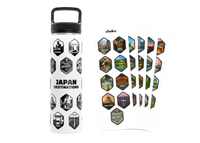
We built this list from more than 100 recent Japan packing videos, focused on what travelers said actually helped and what they wished they had brought. For a checklist that adjusts to your exact dates, our free Japan packing tool builds one around your travel month, and the Traveler Bottle maps 27 of Japan's destinations to plan the trip around.
What is summer like in Japan?
Hot, and humid in a way that defines the whole season. The temperature alone does not tell the story. It is the humidity that makes Japanese summer genuinely demanding.
Across Tokyo, Kyoto and Osaka, summer daytime temperatures run from the high 20s in June into the mid 30s Celsius by August, and the air is heavy and wet throughout. Kyoto, sitting in a basin, is notorious for trapping the heat. The practical effect is that you sweat constantly, clothes stay damp, and the middle of the day asks a lot of you.
The season has a shape. June brings the rainy season, tsuyu, with regular heavy rain and high humidity. July starts wet, then the rainy season lifts, usually mid-month, and hands over to clear, intense heat. August is the peak: the hottest, most humid stretch of the year, and the time typhoons become a possibility. Northern Japan and Hokkaido are noticeably more comfortable all summer, which is exactly why Japanese travelers head there to escape the heat.
One practical consequence of all this humidity is worth saying plainly: in a Japanese summer you will sweat, constantly and a lot, and no amount of clothing prevents it. The goal is not to stay dry but to recover quickly, which is why quick-drying fabric and a spare top do more for your comfort than anything else you can pack. Accepting that reframes the whole list. You are equipping yourself to manage heat across a long day, not hoping to dress your way around it, and once that clicks the right items become obvious.
What to pack for Japan in June?
June packs for heat and rain at the same time. The rainy season is the month's defining feature, so rain protection moves to the top of the list.
Bring a packable rain jacket and a compact umbrella. June rain is frequent and can be heavy, and being caught without cover turns a good day damp and miserable. Alongside the rain gear, pack as you would for any hot, humid month: light, breathable, quick-drying clothing, because cotton that soaks through in a downpour or with sweat stays wet for hours.
Quick-drying fabric is the quiet hero of a June trip. It handles both the rain and the humidity, and it lets you rinse something in the sink and have it ready by morning. Sun protection still matters between the showers, and comfortable shoes that cope with wet pavement complete the list.
What to pack for Japan in July?
July is a month of two halves: wet, then fiercely hot. Pack for both, because the rainy season usually lifts partway through.
Early July still belongs to tsuyu, so keep the rain gear in the bag. Once the rainy season ends, the heat takes over in earnest. The core July kit is light, breathable, quick-drying clothing, strong sun protection, and the cooling items covered below. July is also peak festival season, with fireworks displays and summer matsuri filling the evenings, so something light and comfortable for a long, warm night out is worth a thought.
Hydration becomes a daily habit rather than an afterthought. You do not need to carry liters of water, vending machines are genuinely everywhere, but you do need to keep drinking.
What to pack for Japan in August?
August is the hottest, most humid month, and the one to take most seriously. Everything that helps in July helps more in August.
Pack the lightest, most breathable clothing you own, all of it quick-drying. Sun protection is not optional: sunscreen, a hat and sunglasses all earn their place, and Japan itself treats sun protection as routine. The cooling kit becomes essential rather than nice to have. Add a light layer, too, for the indoors, because Japanese air conditioning in summer is powerful and the swing from a 35-degree street to a chilled train or department store is sharp.
August also carries a small typhoon risk, so a compact umbrella stays in the bag. If your itinerary can flex, this is the month that most rewards mornings, evenings and air-conditioned afternoons over midday sightseeing.
How do you actually pack for the heat and humidity?
The summer skill is packing kit that manages heat, not just clothing that suits it. This is the section most warm-weather packing lists skip, and the one that decides how your trip feels.
Three fabrics-and-gear principles do the heavy lifting. First, every garment should be light, loose and quick-drying; synthetic blends and technical fabrics beat heavy cotton, which holds sweat. Second, pack the cooling kit Japanese summers run on: a folding hand fan, cooling sweat wipes (sold in every convenience store and pharmacy), and a small towel to carry, which doubles for sweat and for the many public restrooms without hand dryers. A clip-on portable fan has become a common sight too. Third, pack a light layer for the indoors, because the air conditioning is genuinely cold.
First time in a Japanese summer: prioritize the cooling kit. A fan, cooling wipes and a sweat towel do more for your day than another change of outfit. Traveling in June: treat rain gear as essential, not optional. A packable jacket and compact umbrella belong in the bag. Sensitive to heat: build your itinerary around mornings and evenings, and treat the midday hours as indoor, air-conditioned time.
For the broader question of what you genuinely need versus what to leave home, our guide to what you actually need for Japan covers cash, adapters and the rest.
Free for you: our Japan packing tool Pick your exact travel month and get a checklist built for it, with the summer items that matter and the ones to skip. Drop your email and we will send the full trip planner too.
What about Japan's summer festivals?
Summer is festival season, and it changes your evenings more than your packing. June through August fill with matsuri and fireworks displays, hanabi, and they are among the best reasons to visit Japan in the heat rather than despite it.
The good news for your suitcase is that you do not need to pack anything special. The classic festival garment is the yukata, a light cotton summer kimono, and you do not bring one from home. If you want the experience, yukata are widely available to rent for the day in tourist areas, and shops will dress you and style your hair as part of it. Buying one as a souvenir is just as easy once you are there. Either way, it is not a packing decision you make at home, so resist the urge to pack festival wear. Beyond the heat, a few everyday dress cues are worth knowing before you go — our guide to what not to wear in Japan covers temple coverage, shoes, and the subtle ones.
What festivals do change is how you think about your evenings. A fireworks display means hours sitting outdoors, often on the ground, in a crowd, after an already hot day. A thin foldable mat earns its tiny packed size here, exactly as it does for spring blossom viewing. Comfortable footwear matters more than usual, because festival crowds mean long stretches of slow standing and walking. And the cooling kit, the fan and the wipes, is just as welcome at a warm evening matsuri as it is at midday. Pack for the festival as an extension of the summer day it follows, not as a separate occasion that needs its own outfit.
What are the most common summer packing mistakes?
Almost every summer packing regret traces back to underestimating the humidity. A few mistakes came up again and again in the videos we studied.
The first is packing heavy cotton. It feels breathable on a hanger, but it soaks through and stays damp in Japanese humidity, and you spend the day in clammy clothes. Quick-drying fabric solves it. The second is packing too many outfits. Travelers assume they need a fresh set for every day, then sweat through everything anyway; a smaller quick-dry wardrobe you rinse as you go works far better, and coin laundries are everywhere.
The third mistake is treating sun and cooling gear as optional extras. In a Japanese summer they are core kit, not afterthoughts. The fourth is forgetting the indoor layer and being cold on every train. And the fifth, specific to June, is underestimating the rainy season and arriving with no rain protection at all. None of the fixes add real weight. They just shift your packing from dressing for warm weather to actively managing heat, which is what a Japanese summer asks.
FAQ
How hot is Japan in summer? Very hot, and the humidity is the real challenge. June through August, Tokyo, Kyoto and Osaka run from the high 20s into the mid 30s Celsius, feeling hotter still in the humidity. August is the peak. Pack to manage heat actively, not just to dress for warmth.
What should I pack for Japan in August? Light, breathable, quick-drying clothing and serious sun protection: sunscreen, a hat and sunglasses. Add the cooling kit, a hand fan, cooling wipes and a small towel, plus a light layer for the cold indoor air conditioning.
Do you need rain gear for Japan in summer? Yes, especially in June, which is the rainy season, with regular heavy rain. Bring a packable rain jacket and compact umbrella. July and August are drier but bring sudden downpours, so a small umbrella stays useful.
How much clothing do you need for two weeks in Japan in summer? Far less than two weeks of outfits. In the humidity you will sweat through clothes daily, so pack four or five quick-drying tops and two or three bottoms and do laundry mid-trip rather than hauling fourteen days of clothes. Most hotels have coin laundry and it is cheap and easy. Packing light and washing beats over-packing for a summer trip.
How we built this list: the items above are digested from more than 100 recent Japan packing videos (2025 to 2026), weighted toward what travelers reported actually using and wishing they had brought. Temperatures are typical ranges for Tokyo, Kyoto and Osaka; northern Japan and Hokkaido are cooler.
Activities and tours in Tokyo
cheku is a GetYourGuide partner. We link to tours that handle the parts of travel that eat your time, getting there, booking ahead, language, context you'd otherwise miss. If you book through our link, we earn a small commission at no extra cost to you.


