
In Akihabara proper, there are 4–5 restaurants worth eating at. Seven minutes west on foot is Kanda Suda-cho, a neighborhood where multiple restaurants have operated in the same pre-war buildings since before World War II. Japanese people make specific trips for specific dishes. Tourists almost never find it.
We live in Tokyo and follow Japanese food sources. Most coverage of Akihabara eating focuses on the shopping district itself, which is the wrong frame. Akihabara's actual food story is about what surrounds it.
This guide builds on our full Akihabara neighborhood guide and goes deeper on what Japanese food sources say. The research draws from San-tatsu (散歩の達人) — a respected Japanese walking and local culture magazine — along with Tabelog rankings and a detailed Akihabara lunch map assembled by a regular local visitor over three years.
What does the food scene around Akihabara actually look like?
The food near Akihabara divides into three zones: Akihabara proper (4–5 legitimately good restaurants among a lot of tourist-facing food), Kanda Suda-cho 7 minutes west (one of Tokyo's most historically significant restaurant neighborhoods, almost entirely tourist-free), and Kanda Curry Street (50+ curry shops serving the area's large office worker population).
Kanda holds one of Tokyo's densest concentrations of revered old restaurants, many operating in the same buildings since the Meiji era. The area's preservation is geographical luck: Japanese local-history coverage of the district explains that in the 1945 Tokyo air raids, the Kanda River acted as a firebreak that spared much of the neighborhood while the surrounding city burned, letting a meaningful share of its prewar buildings survive into the present. The buildings and the businesses inside them have been there ever since.
From Akihabara's Electric Town Exit, Kanda Suda-cho is 7 minutes on foot heading west. Most Akihabara visitors never attempt it.
What should you eat in Akihabara proper?
The three restaurants worth prioritising in Akihabara proper are Tonkatsu Marugo (Michelin Bib Gourmand), Menya Musashi (consistently cited as the district's best ramen), and Kyushu Jangara (the 1984 flagship with a 3.46 Tabelog score and daily queues). All three have no English infrastructure and lunch lines that form and clear quickly — the standard signal for local-facing operation.
Tonkatsu Marugo is the simplest to recommend: a Michelin Bib Gourmand for traditional breaded pork cutlet, beloved by local office workers for decades. Lines form before opening.
Menya Musashi Bujin, one minute from Akihabara Station's Showacho exit and open since 2009, serves rich seafood-and-pork-bone tsukemen with a signature 100g+ chashu block. A Japanese ranking of Menya Musashi's various locations puts the Akihabara Bujin branch in first place among fans of the chain. Price: ¥900–1,200.
Kyushu Jangara at 外神田3-11-6 is the original flagship of a respected Tokyo ramen group, open since 1984. Tabelog rates it 3.46 with 621 reviews. The signature bowl uses pork bone, chicken, and vegetable broth tuned for Tokyo palates — less funky than Hakata-style, cleaner and creamier. Ranked as Akihabara's top ramen on Google reviews as of early 2025.
Two more worth knowing: Tsumakoizaka Keigo (Michelin-recognized soba and tempura, unusual quality for the area) and Yakiniku Motoyama (Kobe beef specialist since 1975, Akihabara location opened November 2024 — serious wagyu without tourist pricing).
The photographer's eye: The Kanda Suda-cho street on a weekday morning. The restaurant signs are hand-painted, the buildings lean slightly, and the storefronts are narrow enough that two people can't stand side by side in the doorways. The absence of foot traffic at 10am — before the lunch rush fills every table — gives you the street as it must have looked for the past century. A 35mm lens at street level, looking along the row of old facades, captures what gets lost once the lunchtime queues arrive.
What is Kanda Suda-cho and why do serious Tokyo food people go there?
Kanda Suda-cho holds several of Tokyo's oldest continuously operating restaurants in their original buildings. Kanda Yabusoba (Tabelog 3.79, est. 1880) is one of the three great Edo soba houses. Botan (Tabelog 3.67, est. 1897) serves tori sukiyaki — chicken hot pot in the Edo style — in a building that survived World War II. Isegen (Tabelog 3.63, est. 1830) is Tokyo's only remaining monkfish nabe specialist. Walking from one to the next covers less than 500 meters.
Kanda Yabusoba has been making Edo soba since 1880. The original building burned in 2013 and was meticulously rebuilt and reopened in 2014 to preserve the historical character. Soba is cut thin and served cold with refined dashi tsuyu. There is no English signage inside, intentionally. Price: ¥1,000–2,000. Japanese journalists, authors, and Tokyo old-timers have eaten here across generations.
Botan serves tori sukiyaki — chicken thigh simmered in an unchanged secret sauce over binchotan charcoal in iron pots. It is one of the few remaining Tokyo restaurants still doing this Edo-style format (beef sukiyaki is now far more common). The building survived wartime bombing raids. Dinner only; reservations recommended. Price: ¥4,000–6,000.
Isegen has operated since 1830 and serves ankō nabe — monkfish hot pot, specifically the "seven tools of anko" preparation using every edible part of the fish. The 1937 building is a designated Important Tokyo Historical Structure. Seventh-generation family ownership. Dinner only; seasonal (autumn through spring); reservations essential. Price: ¥8,000–15,000.
Kanda Matsuya (est. 1884, building 1927 — a Tokyo-designated historical structure) is the peer soba house to Yabusoba, two minutes' walk away. Its handcut seiro soba has a slightly earthier character. On Tabelog it appears alongside Yabusoba in Japanese food criticism as the two soba masters of Kanda. Price: ¥800–1,800.
After soba, Takemura (est. 1930) is the right stop for Japanese sweets. The kanmi-dokoro specializes in anmitsu and fried manju — the latter specifically not available anywhere else at this quality. Author Ikenami Shotaro (池波正太郎) was a regular and wrote about it frequently; in Japanese food culture, a literary connection of this kind carries significant weight.
Visit Chiyoda's guide to the Kanda Suda-cho historic restaurant area describes the geographic reason for the concentration: five Edo-period roads converged at Suda-cho, creating a market town that attracted restaurants to feed its traders and travelers — and those restaurants remained even as the city rebuilt around them.
Where do Akihabara office workers eat lunch?
Kanda Curry Street — over 50 curry shops between Kanda and Akihabara stations — is where the area's large office population eats. Visit Chiyoda identifies it as a genuine institution, dating from Japan's high-growth era when office workers needed fast, filling, affordable lunch. Topca Kanda is the most decorated: European-style curry simmered for 12+ hours with 20+ spices and multiple Kanda Curry Grand Prix wins.
The category is worth knowing because it represents authentic working Tokyo food culture rather than tourist-facing food. The curry shops are packed 11:30–13:00 on weekdays and emptied by 13:15. Show up outside those windows for a shorter wait.
Free for you: our Akihabara and Kanda eating map We've pinned every restaurant in this guide — Akihabara proper, Kanda Suda-cho, and Curry Street — into one shareable Google Maps list. Drop your email and we'll send it.
What should you avoid eating in Akihabara?
The standard tourist-trap tell applies everywhere: large laminated photo menus in multiple languages, tables available at peak hour, staff near the entrance. Japanese food sources specifically flag maid cafes with aggressive street touts — a category where hidden charges (seat fees, time fees, photo fees) stack unpredictably.
Nikkan SPA! covered the predatory shift in Akihabara's maid cafe culture post-2020, and Gendai Business reported on hidden charges reaching ¥40,000–50,000 at some establishments. If a maid cafe has staff outside actively leafleting, that is the signal. Maidreamin (covered in our Akihabara guide) is transparent about its pricing; that's the exception.
For regular restaurants: avoid anything in the main electronics buildings (food courts at Yodobashi pricing; generic chain quality). Walk instead toward the backstreets where the handwritten signs are.
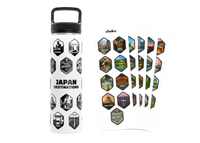
If you're building a Japan itinerary that includes Akihabara, the Traveler Bottle maps 27 key Japan destinations in one piece — designed for visitors working out which stops deserve a full day and which deserve a half.
FAQ
Where do Japanese locals eat in Akihabara?
In Akihabara proper, locals eat at Tonkatsu Marugo (Michelin Bib Gourmand), Menya Musashi (seafood ramen), and Kyushu Jangara (the 1984 flagship, Tabelog 3.46). Seven minutes west is Kanda Suda-cho — Kanda Yabusoba (Tabelog 3.79, est. 1880), Botan (tori sukiyaki since 1897), and Isegen (monkfish nabe since 1830). Tourists almost never find it.
What is Kanda Suda-cho and why should I eat there?
Kanda Suda-cho is 5–10 minutes from Akihabara Station and holds one of Tokyo's densest concentrations of pre-war restaurants — many operating in their original Meiji or Taisho-era buildings. Kanda Yabusoba has been making Edo soba since 1880; Botan has served tori sukiyaki since 1897; Isegen has made monkfish nabe since 1830. Japanese locals make specific pilgrimages for specific dishes. The area is essentially tourist-free.
Is there good food in Akihabara?
In the main district, yes, but you need to know where to go. The legitimate spots — Tonkatsu Marugo, Menya Musashi, Kyushu Jangara — have no English infrastructure and lunch lines that clear by 12:45. The best food near Akihabara is in Kanda Suda-cho, 7 minutes on foot from the Electric Town Exit.
What is Kanda Curry Street?
Kanda Curry Street is a stretch of 50+ curry shops near Kanda and Akihabara stations, feeding office workers since the 1960s and 70s. Topca Kanda is the most decorated: European-style curry with 20+ spices, simmered 12 hours, multiple Kanda Curry Grand Prix wins. It's Tokyo's most concentrated curry district, almost entirely unknown to visitors.
Sources
- https://tabelog.com/en/tokyo/A1310/A131002/13000334/ — Kanda Yabusoba on Tabelog (score 3.79, est. 1880)
- https://tabelog.com/en/tokyo/A1310/A131002/13000336/ — Botan on Tabelog (tori sukiyaki since 1897, score 3.67)
- https://tabelog.com/en/tokyo/A1310/A131002/13000338/ — Isegen on Tabelog (monkfish nabe since 1830, score 3.63)
- https://tabelog.com/en/tokyo/A1310/A131002/13000340/ — Kanda Matsuya on Tabelog (Edo soba, est. 1884)
- https://tabelog.com/en/tokyo/A1310/A131001/13000344/ — Kyushu Jangara on Tabelog (score 3.46)
- https://nlab.itmedia.co.jp/research/articles/864602/ — ITmedia nlab: fan ranking of Menya Musashi locations (Japanese)
- https://chawanbushi.com/post-55916/ — Complete Akihabara lunch map (3 years of regular visits)
- https://note.com/tomiyama_kei/n/n255eec6fa91e — Personal local Akihabara lunch picks on note.com
- https://san-tatsu.jp/collects/175318/ — 散歩の達人 (San-tatsu) Akihabara lunch picks
- https://visit-chiyoda.tokyo/app/spot/detail/498 — Visit Chiyoda: Kanda Suda-cho historic restaurant area
- https://visit-chiyoda.tokyo/app/spot/detail/500 — Visit Chiyoda: Kanda Curry Street
- https://urbanlife.tokyo/post/4128/ — Urban Life Tokyo: Kanda Suda-cho's prewar buildings and the Kanda River firebreak (Japanese)
- https://nikkan-spa.jp/1962910 — Nikkan SPA!: Report on predatory maid cafe culture post-2020
- https://gendai.media/articles/-/76853 — Gendai Business: Hidden charges in Akihabara maid cafes
Activities and tours in Tokyo
cheku is a GetYourGuide partner. We link to tours that handle the parts of travel that eat your time, getting there, booking ahead, language, context you'd otherwise miss. If you book through our link, we earn a small commission at no extra cost to you.


