
The best places to eat in Shibuya are not visible from the Scramble Crossing. They're in the backstreets of Tomigaya, down a 70-year-old drinking alley, and behind unmarked doors that Tabelog reviewers have been returning to for years. Here's what Japanese food sources say — not the tourist strip.
We live in Tokyo and follow Japanese food media. The gap between where tourists eat in Shibuya and where Japanese people eat in Shibuya is larger than in almost any other Tokyo neighborhood, because Shibuya's tourist geography — the Scramble Crossing, Center-gai, the department store restaurants — is so dominant that the real food scene is effectively invisible to visitors.
This guide is built from Tabelog's Shibuya rankings, note.com recommendations from regular Shibuya eaters, and a decade of living in the city. If you're planning the full Shibuya day, our Shibuya neighborhood guide covers everything beyond eating.
What makes Shibuya's food scene confusing for visitors?
The problem is geography. Shibuya's most-visited area — the Scramble Crossing and Center-gai — is optimised for throughput, not quality. The restaurants Japanese people actually return to are 5–15 minutes on foot into the backstreets, in neighborhoods that don't appear on tourist maps.
Multiple Japanese food sources identify the same tell: if a restaurant has a large laminated photo menu in multiple languages and staff hovering near the entrance, skip it. The local-respected restaurants have handwritten specials, paper menus in Japanese with small type, and lunch lines that form and dissolve in under 30 minutes.
The tourist trap concentration is not accidental. Center-gai and the streets immediately around the crossing are high-rent commercial real estate where fast food chains and tourist-facing restaurants dominate. The economics make quality difficult. Two streets east or west, the economics change and so does the food.
Which restaurants do Tabelog's most respected reviewers pick in Shibuya?
At the serious end, Tabelog's Shibuya top ranking is disproportionately yakitori and Japanese counter dining. Tori Chataro (4.40 score, Tabelog Silver 2026) and Sumibi Yaki Yuji (4.16, Tabelog Bronze 2020–2026) represent the categories Shibuya does better than most Tokyo districts. The ramen benchmark is Hayashi — 10 seats, cash only, nine consecutive years on Tabelog's Tokyo 100 list.
Tori Chataro holds a 4.40 Tabelog score and a 2026 Silver Award. Owner Takuya Kaneko personally sources six varieties of chicken, all raised longer than standard to concentrate flavor. Opened 2013; notoriously hard to book; no English menus. This is not a tourist-facing operation. Price: ¥20,000–29,999 per person. For anyone who eats yakitori seriously in Japan, this is the name worth knowing in Shibuya.
Sumibi Yaki Yuji scored Tabelog Bronze continuously from 2020–2026, and has been on Tabelog's Yakiniku Tokyo 100 since 2018. It's a horumon specialist — offal yakiniku cooked over charcoal. The category itself skews toward Japanese regulars: horumon is not food tourists seek out, which means the clientele is exactly right. Price: ¥6,000–9,999. On Tabelog, reviewers consistently cite meticulous preparation and a nostalgic neighborhood atmosphere.
Hayashi is Shibuya's most credentialed ramen shop: 10-seat counter, cash only, no service on Wednesdays or Sundays, closes when sold out. It has appeared on Tabelog's Ramen Tokyo 100 list for nine consecutive years, 2017–2025. Two minutes from Shibuya Station's West Exit. That nine-year run is the simplest possible signal of sustained local credibility.
LATURE sits at 4.24 on Tabelog with consecutive award recognition. The French-Japanese restaurant, located near Aoyama Gakuin's west gate inside Shibuya-ku, is covered by Japanese food media for the chef's sourcing approach (direct from fishermen practicing voluntary resource conservation, with owned agricultural fields) rather than for any tourist appeal. Lunch courses from ¥8,800; dinner ¥17,800–24,000.
The photographer's eye: Nonbei Yokocho at 8pm in autumn. The alley is two meters wide; the signs are handwritten and backlit; the izakaya windows glow warm against the cold air. Shoot from the alley entrance looking in — a 35mm lens captures the compression of 40 bars in a single vanishing-point corridor. The contrast with the neon excess of Center-gai, six minutes away on foot, is the Shibuya story in two photographs.
Where do you eat cheaply in Shibuya the way locals do?
A note.com post by a local food writer covering Shibuya's non-tourist lunch scene identifies the same pocket repeatedly: Kamiyamacho and Udagawacho, where small counter restaurants have been feeding the neighborhood for decades. Prices run ¥1,000–1,500 for a lunch set that includes rice, miso, and a main.
The note.com writer's specific picks:
Yashima in Maruyamacho has been serving Sanuki udon since moving to Shibuya in 1976 (the parent shop opened in 1936 in Kagawa, where the udon style originated). Thick, chewy noodles; guests can watch the fresh udon being made through a kitchen window. Under ¥1,500. On Tabelog, it holds a steady following as one of Shibuya's reliable neighborhood spots. Not the cheapest udon in the city, but the quality of the noodle is what justifies the trip.
Zuicho in Udagawacho serves a single menu item: tonkatsu rice bowl with egg, layered for textural contrast. Around ¥1,500. Counter seating; queues at noon. The note.com writer describes it as the kind of place where the menu has not changed in years because it does not need to.
Kakan Tomigaya, covered below under the neighborhood section, also runs ¥1,000–1,500 for lunch and is worth including here for the price-to-quality ratio.
What is Tomigaya and why do food-obsessed Tokyoites go there?
Tomigaya is a quiet residential neighborhood west of Yoyogi Park, inside Shibuya-ku. The local neighborhood site Tomigaya Shinbun describes it as a place where a short walk from Shibuya Station gives way to a calm, low-key streetscape quiet enough to hear birdsong, dotted with stylish independent cafes. The concentration of independently operated food businesses makes it the most coherent food neighborhood in Shibuya-ku.
Kakan Tomigaya is the most cited restaurant in Japanese food writing about this area, a Sichuan mapo tofu specialist that started in Kamakura before opening its Tomigaya location, customisable by Sichuan pepper and chili intensity. Regular waits outside — the visible sign of repeat local customers, not tourist queues. Five minutes from Yoyogi Park Station.
Minimal Tomigaya, the bean-to-bar craft chocolate shop, has a Tabelog Sweets Tokyo 100 recognition and has been in the neighborhood since 2014. No additives, no aroma chemicals. It's the kind of food business that defines Tomigaya's character: small, carefully sourced, with no tourist infrastructure.
The area is a 15-minute walk from Shibuya Station or three minutes from Yoyogi Koen Station on the Chiyoda Line. Tokyoites living in adjacent neighborhoods treat it as a neighborhood food destination, not a destination restaurant strip.
Free for you: our Google Maps list for Shibuya eating We've pinned every restaurant, neighborhood, and alley in this guide into one shareable Google Maps list. Drop your email and we'll send it — no copying addresses.
Where do you go for drinks and izakaya in Shibuya?
The only answer from Japanese sources is Nonbei Yokocho. The 2-meter-wide alley has operated for over 70 years with around 40 small izakayas, each with 4–8 seats. Every Japanese food source that covers Shibuya evenings points here as the remaining piece of old Shibuya.
Japanese coverage of the alley's history traces it back to the postwar black markets of Showa 25 (1950), when food stalls displaced by regulation regrouped here into the roughly 2-to-3-tsubo shops that still define the alley today; grilled skewers and oden were the original draw, and long-running names from that era, like Torifuku and Nadaichi, are still open. It opens around 6pm. The bars are small enough that you talk to whoever is next to you. There is no equivalent anywhere near Center-gai.
Toritake Sohonten on Dogenzaka (established 1963) is the other anchor of Shibuya's old drinking culture. Multi-floor building; known for yakitori and grilled eel; by early afternoon it is already full of local regulars doing hirunomi — daytime drinking with skewers. On Tabelog, it is listed simply and without fanfare, which is exactly right.
What should you avoid eating in Shibuya?
Anything visible from or marketed around the Scramble Crossing. That includes the restaurant floors in Hikarie, Scramble Square, and the 109 complex. Multiple Japanese food sources identify the immediate Center-gai vicinity as overpriced tourist infrastructure, not local eating.
It comes down to the same economics behind every tourist-facing strip: Center-gai and the streets immediately around the crossing are high-rent commercial real estate, which pushes toward fast turnover and brand recognition rather than the kind of quality a neighborhood shokudo builds over decades. The queues there are long because of foot traffic, not because the food is good.
The practical test: if you can see the Scramble Crossing from the restaurant entrance, keep walking.
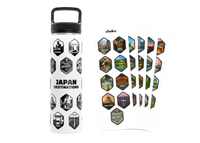
The restaurants on this list — Tori Chataro, Hayashi, Kakan, Yashima, Nonbei Yokocho — are what Japanese food sources return to when they write about Shibuya. If you're building a full Japan trip and want to track each destination you visit, the Traveler Bottle maps 27 key Japan stops including Shibuya, designed for visitors planning a two-week route.
FAQ
Where do Japanese locals eat in Shibuya?
Japanese Tabelog reviewers and local food writers consistently recommend the Tomigaya and Kamiyamacho neighborhoods for everyday eating — Kakan for Sichuan, Yashima for udon (since 1976), and small lunch counters in Udagawacho. For evenings, Nonbei Yokocho (70-year-old alley with 40 tiny izakayas) and Toritake (yakitori since 1963) are the local picks. The area around the Scramble Crossing is where tourists eat.
Is Shibuya good for food?
Yes, if you know where to go. Shibuya has some of Tokyo's most Tabelog-respected restaurants — Tori Chataro (4.40 score, Tabelog Silver 2026) and LATURE (4.24, Tabelog Bronze) draw serious Japanese diners specifically to Shibuya. The error is eating on or near the main shopping strip. Five to fifteen minutes on foot into the backstreets is where the food worth eating is.
What is Nonbei Yokocho in Shibuya?
Nonbei Yokocho is a 2-meter-wide alley that has been running for over 70 years, with around 40 tiny izakayas and bars — each with 4–8 seats. It opens around 6pm. It's the most intact version of old Shibuya, and local food writers consistently recommend it as the antidote to the corporate entertainment zone around Center-gai.
What is Tomigaya and why do Tokyoites eat there?
Tomigaya is a quiet residential neighborhood west of Yoyogi Park, inside Shibuya-ku. It has a concentration of small independent restaurants and food shops well-known to Tokyo food people but essentially absent from tourist maps. Kakan (Sichuan mapo tofu), Minimal (bean-to-bar chocolate), and a string of local lunch counters make it worth the 15-minute walk from Shibuya Station.
Sources
- https://tabelog.com/tokyo/A1303/A130301/rank/ — Tabelog Shibuya popular restaurant rankings
- https://tabelog.com/en/tokyo/A1303/A130301/13157208/ — Tori Chataro on Tabelog
- https://tabelog.com/en/tokyo/A1303/A130301/13001794/ — Sumibi Yaki Yuji on Tabelog
- https://tabelog.com/en/tokyo/A1303/A130301/13003367/ — Hayashi on Tabelog (9 consecutive Tabelog 100 years)
- https://tabelog.com/en/tokyo/A1303/A130301/13198692/ — LATURE on Tabelog
- https://tabelog.com/en/tokyo/A1303/A130301/13001702/ — Toritake Sohonten on Tabelog
- https://tabelog.com/en/tokyo/A1303/A130301/13159039/ — Yashima udon on Tabelog
- https://note.com/poketc_meganest/n/nc0f9145e0199 — Local food writer's non-tourist Shibuya restaurant picks
- https://otonano-shumatsu.com/articles/230360 — Nonbei Yokocho's postwar black-market history (Japanese)
- https://tomigaya-shinbun.com/tomigaya.html/ — Tomigaya Shinbun on the neighborhood's character (Japanese)
- https://tabelog.com/en/tokyo/A1318/A131810/13271864/ — Kakan Tomigaya on Tabelog
Activities and tours in Tokyo
cheku is a GetYourGuide partner. We link to tours that handle the parts of travel that eat your time, getting there, booking ahead, language, context you'd otherwise miss. If you book through our link, we earn a small commission at no extra cost to you.


