
Kamakura is a coastal former capital about an hour south of Tokyo by JR train. A day there covers its 11.4-metre Great Buddha, the temple cluster around Hase, and the Zen temples of Kita-Kamakura, with the Enoden tram line and Enoshima island as the natural add-ons. Japanese travel guides rank it among the easiest, most rewarding day trips from the city.
A Kamakura day trip from Tokyo is one of the few escapes from the city that needs almost no planning. The train runs direct, the journey is about an hour, and the town is small enough to walk. Japanese travel media treats it as a default recommendation: MATCHA's day-trip guide notes that you can leave Tokyo Station in the morning and still have a full day of sightseeing before dark.
What it offers is unusual range for somewhere so compact. Kamakura was Japan's political capital from 1185 to 1333, and that history left it with a concentration of major Zen temples. It also has a coastline, a hydrangea season people travel for, and a tram that rattles between the two.
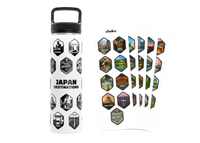
Kamakura is one of the day-trip destinations on the Traveler Bottle, the bucket-list bottle we built for first-time visitors mapping out a route. This guide covers how to reach Kamakura, what to see, and how Japanese travel sources suggest spending the day.
Is Kamakura worth a day trip from Tokyo?
Yes. Kamakura combines the second-largest bronze Buddha in Japan, a dense circuit of Zen temples, a beach and a nostalgic tram into an area small enough to cover on foot in a day. Japanese travel guides consistently place it among the top day trips from Tokyo.
The case for Kamakura is variety per kilometre. Most day trips give you one thing done well: a shrine, a mountain, a hot spring. Kamakura gives you several, and they are different enough that the day never repeats itself.
The headline sight is the Great Buddha, but the town would be worth the trip without it. The Zen temples around Kita-Kamakura are working monasteries with centuries of practice behind them. The coast adds a register that landlocked day trips cannot. And the scale is forgiving: if you miss something, it was a short walk away anyway.
It also rewards repeat visits. Japanese visitors come back for specific seasons, the hydrangeas in June above all, in a way they rarely do for a one-note destination.
How do you get from Tokyo to Kamakura?
Take the JR Yokosuka Line direct from Tokyo Station to Kamakura, about one hour for roughly 920 yen one way. The JR Shonan-Shinjuku Line runs from Shibuya and Shinjuku in a similar time. Get off at Kita-Kamakura, one stop earlier, for the northern Zen temples.
The access is genuinely simple, which is part of why Kamakura is such a reliable day trip. According to japan-guide.com, the JR Yokosuka Line connects Tokyo Station to Kamakura in about an hour without a transfer.
A few practical notes:
- Kita-Kamakura comes first. The Yokosuka Line stops at Kita-Kamakura one station before Kamakura. If you plan to start with the Zen temples, get off here and walk south into town through them.
- The Enoden line links the coast. From Kamakura Station, the Enoden, a single-track tram dating to 1902, runs to Hase, the stop for the Great Buddha, and onward along the seafront toward Enoshima.
- Consider a pass. If you plan to ride the Enoden several times, a day pass can be worth it; otherwise individual fares are low.
You do not need to overthink the logistics. A morning train out and an evening train back is the whole transport plan.
What should you see in Kamakura?
Lead with the Great Buddha at Kotoku-in and the temples around Hase, then the Zen temples of Kita-Kamakura. The Great Buddha is an 11.4-metre bronze statue cast in 1252; nearby Hasedera adds a hilltop garden and ocean views. Kita-Kamakura holds Kamakura's most important Zen monasteries.
Here are the anchors of a Kamakura day.
The Great Buddha (Kotoku-in). The bronze Amida Buddha has sat in the open since the late 15th century, after the hall built around it was destroyed by typhoons and a tsunami. Japan-guide.com records its height at 11.4 metres and the casting date as 1252. Admission is 300 yen, with an extra 50 yen to step inside the hollow statue. It opens at 8:00, which is your window to see it before the crowds.
Hasedera. A five-minute walk from the Great Buddha's Hase Station, Hasedera is a hillside temple with a large wooden Kannon, a garden that performs across the seasons, and a viewpoint over the Kamakura coastline. Admission is 300 yen.
The Kita-Kamakura Zen temples. The northern end of town holds Kamakura's great Zen monasteries, including Kenchoji, the first of its five major Zen temples. These are quieter and more contemplative than the Hase area.
Hokokuji, the bamboo temple. East of Kamakura Station, Hokokuji is a small Zen temple known for a dense bamboo grove with a tea house where you can drink matcha among the stalks.
This table compares the three zones so you can decide where to weight your day:
| Hase area | Kita-Kamakura | Enoshima | |
|---|---|---|---|
| What it is | Great Buddha, Hasedera, beach access | Kamakura's major Zen temples | Coastal island with shrine and caves |
| Best for | First-timers, the iconic sights | Quiet, temple atmosphere | Sea views, a half-day add-on |
| Pace | Busy, compact | Slow, walkable | A trip in its own right |
| Access | Enoden to Hase Station | Yokosuka Line to Kita-Kamakura | Enoden to the western end |
What do Japanese visitors do in Kamakura?
Japanese travel guides treat Kamakura and Enoshima as a pair, lean on the Enoden tram as part of the experience, and time visits around the seasons. The Great Buddha is the fixed point; the rest of the day flexes around food, the coast and whichever season you arrive in.
Read enough Japanese day-trip coverage and a pattern emerges. The Great Buddha is never in question. What varies is the second half of the day.
MATCHA's guide explicitly pairs Kamakura with nearby Enoshima for its ocean scenery, and Jalan's Kanto day-trip ranking lists Enoshima and the Enoshima Aquarium as destinations in their own right. The takeaway for planning: if the coast appeals to you, build the day as Kamakura-then-Enoshima rather than trying to see every temple in town.
The Enoden itself is treated as a feature, not just transport. The tram threads between houses and runs along the seafront, and the ride between Kamakura and Enoshima is part of why the pairing works.
Food clusters on Komachi-dori, the pedestrian street running from Kamakura Station. It is the town's main strip for snacks, sweets and souvenirs, and it is the easy answer for lunch between the temples and the coast.
Free for you: our Tokyo Google Maps list We keep a Google Maps list of the must-see spots around Tokyo - restaurants, cafes, shops, viewpoints, and streets worth the detour. Drop your email and we'll send it over.
How should you plan a Kamakura day trip itinerary?
Start at Kita-Kamakura for the Zen temples in the morning, walk south into central Kamakura, then take the Enoden to Hase for the Great Buddha and Hasedera in the afternoon. Reverse it if you want the Great Buddha crowd-free at opening. Either way, one direction of travel, no backtracking.
The efficient Kamakura day runs north to south or south to north, not in loops.
Option A, temples first. Get off at Kita-Kamakura, walk the Zen temples while they are quiet, continue into central Kamakura for lunch on Komachi-dori, then ride the Enoden to Hase for the Great Buddha and Hasedera in the afternoon.
Option B, Great Buddha first. If your priority is photographing the Great Buddha without crowds, reverse the plan: Enoden to Hase at opening, then work back through central Kamakura to Kita-Kamakura.
Adding Enoshima. If you want the island too, keep central Kamakura brief and ride the Enoden all the way west. This makes for a long but very satisfying day. Trying to do the full temple circuit and Enoshima will leave you rushing both.
For sequencing a longer Japan trip around day trips like this one, the 2-Week Japan Guide covers the order Japanese travel writers tend to recommend.
When is the best time to visit Kamakura?
Cherry blossoms in late March to early April and hydrangeas in June are the signature seasons, and the most crowded. Autumn colour from late November brings comparable beauty with easier weather. On any clear day, arriving early is the single best decision you can make.
Kamakura is a place Japanese visitors return to for specific seasons rather than treating as a one-time tick.
The hydrangea season, roughly early to mid June, is the one people plan trips around; certain temples become famous for it and queue accordingly. Cherry blossom season in early spring is equally beautiful and equally busy. Autumn foliage from late November into early December is the quietly smart choice, with the colour rivalling spring and the weather more comfortable.
The photographer's note: the Great Buddha faces roughly south, so it takes good light through the middle of the day, but the statue is most photogenic in the softer light of early morning, when you can also frame it without a crowd at its base. The Kita-Kamakura temples reward overcast days, when the moss and timber hold colour and the light is even. On the coast, the Enoden stretch near the sea is a classic late-afternoon shot, the tram passing with the light low over the water. Whatever the season, the first train out of Tokyo buys you an hour of quiet at the famous spots.
Kamakura is the kind of place the Traveler Bottle was built around: a destination close enough for a day, good enough to plan a trip around. If you are mapping out a first trip to Japan, it belongs on the shortlist of day trips from Tokyo.
FAQ
Is Kamakura worth a day trip from Tokyo?
Yes. Kamakura sits about an hour south of Tokyo by JR train and packs the Great Buddha, a dense circuit of Zen temples, a coastline and a nostalgic tram line into a compact, walkable area. Japanese travel guides consistently list it among the top day trips from Tokyo, and it works well even for a half day.
How long do you need in Kamakura?
One full day is comfortable. The Great Buddha and the Hase temples take a morning, the Kita-Kamakura Zen temples and central Kamakura fill an afternoon. If you want to add Enoshima island, leave early and treat it as a long day, or focus on either Kamakura or Enoshima rather than rushing both.
How do you get from Tokyo to Kamakura?
Take the JR Yokosuka Line direct from Tokyo Station to Kamakura Station, about one hour for roughly 920 yen one way. The JR Shonan-Shinjuku Line connects from Shibuya and Shinjuku in a similar time. Kita-Kamakura, one stop before Kamakura, is the access point for the northern Zen temples.
What is the best time of year to visit Kamakura?
Late March to early April for cherry blossoms and early-to-mid June for hydrangeas are the most scenic windows, but both draw the heaviest crowds. Late November to early December brings autumn colour with more comfortable weather. Any clear day works; arrive early to see the Great Buddha before the crowds.
Sources
- japan-guide.com — Kamakura — overview and access from Tokyo
- japan-guide.com — Great Buddha — height, casting date, admission, hours
- japan-guide.com — Hasedera — admission and access
- japan-guide.com — Hokokuji — the bamboo temple
- MATCHA — day trips from Tokyo — Japanese day-trip guide pairing Kamakura with Enoshima
- Jalan — Kanto day trips within two hours — Japanese ranking including Enoshima
Activities and tours in Tokyo
cheku is a GetYourGuide partner. We link to tours that handle the parts of travel that eat your time, getting there, booking ahead, language, context you'd otherwise miss. If you book through our link, we earn a small commission at no extra cost to you.


